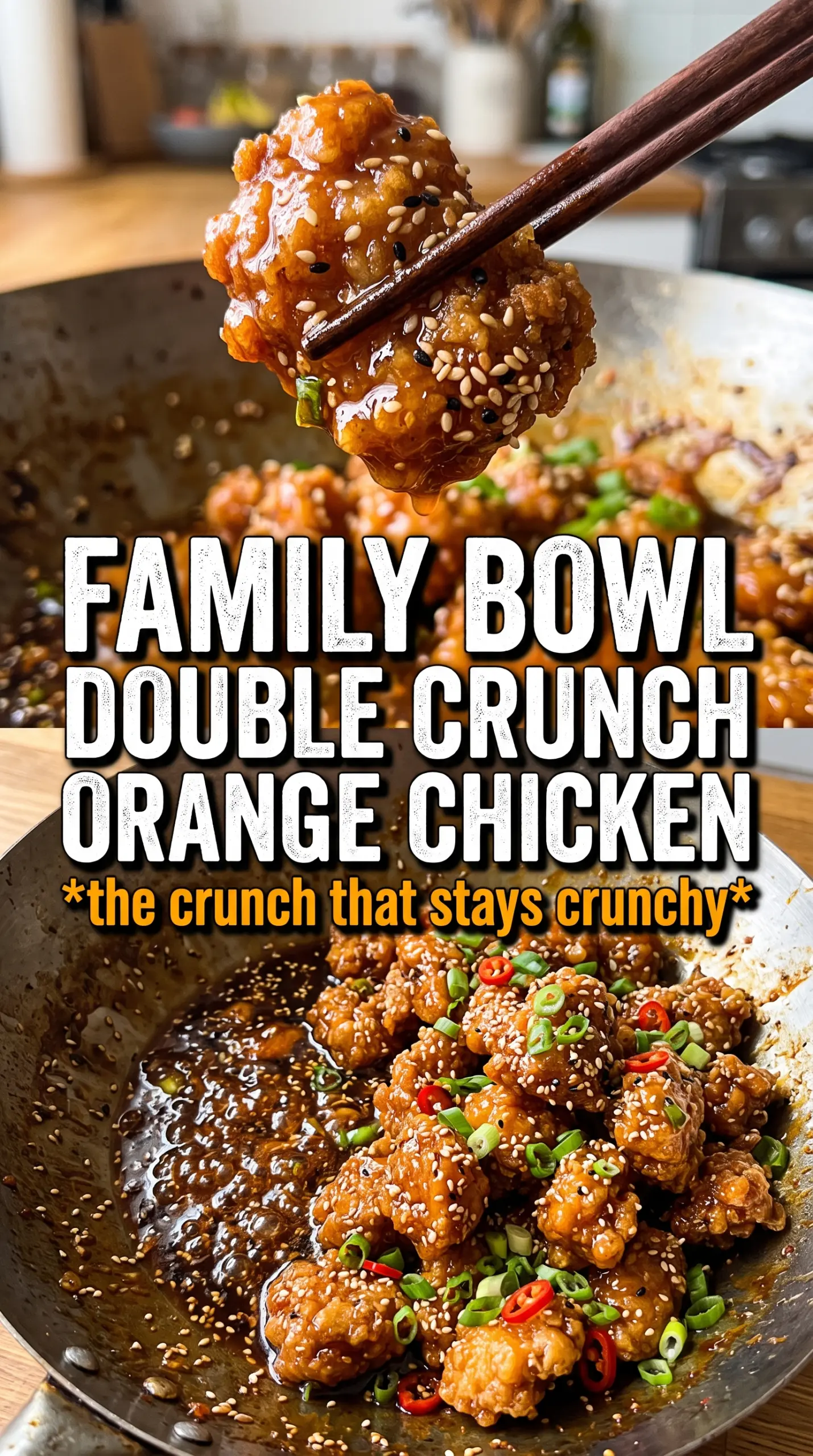
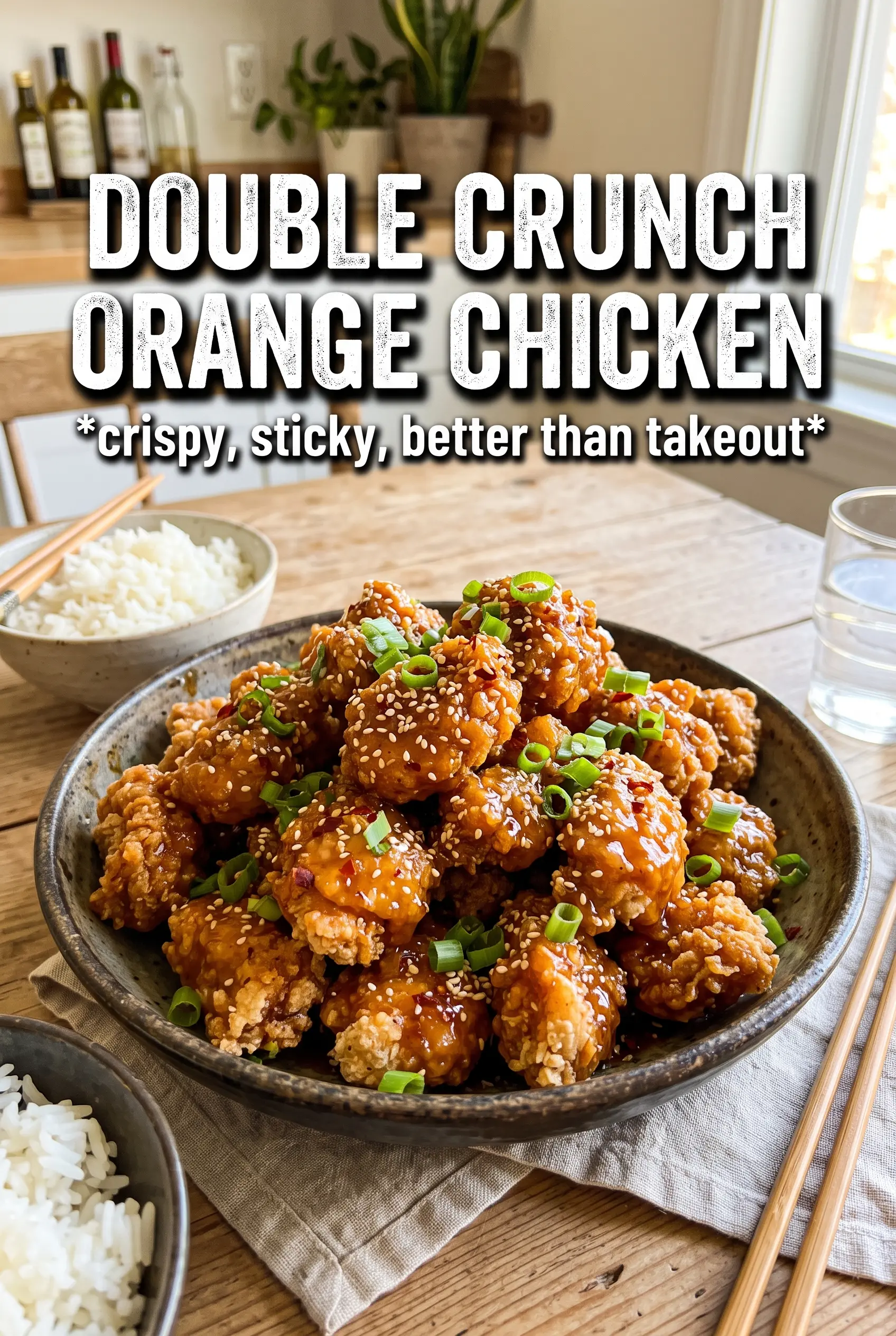
Double Crunch Orange Chicken lands with that first bite you hope for: shattering crust, juicy chicken, and a sticky orange glaze that clings without turning soggy. The coating stays crisp long enough to get a few bites in, and the sauce tastes bright and bold instead of flat or overly sweet. It’s the kind of takeout-style dinner that disappears fast because every piece tastes like it should have been the last one on the plate.
The crunch comes from a double dredge, not from frying alone. Cornstarch mixed with flour gives the coating a lighter, craggier shell, and the second dip builds the thicker crust that holds up under sauce. The orange sauce works because it uses both juice and zest, then gets tightened with a quick cornstarch slurry so it turns glossy and clingy instead of watery.
Below, I’ll walk through the part that matters most: how to keep the chicken crisp even after saucing, plus a few swaps if you need to adjust for what’s already in your kitchen.
The chicken stayed crisp even after I tossed it in the sauce, and the orange glaze thickened up in just a couple of minutes. I used thighs like you suggested and they came out juicy, not greasy.
Like this double crunch orange chicken? Save it to Pinterest for the nights when you want crispy takeout-style chicken with a bright, sticky orange glaze.
The Double-Dip Is What Keeps the Coating from Going Flat
A single dredge gives you a thin shell that looks crisp for a minute and then softens as soon as the sauce hits it. The second dip builds a rougher, thicker crust, which is exactly what you want here because orange sauce has enough sugar and moisture to soften anything flimsy. Cornstarch helps with that craggy texture, while the flour gives the coating enough structure to fry up with a sturdy bite.
The other thing that matters is oil temperature. If the oil drops too low, the coating drinks it up and turns heavy instead of crisp. Keep the oil at 375°F and fry in batches so the pieces have room to move and color evenly. Crowding the pan is the fastest way to lose the crunch before the sauce even shows up.
What Each Ingredient Is Doing in the Sauce and the Crunch
- Chicken thighs — Thighs stay juicier than breast meat and hold up better to frying. If you swap in chicken breast, cut the pieces evenly and pull them as soon as they’re cooked through so they don’t dry out.
- Cornstarch and flour — This mix gives the coating its double crunch. Cornstarch fries up lighter and crispier than flour alone, while the flour helps the crust cling and brown instead of shedding in the oil.
- Fresh orange juice and zest — Juice brings the citrus flavor, but zest is what makes the sauce taste vivid instead of just sweet. Bottled juice will work in a pinch, but it won’t give the same bright edge.
- Soy sauce, brown sugar, rice vinegar, and hoisin — These four build the backbone of the glaze: salty, sweet, tangy, and a little deep from the hoisin. If you leave out the vinegar, the sauce tastes heavy; if you skip the hoisin, it loses that takeout-style roundness.
- Cornstarch slurry — This is what turns the sauce glossy and clingy. Add it only after the sauce boils, then let it bubble for a couple of minutes so the raw starch cooks out and the glaze thickens properly.
The 20 Minutes That Matter Most
Build the Crust First
Mix the dredging ingredients until they’re evenly combined, then coat each piece of chicken in the egg before pressing it firmly into the flour mixture. The surface should look dusty and thick, not bare in spots. After the first coating, dip it back into the egg and dredge again so the crust has enough body to stay crunchy under sauce. If the coating feels patchy, press it on again before it goes into the oil.
Fry Until Deep Gold, Not Pale Tan
The oil should stay hot enough that the chicken sizzles the second it goes in. Fry the pieces for 5 to 6 minutes until they’re deeply golden and the outside looks set and textured. Pale chicken usually means the coating was under-fried, and that’s the version that softens fast once sauced. Drain the chicken on a rack or paper towels, then move right into the sauce while the surface is still crisp.
Cook the Orange Glaze Until It Clings
Combine the sauce ingredients in a saucepan and bring them to a boil before adding the slurry. Once the cornstarch mixture goes in, the sauce should go from thin and bubbly to glossy and nappe-like within a couple of minutes. If it stays loose, keep it at a steady simmer long enough for the starch to activate. If it turns pasty, it cooked too long after thickening, so pull it off the heat as soon as it coats a spoon.
Toss Fast and Serve Right Away
Add the fried chicken to the sauce and toss just until every piece is coated. Don’t let it sit in the pan or the crust will start absorbing the glaze and lose its edge. Serve it over steamed rice with sesame seeds and sliced green onions while the sauce is still shiny and the chicken still has some crunch left in the bite.
How to Adjust This Without Losing the Crunch
Make it gluten-free
Use a gluten-free all-purpose flour blend in place of the regular flour, then swap the soy sauce for tamari. The texture stays close to the original, though the crust may brown a little faster, so watch the oil closely and pull the chicken once it turns deeply golden.
Use chicken breast instead of thighs
Chicken breast works, but it dries out faster, so cut the pieces into even chunks and don’t overcook them. The sauce gives them plenty of flavor, but thighs still win for juiciness and forgiveness if you’re frying on a busy night.
Bake or air-fry instead of deep-frying
You can bake or air-fry the coated chicken for a lighter version, but the crust won’t get quite as rugged or as shattering as it does in oil. Spray the pieces well with oil before cooking so the coating browns instead of drying out, then toss them in the sauce right before serving.
Storage and Reheating
- Refrigerator: Store the chicken and sauce separately for up to 3 days. Once coated, the crust softens, so the best texture always comes from keeping them apart until serving.
- Freezer: The fried chicken freezes better than the sauced version. Freeze the cooked pieces in a single layer, then reheat and sauce them fresh; the finished sauced dish doesn’t freeze well because the coating turns soggy.
- Reheating: Re-crisp the chicken in a 375°F oven or air fryer until hot and crisp, then warm the sauce separately on the stove and toss together right before eating. Microwaving softens the crust fast, which is the main mistake to avoid here.
Questions I Get Asked About This Recipe
Double Crunch Orange Chicken
Ingredients
Equipment
Method
- Mix cornstarch, all-purpose flour, garlic powder, and salt and pepper in a bowl; set aside for dredging and keep an egg bowl ready for dipping.
- Dip the chicken pieces in beaten large eggs, then dredge in the flour mixture to coat thoroughly.
- Double-dip the coated chicken by dipping again in beaten large eggs, then dredging again in the flour mixture for maximum crunch.
- Heat vegetable oil in a Dutch oven to 375°F, then fry the double-dipped chicken for 5-6 minutes until deeply golden and cooked through.
- Drain the fried chicken on a sheet pan so it stays crisp while you finish the sauce.
- In a saucepan, combine fresh orange juice, orange zest, soy sauce, brown sugar, rice vinegar, hoisin sauce, minced garlic, grated fresh ginger, and sesame oil; bring to a boil.
- Stir in the cornstarch slurry (cornstarch mixed with water) and cook 2-3 minutes until thick and glossy.
- Toss the crispy chicken in the orange sauce until evenly coated, then immediately pile over steamed rice.
- Finish with sesame seeds and sliced green onions on top and serve right away.