Layered lasagna turns wonderfully rustic in a Dutch oven. The noodles soften right in the sauce, the ricotta mixture stays creamy, and the top finishes with that familiar bubbly cheese pull that makes people hover near the pot with a serving spoon in hand. It has the comfort of a classic baked lasagna, but the method is built for campfire cooking, a backyard fire pit, or any time you want a one-pot main dish that feeds a crowd without fuss.
What makes this version work is the balance between moisture and heat. Uncooked noodles need enough sauce to hydrate, but not so much that the layers collapse into a soupy mess. The meat sauce goes in a thin layer first so the pasta doesn’t stick, and the ricotta mixture gets egg and cheese for structure, which keeps it from sliding apart when you scoop it out. Covered heat does the heavy lifting here; the coals on top matter just as much as the coals underneath.
Below you’ll find the layering order that keeps the noodles tender, the cheese layer from disappearing, and the top from scorching before the center is done. There’s also a note on what to do if you’re cooking over a fire that runs hotter than expected.
The noodles came out tender all the way through and the top got this perfect bubbly crust without burning on the bottom. I used the full cook time and it sliced up clean after resting.
Save this Dutch oven lasagna for a campfire dinner with layers that bake up bubbly, hearty, and easy to serve from one pot.
The Layering Trick That Keeps the Noodles Tender Instead of Crumbly
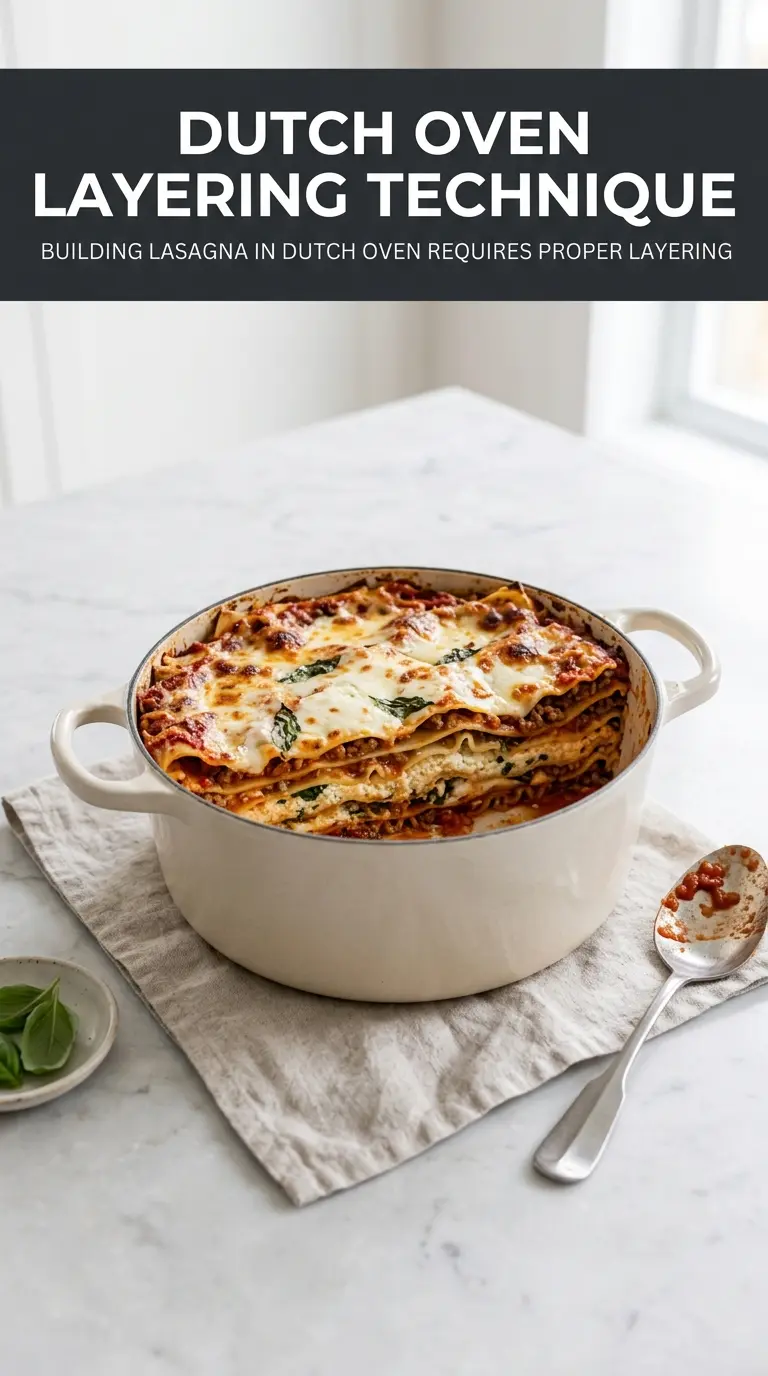
The biggest mistake with Dutch oven lasagna is treating it like oven-baked lasagna in a glass pan. Campfire heat is less forgiving, and the top can brown before the noodles have absorbed enough sauce. This version starts with a thin layer of meat sauce so the bottom noodles have immediate contact with moisture, then the layers alternate in a way that spreads the sauce evenly without flooding the center.
Broken noodles are part of the job here. They let you fit the pasta snugly in a round Dutch oven, which matters more than perfect strips. Gaps invite dry edges. Tight, overlapping pieces help the sauce stay in place and give you cleaner slices after the rest time.
What Each Ingredient Is Doing in the Pot
- Ground beef — This gives the lasagna its hearty base and helps the sauce feel substantial enough for outdoor cooking. If you swap in ground turkey, cook it a little longer so it loses excess moisture before the sauce goes in.
- Spaghetti sauce — A jarred sauce is perfect here because it already has the right balance of liquid and seasoning for uncooked noodles. Use a thicker sauce if you have one; a thin, watery one can leave the lasagna loose in the center.
- Ricotta — This is what keeps the middle creamy instead of dense. Whole-milk ricotta gives the best texture, but part-skim works if that’s what you have. Stir it well so it spreads instead of clumping.
- Mozzarella and Parmesan — Mozzarella melts into that stretchy top layer, while Parmesan sharpens the flavor and helps the ricotta filling taste seasoned, not flat. Use freshly grated Parmesan if you can; the shelf-stable kind doesn’t melt as smoothly.
- Egg — The egg binds the ricotta mixture so it holds its shape when the lasagna is cut. Skip it and the filling will be softer and more likely to ooze out when serving.
- Uncooked lasagna noodles — These need the sauce to soften properly, so don’t reduce the liquid in the meat sauce. If the noodles are wider than your Dutch oven, break them to fit and overlap the pieces a little.
How to Build the Heat So the Center Cooks Before the Top Burns
Brown the Beef First
Cook the ground beef until it loses all pink color and starts to brown in spots. That deeper browning gives the sauce more flavor and keeps the finished lasagna from tasting flat. Drain off any excess fat if the meat leaves a lot behind, because too much grease can keep the layers from setting cleanly.
Mix the Cheese Layer Until It Spreads Easily
Stir the ricotta, one cup of mozzarella, Parmesan, egg, and Italian seasoning until the mixture looks even and creamy. You want it thick but spoonable. If it’s stiff and hard to spread, it won’t settle into the noodle layers evenly, and you’ll end up with pockets of plain pasta.
Layer in the Dutch Oven with the Rim in Mind
Spray the Dutch oven well, then start with a thin layer of meat sauce. Add three noodles, breaking them as needed, then half the ricotta mixture and half the remaining sauce. Repeat once more, then finish with the last noodles, the rest of the sauce, and the remaining mozzarella. Keep the sauce close to the edges so the noodles at the perimeter don’t dry out first.
Cook Over Coals, Not Direct Flame
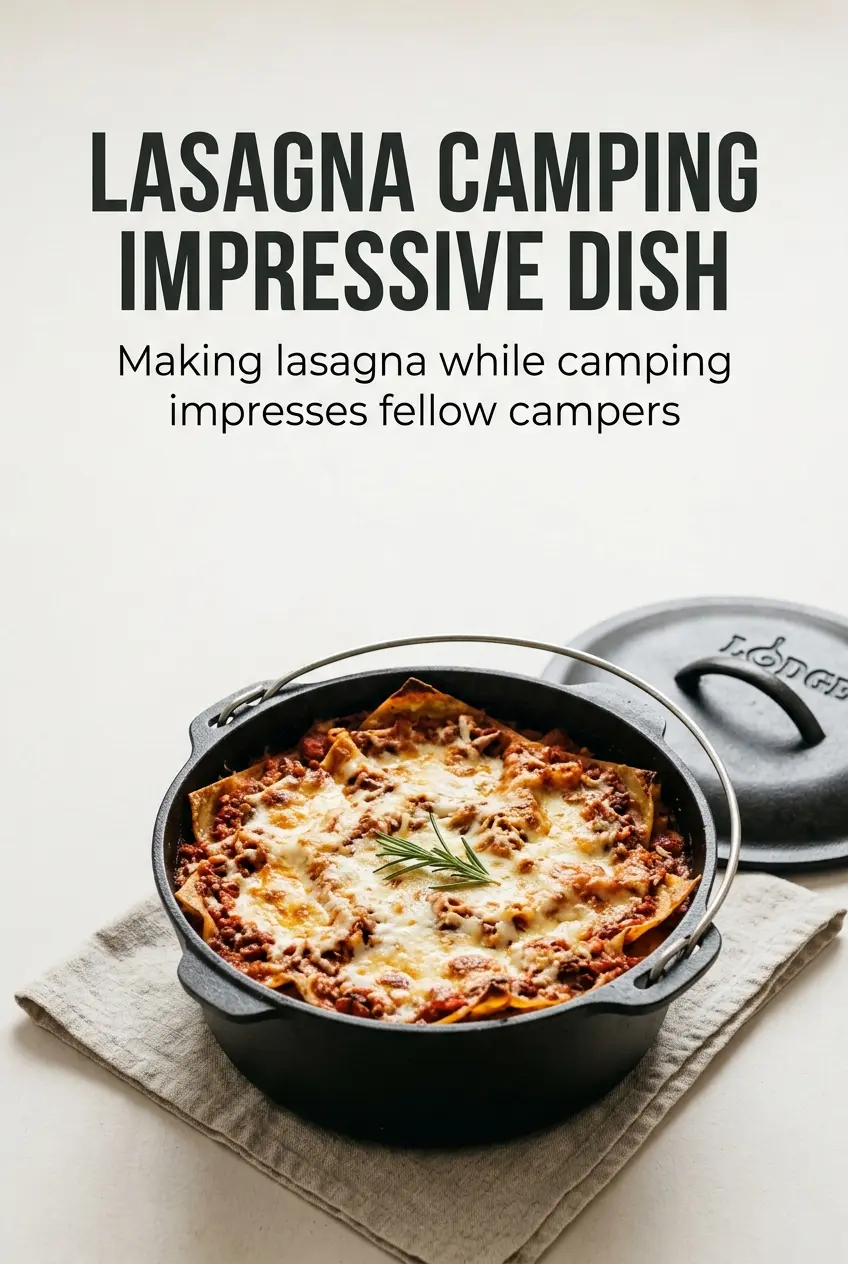
Place the Dutch oven on campfire coals with coals on the lid and cook for 45 to 50 minutes. Direct flame is too harsh and can scorch the bottom before the center softens. If the top is getting dark too fast, pull a few coals off the lid and let the residual heat finish the job.
Let It Rest Before Serving
Give the lasagna 10 minutes before you scoop it out. That pause lets the cheese settle and the sauce tighten up, which means cleaner servings and less sliding around in the pot. If you cut into it immediately, the layers will still be loose and the slices won’t hold.
How to Adapt This for a Different Fire, a Different Diet, or a Different Crowd
Use Italian sausage instead of beef
Swap the ground beef for bulk Italian sausage if you want a saltier, more seasoned filling. It adds extra fat and spice, so drain it well before mixing in the sauce, or the lasagna can turn greasy at the bottom.
Make it vegetarian without losing body
Use a thick marinara and add sautéed mushrooms, zucchini, or spinach in place of the beef. The vegetables need to be cooked down first so they don’t release water into the layers and soften the noodles unevenly.
Go gluten-free with oven-ready GF noodles
Use gluten-free lasagna noodles only if the package says they can bake without boiling. They vary a lot by brand, so keep the sauce generous and check for tenderness a little early; some GF noodles need a few extra minutes to soften fully.
Storage and Reheating
- Refrigerator: Store leftovers covered for up to 4 days. The noodles firm up a bit overnight, which actually makes the slices cleaner.
- Freezer: It freezes well in portions. Cool completely, wrap tightly, and freeze for up to 2 months. The ricotta stays a little softer after thawing, but the texture is still solid.
- Reheating: Reheat covered in a 350°F oven until hot in the center, or warm individual servings in the microwave with a splash of sauce on top. Don’t blast it uncovered or the edges dry out before the middle heats through.
Answers to the Questions Worth Asking
Dutch Oven Lasagna
Ingredients
Equipment
Method
- Heat a cast iron skillet over medium-high heat and brown the ground beef until no longer pink, then stir in the spaghetti sauce until combined.
- Simmer the meat sauce for 5 minutes to thicken slightly, then remove from heat.
- In a bowl, mix ricotta cheese with 1 cup mozzarella, Parmesan cheese, egg, and Italian seasoning until smooth and evenly combined.
- Spray the Dutch oven with cooking spray, then spread a thin layer of meat sauce over the bottom.
- Layer 3 lasagna noodles (broken to fit) over the sauce, then spread half the ricotta mixture on top.
- Spoon half the remaining meat sauce over the ricotta layer to cover.
- Repeat the layers using the remaining noodles (broken to fit), the rest of the ricotta mixture, and the rest of the meat sauce.
- Top with the remaining mozzarella, keeping the cheese evenly distributed.
- Cover the Dutch oven and place it on campfire coals, with additional coals on the lid, and cook for 45-50 minutes until the top is golden and bubbling.
- Let the lasagna rest for 10 minutes before serving so the layers set.