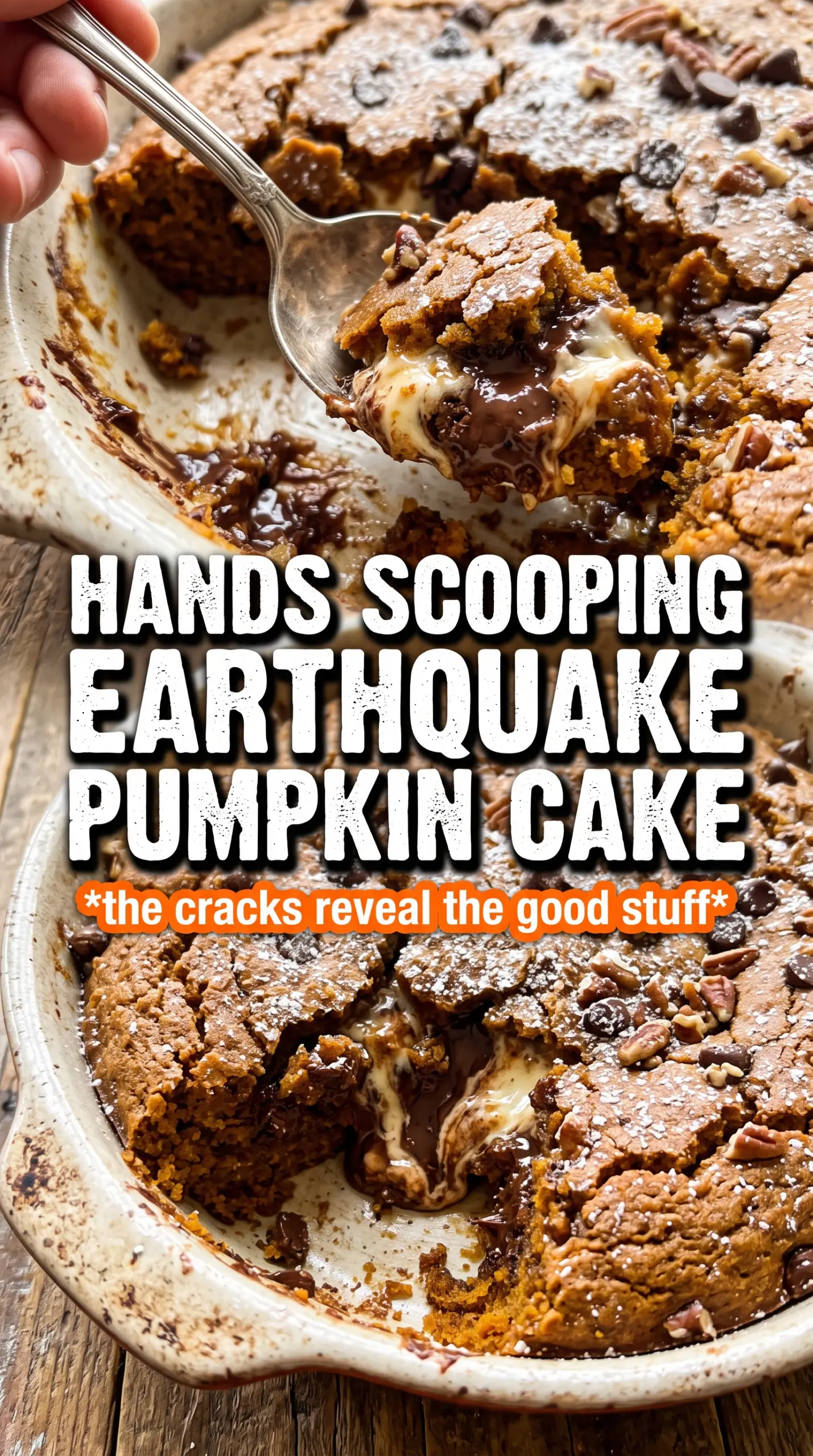
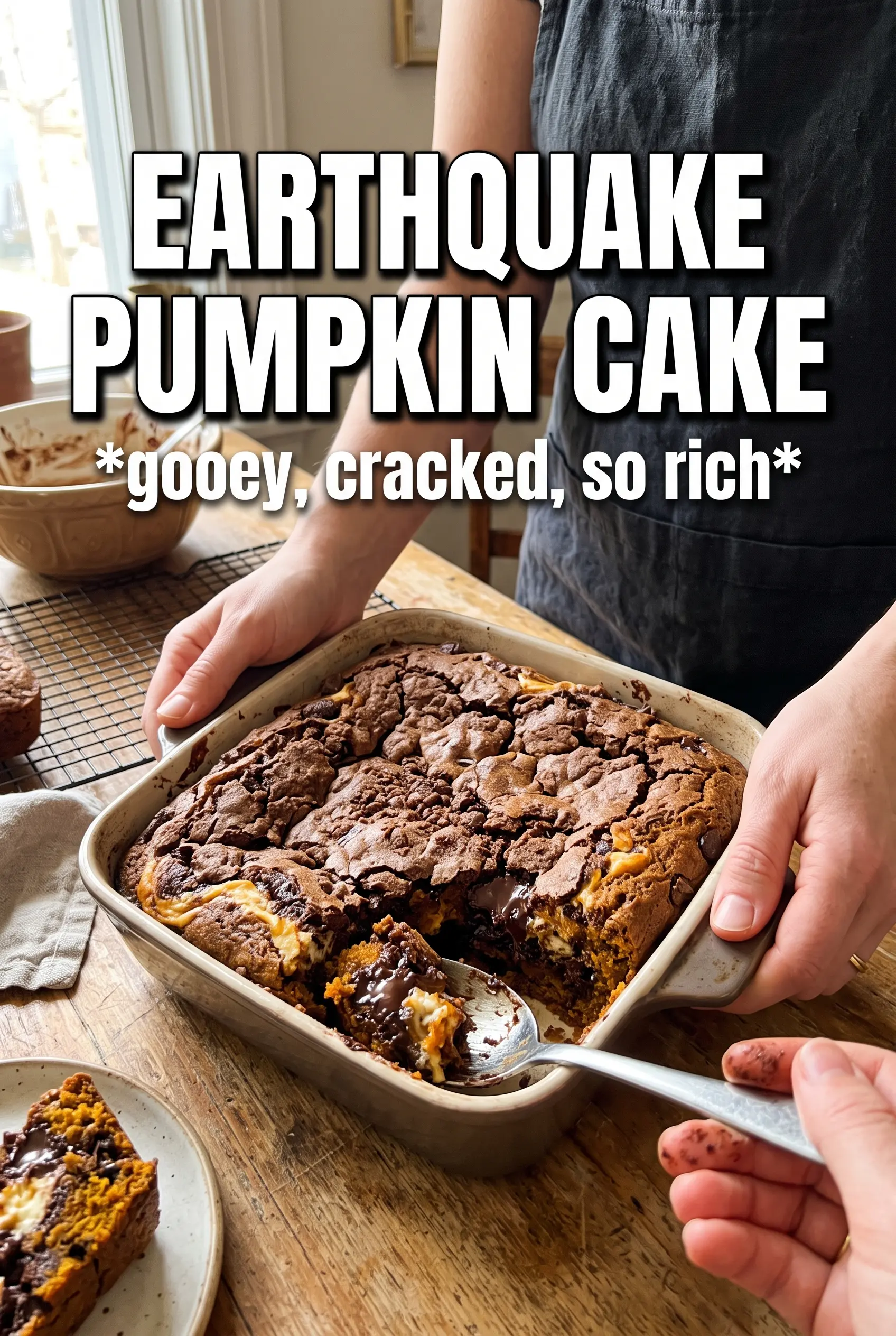
Earthquake Pumpkin Cake bakes up with a crackled top, creamy pockets of cheesecake, and caramel running through the middle like it belonged there all along. The magic is in the mess: the batter rises around the cream cheese layer, the cream cheese sinks in spots, and the whole pan ends up looking dramatic in the best way. Every slice gives you soft pumpkin spice cake, tangy cream cheese, and those sweet caramel streaks that keep people going back for one more piece.
This version starts with cake mix, which keeps the crumb tender and dependable, but the pumpkin puree and pumpkin pie spice pull it firmly into fall dessert territory without making the batter heavy. The cream cheese layer is thick enough to hold its shape when you drop it over the batter, then it settles into the cake as it bakes instead of disappearing into it. That contrast is what makes the texture work: fluffy cake below, creamy pockets above, and a cracked, swirled top that looks wild but bakes up exactly as it should.
Below, I’ll walk through the one part that matters most: how to layer the cream cheese so you get those signature earthquake cracks instead of a blended cake. I’ve also included a few smart swaps for when you want to adjust the sweetness or make the pan stretch a little farther.
The cream cheese sank into perfect little pockets and the caramel stayed visible on top, so every bite had that sweet-tangy swirl instead of turning muddy. I cooled it all the way before cutting and the squares held together beautifully.
Save this Earthquake Pumpkin Cake for the days when you want a cracked, swirled pumpkin dessert with creamy cheesecake pockets and caramel on top.
The Cream Cheese Layer Is Supposed to Sink
Most people fight the look this cake is aiming for. They expect a neat cheesecake ribbon and worry when the topping settles into the batter, but that sinking is what creates the earthquake effect. The cream cheese mixture is heavier than the pumpkin cake base, so it drops in uneven pockets as the cake rises around it. That leaves you with crackles, swirls, and creamy spots instead of a flat, blended top.
The other mistake is overmixing the cream cheese layer until it gets loose and pourable. Keep it smooth, but thick enough that it sits in spoonfuls. If it spreads too much before baking, you lose the contrast between the layers and the cake bakes up more like a marbled sheet cake than an earthquake cake.
What the Pumpkin Mix, Cream Cheese, and Caramel Are Doing Here
- Yellow cake mix — This gives you structure without asking you to build a batter from scratch. A standard boxed mix works best here because it bakes up light enough to support the cream cheese layer without turning dense.
- Pumpkin puree — This adds moisture and that soft pumpkin flavor that makes the cake taste homemade. Use pure pumpkin puree, not pumpkin pie filling, or the sugar and spice balance will be off.
- Cream cheese — This is the whole point of the cake. It needs to be softened all the way so it blends smooth; cold cream cheese leaves little lumps that bake unevenly and don’t melt into those creamy pockets.
- Caramel sauce — A thick caramel sauce holds up better than a thin dessert topping. It threads through the top of the cake instead of disappearing, which gives you those sweet, glossy streaks in every slice.
- Powdered sugar — This sweetens the cream cheese layer and helps it stay thick enough to drop by spoonfuls. Granulated sugar will make the filling looser and a little grainy.
The Layering Trick That Gives You the Swirl
Building the Pumpkin Batter
Beat the cake mix, pumpkin puree, eggs, oil, water, and pumpkin pie spice just until the batter is smooth and no dry pockets remain. The batter should be thick and spreadable, not runny. Spread it into a greased 9×13 pan and level it gently so the cream cheese layer has an even base to sink into. If the batter is lumpy or streaky, the cake will bake unevenly and the cream cheese pockets won’t distribute well.
Dropping the Cream Cheese in Blobs
Mix the cream cheese, eggs, powdered sugar, and vanilla until completely smooth, then drop large spoonfuls over the pumpkin batter without stirring them in. Leave space between the spoonfuls so the topping can settle in separate pockets instead of merging into one layer. This is the part that creates the crackled look, so resist the urge to spread it flat. If you swirl it too much, you lose the earthquake pattern.
Finishing with Caramel and Baking Through
Drizzle the caramel over the cream cheese blobs, letting it fall in ribbons rather than trying to coat the whole pan evenly. Bake until the edges are set and the center has only a slight jiggle; the cake will look cracked and uneven on top, and that’s exactly right. Pull it when a tester comes out with a few moist crumbs from the cake portion, not wet cream cheese. Then cool it completely before cutting, because the structure firms up as it sits and the slices hold much better.
How to Adapt This Cake Without Losing the Swirl
Dairy-Free Version
Use a dairy-free cream cheese that bakes reasonably well and keep the rest of the recipe the same. The texture will be a little softer and the tang less pronounced, but the cracked-top effect still works as long as the filling stays thick enough to drop in spoonfuls.
Gluten-Free Shortcut
Swap in a gluten-free yellow cake mix and bake by the same visual cues. Gluten-free mixes can brown a little faster, so start checking a few minutes early. The cream cheese layer doesn’t need any adjustment.
Less Sweet, More Pumpkin
Cut the caramel drizzle down to a light ribbon over the top or skip it entirely if you want the pumpkin spice and cream cheese to lead. The cake still bakes into the same earthquake pattern, but the flavor lands closer to pumpkin cheesecake than dessert bar.
Storage and Reheating
- Refrigerator: Store covered for up to 5 days. The cream cheese layer firms up in the fridge, which actually makes clean slices easier.
- Freezer: It freezes well. Wrap individual pieces tightly and freeze for up to 2 months, then thaw in the fridge so the cream cheese layer doesn’t turn watery.
- Reheating: Eat it cold or let slices sit at room temperature for 20 to 30 minutes. If you warm it, use short bursts in the microwave; long heating can make the cream cheese layer separate and the cake turn greasy.
Questions I Get Asked About This Recipe
Earthquake Pumpkin Cake
Ingredients
Equipment
Method
- Preheat the oven to 350F and grease a 9x13 pan.
- Beat the yellow cake mix, pumpkin puree, eggs, vegetable oil, water, and pumpkin pie spice until combined, then spread the batter into the prepared pan.
- Beat the softened cream cheese, eggs, powdered sugar, and vanilla until smooth.
- Drop large spoonfuls of the cream cheese mixture over the cake batter without mixing it in.
- Drizzle the caramel sauce over the cream cheese blobs.
- Bake for 45–50 minutes, until the cream cheese sinks and creates the earthquake swirl pattern.
- Cool completely before cutting, noting the cake should look cracked and swirled—this is correct.