Juicy chicken breasts covered in a tangy cream cheese sauce make this the kind of skillet dinner that disappears fast. The sauce clings to the chicken instead of sliding off in a puddle, and the lemon zest at the end keeps the richness from tasting heavy. It lands right in that sweet spot between comforting and bright.
What makes this version work is the order. The chicken gets a real sear first, which gives the sauce something worth building on, and the broth loosens the browned bits left in the pan. Cream cheese melts smoothly when it’s softened and stirred over lower heat, while sour cream adds a little tang without thinning everything out.
You’ll also find a few practical notes below on keeping the sauce silky, plus a couple of simple ways to adapt the dish if you need to swap ingredients or stretch it for another meal.
The sauce turned out thick and silky, and it coated the chicken instead of separating like some cream sauces do. I added the lemon zest at the end and it made the whole dish taste fresh instead of heavy.
Save this cream cheese chicken for a creamy skillet dinner with a silky sauce and bright lemon finish.
The Reason Cream Cheese Stays Smooth Here Instead of Turning Grainy
Cream cheese sauces usually break for one of two reasons: the cheese goes into a pan that’s too hot, or the dairy gets rushed before the base is emulsified. This recipe avoids both problems by letting the broth loosen the browned bits first, then melting the cream cheese over medium-low heat before the sour cream goes in. That slow, steady approach is what gives you a sauce that looks glossy instead of curdled.
The chicken matters too. A good sear gives you flavor, but it also means the skillet already has a built-in base from the browned fond. If you skip that step or crowd the pan, you lose the depth that keeps the sauce from tasting flat.
What the Cream Cheese, Sour Cream, and Broth Are Each Doing

- Cream cheese — This is the body of the sauce. It gives you thickness and that velvety finish, but it only melts cleanly if it’s softened and cut into cubes first. Cold blocks tend to sit in the pan and fight you.
- Sour cream — This adds the tang that keeps the sauce from tasting like plain dairy. Stir it in after the cream cheese has fully melted and keep the heat low, because boiling sour cream is the fastest way to make the sauce look dull or separate.
- Chicken broth — Broth loosens the sauce and carries the browned bits off the bottom of the skillet. Water will thin it, but it won’t add the same savory backbone.
- Lemon juice and zest — The juice sharpens the sauce, while the zest gives you a fresher citrus lift at the end. The zest matters more than people think; it keeps the finished dish from reading as heavy.
- Italian seasoning — This rounds out the sauce without making it taste like a specific herb-heavy dish. If you don’t have it, a mix of dried oregano and thyme works well.
Getting the Sauce to Coat the Chicken Without Splitting
Building the Golden Sear
Season the chicken well before it hits the pan. You want a hot skillet and enough oil to keep the surface in contact with the heat, so the chicken browns instead of steaming. Let it cook undisturbed for 5 to 6 minutes per side unless your breasts are very thick; if they’re racing toward dark before the center cooks through, drop the heat slightly and finish more gently. Pull the chicken once it reaches 165°F, then rest it on a plate while you build the sauce.
Pulling the Fond Into the Sauce
After the chicken comes out, the skillet should still have browned bits stuck to the bottom. Add the garlic for just 30 seconds, then pour in the broth and scrape the pan with a wooden spoon. That scraping is not optional; those browned bits are where the deeper flavor lives, and they dissolve into the broth to give the sauce its savory edge. If the pan looks dry before the broth reduces a little, that’s normal.
Melting the Cream Cheese the Right Way
Add the softened cream cheese cubes and stir over medium-low heat until the sauce turns smooth. If the heat is too high, the outside of the cheese melts while the center stays stubborn, which leaves you with little lumps that don’t fully disappear. Keep stirring and pressing the cubes against the side of the pan until the sauce looks uniform and glossy.
Finishing With Sour Cream and Lemon
Take the pan down a notch before stirring in the sour cream, lemon juice, and Italian seasoning. The sauce should look creamy and loose enough to spoon, but not watery. Once the sour cream is in, don’t let the sauce boil. High heat at this point can make it look grainy, and the texture never fully recovers.
How to Adapt This for a Bigger Crowd or a Different Diet
Make it gluten-free without changing the method
This recipe is naturally gluten-free as written, as long as your chicken broth is certified gluten-free. The sauce gets its thickness from the cream cheese, not flour, so you don’t need any special swap to keep the texture intact.
Use chicken thighs for a richer, more forgiving result
Boneless skinless thighs work well if you want more moisture and a little extra richness. They may need a few more minutes in the pan, but they’re less likely to dry out than breasts, especially if your pieces are uneven.
Swap the sour cream if that’s what you’ve got
Plain Greek yogurt can replace the sour cream in a pinch, but stir it in off the heat or over very low heat so it doesn’t curdle. The result will taste a little sharper and less lush, which works fine if you want a lighter finish.
Double it for company, but brown in batches
If you’re serving more people, cook the chicken in batches so the skillet stays hot enough to brown properly. Crowding the pan traps moisture and gives you pale chicken, which means less flavor going into the sauce.
Storage and Reheating
- Refrigerator: Store leftovers in an airtight container for up to 3 days. The sauce will thicken as it chills.
- Freezer: This freezes, but the dairy sauce can turn slightly grainy after thawing. Freeze only if needed, and thaw it slowly in the refrigerator.
- Reheating: Warm it gently on the stove over low heat with a splash of broth or water. Microwaving on high can split the sauce before the chicken heats through.
Answers to the Questions Worth Asking
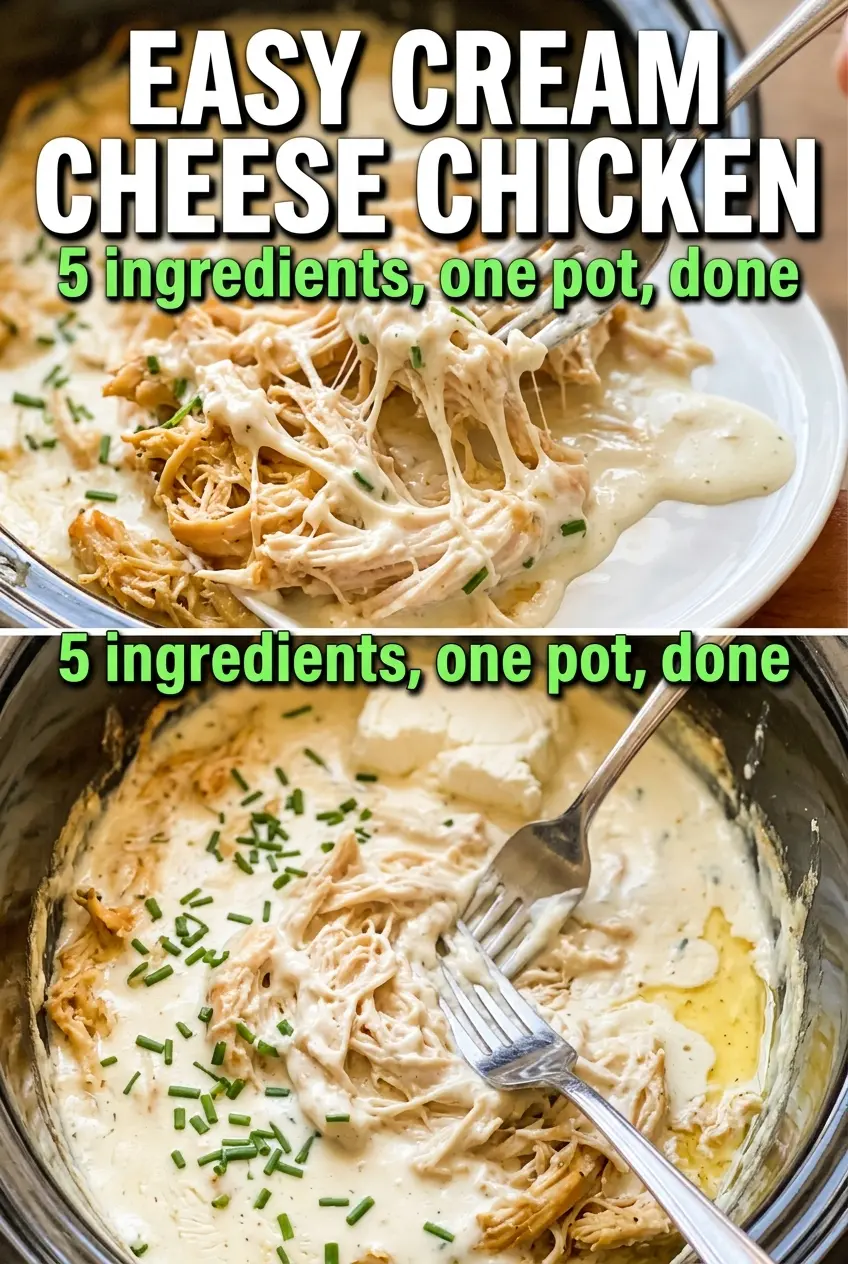
Easy Cream Cheese Chicken
Ingredients
Equipment
Method
- Season the chicken breasts with salt, pepper, garlic powder, and onion powder to taste. Heat the olive oil in a large skillet over medium-high heat and sear the chicken until golden, 5-6 minutes per side, until internal temperature reaches 165°F; remove to a plate.
- In the same pan, cook the minced garlic over medium heat for 30 seconds. Pour in the chicken broth and scrape up the browned bits from the bottom of the skillet.
- Add the cubed, softened cream cheese and stir over medium-low heat until fully melted and smooth.
- Stir in the sour cream, lemon juice, and Italian seasoning until the sauce is creamy and well combined; do not boil after adding sour cream.
- Return the chicken to the pan and spoon the sauce over each breast so it coats the tops.
- Garnish with fresh chives and lemon zest before serving.