Golden, pillowy campfire bread earns its place beside any fire because it gives you a crisp, toasty outside and a soft, steamy center with almost no fuss. Wrapped around a stick and cooked over coals, it turns into one of those simple foods people remember long after the fire dies down.
The trick is getting the dough mixed just until it comes together, then keeping the rope even so it cooks through without burning in spots. A little sugar helps the crust brown and gives the bread that warm, bakery-style edge, while the butter keeps the crumb tender instead of dry and chalky.
Below, I’m walking through the little details that matter most: how to keep the dough from turning tough, how to avoid raw dough near the stick, and what to serve with it once it slides off the fire.
The outside got beautifully crisp over the coals, and the inside stayed fluffy instead of doughy. Rotating it constantly made all the difference, and my kids loved pulling the bread off the stick while it was still warm.
Save this fluffy campfire bread for your next cookout when you want soft, golden bread wrapped around a stick and cooked over the fire.
The Part That Keeps Campfire Bread From Burning Before It Cooks
Campfire bread fails in a very specific way: the outside gets dark and crackly while the center stays wet and gummy. That usually happens when the dough rope is too thick, the fire is too hot, or the stick sits too close to open flames instead of steady coals. This version is built to avoid all three problems.
Keeping each portion evenly rolled matters more than people think. A rope that’s thin at one end and bulky at the other cooks unevenly, and the skinny part will dry out before the thick part finishes. Rotating the stick constantly sounds tedious, but it’s the difference between bread that looks finished and bread that’s actually cooked through.
- Even rope thickness — Aim for a rope that’s roughly the same width from end to end so it bakes at the same speed all the way around.
- Coals instead of flames — Bright flames scorch the outside fast. Steady coals give you better color and a cooked interior.
- Butter in the dough — Melted butter keeps the crumb tender and helps the surface brown instead of drying out.
What Each Ingredient Is Actually Doing in This Dough
- All-purpose flour — This gives the bread its structure without making it heavy. Bread flour is too strong here and can make the interior a little chewy instead of soft.
- Baking powder — This is what gives campfire bread its lift. Without it, you’ll get a denser, more biscuit-like dough that doesn’t puff as nicely around the stick.
- Sugar — Just enough sugar helps the bread brown over the fire and gives the crust a subtle sweetness that plays well with butter or honey.
- Melted butter — Butter adds richness and keeps the dough easy to shape. If you swap in oil, the bread still works, but the flavor is flatter and the crumb isn’t quite as tender.
- Milk — Milk gives the dough a softer texture than water would. If you need a dairy-free version, unsweetened oat milk works well and keeps the dough supple.
- Roasting sticks — Use clean, sturdy sticks or metal roasting sticks. If you’re using wooden sticks, soak them first so they don’t scorch before the bread finishes.
Building the Dough, Wrapping the Stick, and Cooking It Through
Mix the Dough Just Until It Comes Together
Start by shaking the flour, baking powder, salt, and sugar together in a zip-top bag, then add the melted butter and milk. Knead inside the bag until the dough forms a shaggy ball and no dry flour remains. If you work it hard, the bread turns tougher and loses that fluffy bite. The dough should feel soft and slightly tacky, not sticky enough to smear all over your hands.
Shape Tight, Even Ropes
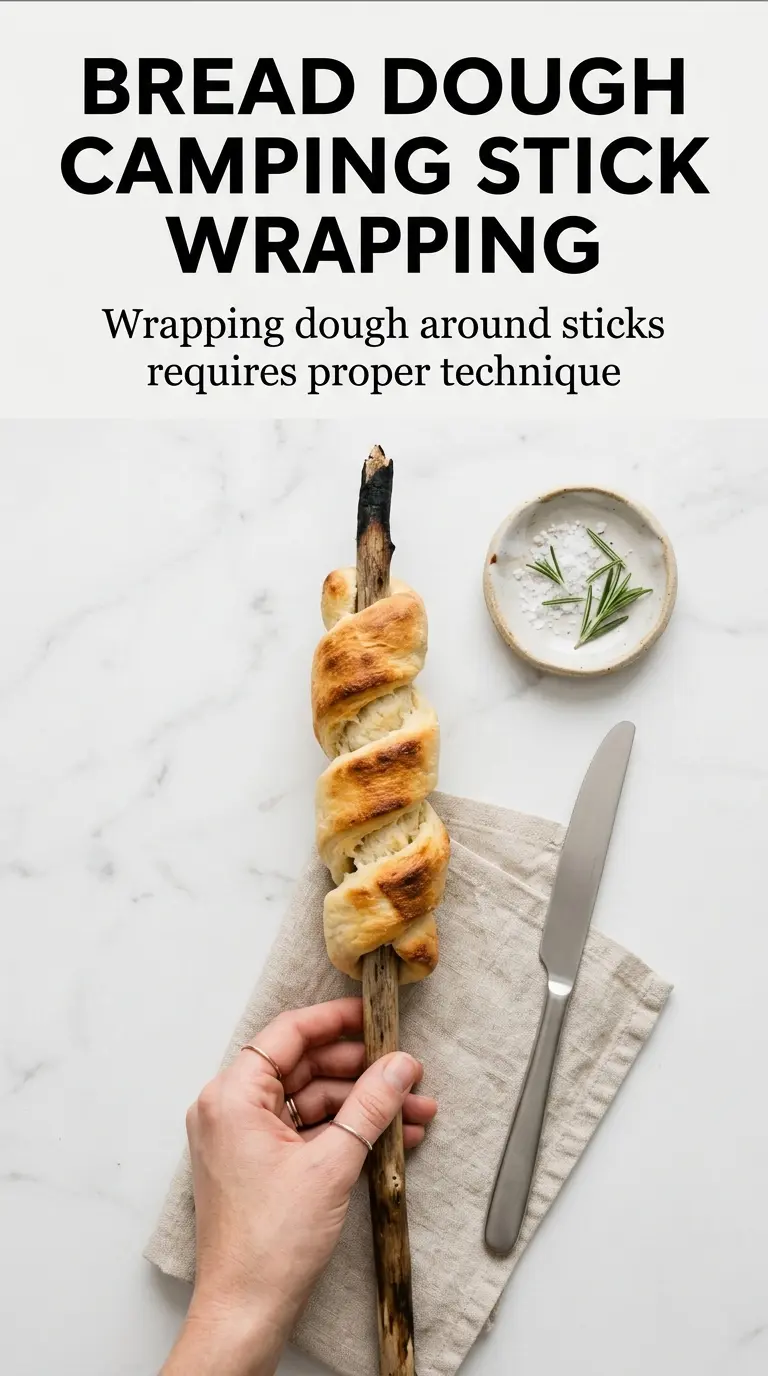
Divide the dough into eight portions and roll each one into a rope that’s even from end to end. Wrap it around the tip of the roasting stick with a little overlap so it grips itself instead of sliding off. Leave small gaps between the turns of dough so heat can reach the center; if you wind it too tightly, the middle stays undercooked while the outside browns.
Rotate Over Steady Coals
Hold the stick over hot coals, not direct flame, and turn it constantly for 10 to 12 minutes. You’re looking for a deep golden crust that feels set all the way around, not just color on one side. If the bread darkens too fast, move it farther from the heat and keep rotating. When it’s done, it should sound a little hollow when tapped and slide off the stick without sticking to the dough underneath.
Serve It While the Center Is Still Soft
Slide the bread off the stick as soon as it’s cool enough to handle, then serve it warm with butter, jam, or honey. The texture is best right away, when the crust is crisp and the inside is still plush. If you let it sit too long, the crust softens, which is fine, but you lose that fresh-from-the-fire contrast.
How to Change It Without Losing the Campfire Texture
Honey Campfire Bread
Swap the sugar for 1 1/2 to 2 tablespoons of honey and mix it in with the milk. The dough will brown a little faster and the finished bread tastes warmer and more rustic, but you’ll need to watch the fire more closely because honey scorches sooner than granulated sugar.
Dairy-Free Version
Use plant-based butter and unsweetened oat milk in place of the dairy ingredients. Oat milk keeps the dough soft without adding a strong flavor, and a good vegan butter still gives you enough richness for a tender crumb.
Gluten-Free Campfire Bread
Use a 1:1 gluten-free baking blend that includes xanthan gum. The dough may be a little more fragile when you wrap it around the stick, so keep the ropes slightly thicker and handle them gently while rotating them over the fire.
Storage and Reheating
- Refrigerator: Store leftovers in an airtight container for up to 2 days. The crust softens, but the bread still tastes good warmed back up.
- Freezer: Freeze fully cooled bread for up to 1 month, wrapped tightly and sealed in a freezer bag. Thaw at room temperature before reheating so the center doesn’t stay icy.
- Reheating: Warm in a 300°F oven for 5 to 8 minutes. The biggest mistake is using a microwave, which makes the bread rubbery and wipes out the crisp exterior.
Answers to the Questions Worth Asking
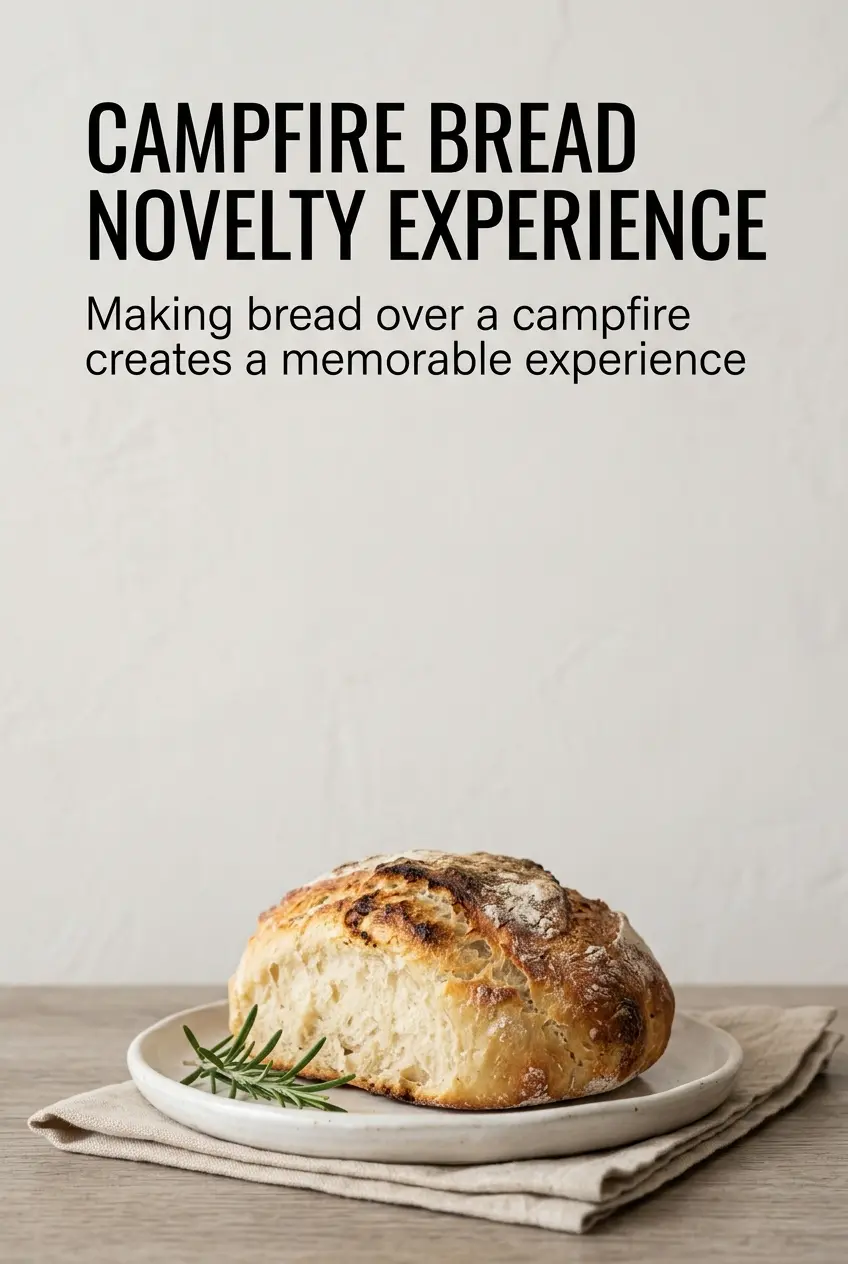
Fluffy Campfire Bread
Ingredients
Method
- Mix all-purpose flour, baking powder, salt, and sugar in a large zip-top bag until evenly combined, with no dry pockets visible.
- Add melted butter and milk to the bag, seal, and knead until the dough forms and comes together as a soft, pliable mass with a smooth surface.
- Divide the dough into 8 portions so each piece will form one stick bread spiral.
- Roll each portion into a long rope and wrap around the end of a roasting stick, leaving the dough spiraled snugly but not overly tight.
- Hold each stick bread over campfire coals and rotate constantly for 10-12 minutes, until golden brown and cooked through with visible browning on the outside.
- Slide the bread off the stick and serve warm, ideally with butter, jam, or honey, so the interior stays fluffy when broken open.