Freezer breakfast sandwiches earn their place in the freezer because they actually reheat like breakfast, not like a compromise. The eggs stay tender, the cheese melts back into the muffin, and the sausage gives each sandwich enough heft to carry you through a busy morning. When they’re wrapped and frozen the right way, you get a grab-and-go breakfast that tastes assembled, not salvaged.
The trick is baking the eggs in a muffin tin instead of scrambling them in a skillet. That gives you evenly shaped rounds that fit the English muffins without slipping out the sides, and it keeps the texture more even after reheating. Lightly toasting the muffins before assembly helps them hold up in the freezer, and letting the sandwiches cool before wrapping keeps condensation from turning the bread soggy.
Below, I’ll walk you through the few details that matter most: how to keep the eggs from turning rubbery, which cheese melts best after freezing, and the best way to reheat a sandwich so the middle warms through without drying out the bread.
The eggs stayed fluffy after freezing and the cheese melted all the way through in the microwave. I wrapped them individually and they were perfect for school mornings all week.
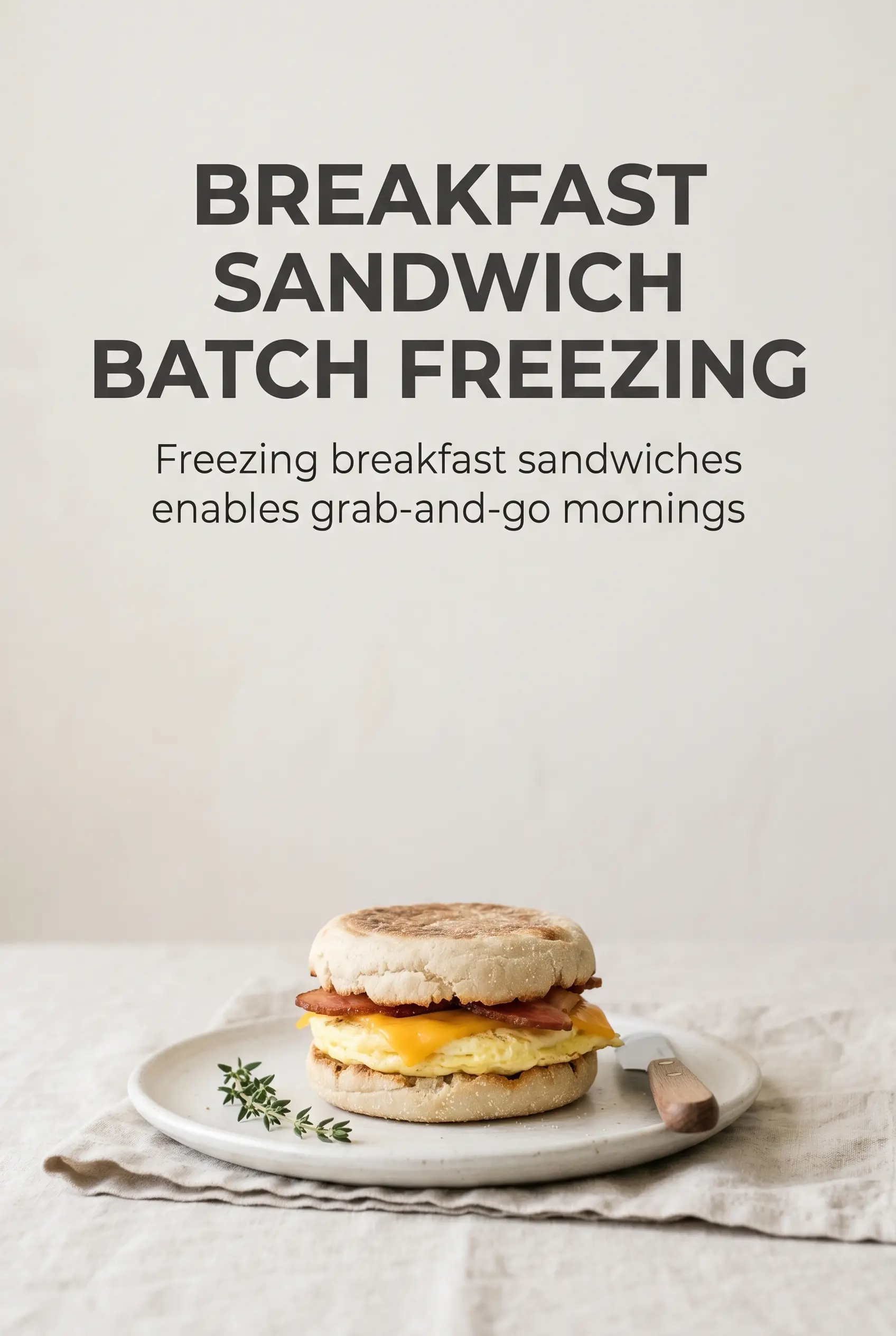
Keep these freezer breakfast sandwiches on hand for fast mornings, with fluffy eggs, melted cheese, and a toastable English muffin.
The part that keeps these sandwiches from turning soggy
The biggest mistake with freezer breakfast sandwiches is building them like a fresh sandwich and hoping the freezer won’t notice. It notices. Moisture from hot eggs, under-toasted bread, or warm sausage turns into ice crystals, and that’s what gives you a wet, chewy muffin after reheating. This version avoids that by drying out the bread a little, cooking the eggs into neat rounds, and letting every component cool before wrapping.
American cheese melts smoothly after freezing, which is why it works so well here. Cheddar brings a sharper bite, but it can separate a little more when microwaved, so slice it thin and place it directly against the hot egg to help it melt evenly. The other detail that matters is space: if you crowd the muffin tin or overload the sandwiches, they won’t hold together cleanly once frozen.
What each ingredient is doing in the sandwich
- English muffins — They freeze better than softer sandwich bread because the nooks and crannies stay structured after reheating. Light toasting gives them a little protection against moisture. If you only have bagels, they work too, but they come out denser and need a longer reheat.
- Eggs — Baking the eggs in a muffin tin gives you a shape that matches the sandwich and a texture that reheats better than scrambled eggs. If you break the yolks, the eggs set more evenly and stack without slipping. You can add a splash of milk, but I skip it here because it makes the eggs a little softer after freezing.
- Breakfast sausage or bacon — Sausage patties give you the most classic freezer sandwich bite and stay juicy after microwaving. Bacon works, but it can dry out faster, so keep the strips flat and don’t overcook them before assembling. Turkey sausage is fine if that’s what you buy regularly; just cook it fully and let it cool.
- Cheese — American melts the smoothest, cheddar gives the best flavor. Either way, put it against the warm egg so it softens on reheat instead of sitting cold in the middle. Thick slices take longer to melt, so keep them thin.
Building and freezing the sandwiches in the right order
Cooking the sausage first
Cook the sausage patties all the way through and set them on a plate to cool while you handle the eggs. If they go into the sandwich steaming hot, they’ll trap moisture under the wrapper and soften the muffin. You want them warm at most, not sizzling.
Baking the eggs for a clean fit
Spray the muffin tin well, then crack one egg into each cup and break the yolk if you want a flatter sandwich. Bake until the whites are set and the centers no longer look wet, usually 12 to 15 minutes at 350°F. If you pull them too early, they’ll weep into the muffin when you reheat them later.
Assembling without trapping steam
Toast the muffins lightly, then build each sandwich with the muffin bottom, egg, sausage, cheese, and top. Let the components cool enough that you can handle them comfortably before you wrap them. That pause is what keeps the bread from sweating inside the plastic wrap.
Wrapping for the freezer
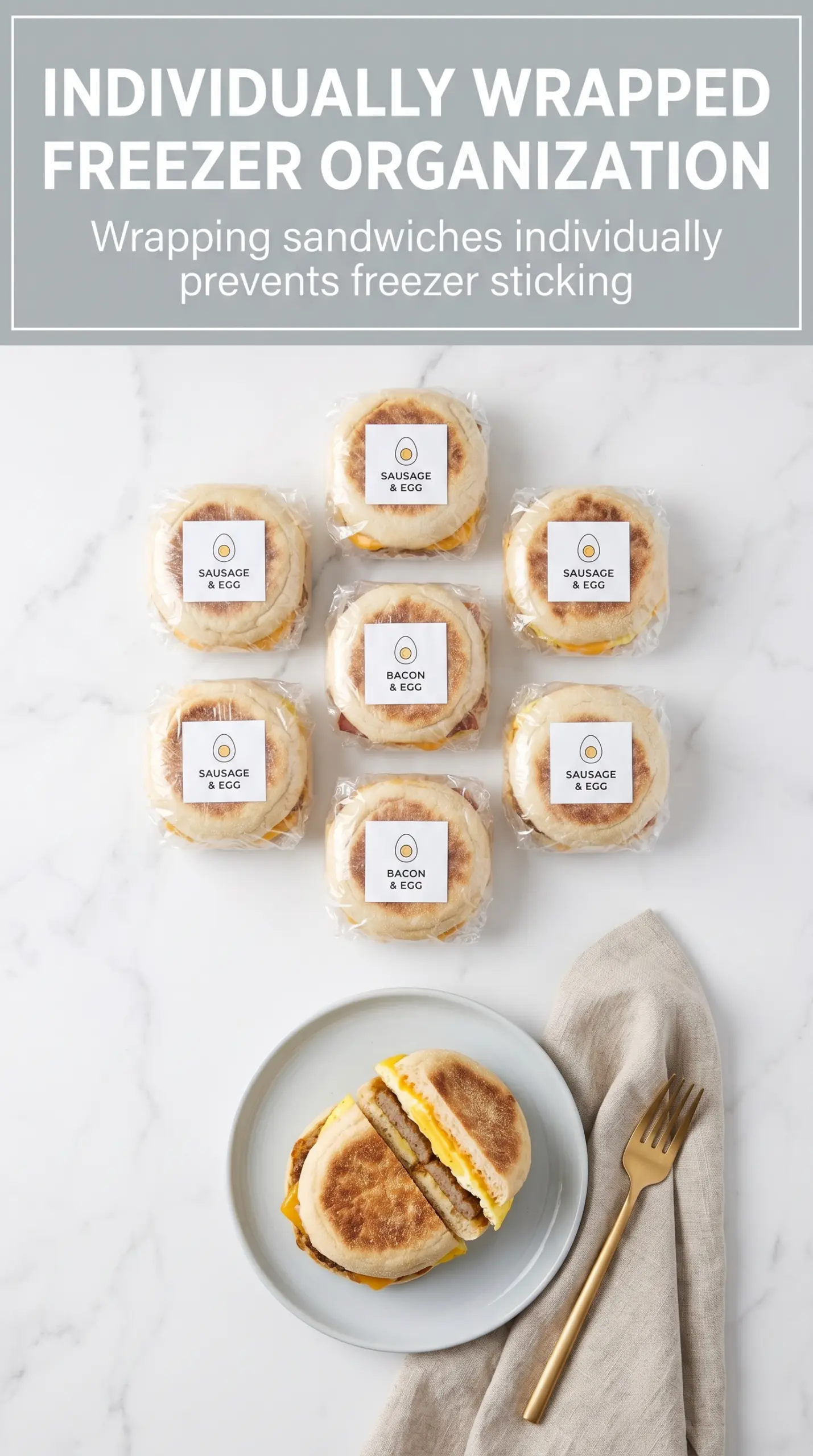
Wrap each sandwich tightly in plastic wrap, then tuck the wrapped sandwiches into freezer bags. Press out as much air as you can before sealing the bag. The more air you leave in there, the more freezer burn you’ll get on the edges of the bread.
Make it with bacon instead of sausage
Bacon gives the sandwich a smokier, saltier bite and a slightly lighter feel. Cook it until crisp but not brittle, because very crisp bacon can turn sharp and dry after freezing and microwaving.
Dairy-free version
Use your favorite dairy-free cheese slice and skip the butter in the egg tin, using cooking spray only. The sandwich still works well, but the cheese won’t melt quite as smoothly, so it helps to microwave a few extra seconds and let it sit for a minute before eating.
Gluten-free sandwich build
Use sturdy gluten-free English muffins that toast well and can handle freezing. Softer brands tend to crumble after thawing, so choose one with a tighter crumb and toast it lightly before assembling.
Make them ahead for a bigger batch
This recipe scales up cleanly if you have a second muffin tin and a couple of extra freezer bags. Bake the eggs in batches and keep the cooked sausage spread out on trays so everything cools evenly before wrapping.
Storage and Reheating
- Refrigerator: Keep assembled sandwiches in the fridge for up to 3 days, but they’re best frozen if you’re not eating them right away.
- Freezer: Freeze for up to 3 months. Wrap each sandwich tightly first so the muffin doesn’t dry out.
- Reheating: Unwrap the sandwich, wrap it in a paper towel, and microwave for 1 to 2 minutes until heated through. If the center is still cool, let it rest for 30 seconds before adding more time so the heat can spread instead of overcooking the bread.
Answers to the questions worth asking
Freezer Breakfast Sandwiches
Ingredients
Equipment
Method
- Cook the breakfast sausage patties according to package directions, then set aside so they’re ready to assemble.
- Spray a muffin tin with cooking spray and crack one egg into each cup, breaking yolks if desired.
- Season the eggs with salt and pepper, then bake at 350°F for 12-15 minutes until set.
- Toast the English muffins lightly so they hold up during freezing.
- Assemble sandwiches with muffin bottom, egg, sausage patty, cheese slice, and muffin top.
- Wrap each sandwich individually in plastic wrap, then place them in freezer bags for freezing.
- Freeze for up to 3 months; to reheat, unwrap and microwave for 1-2 minutes until heated through.