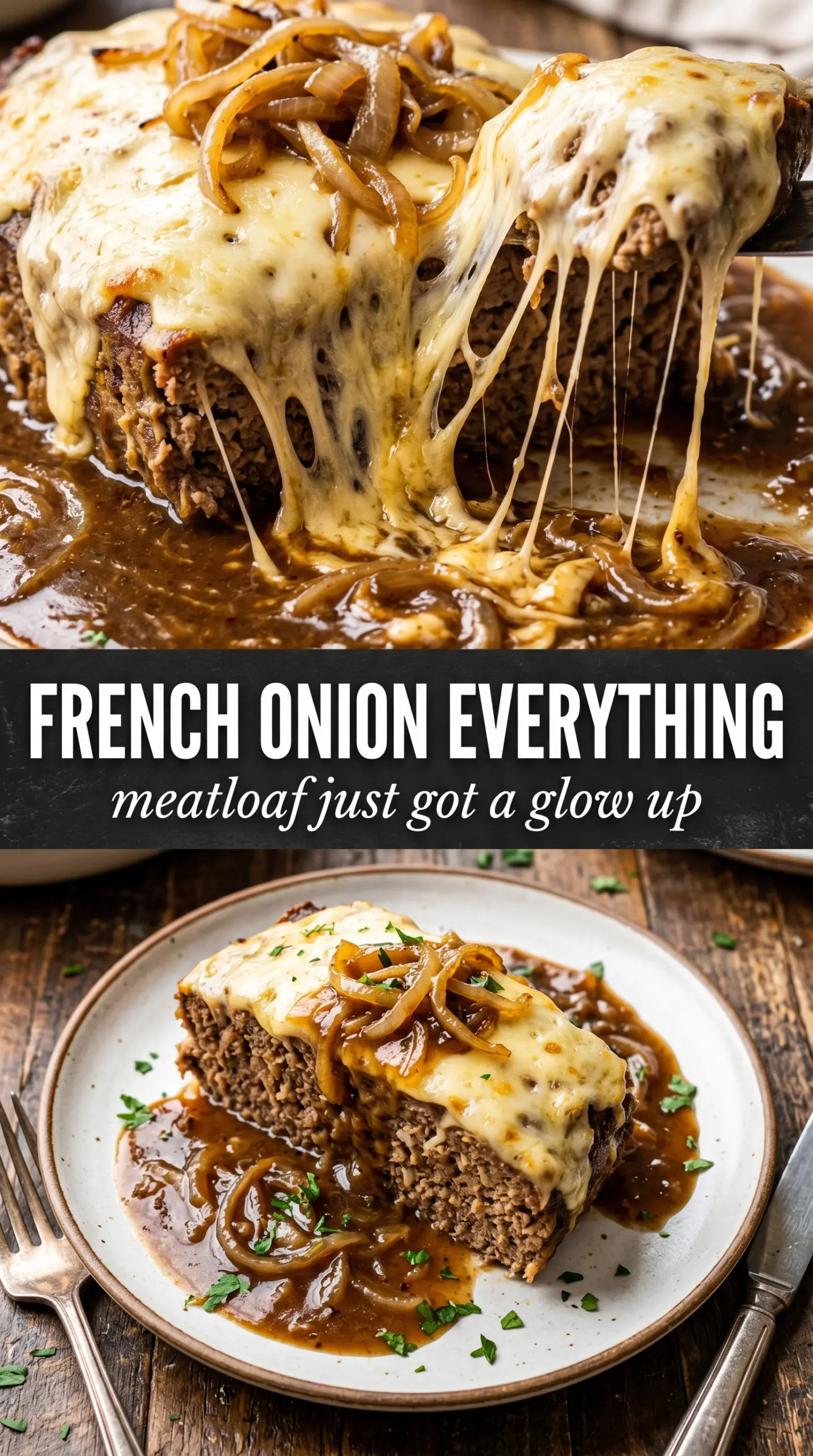
Deeply caramelized onions and melted Swiss cheese turn this meatloaf into something that tastes like French onion soup in dinner form. The loaf stays tender, the top gets rich and savory, and the onions bring the kind of sweetness that makes each slice taste more finished than standard meatloaf ever does. It’s the sort of meal that lands on the table looking humble and gets quiet for the first few bites.
What makes this version work is restraint in the base and patience on the topping. The meat mixture stays simple so the French onion soup mix and Worcestershire can season the beef without turning it heavy or salty. The onions need their full time in the pan, too. If you rush that step, you get softened onions instead of the deep, jammy layer that makes the whole dish taste like it took much more effort than it did.
Below, I’ve laid out the one step that keeps the loaf from drying out, plus a few smart swaps if you want to change the cheese or make it gluten-free without losing that French onion feel.
The onions got beautifully jammy and the Swiss cheese melted right over the top without sliding off. I baked mine to 160°F and let it rest, and the slices held together perfectly.
Like this French Onion Meatloaf? Save it for the nights when you want caramelized onions, Swiss cheese, and a tender loaf in one pan.
The Secret to Keeping the Loaf Tender Under All That Onion and Cheese
French onion meatloaf can turn dry if the meat gets packed too tightly or if the topping goes on too soon and overcooks the surface before the center is done. The breadcrumb-and-milk mix does more than stretch the meat; it holds onto moisture so the loaf slices cleanly instead of crumbling. The goal is a firm loaf that still feels juicy when you cut into it.
The other trap is the onions. They belong on top only after the loaf has baked long enough to set its shape. If you add them at the start, they can sink, scorch, or leak moisture into the pan. Caramelize them separately until they’re soft, brown, and sweet with no raw bite left behind.
- Ground beef — Use an 80/20 blend if you can. Leaner beef can work, but it gives you a drier loaf unless you’re extra careful with the milk and rest time.
- French onion soup mix — This is the backbone of the French onion flavor. It seasons the meat and helps carry that savory onion taste through every slice.
- Breadcrumbs and milk — They act as a panade, which keeps the meatloaf tender. If you need a gluten-free version, use gluten-free breadcrumbs or crushed gluten-free crackers in the same amount.
- Swiss cheese — It melts into a smooth, nutty blanket instead of turning greasy. Gruyère is the best upgrade if you want a sharper finish, but Swiss keeps the classic French onion feel.
- Onions — Thin slices cook down into a sweet, jammy topping. Yellow onions are the best choice here because they brown well and stay balanced rather than sharp.
What Each Ingredient Is Actually Doing in This Meatloaf or Meatballs
- Ground meat (the protein foundation) — Use 80/20 so it stays moist. Handle gently to keep texture tender instead of dense.
- Breadcrumbs or fillers (the binder) — These hold the meat together without making it dense. Soak in milk first so they add moisture.
- Egg (the structural binding agent) — This holds everything together during cooking. One egg per pound of meat is the right ratio.
- Onion and aromatics (the base flavor) — Mince finely so they distribute evenly. Raw onion softens as it cooks and becomes part of the texture.
- Seasonings (salt, pepper, Worcestershire, spices) — Build flavor boldly. The meat mixture carries the entire flavor profile.
- Milk or liquid (the moisture keeper) — This keeps the meatloaf tender instead of dense and dry. Don’t skip this step.
- Glaze or sauce (ketchup-based or other) — This adds sweetness, moisture, and flavor to the exterior. Apply strategically so it caramelizes.
- Resting time (the final step) — Let the meatloaf rest 10 minutes so it sets and slices cleanly. Cutting too soon makes it fall apart.
Building the Onion-Topped Meatloaf Without Letting It Dry Out
Mix the Meat Gently
Combine the beef, breadcrumbs, eggs, milk, soup mix, Worcestershire, salt, and pepper just until everything is evenly distributed. If you work the mixture too hard, the loaf turns dense and slices like a brick. The mix should hold together when pressed, but it shouldn’t look paste-like.
Shape and Bake the Base
Press the mixture into a greased 9×5 loaf pan and level the top so it bakes evenly. Bake at 350°F for 50 minutes, long enough for the loaf to set before the topping goes on. If it looks pale and loose in the center, give it a few more minutes before adding the onions.
Finish With the Caramelized Onions and Swiss
Spoon the caramelized onions over the top, then lay the Swiss slices across the onions so they melt into the surface instead of sliding around. Return the loaf to the oven for 15 to 20 minutes, until the cheese is melted and the center reaches 160°F. If the cheese browns before the meat is done, tent it loosely with foil for the last few minutes.
Rest Before Slicing
Let the meatloaf rest for 10 minutes after it comes out of the oven. That pause keeps the juices in the loaf instead of running onto the cutting board. Slice too soon and the meat will fall apart; wait, and you get neat pieces with the onions and cheese staying right where they belong.
How to Adapt French Onion Meatloaf for Different Pans, Cheeses, and Diets
Make It Gluten-Free
Swap the breadcrumbs for certified gluten-free breadcrumbs or crushed gluten-free crackers. Keep the amount the same so the texture still holds together, and check that your onion soup mix is gluten-free too, since that’s where hidden wheat often shows up.
Use Gruyère Instead of Swiss
Gruyère gives you a deeper, slightly nuttier melt that leans even harder into the French onion soup idea. It’s a little stronger than Swiss, so the loaf tastes a touch more savory and less mild, but it still melts beautifully over the onions.
Make It Ahead for a Busy Night
You can caramelize the onions a day or two ahead and refrigerate them, which saves the longest part of the process. You can also shape the raw loaf in the pan, cover it tightly, and chill it for up to 24 hours before baking, though it may need a few extra minutes in the oven if it goes in cold.
Use a Free-Form Loaf Instead of a Pan
You can shape the mixture on a parchment-lined sheet pan if you want more browned edges. The loaf will cook a little faster and the sides won’t steam in their own juices, but you’ll need to watch the internal temperature closely so the edges don’t dry out before the center reaches 160°F.
Storage and Reheating
- Refrigerator: Store leftovers in an airtight container for up to 4 days. The onions stay flavorful, but the cheese will set more firmly once chilled.
- Freezer: Freeze individual slices or the whole loaf, tightly wrapped, for up to 2 months. Thaw overnight in the fridge before reheating so the center warms evenly.
- Reheating: Warm slices covered in a 325°F oven with a splash of broth or water in the pan. The biggest mistake is blasting it in the microwave until the meat goes dry and the cheese turns rubbery.
Answers to the Questions Worth Asking
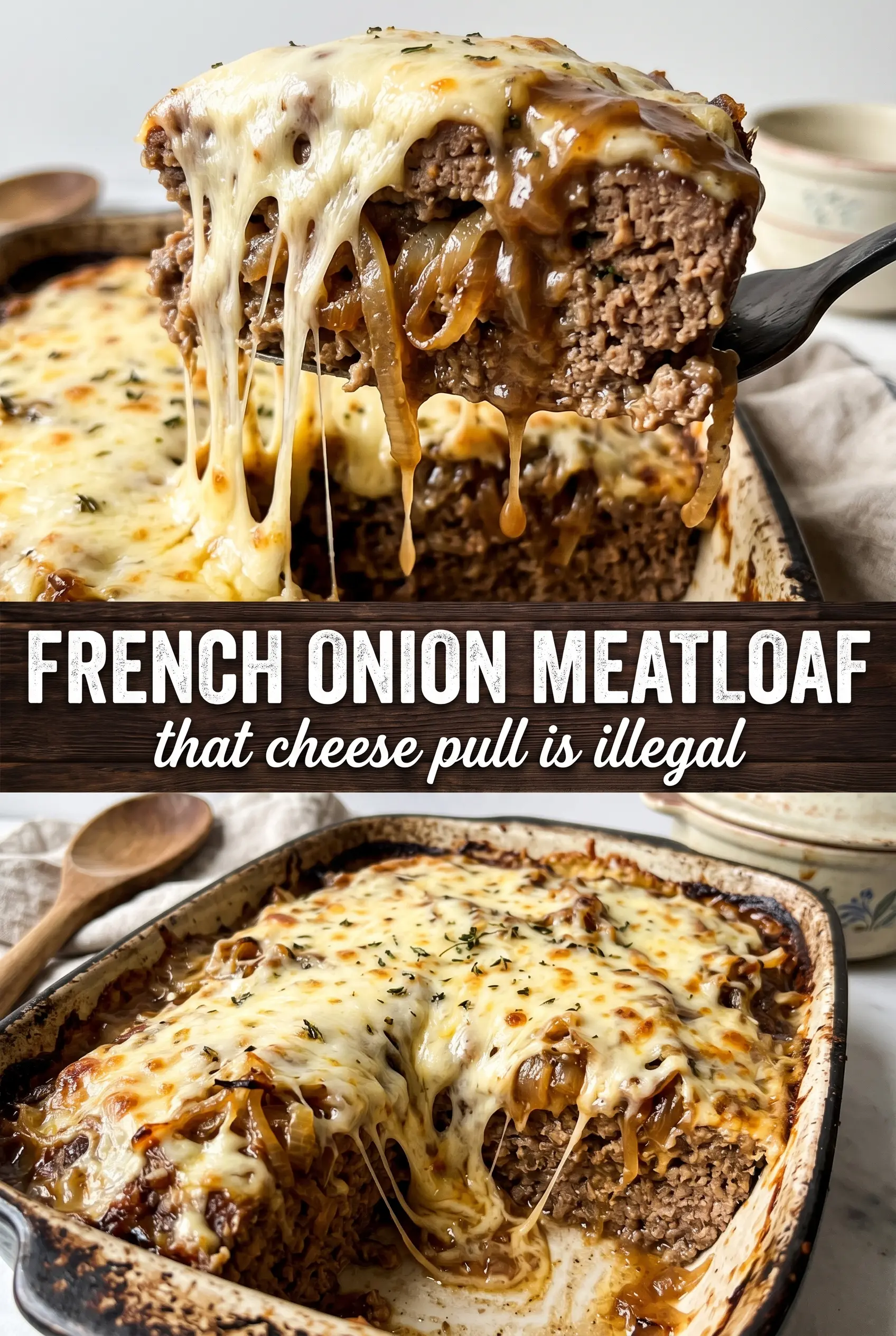
French Onion Meatloaf
Ingredients
Equipment
Method
- In a Dutch oven, caramelize the thinly sliced onions in butter over medium heat for 25 min, stirring often until deeply golden and reduced. Visual cue: the onions should look jammy and translucent with dark golden edges.
- Preheat the oven to 350°F and grease a 9x5 loaf pan. Visual cue: oven reaches temperature before mixing.
- In a mixing bowl, combine ground beef, breadcrumbs, eggs, milk, French onion soup mix, Worcestershire sauce, salt, and pepper until just evenly combined. Visual cue: the mixture should look cohesive with no dry breadcrumb pockets.
- Press the meat mixture firmly into the loaf pan, smoothing the top. Visual cue: the loaf should fill the pan evenly for consistent baking.
- Bake at 350°F for 50 minutes, until the loaf is set and browning at the edges. Visual cue: juices should be bubbling lightly around the pan edges.
- Top the hot meatloaf with the caramelized onions and lay Swiss cheese slices over the surface. Visual cue: cheese should fully cover the onions in a single layer.
- Return to the oven and bake for 15–20 minutes more at 350°F until the cheese is melted and bubbly and the internal temperature reaches 160°F. Visual cue: cheese will blister and brown in spots; meatloaf center should read 160°F.
- Rest the meatloaf for 10 minutes before slicing. Visual cue: the loaf should hold its shape and release less steam when cut.
- Garnish with fresh thyme and serve. Visual cue: scattered thyme leaves add a fresh green finish on top.