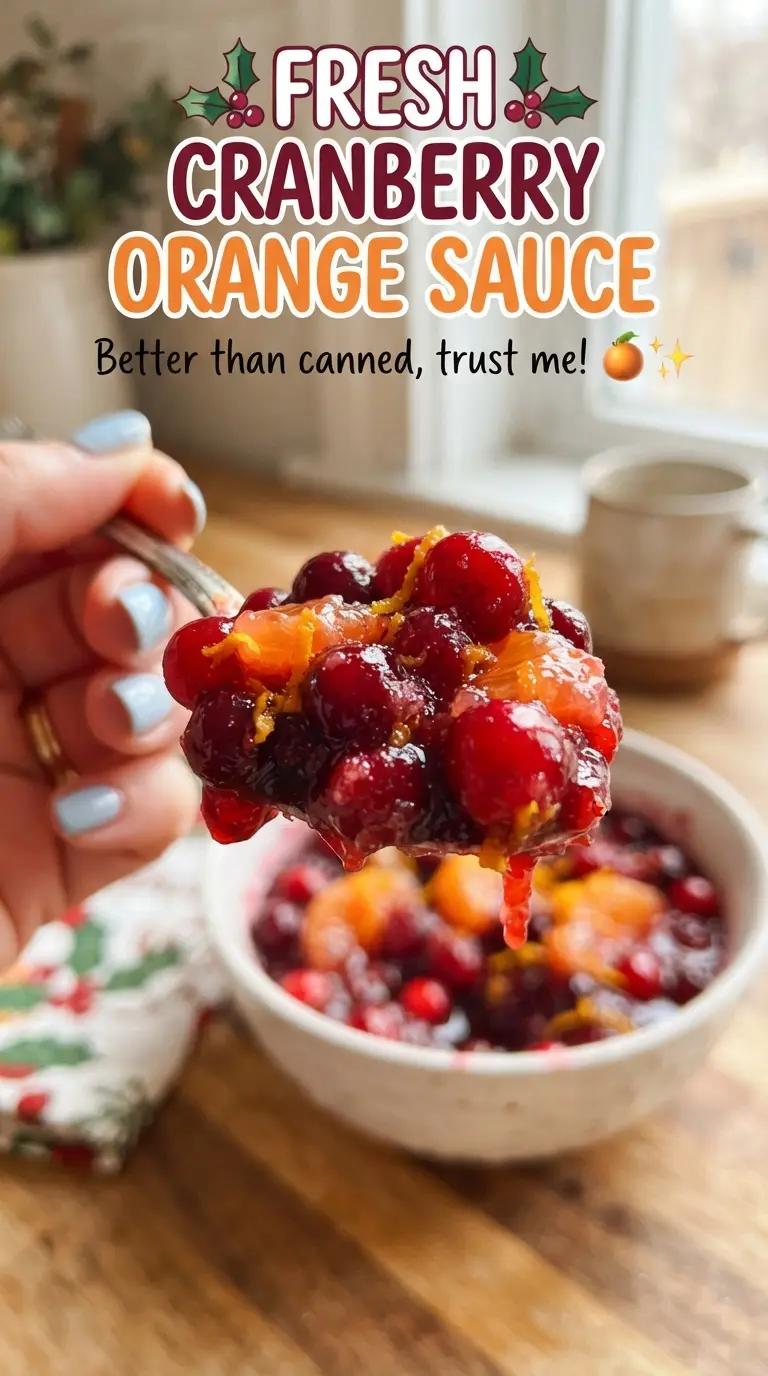
Cranberry orange sauce lands on the table bright, glossy, and tart enough to wake up everything рядом with it. The cranberries cook down into a spoonable jammy base, while the fresh orange juice keeps the flavor lively instead of heavy. Folding in the orange segments at the end gives you little bursts of juicy sweetness that make every bite taste fresh, not flat.
The trick is starting with orange juice and sugar together so the cranberries hit a hot, lightly sweetened bath right away. That helps them burst evenly and keeps the sauce from tasting sharp or raw. The zest goes in off the heat so the orange stays fragrant, and the segments go in after the sauce cools a bit so they keep their shape instead of dissolving into the pot.
If you’ve only had cranberry sauce from a can, this version is the one that changes your mind. It’s the kind of side dish that takes ten minutes of real work and tastes like you planned ahead.
The cranberries broke down into a perfect spoonable sauce, and the orange segments held their shape even after chilling overnight. It tasted bright instead of overly sweet, which is exactly what I wanted.
Fresh Cranberry Orange Sauce is the bright, tangy side that wakes up the whole plate.
The Little Trick That Keeps Cranberry Sauce Bright Instead of Muddy
Cranberry sauce can turn dull fast if it cooks too long or gets stirred like a stew. The berries only need enough heat to burst and thicken the juices around them; after that, more cooking just mutes the color and dulls the orange. Pulling it off the heat while a few berries are still holding shape gives you a sauce with a better texture and a fresher look.
The other common mistake is folding in the orange too early. Segments added at the start lose their clean shape and their juice gets lost in the pot. Adding them after the sauce cools slightly keeps the pieces distinct, so the finished dish tastes layered instead of one-note.
What the Orange Is Doing Here, and Why It’s Worth the Extra Step
- Fresh cranberries — They’re nonnegotiable for that sharp, clean cranberry flavor and the natural pectin that thickens the sauce as it cooks. Frozen cranberries work too; use them straight from frozen and add a minute or two to the simmer.
- Fresh orange juice — Bottled juice tastes flatter and sweeter, and that shows up immediately in a simple sauce like this. Fresh juice gives you acidity and aroma at the same time, which keeps the cranberry flavor lively.
- Orange zest — This is where the bold orange aroma comes from. Add it after cooking so the oils stay bright instead of fading out on the stove.
- Orange segments — They’re the texture change that makes this feel special. Peel them cleanly and segment them over a bowl so you can catch the juice; stir them in gently once the sauce has cooled a bit.
- Sugar — It softens the sharp edge of the cranberries, but it doesn’t make the sauce taste sugary if you keep the ratio balanced. If you like a tarter sauce, reduce it by a couple tablespoons, not more.
Cooking the Cranberries Without Turning Them to Jam
Start with the syrupy base
Bring the orange juice and sugar to a full boil before the cranberries go in. That quick start helps the sugar dissolve completely and gives the berries an even surface to cook in, which means fewer stubborn berries and more consistent thickening. If the sugar isn’t dissolved first, the sauce can taste grainy and the fruit breaks down unevenly.
Let the berries burst on their own
Once the cranberries and salt go in, keep the simmer steady but not aggressive. You want most of the berries to pop open and release their juices, but not so hard that the pot spits or the fruit turns into an overworked purée. Ten minutes is usually enough, though the sauce should look glossy and slightly loose in the pan because it thickens as it cools.
Finish with zest and segments
Take the pan off the heat before adding the orange zest. Stir it in while the sauce is still warm so the oils bloom, but don’t keep it over direct heat or the citrus aroma fades. Let the sauce cool a few minutes before folding in the orange segments so they stay plump and intact instead of turning soft and stringy.
How to Adjust It for Different Tables and Different Tastes
Make it less sweet
Cut the sugar back by 2 to 3 tablespoons if you like a sharper sauce. Don’t reduce it too far or the cranberries can taste harsh instead of bright, especially once the sauce chills.
Make it ahead for a holiday meal
This sauce gets even better after a night in the fridge because the flavors settle and the texture tightens up. Cook it a day or two ahead, chill it, then bring it out cold or let it sit at room temperature for about 20 minutes before serving.
Make it dairy-free and gluten-free by default
As written, it already fits both dairy-free and gluten-free eating. That’s one reason it’s such an easy side dish to bring to a mixed table without extra adjustments or a second version.
Swap in a different citrus note
If oranges are out of season or you want a sharper edge, use tangerine or mandarin juice with the zest from one orange. The sauce will be a little softer and sweeter, but it still keeps that bright, jewel-toned finish.
Storage and Reheating
- Refrigerator: Store covered for up to 1 week. It will thicken as it chills, so it should look looser in the pan than you want it to look on the plate.
- Freezer: It freezes well for up to 2 months. Use a freezer-safe container and leave a little room at the top for expansion, then thaw overnight in the refrigerator.
- Reheating: Warm it gently over low heat just until loosened, or serve it cold. The common mistake is boiling it again, which breaks down the orange segments and dulls the fresh citrus flavor.
Answers to the Questions Worth Asking
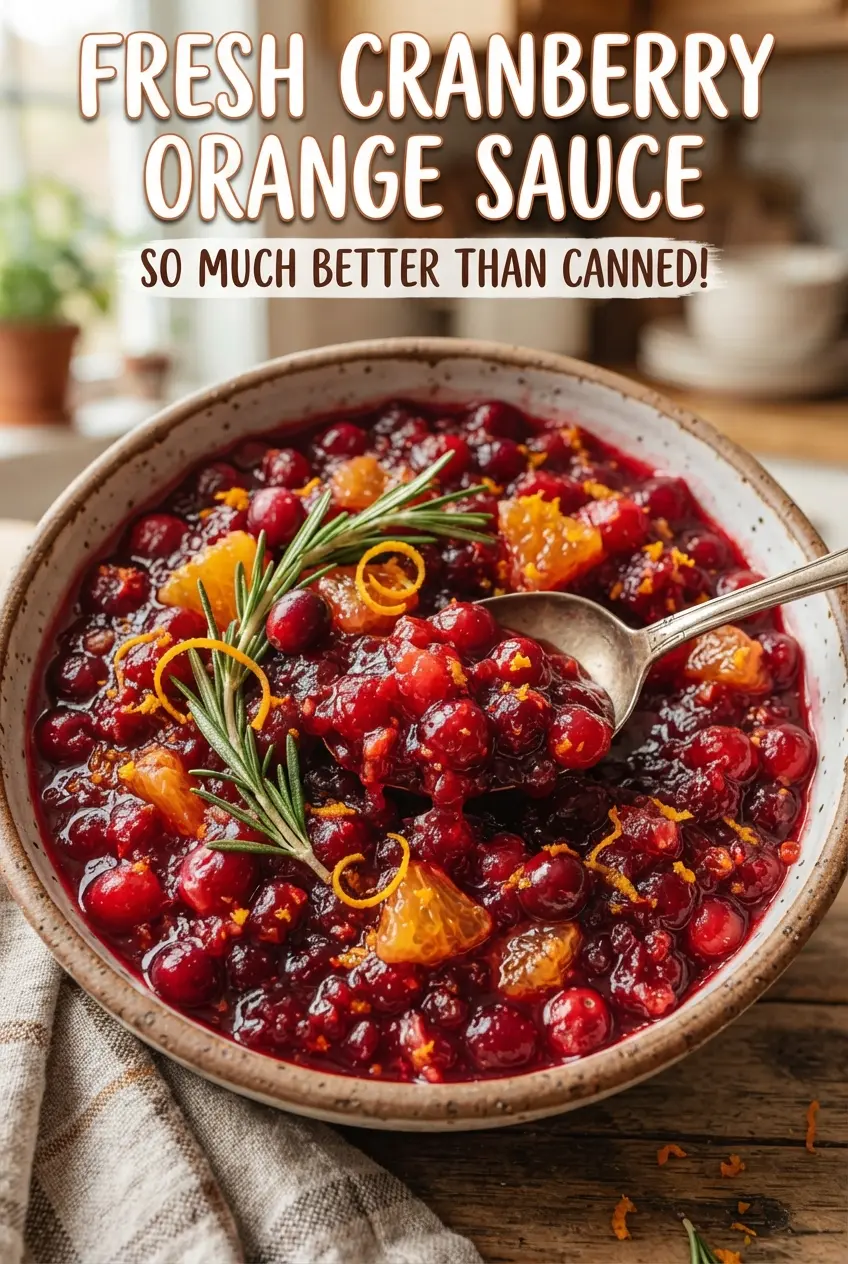
Fresh Cranberry Orange Sauce
Ingredients
Equipment
Method
- Bring sugar and fresh orange juice to a boil in a saucepan over medium-high heat, stirring until the sugar dissolves. You should see a rolling boil across the surface.
- Add fresh cranberries and salt to the boiling liquid, then reduce to a gentle simmer. Simmer for 10 minutes, stirring occasionally, until most berries burst and the mixture thickens slightly.
- Remove the saucepan from the heat and stir in orange zest. The sauce will look more fragrant and bright after the zest is mixed in.
- Cool slightly, then gently fold in the peeled and segmented orange. Keep the segments intact so they don’t break apart.
- Chill until serving. The sauce should thicken as it cools for a spoonable texture.