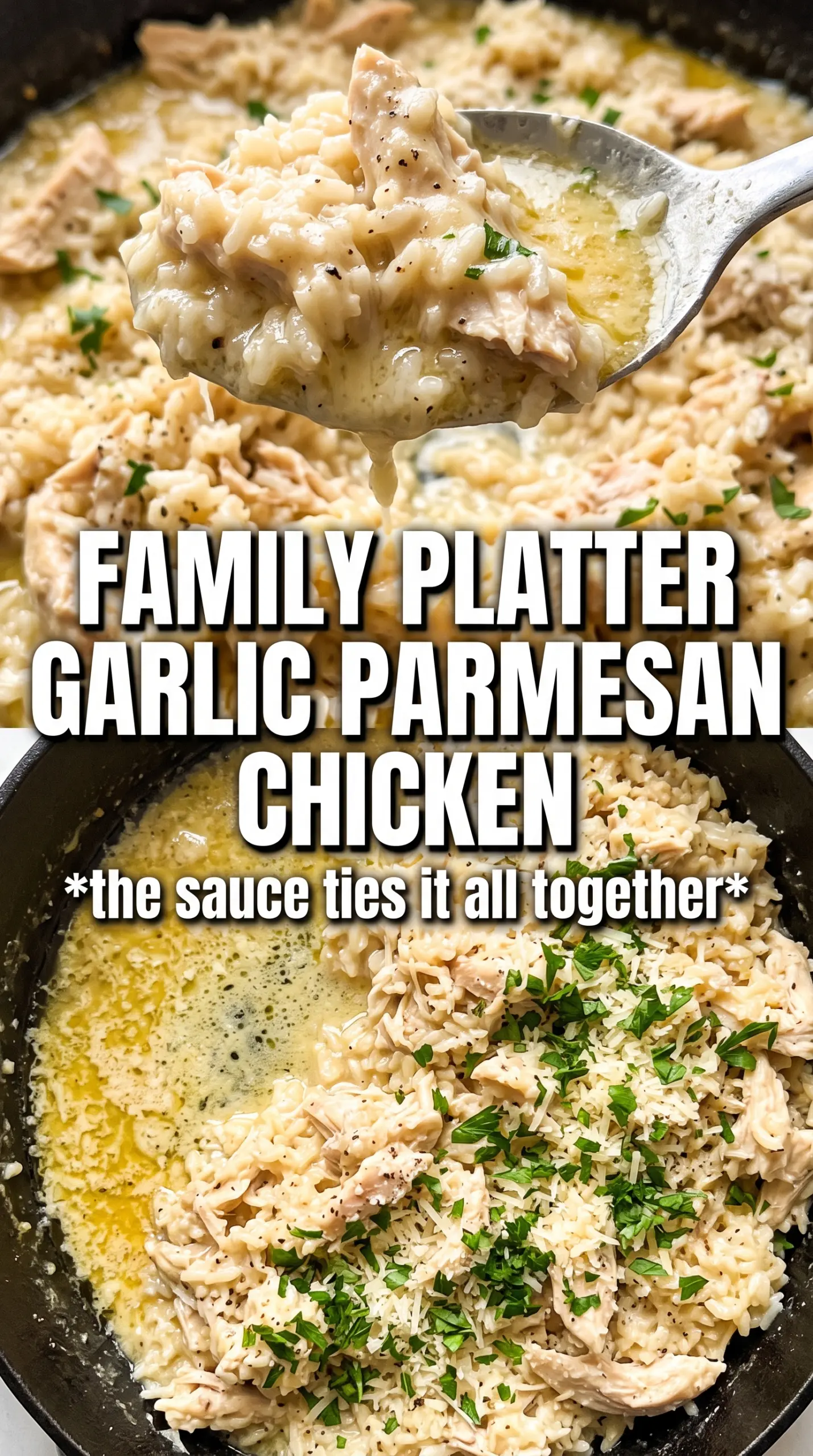
Golden garlic butter chicken thighs over creamy Parmesan rice hit that sweet spot between comfort food and a meal that still feels intentional. The chicken brings a deep sear and a little edge from the paprika, while the rice soaks up every bit of buttery garlic and pan drippings until it turns rich and spoonable. It’s the kind of skillet dinner that doesn’t need much on the side because everything good is already in the pan.
What makes this version work is the order. The chicken sears first, leaving behind browned bits that become the backbone of the rice, and the rice gets toasted in the butter before any liquid goes in, which gives it a cleaner flavor and keeps the grains from turning mushy. The Parmesan and cream go in at the end, after the rice has fully cooked, so the sauce stays smooth instead of going grainy or broken.
Below, I’ve included the small timing details that matter most, plus a few swaps for when you need to work with what’s in the fridge. If you’ve ever had chicken and rice turn bland or soggy, this method fixes both problems.
The rice came out creamy without getting sticky, and the garlic butter flavor from the chicken soaked right into it. I followed the timing exactly and the thighs were juicy with a perfect golden crust.
Save this garlic butter chicken with Parmesan rice for a skillet dinner with creamy rice and golden chicken in one pan.
The Trick to Keeping the Rice Creamy Instead of Gummy
The biggest mistake with chicken and rice skillet meals is crowding too many wet ingredients in too early. Rice needs time to absorb liquid evenly, and Parmesan needs to be added after the grains are tender, not while they’re still hard. If you stir cheese into undercooked rice, you end up with a pasty center and a sauce that clings in the wrong way.
Searing the chicken first matters for another reason: it seasons the whole pan. Those browned bits left behind in the skillet dissolve into the broth and give the rice a deeper, more savory base than plain stock alone. Keep the heat low once the lid goes on. A hard simmer will cook off liquid too fast and leave the bottom scorched before the rice softens.
What Each Ingredient Is Actually Doing in This Dish
- Chicken thighs — Thighs stay juicier than breasts and tolerate a hard sear better, which matters here because they finish in the rice. If you use chicken breasts, cut the cook time slightly and pull them as soon as they hit 165°F so they don’t dry out.
- Long-grain white rice — This gives you separate grains that still turn creamy once the cream and Parmesan go in. Short-grain rice gets too sticky for this dish, and brown rice needs more liquid and a much longer cook.
- Chicken broth — Broth carries the savory flavor through the rice and picks up the browned bits from the pan. Water will work in a pinch, but the dish loses a lot of depth.
- Parmesan cheese — Freshly grated Parmesan melts into the sauce more smoothly than the shelf-stable kind. Pre-shredded cheese often contains anti-caking starches that can make the rice look a little sandy.
- Heavy cream — This is what turns the rice from seasoned to silky. Half-and-half can work, but the sauce will be lighter and less plush.
- Garlic and butter — Don’t rush this part. The garlic needs just a minute in the butter so it softens and perfumes the pan without turning bitter, and the butter carries that flavor into every bite.
Building the Skillet So Nothing Cooks Too Fast or Too Slow
Season and sear the chicken first
Pat the chicken dry, season it well, and sear it in olive oil over medium-high heat until the outside is deeply golden and the center reaches 165°F. You’re looking for a crust that releases cleanly from the pan; if it sticks, give it another minute before turning. Pull the chicken out and keep the skillet on the stove, because the browned residue is part of the flavor base now.
Toast the rice in the garlic butter
Melt the butter, add the garlic, and cook it just until fragrant. Stir in the rice and let it toast for about two minutes so the grains get coated and slightly glossy. That quick toast helps the rice hold its shape instead of collapsing into a soft, one-note mush.
Simmer with the lid on
Pour in the broth, bring it to a boil, then drop the heat low and cover the skillet. Once it’s covered, resist the urge to keep lifting the lid; every peek sends steam out and throws off the liquid ratio. After about 18 minutes, the rice should be tender and the liquid mostly absorbed, with a little steam still trapped under the lid.
Finish with cream, Parmesan, and the chicken
Stir in the cream, Parmesan, and thyme after the rice is cooked through. If you add the cheese while the pan is boiling hard, it can turn grainy or stringy, so keep the heat low and let the residual warmth do the work. Nestle the chicken back into the rice, spoon some of the sauce over the top, and let it sit for a minute so everything comes together before serving.
How to Adapt This When You Need a Different Chicken Dinner
Boneless Chicken Breasts Instead of Thighs
Chicken breasts work, but they dry out faster than thighs, so watch the sear closely and don’t overcook them in the pan. Pull them as soon as they reach 165°F and return them only at the end so they stay tender.
Dairy-Free Version
Swap the butter for more olive oil and use unsweetened coconut cream or a plain dairy-free cooking cream in place of the heavy cream. You’ll lose some of the Parmesan richness, so add a little extra salt and a spoonful of nutritional yeast if you want more savory depth.
Gluten-Free Without Any Special Adjustments
This recipe is naturally gluten-free as written, as long as your broth is certified gluten-free. That’s the only label worth checking here, since everything else in the pan is already safe.
Stovetop Reheat for Leftovers
Store leftovers in a covered container in the refrigerator for up to 3 days. Reheat gently on the stovetop with a splash of broth or cream so the rice loosens again; the common mistake is blasting it in the microwave until the rice tightens and the chicken turns rubbery.
Answers to the Questions Worth Asking
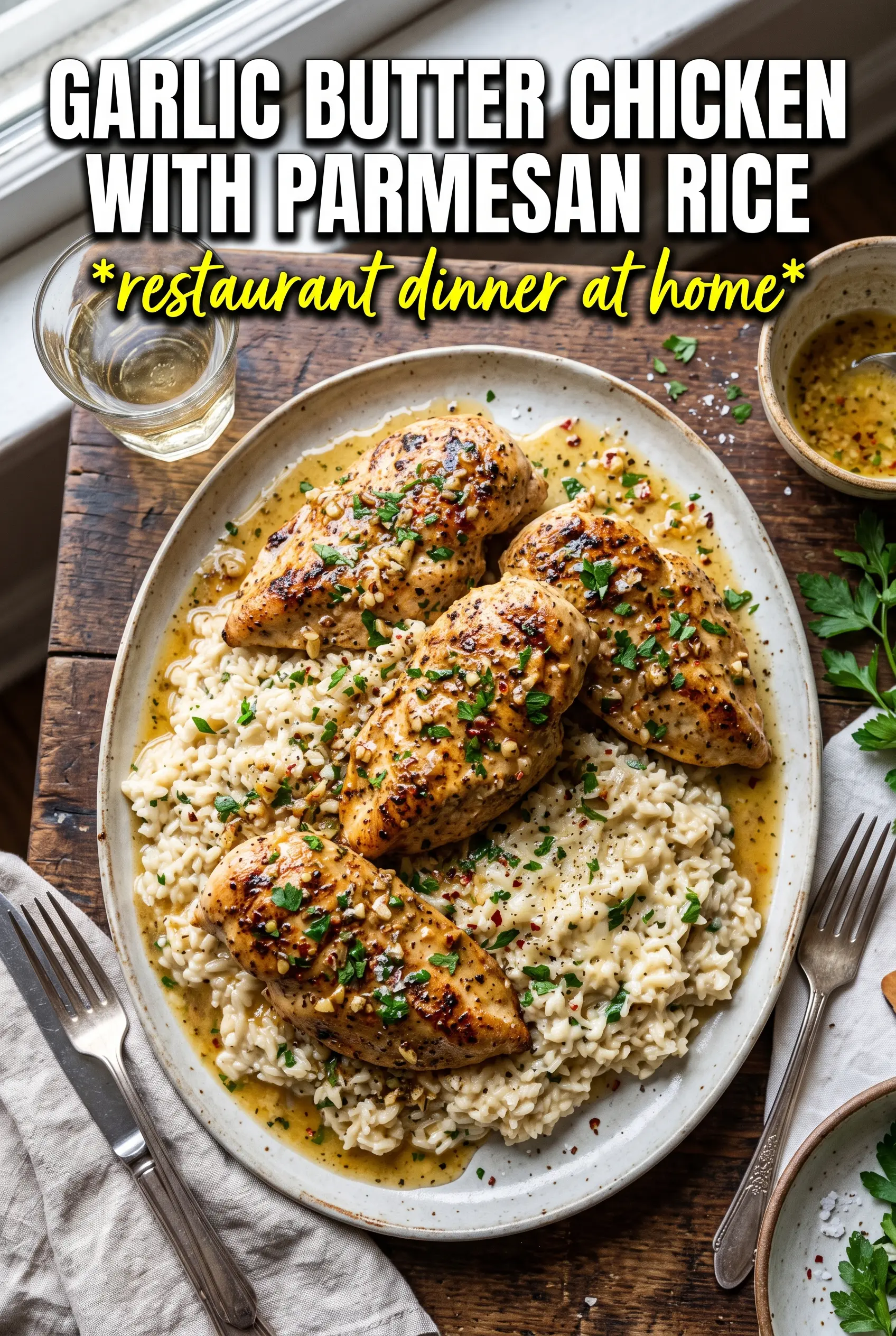
Garlic Butter Chicken with Parmesan Rice
Ingredients
Equipment
Method
- Season the boneless skinless chicken thighs with salt, pepper, garlic powder, and smoked paprika to taste. Pat to help the seasoning adhere.
- Heat olive oil in a large skillet over medium-high heat, then sear chicken for 5-6 minutes per side until golden. Cook through to 165°F, then remove to a plate.
- Melt butter in the same skillet over the heat level you were using, then cook minced garlic for 1 minute. Stir just until fragrant, watching it for light golden color.
- Add the long-grain white rice to the skillet and toast for 2 minutes. Keep stirring so the grains look slightly glossy and lightly toasted.
- Pour in chicken broth and bring it to a boil. Scrape up any browned bits, then cover and simmer over low heat for 18 minutes until the rice is tender.
- Stir in grated Parmesan cheese, heavy cream, and dried thyme until the rice turns creamy and saucy. Keep stirring until the cheese melts fully and the mixture clings to the rice.
- Return the seared chicken to the pan, nestling it into the Parmesan rice. Let it warm in the hot rice just until the top looks glossy.
- Garnish with fresh parsley and serve. Finish with a quick spoon-through so each serving shows creamy rice around the chicken.