Silky garlic Parmesan sauce clings to every strand of pasta here, and the sliced chicken on top keeps it from feeling like just another cream-sauce dinner. The first bite should taste rich but not heavy, with enough garlic to stand up to the Parmesan and just a little heat at the back from red pepper flakes. It’s the kind of pasta that comes together fast, but still looks like you paid attention.
The trick is building the sauce in the same skillet you used for the chicken. Those browned bits left behind give the cream and broth a deeper savory base, and the pasta water helps the sauce loosen without turning thin or greasy. Freshly grated Parmesan matters here too; pre-shredded cheese often melts into a grainy sauce instead of that smooth finish you want.
Below, I’ve added the small details that keep the sauce from breaking, plus a few smart swaps if you need to stretch the recipe or adjust it for what’s already in your kitchen.
The sauce thickened up beautifully and didn’t turn gritty at all. I used the pasta water at the end like you said, and the whole skillet clung to the noodles instead of pooling at the bottom.
Save this garlic Parmesan chicken pasta for the nights when you want creamy sauce, golden chicken, and one pan’s worth of flavor.
The Sauce Breaks When You Rush the Heat
The most common mistake in a cream pasta like this is cranking the heat once the dairy goes in. That looks harmless at first, but high heat can make the cream separate and turn the Parmesan grainy instead of smooth. Keep the sauce at a gentle simmer, not a boil, and let the cheese melt in off the hottest part of the flame if your pan runs aggressively.
Another thing that matters here is the pasta water. It’s not just for thinning; it gives the sauce a little starch so it sticks to the noodles instead of sliding off. Add it a splash at a time. Once the sauce looks glossy and coats the back of a spoon, stop.
What Each Ingredient Is Actually Doing in This Dish
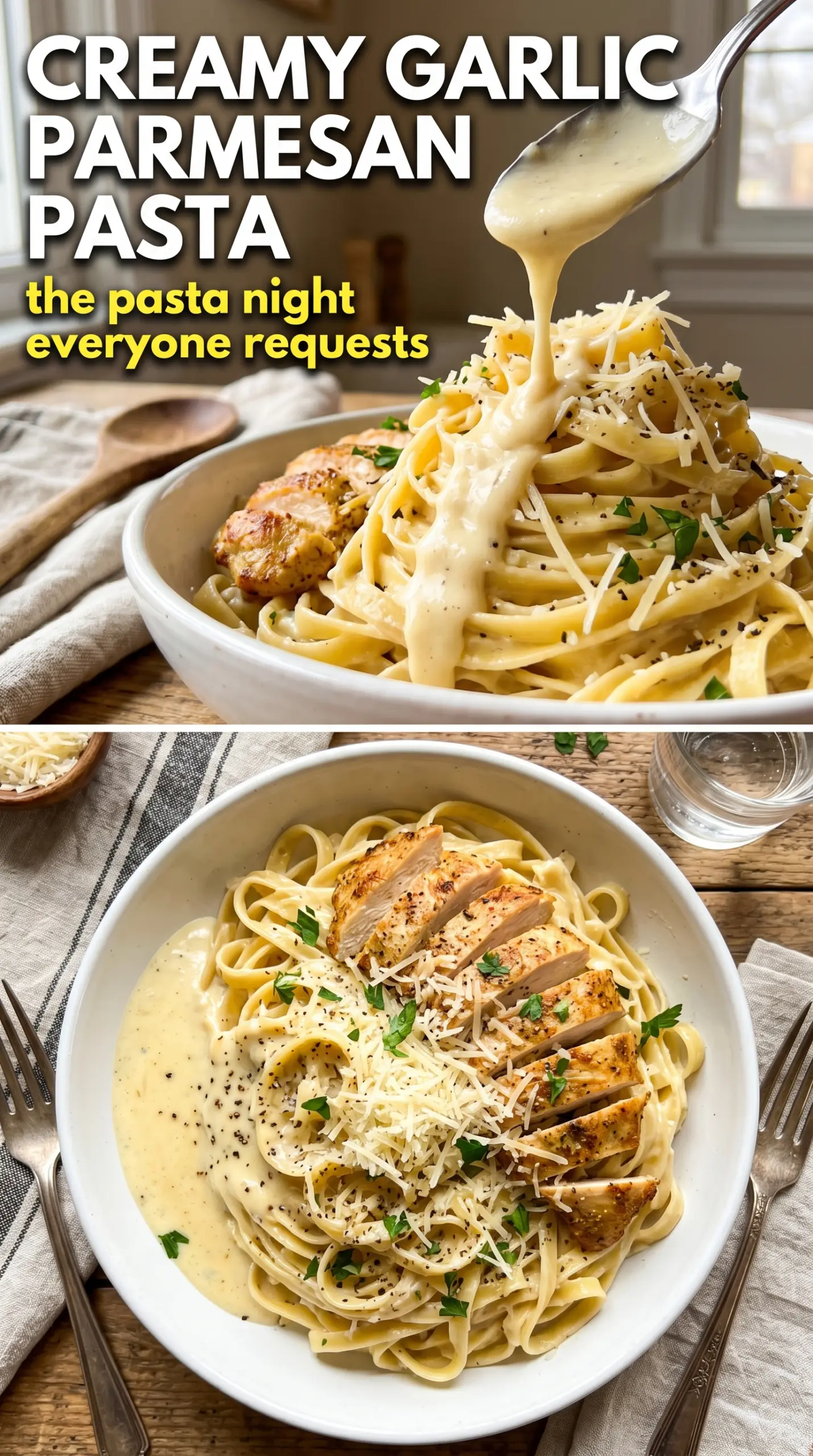
- Chicken breasts — Sliced thin after resting, they stay juicy and give the pasta enough protein to carry the meal. You can use chicken thighs if you want a little more richness; they’re more forgiving and stay tender even if you cook them a minute too long.
- Fresh garlic — This is the backbone of the sauce, so minced fresh garlic matters more than a jar here. Let it cook for just a minute in butter until fragrant; if it browns, it turns bitter and can take over the whole pan.
- Heavy cream — This gives the sauce its body and helps it stay smooth once the cheese goes in. Half-and-half can work in a pinch, but the sauce will be thinner and needs a little more pasta water reduction to get back to a clingy texture.
- Freshly grated Parmesan — This is the ingredient that makes the sauce taste finished. Pre-grated cheese has anti-caking agents that can leave the sauce sandy, so grate it yourself if you can.
- Chicken broth — It stretches the cream without dulling the flavor, and it helps capture the browned bits from the skillet. Use low-sodium broth if possible so the cheese and seasoning can set the salt level instead of fighting it.
- Spaghetti or fettuccine — Both hold the sauce well, but fettuccine catches a little more of the cream. Cook it just to al dente, because it will soften a bit more when it hits the warm sauce.
Building the Chicken and Sauce in the Right Order
Searing the Chicken First
Season the chicken well before it goes into the pan, because the pasta later won’t do much to rescue bland meat. Cook it over medium-high heat until you get a deep golden crust and the center reaches 165°F. If the chicken sticks at first, leave it alone; it usually releases once the crust forms. Pull it out to rest before slicing so the juices stay in the meat, not on the cutting board.
Using the Same Skillet for the Sauce
Don’t wipe out the pan. The browned bits left behind after the chicken cooks are the flavor that makes this sauce taste like more than cream and cheese. Add the butter and garlic, and cook just until fragrant, then pour in the cream and broth. Keep the heat moderate so the dairy warms through without scalding.
Finishing the Pasta Without a Heavy Coat
Stir in the Parmesan after the sauce has started to thicken a bit, then loosen it with pasta water only if it needs it. The sauce should look glossy and cling to the pasta in a thin, even layer, not sit in a puddle under the bowl. Toss the noodles before adding the chicken back on top so every strand gets coated instead of only the bottom layer.
Make It with Chicken Thighs
Thighs add a little more richness and stay tender even if they cook longer than planned. The flavor is deeper, and the sauce still works the same way, but you’ll want to slice them after a longer rest so they don’t lose their juices.
Gluten-Free Pasta Version
Use a sturdy gluten-free spaghetti or fettuccine and cook it just shy of done. Gluten-free pasta can soften fast once it hits hot sauce, so undercooking it by a minute keeps the final texture from turning mushy.
Lighter Cream Swap
If you swap in half-and-half, the sauce will be less rich and a little more delicate. Let it reduce a bit longer before adding the cheese, and keep the heat low so it doesn’t split while it thickens.
Extra Vegetables Without Diluting the Sauce
Spinach, peas, or sliced mushrooms work well, but cook off any moisture before the pasta goes in. Wet vegetables can thin the sauce and wash out the Parmesan flavor, so add them only after they’ve released their liquid and started to caramelize or wilt.
Storage and Reheating
- Refrigerator: Store leftovers in an airtight container for up to 3 days. The sauce will thicken as it chills, and the pasta will soak up some of the cream.
- Freezer: I don’t recommend freezing this one. Cream sauces and pasta both change texture after thawing, and the sauce can separate.
- Reheating: Warm gently on the stove or in the microwave with a splash of broth, milk, or water. High heat is the mistake to avoid here, since it dries out the chicken and makes the sauce break.
Questions I Get Asked About This Recipe
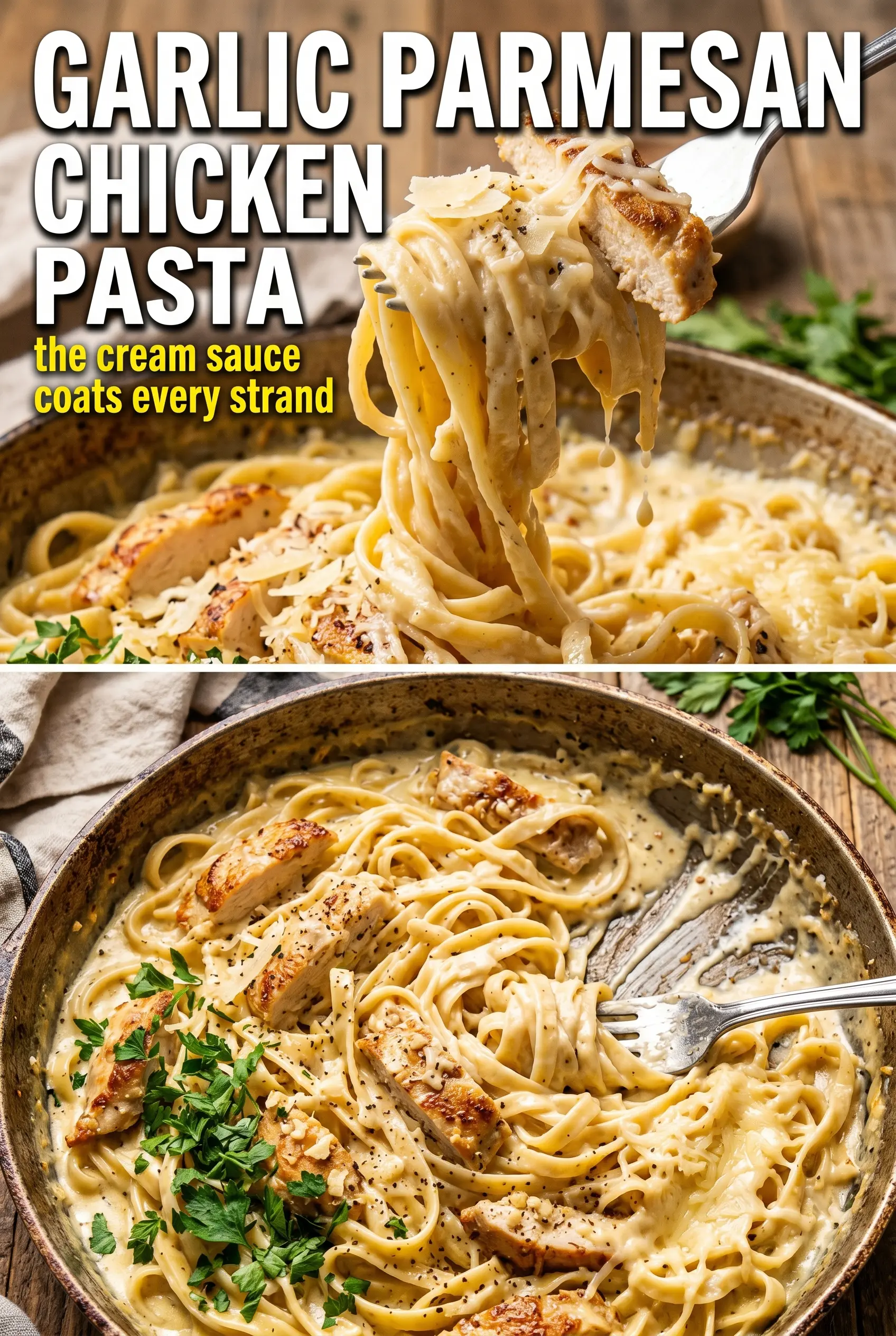
Garlic Parmesan Chicken Pasta
Ingredients
Equipment
Method
- Season the chicken breasts with salt, pepper, garlic powder, and Italian seasoning. Heat olive oil in a large skillet over medium-high heat and cook chicken for 5-6 minutes per side until golden and cooked through to 165°F.
- Transfer chicken to a plate, rest briefly, then slice thin for topping.
- In the same skillet, cook minced garlic in butter over medium heat for 1 minute until fragrant. Pour in heavy cream and chicken broth.
- Simmer for 4-5 minutes until slightly thickened. Stir until smooth after adding Parmesan cheese, Italian seasoning, and red pepper flakes.
- Add reserved pasta water a splash at a time until the sauce reaches a silky, clingy consistency.
- Toss the cooked spaghetti or fettuccine in the garlic Parmesan sauce until every strand is coated. Divide pasta among plates.
- Top with the sliced chicken. Garnish with fresh basil and extra Parmesan.