Garlic parmesan meatloaf lands on the table with a deep savory edge, a browned cheese crust, and slices that hold together without turning dense. The garlic butter on top melts into the parmesan as it bakes, so every bite gets that salty, rich finish without losing the old-school comfort of a good meatloaf.
The trick is keeping the loaf free-form on a parchment-lined sheet instead of packing it into a pan. That gives the edges room to brown, which matters here because the parmesan needs heat and airflow to turn crisp instead of just wet and pale. I also use just enough milk and breadcrumbs to keep the interior tender, not fluffy or crumbly.
Below, I’ve broken down the one step that keeps the texture juicy, what each ingredient is doing, and a few swaps that still keep the loaf sturdy. If meatloaf has ever come out bland, greasy, or gray on top, this version fixes all three.
The parmesan crust browned beautifully and the garlic butter kept the top from drying out. I baked it on a sheet like you said and the slices held together perfectly.
Save this garlic parmesan meatloaf for a dinner with a crisp parmesan top and juicy, garlicky slices.
The Reason Parmesan Crust Stays Crisp Instead of Turning Soggy
The problem with a lot of meatloaves is that they steam in a loaf pan and never really brown on top. This version skips the pan and bakes as a free-form loaf, which lets the hot air do its job. The parmesan on the surface has room to toast, and the garlic butter helps it brown without drying out the meat underneath.
Two things keep the texture on track: enough binder to hold the loaf together, and not so much that it turns bready. Breadcrumbs and eggs give the structure, but the beef still stays front and center. If your meatloaf has ever come out heavy, it was usually because it was packed too tightly or mixed too long.
What Each Ingredient Is Actually Doing in This Loaf
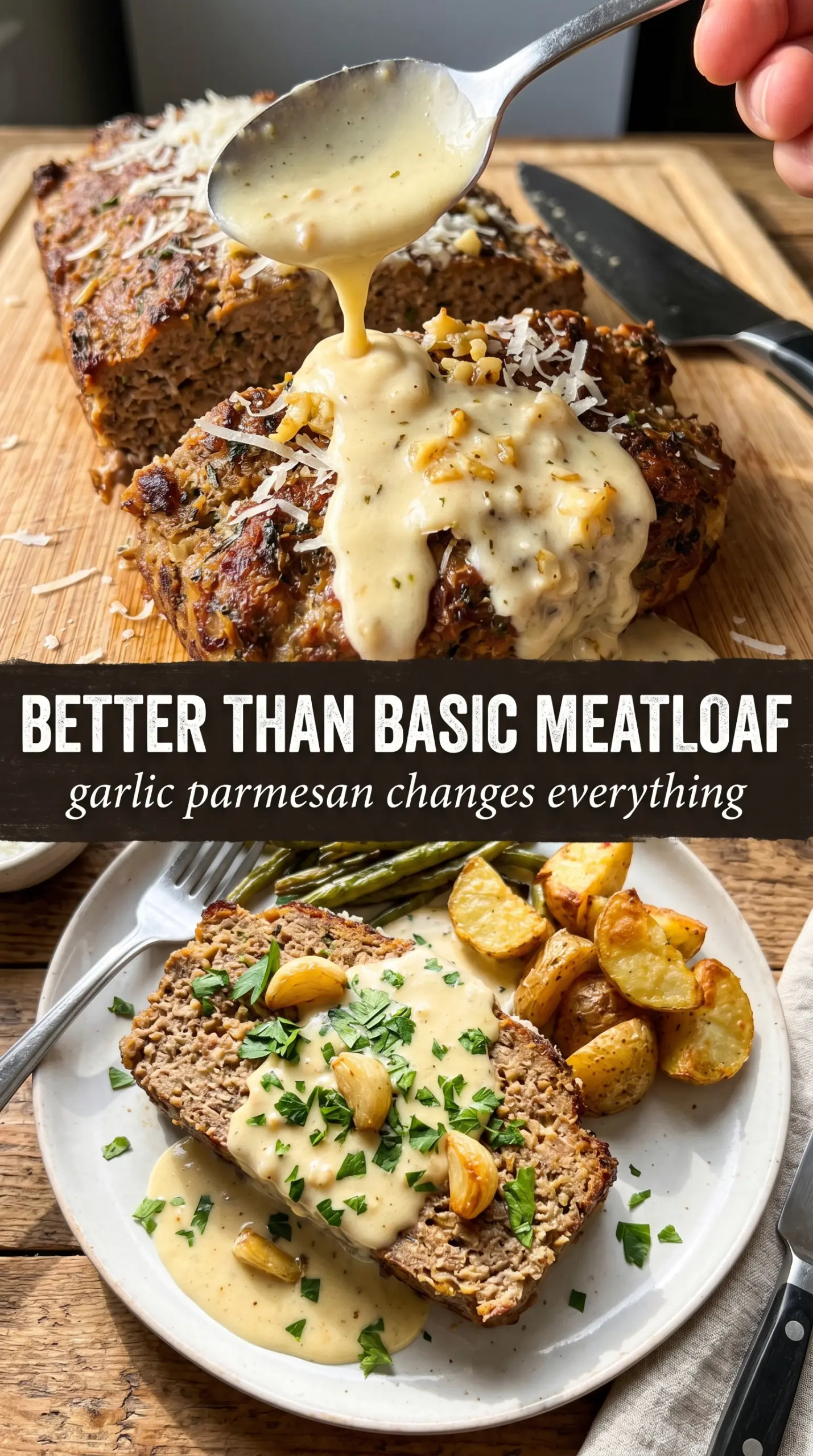
- Ground beef — An 80/20 blend gives you enough fat for a juicy slice and enough structure to hold the loaf together. Leaner beef can work, but the finished meatloaf will be drier and won’t taste as rich.
- Parmesan — This does double duty: it seasons the meat and forms that salty crust on top. Freshly grated parmesan melts and browns better than the shelf-stable finely shredded kind, which can stay dusty instead of toasty.
- Breadcrumbs, milk, and eggs — This trio keeps the loaf tender and sliceable. The milk hydrates the crumbs before baking, which helps the texture stay soft instead of tight. If you use dry crumbs straight from the box without the milk, the loaf can bake up coarse.
- Garlic and parsley — Fresh garlic gives the meatloaf its backbone, and parsley keeps it from tasting heavy. Mince the garlic finely so it disappears into the loaf and doesn’t leave sharp little bites.
- Worcestershire sauce — This adds depth without making the meat taste saucy. It’s worth keeping in the mix because it gives the beef a longer, rounder finish.
- Garlic butter topping — This is what turns the top from plain to memorable. Brush on half before baking, then the rest partway through so the butter has time to soak in without scorching the garlic.
Building the Loaf So It Stays Juicy in the Center
Mix the Meat Gently
Combine everything in a large bowl and stop as soon as the ingredients look evenly distributed. Overmixing is the fastest way to get a tough meatloaf because the beef starts to tighten up before it even hits the oven. The mixture should hold together when you squeeze it, but it should still look loose and a little shaggy.
Shape, Don’t Pack
Form the mixture into a free-form loaf on a parchment-lined baking sheet. Don’t press it down hard or round the sides too tightly, or the center will bake up dense and the edges won’t brown as well. A loaf that’s about the same thickness from end to end cooks more evenly and slices cleaner after resting.
Bake to Temperature, Not Just Time
Start checking the internal temperature near the end of the bake time. You want 160°F in the center, and that’s more reliable than guessing by color because the parmesan crust can look done before the middle is ready. Brush with the remaining garlic butter halfway through so the top stays glossy and the garlic flavor lands right on the crust.
Let It Rest Before Slicing
Give the loaf a full 10 minutes on the counter before cutting into it. If you slice too soon, the juices run out and the center can look crumbly even when it’s cooked perfectly. A short rest lets the meat settle, which is what gives you those clean, intact slices.
How to Adapt This for a Bigger Crowd, Lower Carbs, or No Dairy
Make It Gluten-Free
Swap the breadcrumbs for a certified gluten-free breadcrumb or crushed gluten-free cracker crumbs. Keep the amount the same, then check the texture after mixing; it should still feel moist and hold together without turning paste-like.
Make It Dairy-Free
Use a dairy-free parmesan-style alternative and replace the butter with olive oil mixed with minced garlic. You’ll lose a little of the classic buttery finish, but the loaf will still brown well and keep that garlicky, savory edge.
For a More Italian-Style Loaf
Add a tablespoon of tomato paste and a pinch of red pepper flakes to the meat mixture. That pushes the flavor toward a richer Italian-American profile and gives the interior a little more color and depth without changing the structure.
Storage and Reheating
- Refrigerator: Store slices in an airtight container for up to 4 days. The parmesan crust softens a little, but the flavor stays strong.
- Freezer: This freezes well. Wrap individual slices tightly and freeze for up to 3 months, or freeze the whole cooled loaf wrapped in foil and placed in a freezer bag.
- Reheating: Warm slices covered in a 300°F oven with a spoonful of water or broth in the dish so they don’t dry out. The biggest mistake is blasting them in the microwave, which can make the edges rubbery before the center is hot.
Questions I Get Asked About This Recipe
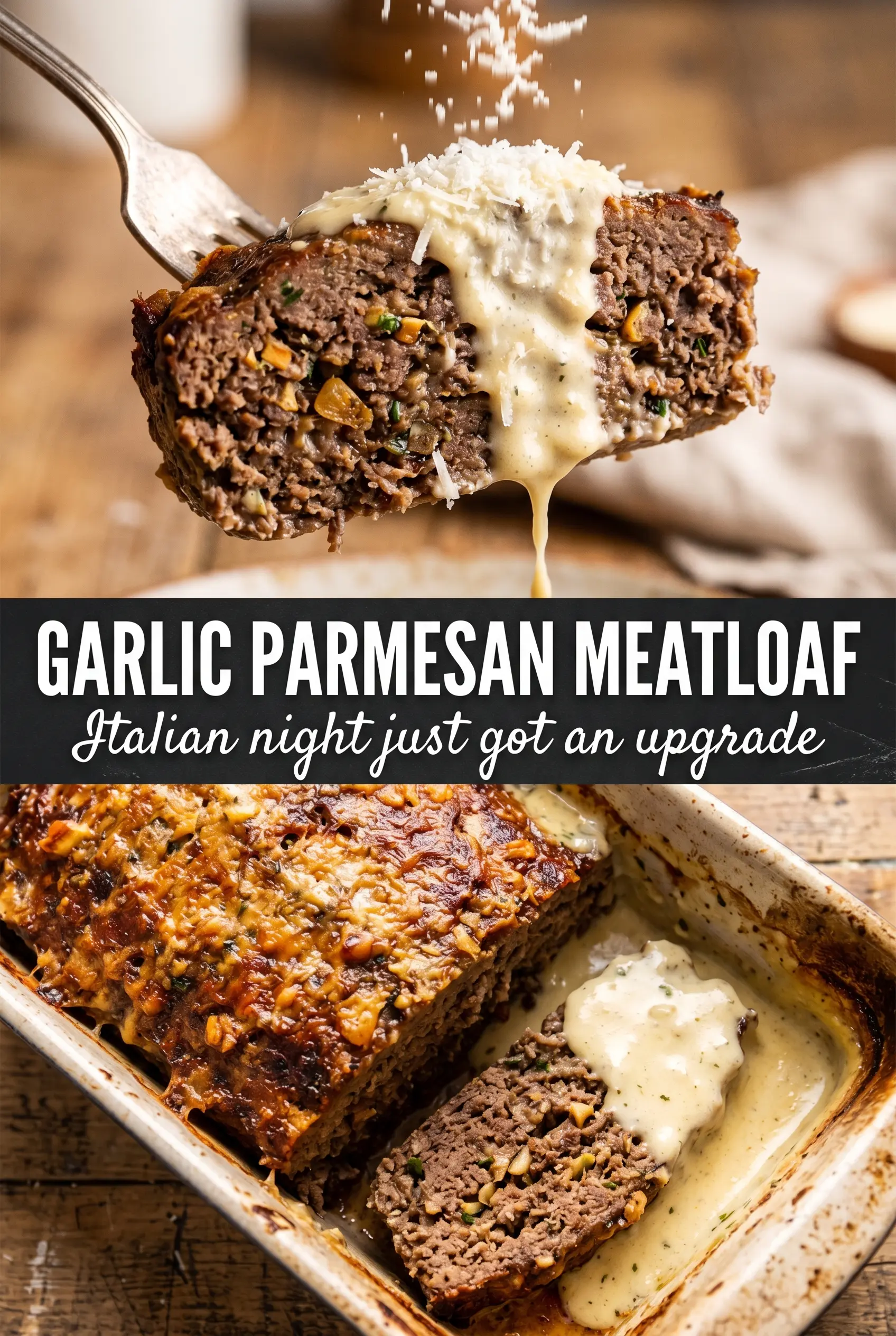
Garlic Parmesan Meatloaf
Ingredients
Equipment
Method
- Preheat the oven to 350°F and line a baking sheet with parchment (this prevents sticking and helps browning).
- In a large bowl, combine ground beef, parmesan, breadcrumbs, eggs, milk, garlic, parsley, Italian seasoning, Worcestershire, salt, and black pepper until evenly mixed.
- Shape the mixture into a free-form loaf on the prepared baking sheet, smoothing the surface so the crust bakes evenly.
- Mix the garlic butter topping (melted butter, minced garlic, parmesan, and fresh parsley) and brush half over the top of the loaf.
- Press extra parmesan into the surface so you get a thicker golden crust as it bakes.
- Bake the meatloaf for 55–65 minutes, until the internal temperature reaches 160°F, brushing with the remaining garlic butter halfway through.
- Rest the meatloaf for 10 minutes before slicing so the juices set and the slices hold together.
- Slice and garnish with fresh parsley for a bright herb finish.