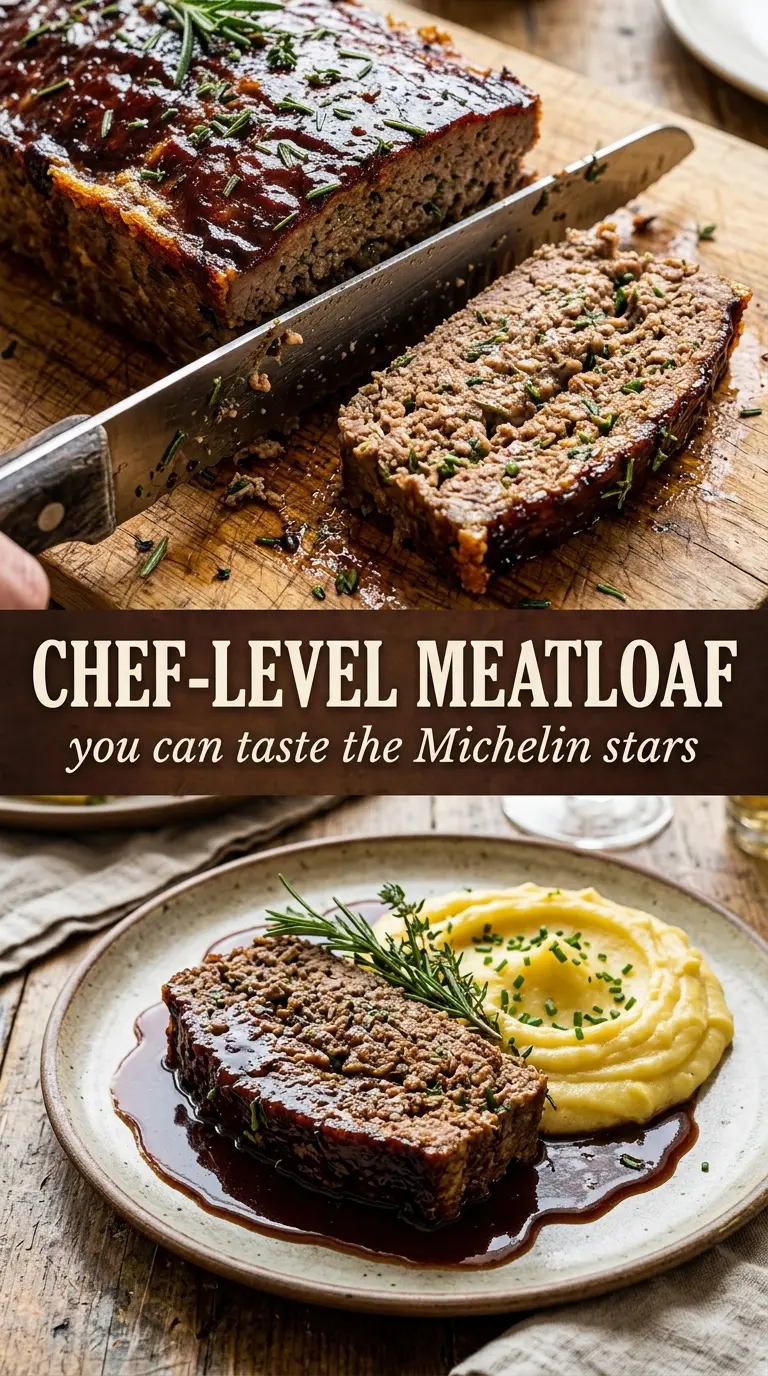
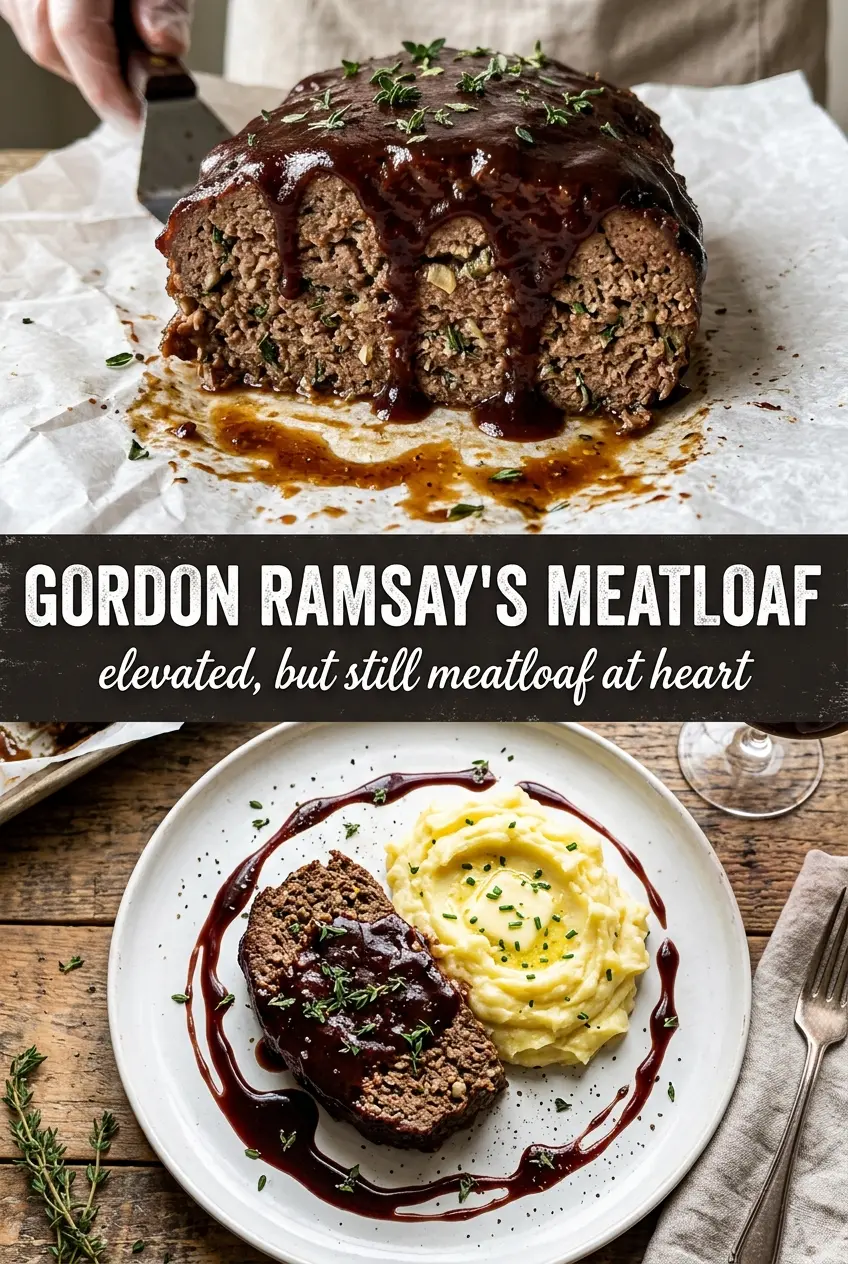
Gordon Ramsay meatloaf lands on the plate with the kind of dark, caramelized crust that makes the first slice feel like a small reveal. The inside stays juicy and tender, not dense or gummy, because the loaf is mixed just enough to hold together and then seared before it ever goes into the oven. That extra browning step gives the meatloaf a restaurant-style finish that a straight bake never quite matches.
The mix of beef and pork gives you flavor without dryness, and the sautéed onion keeps the texture soft instead of crunchy or sharp. Breadcrumbs and milk work together to keep the crumb light, while Dijon and Worcestershire deepen the meat flavor without turning the loaf into a sauce-heavy mess. The glaze is simple, but it matters: ketchup for body, balsamic for a little edge, and brown sugar for that sticky sheen.
Below, you’ll find the part that matters most if meatloaf has ever turned out dry, bland, or crumbly for you. The sear, the shaping, and the resting time all pull their weight here, and I’ve included the swaps and storage notes that actually help on a busy weeknight.
The sear made all the difference. My meatloaf had a deep browned crust, sliced cleanly, and stayed moist all the way through instead of falling apart.
Like this glossy, seared Gordon Ramsay meatloaf? Save it to Pinterest for the nights when you want a restaurant-style main with a sticky glaze and a juicy slice.
The Seared Crust Is What Keeps This Meatloaf from Tasting Flat
Most meatloaves go straight into the oven, which works fine, but it leaves a lot of flavor sitting on the table. Searing this loaf first builds a browned shell that gives the finished slices a deeper beefy taste and a better texture on the outside. It also helps the loaf hold its shape, which matters here because this recipe is meant to be free-form, not baked in a pan.
The other quiet win is the sautéed onion. Raw onion can leak moisture and leave harsh little bites in the finished loaf, but softened onion blends into the meat and disappears into the crumb. That small extra step keeps the center tender without turning it soggy.
- Free-form shaping — This lets heat circulate around the loaf so the outside browns instead of steaming. Pack it tightly enough to hold, but don’t compress it into a brick.
- Searing before roasting — The skillet builds color fast, and that color becomes flavor. If the loaf sticks at first, leave it alone for another 20 to 30 seconds; once the crust forms, it releases more easily.
- Resting after baking — The juices need time to settle back into the meat. Slice too early and they run across the board instead of staying in the loaf.
What Each Ingredient Is Actually Doing in This Meatloaf
- Ground beef — This brings the deep, familiar meatloaf flavor. An 80/20 blend works best because it has enough fat to stay juicy without turning greasy.
- Ground pork — Pork softens the texture and adds richness that beef alone can’t give you. If you need to swap it, use more beef, but expect a firmer, less plush result.
- Fresh breadcrumbs and milk — This is the tenderizing part of the recipe. The crumbs soak up the milk and keep the loaf from tightening up in the oven; dry breadcrumbs won’t hold moisture the same way.
- Sautéed onion and garlic — The onion should be cooked until soft and lightly golden, not browned hard. That gives the loaf sweetness and depth without any raw edge.
- Worcestershire and Dijon — These do the heavy lifting for savory flavor. They don’t make the meatloaf taste like sauce; they just make the beef taste more complete.
- Fresh thyme and parsley — Fresh herbs keep the loaf from tasting heavy. Dried herbs will work in a pinch, but use less and expect a flatter finish.
- The glaze — Ketchup gives body, balsamic sharpens it, and brown sugar helps it caramelize in the oven. Brush it on before roasting so it can set into a lacquer instead of sitting on top like an afterthought.
Building the Loaf So It Stays Juicy After the Oven
Mix the meat just until it comes together
Combine everything in one bowl and stop as soon as the ingredients are evenly distributed. Overmixing makes meatloaf dense and springy instead of tender, because the proteins tighten up from too much handling. The mixture should hold its shape when you squeeze it, but still look loose enough to mound.
Shape it like a compact oval, not a packed brick
Form the mixture into a tight loaf on a tray or in the skillet, but don’t press down hard. You want enough structure for the sear, yet enough air in the mix for the center to stay soft. A loaf that’s too tall in the middle will brown on the outside before the center reaches temperature, so keep the shape even from end to end.
Sear until the crust is deeply browned
Heat the oil until it shimmers, then lay the loaf in the pan and let it cook without moving it. Each side needs about 2 minutes, just long enough to form a deep brown crust that won’t smear when you turn it. If the oil starts smoking hard, the pan is too hot and the outside will burn before it develops real color; lower the heat and keep going.
Roast until the center reaches 160°F
Brush on the glaze, move the skillet to the oven, and roast until the internal temperature hits 160°F in the middle. A meatloaf that looks done on the outside can still be undercooked in the center, so the thermometer is the only number that matters. Pull it out at temperature and let it rest for 15 minutes before slicing so the juices stay in the meat instead of running out.
How to Adapt This Meatloaf Without Losing the Good Parts
Gluten-Free Version
Use certified gluten-free breadcrumbs in the same amount. The texture stays close to the original because the crumbs still soak up the milk and bind the loaf, but you may notice a slightly more delicate slice if the crumbs are very fine.
Dairy-Free Adjustment
Swap the whole milk for an unsweetened plain non-dairy milk like oat or almond. The loaf still stays tender, though oat milk gives the closest body and neutral taste.
Make-Ahead Option
Shape the loaf and mix the glaze up to 24 hours ahead, then cover and refrigerate separately. Cold meatloaf sears more slowly, so let it sit out for 20 to 30 minutes before it goes into the hot skillet.
Storage and Reheating
- Refrigerator: Store slices in an airtight container for up to 4 days. The glaze may darken a bit, but the flavor holds up well.
- Freezer: This freezes well. Wrap individual slices tightly and freeze for up to 3 months for easier single servings.
- Reheating: Reheat covered in a 300°F oven with a splash of water or broth until warm. The common mistake is blasting it in the microwave, which dries out the edges before the center heats through.
Answers to the Questions Worth Asking
Gordon Ramsay Meatloaf
Ingredients
Equipment
Method
- Preheat the oven to 350°F.
- Mix ground beef, ground pork, fresh breadcrumbs, eggs, whole milk, sautéed onion, minced garlic, Worcestershire sauce, Dijon mustard, chopped thyme, chopped parsley, salt, and coarse black pepper until just combined.
- Shape the mixture into a tight, free-form loaf.
- Heat olive oil in an oven-safe skillet over medium-high heat and sear the meatloaf on all sides until deeply browned, about 2 minutes per side, with a dark caramelized crust forming.
- Mix ketchup, balsamic vinegar, and brown sugar for the glaze, then brush it over the top so it coats evenly.
- Transfer the skillet to the oven and roast for 60–70 minutes, until the internal temperature reaches 160°F and the glaze turns lacquered and glossy.
- Rest the meatloaf for 15 minutes before slicing so the juices settle and the center stays moist.