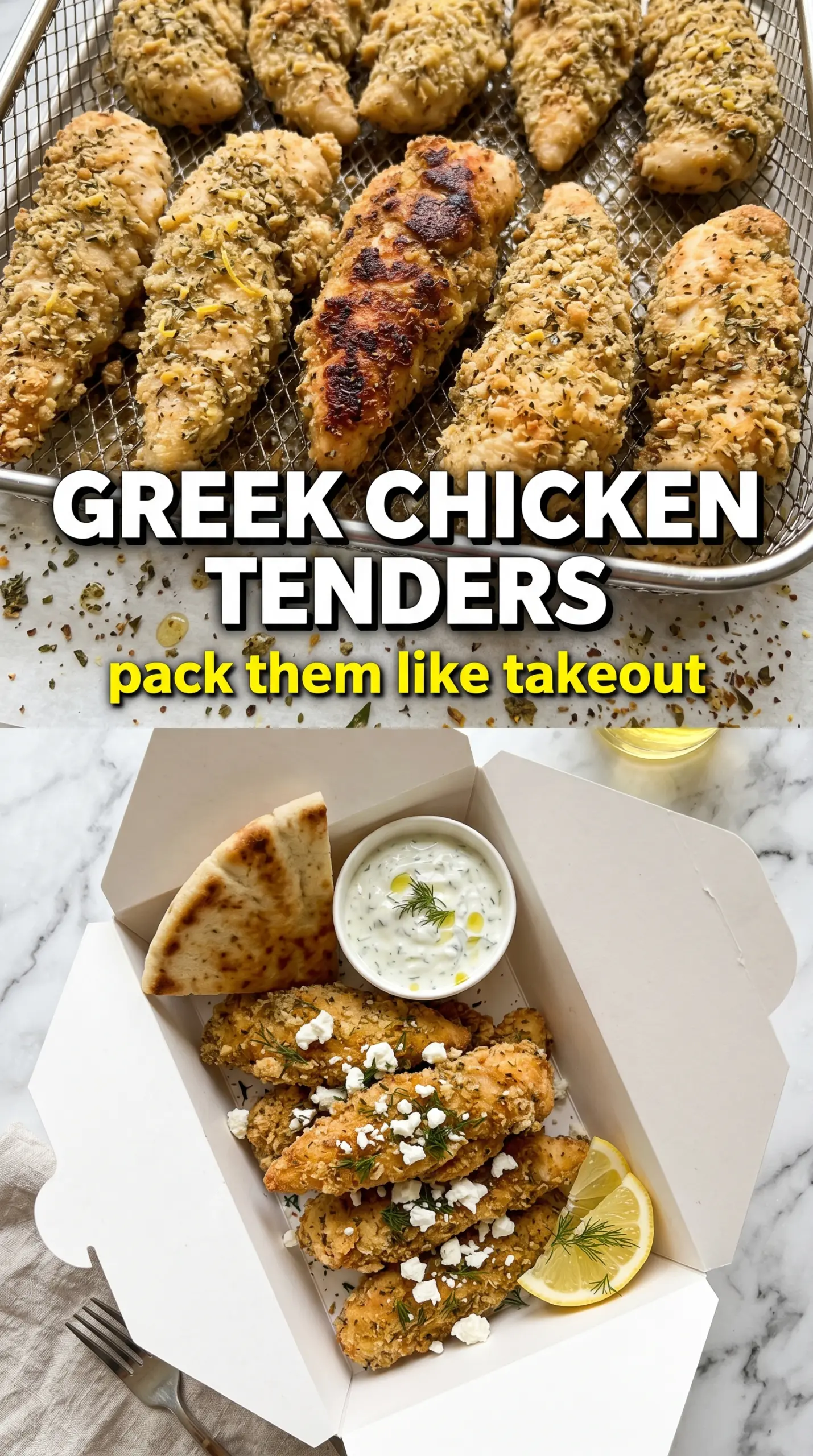
These Greek chicken tenders cook fast, but they still taste like they had time to think about it. The lemon, oregano, garlic, and smoked paprika build a bright crust on the outside while the chicken stays juicy inside, and the cool tzatziki underneath makes each bite taste fresher than a plain skillet chicken dinner ever could. It’s the kind of meal that lands on the table looking simple and eating like you worked harder than you did.
What makes this version work is the short marinade. Lemon juice and zest bring the Greek-style brightness, but the marinade is kept to 20 minutes so the chicken gets seasoned without turning soft or stringy. A hot skillet is the other key piece. You want enough heat to brown the tenders quickly and set that herb crust before the garlic has a chance to burn.
Below, I’ll show you the small details that keep the coating flavorful and the chicken tender, plus a few ways to serve it depending on what you’ve got in the fridge. The feta, olives, cucumber, and dill aren’t just garnish here — they turn these Greek chicken tenders into a full dinner with barely any extra work.
The lemon and oregano came through without overpowering the chicken, and the tenders browned beautifully in the skillet. I served them over tzatziki with pita, and even the leftovers stayed juicy the next day.
Like these lemon-oregano Greek chicken tenders? Save them to Pinterest for a fast dinner with a crisp sear, creamy tzatziki, and fresh Mediterranean toppings.
The Marinade Window That Keeps Greek Chicken Tender, Not Mushy
The mistake most people make with lemon chicken is leaving it in the acid too long. Lemon juice does the flavor work here, but it also starts changing the chicken’s texture if you let it sit for hours. Twenty minutes is enough to season the surface and bring the oregano, garlic, and zest into the meat without turning the outside chalky or soft.
The other thing that matters is drying the skillet off the right way before the chicken goes in. You want a thin coating of oil, not a wet bath of marinade. Excess liquid steams the tenders and keeps the seasoning from forming that browned, fragrant crust you’re after.
- Chicken tenders — These cook fast and stay juicy, which makes them ideal for a quick marinade. If you use sliced chicken breast instead, cut it into even strips so it cooks at the same pace.
- Lemon zest and juice — The zest carries the bright citrus aroma; the juice brings the tang. Don’t skip the zest, because juice alone tastes flatter and sharper.
- Dried oregano — This is the backbone of the Greek flavor. Fresh oregano can work, but use a little more carefully because it’s sharper and less concentrated.
- Smoked paprika and cumin — They don’t make the dish taste smoky or earthy in an obvious way; they deepen the seasoning so the chicken tastes rounded instead of one-note. If you don’t have cumin, leave it out before you swap in something stronger.
What Each Ingredient Is Actually Doing in This Recipe
- Primary ingredient (the star) — Quality matters most. Choose the best you can find.
- Cooking medium (oil, butter, or broth) — This carries flavors and prevents dryness.
- Seasonings (salt, pepper, spices, herbs) — Layer flavors so nothing overpowers. Build depth gradually.
- Aromatics (garlic, onion, herbs) — Cook with fat to bloom flavors. Become the foundation.
- Supporting ingredients — Complement the main ingredient without overpowering it.
- Sauce or liquid (if applicable) — Brings flavors together. Balance richness with acid.
- Acid (lemon, vinegar, wine, or other) — Brightens and prevents flat-tasting results.
- Final finish (garnish, glaze, or sauce) — Prevents one-dimensional taste and adds visual appeal.
Getting the Sear Before the Tzatziki Goes On
Mixing the Marinade
Whisk the olive oil, lemon juice, zest, garlic, oregano, smoked paprika, cumin, salt, and pepper until the mixture looks evenly speckled and glossy. Toss the chicken until every piece is coated, then let it rest for 20 minutes while you get the pan hot. If the chicken sits much longer, the lemon starts to work like a cure instead of a marinade.
Building the Crust in the Pan
Heat a large skillet or grill pan over medium-high heat until a drop of water flicks and sizzles on contact. Add a thin drizzle of olive oil, then lay the chicken in without crowding the pan. If the pieces are packed too tightly, they steam instead of sear and you lose the browned edges that make this taste finished.
Knowing When the Chicken Is Done
Cook the tenders for 3 to 4 minutes per side, depending on thickness, until they’re deeply golden and the center reaches 165°F. The exterior should release from the pan without tearing once it’s ready to turn. If the garlic in the marinade starts darkening too fast, lower the heat slightly; burned garlic turns bitter in a hurry.
Serving It the Greek Way
Spread tzatziki over a platter or shallow bowl, then arrange the chicken on top so some of the sauce catches under the edges. Scatter feta, cucumbers, olives, and dill around the chicken and finish with lemon wedges. The cool sauce against the warm chicken is what makes the whole plate feel complete.
How to Adapt These Chicken Tenders Without Losing the Point
Dairy-Free Dinner Plate
Skip the feta and use a dairy-free tzatziki or a simple cucumber-herb yogurt made with a plant-based base. The chicken itself doesn’t need dairy, so you still get the same bright, savory finish without changing the marinade or cook time.
Make It a Sheet Pan Meal
If you don’t want to stand over the stove, spread the marinated tenders on a lightly oiled sheet pan and roast at 425°F until they hit 165°F. You’ll lose some of the pan-seared crust, but the flavor stays clean and the cleanup is much lighter.
Gluten-Free Serving Idea
Serve the chicken over rice, potatoes, or a big salad instead of pita. The recipe is naturally gluten-free as written, so the only thing to watch is your toppings and any store-bought tzatziki.
Turn It Into Wraps
Slice the cooked tenders and tuck them into warm pita with tzatziki, cucumber, and dill. This changes the texture from plated dinner to handheld meal, but it’s the same flavors in a more portable form.
Storage and Reheating
- Refrigerator: Store the chicken in an airtight container for up to 4 days. It stays juicy, though the crust softens a bit once chilled.
- Freezer: The cooked chicken freezes well for up to 2 months. Freeze it in a single layer first if you can, then move it to a bag or container so the pieces don’t stick together.
- Reheating: Warm it in a skillet over low heat with a splash of water or in a 300°F oven until just heated through. High heat dries out tenders fast, so don’t blast them in the microwave unless you’re in a hurry and don’t mind a softer texture.
Questions I Get Asked About This Recipe

Greek Chicken Tenders
Ingredients
Equipment
Method
- Whisk together olive oil, lemon juice, lemon zest, garlic, oregano, smoked paprika, cumin, salt, and pepper until evenly combined; the mixture should look glossy and fragrant. Toss chicken tenders in the marinade, then rest them 20 minutes so the flavors cling to the surface.
- Heat a large skillet over medium-high heat and add a drizzle of olive oil; it should shimmer when ready. Place chicken tenders in the pan and cook 3-4 minutes per side until golden, flipping once for even browning.
- Continue cooking until the internal temperature reaches 165°F; the center should be opaque with no pink. Transfer the tenders to a plate to hold briefly while you assemble the platter.
- Spread tzatziki on a serving platter to form a creamy pool under the chicken. Arrange chicken tenders over the top so the golden exterior stands out against the white sauce.
- Scatter crumbled feta, Kalamata olives, cucumber slices, and fresh dill around the chicken; finish with a pop of green and dark olive accents. Serve with warm pita and lemon wedges for squeezing over the lemon-herb crust.