
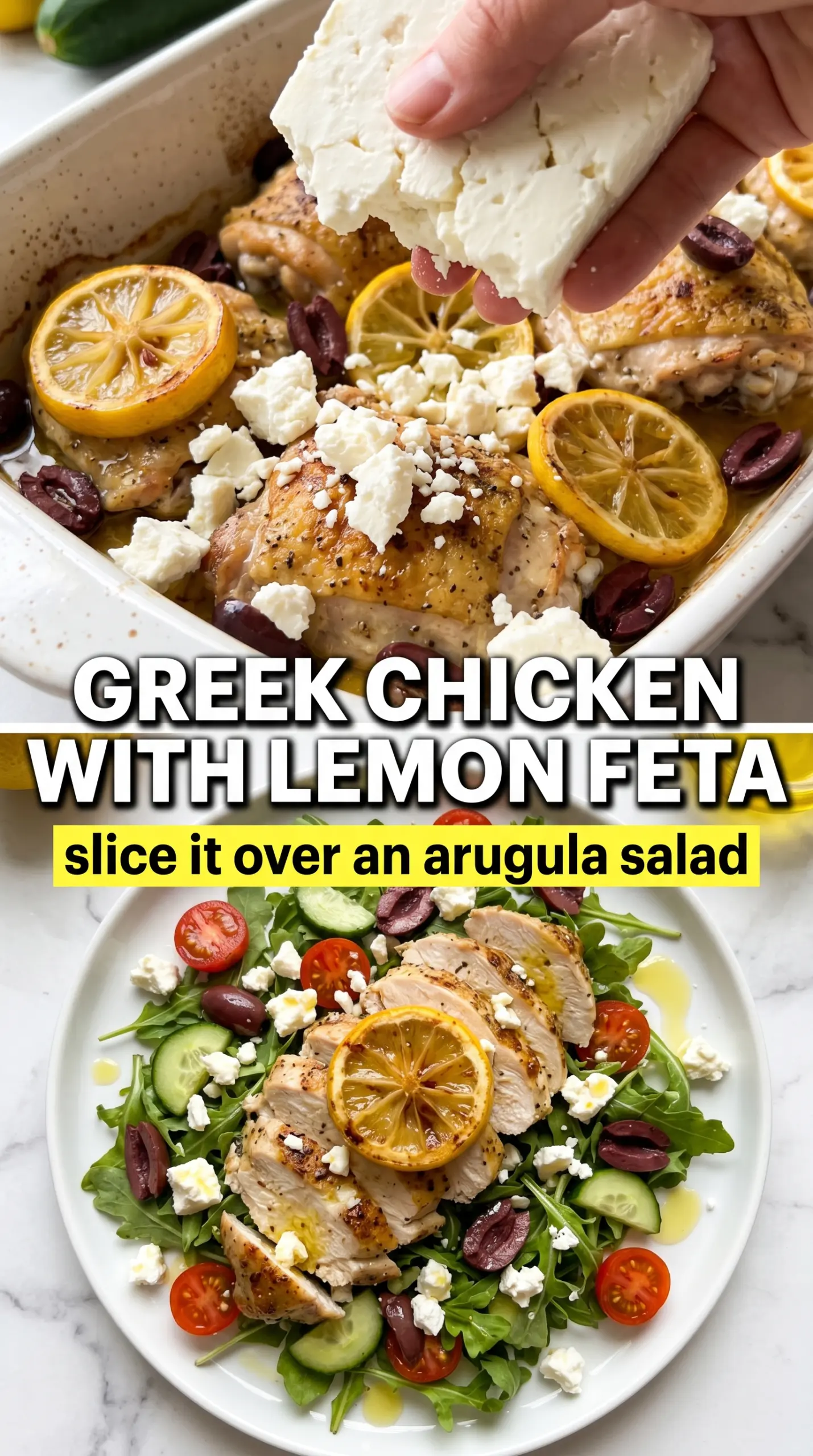
Golden chicken thighs with lemon, oregano, and feta hit the table with crispy skin, bright pan juices, and roasted tomatoes that collapse into the sauce around them. The feta softens just enough from the heat to turn creamy at the edges without disappearing into the dish, and the lemon slices caramelize in the oven so every bite has a little sweet bitterness along with the tang.
What makes this version work is the balance in the marinade and the way the chicken roasts skin-side up the whole time. Lemon juice and zest give you sharpness, but olive oil keeps the chicken from drying out while the skin renders and browns. The tomatoes and olives aren’t just there for color; they turn into the salty, juicy base that keeps the pan from tasting flat.
Below, I’ve laid out the few details that matter most: how long to marinate, when to add the feta, and why bone-in thighs give you more margin for error than lean cuts. If you’ve ever had Greek-style chicken turn out pale or bland, this version fixes both problems.
The chicken skin came out crisp and the lemon slices turned sweet instead of bitter. I was surprised how the feta softened right on top without getting greasy, and the tomatoes made their own little sauce in the pan.
Save this Greek Chicken with Lemon and Feta for a dinner with crisp skin, roasted tomatoes, and that creamy feta finish.
The part most people miss: getting the skin crisp before the feta goes on
Bone-in, skin-on thighs are doing the heavy lifting here. They stay juicy through a hot roast, and the skin renders enough fat to protect the meat while giving you that deep golden finish. If you swap in boneless pieces, the timing changes fast and the dish loses some of the contrast between crisp skin and soft toppings.
The other mistake is crowding the pan. The chicken needs space so the skin roasts instead of steaming in the juices from the tomatoes and marinade. The tomatoes should blister and burst at the edges, not sit pale and intact under the chicken.
- Chicken thighs — Bone-in, skin-on thighs hold up best at 425°F and give you the juiciest result. Chicken breasts can work, but they need less time and are much easier to dry out.
- Lemon juice and zest — Juice brings the brightness, while zest carries the lemon flavor without extra acid. Don’t skip the zest; it’s what keeps the dish tasting lively after roasting.
- Feta — Use a block if you can and crumble it yourself. Pre-crumbled feta is drier and often coated to prevent clumping, which means it melts less evenly over the hot chicken.
- Kalamata olives — These add salt and depth that balance the lemon. If you use milder olives, the dish still works, but it tastes flatter and less distinctly Greek.
What Each Ingredient Is Actually Doing in This Recipe
- Primary ingredient (the star) — Quality matters most. Choose the best you can find.
- Cooking medium (oil, butter, or broth) — This carries flavors and prevents dryness.
- Seasonings (salt, pepper, spices, herbs) — Layer flavors so nothing overpowers. Build depth gradually.
- Aromatics (garlic, onion, herbs) — Cook with fat to bloom flavors. Become the foundation.
- Supporting ingredients — Complement the main ingredient without overpowering it.
- Sauce or liquid (if applicable) — Brings flavors together. Balance richness with acid.
- Acid (lemon, vinegar, wine, or other) — Brightens and prevents flat-tasting results.
- Final finish (garnish, glaze, or sauce) — Prevents one-dimensional taste and adds visual appeal.
Building the marinade so the chicken tastes seasoned all the way through
Mixing the Lemon, Garlic, and Oregano
Whisk the olive oil, lemon juice, lemon zest, garlic, oregano, smoked paprika, salt, and pepper until the mixture looks cloudy and emulsified. That means the oil and acid are working together instead of separating immediately, which helps the seasoning cling to the chicken. If the garlic is chopped too large, it can scorch in the oven, so mince it fine.
Letting the Chicken Sit Long Enough
Thirty minutes is enough to season the outside and let the surface pick up the lemon and herb notes. Longer marinating won’t hurt here, but once you get much past a few hours, the lemon starts to work more like a cure and the texture gets firmer at the edges. Pat the thighs out of the marinade lightly before they go into the dish so the skin can brown instead of steaming.
Roasting for Color, Not Just Doneness
Lay the chicken skin-side up and scatter the tomatoes, olives, and lemon slices around it. Roast until the skin is deeply golden and the thickest part of the thigh reaches 165°F. If the skin is pale at the end, the oven wasn’t hot enough or the pan was too crowded; give it the space and heat it needs.
Finishing with Feta at the Right Moment
Crumb the feta over the chicken as soon as it comes out of the oven. The residual heat softens it just enough so it clings to the chicken and vegetables without fully melting away. Add the fresh oregano last so it stays fragrant instead of going dark and wilted.
How to change this dish without losing the balance
Use chicken breasts for a leaner version
Boneless or bone-in breasts will work, but they need a shorter roast and a close eye so they don’t dry out. Pull them as soon as the center reaches 165°F and the juices run clear. You’ll lose some richness from the skin and bones, but the lemon, olives, and feta still carry the dish.
Make it dairy-free
Leave off the feta and add a few extra olives plus a drizzle of good olive oil at the end. You’ll lose the creamy-salty finish, so the dish leans brighter and a little sharper, but it still tastes complete if the seasoning on the chicken is right.
Swap in zucchini or bell peppers for part of the tomatoes
This works well when you want more vegetables in the pan. Cut them into larger pieces so they don’t collapse before the chicken is done, and expect a drier, more roasted finish instead of the juicy burst you get from cherry tomatoes.
Storage and Reheating
- Refrigerator: Store leftovers in an airtight container for up to 4 days. The feta softens more as it sits, and the chicken stays flavorful.
- Freezer: The chicken freezes well for up to 2 months, but the tomatoes and feta lose some of their texture. Freeze in portions for the best result.
- Reheating: Warm covered in a 325°F oven until hot, about 15-20 minutes. The biggest mistake is blasting it in the microwave, which makes the skin rubbery and turns the feta greasy.