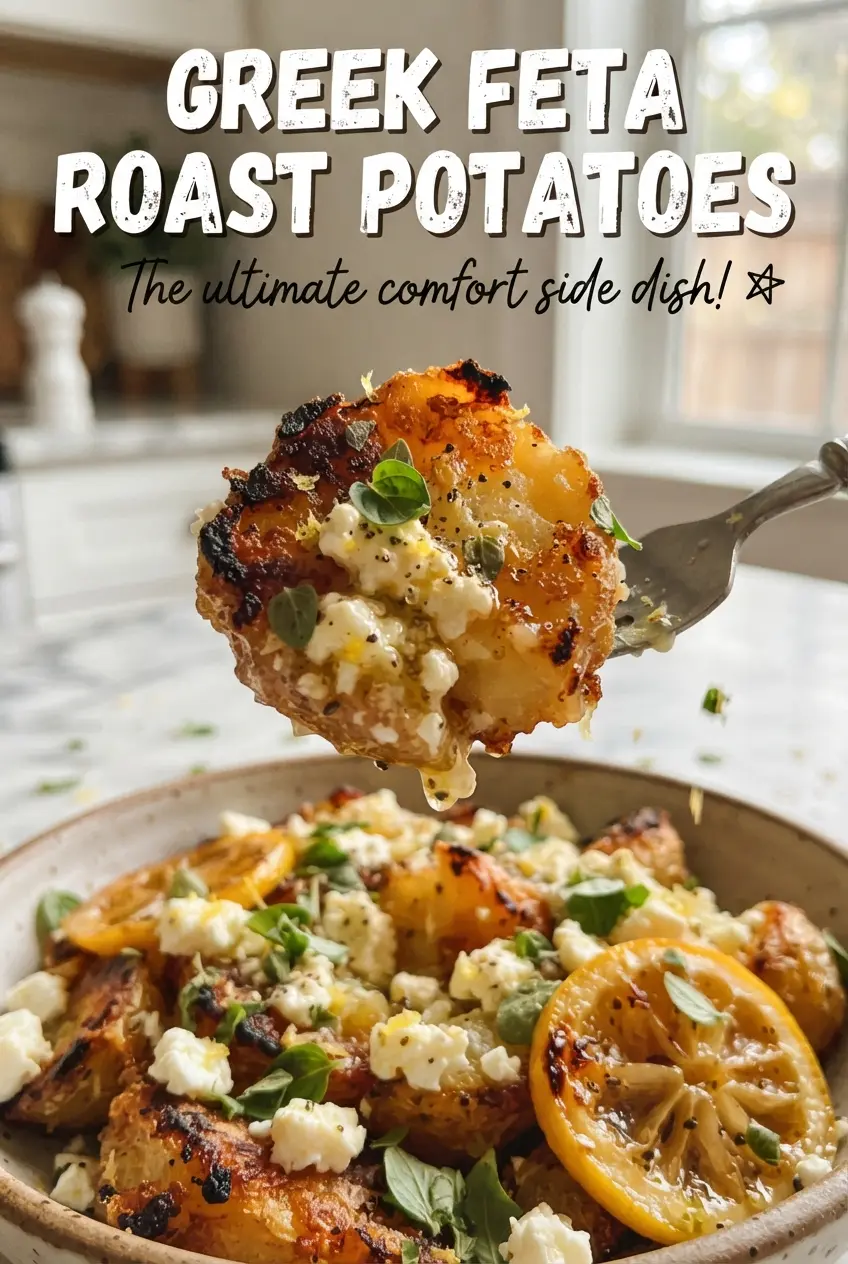
Crispy Greek feta roast potatoes hit the table with browned edges, soft centers, and that bright lemon-oregano flavor that keeps people reaching back for another wedge. The pan finishes with just enough saucy residue to coat the potatoes without turning them soggy, and the feta melts slightly on top while still staying crumbly and salty.
The trick is roasting the potatoes in a mix of oil, lemon juice, and broth instead of coating them in dry seasoning alone. That little bit of liquid steams the wedges at first, then cooks off so the potatoes can actually crisp in the oven. Yukon golds are the right choice here because they hold their shape and turn creamy inside instead of breaking apart.
Below, I’ve included the detail that matters most for getting the texture right, plus a few smart swaps if you need to work with what’s already in your kitchen.
The potatoes got crisp at the edges and stayed tender in the middle, and the lemon-garlic pan juices soaked in just enough without making them mushy. I used the dill on top and the feta was the perfect salty finish.
Save these Greek feta roast potatoes for the nights when you want crispy lemon-oregano wedges with a salty feta finish.
The Reason These Potatoes Crisp Instead of Turning Soft
The biggest mistake with roast potatoes is crowding them into a dry pan and hoping the oven will do all the work. Here, the broth and lemon juice start the wedges off with enough moisture to soften the centers while the oil helps the outsides fry as the liquid cooks away. That balance is what gives you crisp edges without scorching the garlic or leaving the potatoes stuck and pale.
Flipping them halfway matters because the first side does most of the browning while the second side finishes once the pan liquid has mostly disappeared. If the potatoes still look wet near the end, give them a few more minutes before adding the feta. Feta goes on at the end for a reason: it softens from the heat but doesn’t dissolve into the pan.
What Each Ingredient Is Actually Doing in This Pan

- Yukon gold potatoes — These hold their shape through a long roast and turn creamy inside. Russets can work, but they break down faster and give you a fluffier, less structured wedge.
- Olive oil — This is what helps the edges blister and brown. Use a good-tasting olive oil since the potatoes soak up plenty of it.
- Lemon juice and chicken broth — The lemon gives sharpness and the broth keeps the pan from drying out too early. If you need a vegetarian version, use vegetable broth and the result stays bright and savory.
- Garlic and oregano — Add the Greek backbone. Minced garlic cooks directly in the pan, so keep it mixed well with the liquid; clumps on top can brown too fast.
- Feta — Crumble it by hand if you can. Pre-crumbled feta works, but a block tends to taste creamier and less dry.
- Fresh dill or parsley — This is the finishing lift. Dill gives the most classic Greek feel, while parsley keeps it cleaner and more neutral.
How to Roast the Potatoes So the Pan Juices Reduce at the Right Time
Coating the Wedges Evenly
Toss the potatoes in the roasting pan until every wedge is slick with oil, lemon juice, broth, garlic, oregano, salt, and pepper. The goal is not a marinade sitting underneath them; it’s a thin coating that clings to the cut surfaces. Spread them in a single layer with some space between wedges, or they’ll steam and stay soft.
Roasting Until the Liquid Cooks Off
Put the pan in a hot 425F oven and leave it alone long enough for the edges to start taking on color. Around the halfway point, flip the wedges so both sides can brown evenly. If there’s still a puddle of liquid at the end, keep roasting until it’s mostly absorbed and the potatoes look deeply golden rather than just warmed through.
Finishing With Feta and Herbs
Sprinkle the feta over the potatoes as soon as they come out of the oven so it softens against the heat. Add the dill or parsley right after that so it stays fresh and bright. If you add the herbs too early, they’ll wilt and lose the sharp green finish that makes the whole dish pop.
How to Adapt These Greek Feta Roast Potatoes for Different Tables
Vegetarian Version
Swap the chicken broth for vegetable broth. You’ll keep the same roast-pan texture and lemony finish, just with a slightly lighter savory note. The feta still brings plenty of depth, so you won’t miss the meat-based broth.
Dairy-Free Version
Leave off the feta and finish with extra dill, a little more lemon zest, and a pinch of flaky salt. You’ll lose the creamy-salty finish, but the potatoes still taste bold and complete because the roasting liquid does most of the flavor work.
Extra-Crisp Edge Version
Use a wider roasting pan and give the wedges more breathing room. The potatoes brown better when the liquid evaporates quickly, and a crowded pan traps steam. This version takes a few extra minutes, but the edges get noticeably crunchier.
Storage and Reheating
- Refrigerator: Store leftovers in an airtight container for up to 4 days. The potatoes soften a little, but the flavor holds up well.
- Freezer: These freeze, but the texture turns a bit mealy after thawing, so I only do it if I’m okay with using them in a hash or breakfast skillet later.
- Reheating: Reheat on a sheet pan in a 400F oven until the edges crisp back up. The microwave makes them limp, which is the one thing that undoes all the work you did in the oven.
Answers to the Questions Worth Asking
Greek Feta Roast Potatoes
Ingredients
Equipment
Method
- Preheat the oven to 425F and place a roasting pan in the oven while it heats for better browning.
- In a roasting pan, toss Yukon gold potatoes with olive oil, fresh lemon juice, chicken broth, minced garlic, dried oregano, salt, and black pepper until evenly coated.
- Spread the potatoes in a single layer so the cut sides can crisp rather than steam.
- Roast for 45-50 minutes, flipping halfway, until the liquid is absorbed and the edges are crispy and golden, watching for deep golden color and dryness at the pan bottom.
- Remove the pan and top the roasted potatoes with crumbled feta and fresh dill or parsley.
- Serve hot so the feta softens slightly and the herbs stay bright.