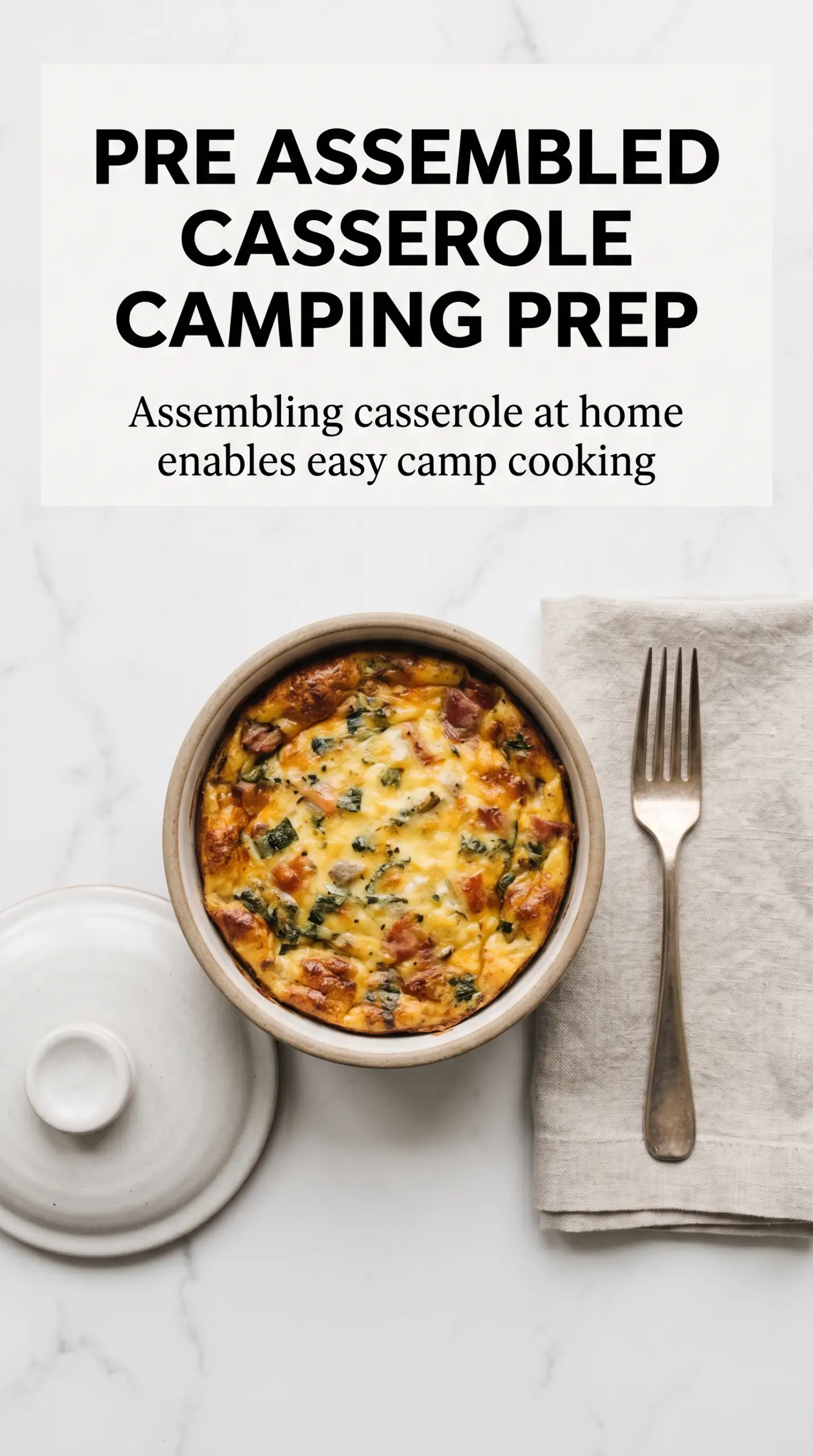
Golden hash browns on the bottom, fluffy eggs in the middle, and melted cheddar across the top make this grilled breakfast casserole the kind of campfire breakfast people actually hover around. It slices cleanly after a short rest, holds together in a spoon, and brings that mix of smoky sausage, creamy eggs, and crisp-edged potatoes that disappears fast at the table.
The trick is putting the hash browns and sausage under the custard instead of stirring everything together. That gives the potatoes a chance to heat through and pick up some color while the eggs set around them. A Dutch oven does the heavy lifting here because it holds steady heat from the coals and gives you a top and bottom cook at the same time, which is what keeps the center from staying loose while the top burns.
Below, I’ll walk through the part that matters most: how to keep the eggs tender, not rubbery, and how to use the coals so the casserole cooks evenly all the way through. I’ve also included a few smart swaps for making it fit what you’ve got on hand.
The eggs set up perfectly in the Dutch oven and the hash browns on the bottom came out tender with just a little crispness around the edges. I made it for our camping group and there wasn’t a bite left.
Like this cheesy Dutch oven breakfast casserole? Save it to Pinterest for your next camping morning or crowd breakfast.
The Reason the Eggs Set Cleanly Instead of Turning Watery
The biggest mistake with a breakfast casserole like this is crowding in cold ingredients and then cooking it too hot. Frozen hash browns release moisture as they heat, and if the Dutch oven runs scorching hot, that steam turns the eggs soft in a bad way and keeps the bottom from ever getting the chance to brown. Layering the potatoes and sausage first gives the moisture somewhere to go and keeps the custard from thinning out.
The other thing that matters is the rest at the end. Five minutes doesn’t sound like much, but it’s the difference between a casserole that runs across the plate and one that cuts into real squares. The eggs finish setting off the heat, the cheese firms up, and the whole dish holds together instead of collapsing the second you scoop it.
What the Sausage, Hash Browns, and Cheese Are Each Doing Here
- Frozen hash browns — These are the backbone of the casserole. They soak up some of the egg mixture, but they also give the bottom a sturdy, potato-forward base. Thawed hash browns work too, but squeeze out any extra water first or the casserole will steam instead of set.
- Breakfast sausage — The sausage gives the dish salt, fat, and the savory flavor that keeps it from tasting like plain eggs and potatoes. Cook it first and crumble it well so every bite gets a little meat instead of a few heavy pockets.
- Eggs and milk — This is the custard. Whole milk keeps it tender without making it heavy, and whisking until the eggs are fully blended helps the texture stay even. If you use a richer dairy like half-and-half, the casserole will taste a little more luxurious but also set a touch softer.
- Cheddar cheese — Sharp cheddar is best here because it stands up to the eggs and sausage. Pre-shredded cheese works fine in a camping situation, though freshly shredded melts smoother and gives you a better top.
- Green onions — These add a fresh finish and keep the casserole from tasting one-note. They go on top so they stay bright instead of disappearing into the hot eggs.
Building the Dutch Oven Layers So the Center Cooks Through
Start with a well-greased oven
Coat the Dutch oven generously with cooking spray before anything else goes in. That keeps the potatoes from welding to the bottom and helps the edges release cleanly when you scoop servings. If your pot is dry, the first layer can brown too hard and stick before the center has a chance to set.
Layer the potatoes and sausage first
Spread the hash browns over the bottom in an even layer, then scatter the cooked sausage on top. Don’t stir them together yet. Keeping them layered creates a better base and helps the eggs sink through the gaps instead of sitting all on top and cooking unevenly.
Pour the custard over the top
Whisk the eggs, milk, salt, and pepper until the mixture looks uniform and a little frothy, then pour it slowly over the casserole. Give the pan a gentle shake so the egg mixture settles into the potatoes. If you pour all in one spot, you can end up with dry pockets on one side and a soggy center on the other.
Cook with steady heat, not fire bursts
Set the Dutch oven on a bed of campfire coals and put coals on the lid too, then cook for 30 to 35 minutes. You’re looking for set edges, no liquid egg in the center, and a lightly golden top. If the top is browning before the middle is done, the heat is too aggressive; pull a few coals off the lid and let the residual heat finish the job.
Rest before serving
Let the casserole sit for 5 minutes after cooking. That short rest lets the eggs finish firming up and keeps the first serving from turning into a runny scoop. The top should still be hot, the cheese melty, and the center just set when you cut in.
How to Adapt This Breakfast Casserole for Different Camps and Crowds
Make it vegetarian without losing body
Skip the sausage and add sautéed mushrooms or diced bell peppers if you’ve got a skillet available, or just lean into the potatoes and cheese for a simpler version. You’ll lose some of the smoky, salty depth, so add a little extra pepper and a pinch of smoked paprika if you have it.
Use bacon instead of sausage
Cook and crumble the bacon before it goes in, and drain off most of the fat so the casserole doesn’t turn greasy. Bacon gives you a smokier, saltier result with a little less bulk than sausage, so the final texture comes out a bit lighter.
Make it gluten-free as written
This recipe is naturally gluten-free if your sausage is certified gluten-free. That’s one reason it works so well for a crowd; the texture comes from eggs and potatoes, not bread or flour, so nothing is missing.
Storage and Reheating
- Refrigerator: Store leftovers in an airtight container for up to 4 days. The potatoes soften a little, but the flavor holds up well.
- Freezer: It freezes, though the eggs and potatoes will be a bit softer after thawing. Wrap portions tightly and freeze for up to 2 months for best texture.
- Reheating: Warm individual portions in a covered skillet over low heat or in the microwave at medium power. High heat dries out the eggs and makes them rubbery before the center is warm.
Answers to the Questions Worth Asking
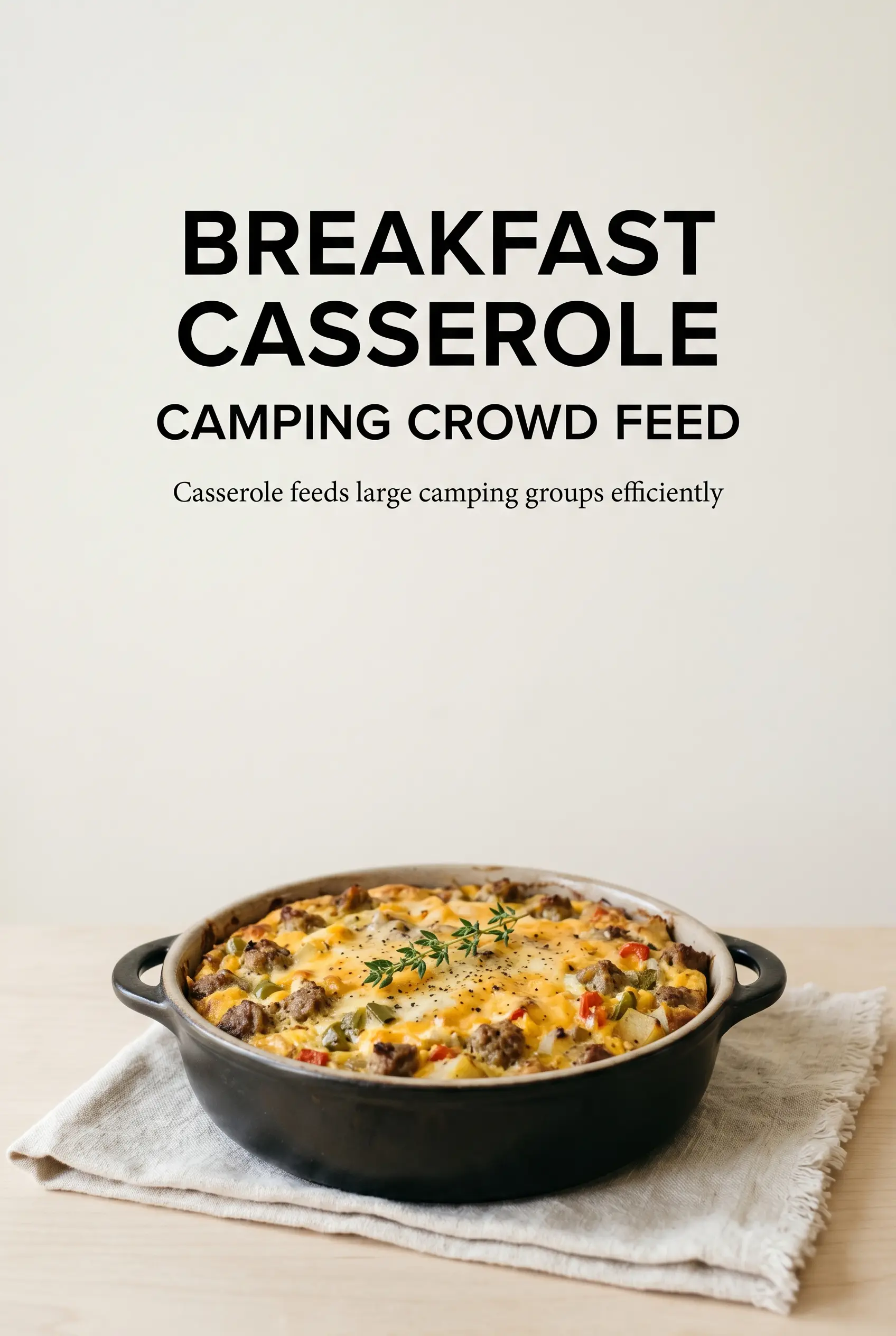
Grilled Breakfast Casserole
Ingredients
Equipment
Method
- Spray a Dutch oven with cooking spray to coat the sides and bottom for easy release.
- Layer frozen hash browns and cooked, crumbled breakfast sausage in the bottom of the Dutch oven in an even layer.
- Whisk together eggs, milk, salt, and pepper until smooth, then pour over the hash browns and sausage so everything is covered.
- Top with shredded cheddar cheese and sliced green onions for a browned, savory finish.
- Cover the Dutch oven and place it on campfire coals with additional coals on top of the lid to create even heat.
- Cook for 30-35 minutes, until the eggs are set and the top is golden, with visible browning at the cheese.
- Let the casserole cool for 5 minutes before serving so it slices cleanly and thickens slightly.