Grilled campfire pizza gives you the kind of crust you usually only get from a hot oven floor: blistered edges, a crisp bottom, and cheese that melts into the sauce before the dough has time to turn heavy. The trick is building it in two stages so the crust gets its color first and the toppings go on only after the dough has enough structure to hold them.
That two-step cook is what keeps this from becoming a floppy mess over an open fire. A thin round of dough brushed with oil and placed oil-side down develops fast, direct heat on the first side, then the toppings go onto the grilled side once it releases cleanly. Keep the fire at medium heat and the lid handy; too much heat burns the bottom before the cheese has a chance to melt.
Below you’ll find the timing cues that matter, the topping moves that work best over live fire, and a few ways to adapt the method if you’re cooking for a crowd or skipping meat.
The crust got those perfect char marks and the cheese melted before the bottoms burned. I used foil for the last few minutes and it came out like a pizzeria pizza at the campsite.
Love the smoky crust and gooey cheese on this grilled campfire pizza? Save it to Pinterest for your next outdoor pizza night.
The Part Most Campfire Pizzas Get Wrong: Crust First, Toppings Second
The mistake is loading the dough before it has any backbone. Raw toppings, cold sauce, and a thick layer of cheese all go on a little too early, and the center turns soft before the bottom has a chance to crisp. This method flips that problem around. The dough gets direct heat first, which dries the surface just enough to make it easy to turn and strong enough to carry sauce and toppings.
That first side should look charred in spots and lift cleanly from the grate. If it sticks, it needs another 30 to 60 seconds; if it’s burning fast, the fire is too hot. Once you flip it, work quickly. A grilled crust waits for no one, and the toppings go on while the second side finishes with the help of a lid or foil trap.
What Each Ingredient Is Doing Over the Fire
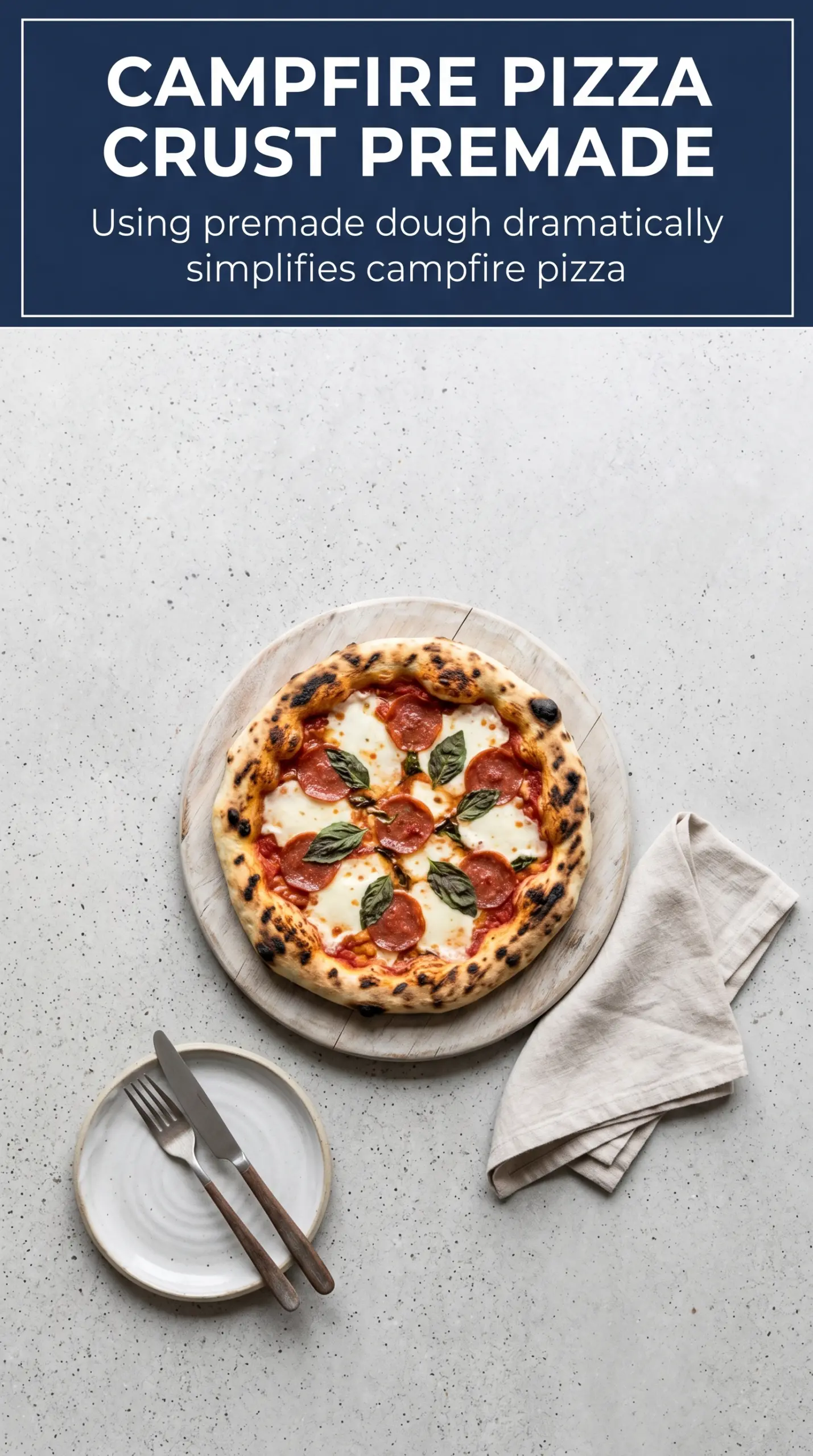
- Pizza dough — Store-bought dough works well here because the grill adds so much character on its own. Homemade dough is great too, but keep it on the thinner side so it cooks through before the toppings overtake the crust. Cold dough fights back and tears, so let it sit at room temperature until it stretches without snapping.
- Olive oil — This is what helps the dough release from the grate and gives the first side enough fat to brown instead of dry out. Brush it on lightly; too much oil can flare up over the fire and make the bottom greasy instead of crisp.
- Pizza sauce — Use a thick sauce, not a watery one. Loose sauce steams the cheese and softens the crust, which is the last thing you want on a grill. If your sauce is thin, simmer it for a few minutes first so it clings to the dough.
- Mozzarella — Low-moisture shredded mozzarella melts fast and evenly, which matters because this pizza finishes in just a few minutes. Fresh mozzarella can work, but it releases more water, so pat it dry and use less of it if you go that route.
- Toppings — Keep them cooked or quick-cooking. Raw sausage needs to be cooked first, and heavy vegetables should be sliced thin so they soften before the crust overcooks.
- Parmesan and basil — Add these at the end. Parmesan gives salt and sharpness without extra melting time, and basil stays brighter when it lands on the pizza off the heat.
How to Work Fast Without Burning the Bottom
Stretching the Dough for the Grate
Divide the dough into four pieces and stretch each one into a thin round, about the size you can manage comfortably over the fire. The dough doesn’t need to be perfectly round, but it does need to be even enough that the thinner spots don’t vanish before the center cooks. If it keeps springing back, let it rest for a few minutes and try again. That relaxation time matters more than force.
Getting the First Side Crisp
Brush one side with olive oil and lay it oil-side down on a medium-hot grate. You’re looking for bubbles, light charring, and a crust that releases without tearing after 2 to 3 minutes. If the flame is licking the underside, move the dough to a cooler part of the grate. Burnt spots happen fast over fire, and once the bottom goes black, there’s no saving the pizza.
Flipping and Topping in One Motion
Turn the dough, then immediately spread on sauce, cheese, and toppings on the grilled side. Don’t overload it. A heavy layer sinks into the center and makes the middle sluggish while the edges overcook. Work with a spoon and keep the toppings close so you can get the lid on quickly.
Melting Under the Lid
Cover the pizza with a lid or a sheet of foil and let it cook for 3 to 5 minutes. The cover traps heat and helps the cheese melt before the base dries out. Peek once near the end; you want bubbling cheese, crisp edges, and a bottom that sounds dry when you lift it. If the cheese is melted but the crust still feels soft, give it another minute uncovered.
How to Adjust This for Different Camps, Diets, and Crowds
Gluten-Free Dough Works If It’s Stretchy Enough
Use a gluten-free pizza dough that’s meant to be rolled or stretched, not a batter-style crust. It won’t have quite the same chew, but grilling gives it a much better chance at crisp edges and a sturdy base. Handle it gently and keep the rounds a little thicker so they don’t tear on the grate.
Vegetarian Toppings That Hold Up on Heat
Go with mushrooms, thin-sliced peppers, onions, olives, or spinach, but keep the slices thin and the layer light. Watery vegetables need a little pre-cook or they’ll steam the cheese and weaken the crust. A quick sauté for mushrooms or onions makes the flavor deeper and keeps the pizza from getting soggy.
Pepperoni and Sausage Need a Head Start
Pepperoni can go on as-is, but sausage should be cooked before it hits the pizza. Raw sausage won’t always finish in the short covered cook time, and that’s a food safety issue as well as a texture problem. Pre-cooked sausage gives you the same savory punch without risking an underdone topping.
Storage and Reheating
- Refrigerator: Leftover pizza keeps for 3 days in an airtight container. The crust softens a bit, but the flavor holds up well.
- Freezer: Freeze slices wrapped individually, then bag them together for up to 2 months. Thawing first helps the cheese reheat more evenly.
- Reheating: Reheat in a skillet over medium-low heat with a lid for a few minutes, or in a hot oven until the bottom crisps again. The common mistake is microwaving it, which turns the crust rubbery and the cheese oily.
Answers to the Questions Worth Asking

Grilled Campfire Pizza
Ingredients
Equipment
Method
- Divide pizza dough into 4 portions and stretch each into a thin round, keeping the centers slightly thicker to prevent tearing.
- Brush one side of each dough round with olive oil so it browns quickly on the grate.
- Place the oiled side of each dough round down on a campfire grate over medium heat and cook 2-3 minutes until the bottom is charred and crisp, with visible dark grill marks.
- Flip each dough and quickly add pizza sauce, mozzarella cheese, and your toppings to the grilled side so everything starts melting right away.
- Cover with a lid or foil and cook 3-5 minutes until the cheese melts and the bottom is crispy, watching for bubbling cheese and set edges.
- Remove pizzas from the grill and top immediately with grated Parmesan and fresh basil, so the herbs stay bright and the cheese sets as you slice.
- Slice each pizza and serve hot, with cheese stretching from the charred crust.