Pale, icy lemon sorbet is one of those desserts that wakes up the whole table. It lands on the spoon with a clean snap, then melts into a bright rush of citrus that feels sharper and lighter than the standard sugar-heavy version. The honey keeps the flavor rounded without turning it cloying, so every bite stays tart, cold, and refreshing.
What makes this version work is restraint. Lemon sorbet can turn muddy fast if it’s overloaded with sweetener, but here the honey is just enough to soften the edges of the lemon without hiding them. Cooling the syrup completely before mixing it with the juice matters, too, because heat dulls fresh lemon flavor and can make the final texture less clean. A little salt is useful here as well; it doesn’t make the sorbet taste salty, it just sharpens the citrus and keeps the sweetness in check.
Below you’ll find the small technique choices that keep the texture icy instead of slushy, plus a few practical swaps and storage notes if you’re making it ahead.
The sorbet froze up light and scoopable, and stirring it every hour kept the texture from getting icy. The lemon flavor stayed sharp even after a night in the freezer.
Save this healthy lemon sorbet for the kind of dessert that stays icy, tart, and lightly sweetened with honey.
The Reason This Sorbet Stays Bright Instead of Flat
Lemon sorbet is easy to ruin with too much sugar or too much heat. If the sweetener dominates, the lemon tastes dull. If the syrup is mixed in while it’s warm, the fresh juice loses the sharp edge that makes sorbet worth eating in the first place.
The other trap is texture. Without enough stirring during freezing, large ice crystals form and the sorbet turns hard and sandy. Stirring every hour breaks up those crystals while the mixture is still loose enough to cooperate, which gives you a finer, cleaner scoop later.
What the Honey, Zest, and Salt Are Doing Here

- Fresh lemon juice — This is the backbone of the sorbet, so use lemons you’d happily squeeze over a glass of water. Bottled juice tastes dull and sometimes slightly bitter; it won’t give you the same clean finish.
- Lemon zest — The zest carries the floral lemon oils that juice alone can’t provide. Grate it fine so it disperses evenly, and add it after the syrup cools so the aromatics stay vivid.
- Honey or agave — Honey adds a soft, rounded sweetness that plays well with tart citrus. Agave works too and keeps the flavor a little more neutral. Either one is best when dissolved completely in the water first so the sorbet freezes evenly.
- Salt — Just a small amount is enough. It tightens the lemon flavor and keeps the sorbet from tasting thin, especially if your lemons are extra tart.
Freezing the Base Without Turning It Into a Lemon Ice Block
Dissolving the Sweetener First
Warm the water, honey, and salt just until the honey disappears. You don’t want the mixture boiling or even simmering hard, because extra heat is unnecessary here and can leave you waiting longer for the base to cool. Once the syrup is clear, pull it off the heat and let it cool completely before you add the lemon juice.
Mixing in the Lemon at the Right Temperature
Stir the cooled syrup with the lemon juice and zest, then taste it before freezing. It should taste a little sweeter than you want the finished sorbet because cold dulls sweetness, but it should still read sharply lemony. If it tastes flat now, it’ll taste flat after freezing, so adjust it before the mixture goes into the freezer.
Breaking Up Ice Crystals as It Sets
Pour the mixture into a shallow freezer-safe container so it chills quickly and evenly. Stir vigorously every hour, scraping the frozen edges into the center each time. The sorbet will look slushy at first, then thicker and more granular, and finally smooth and scoopable. If you skip the stirring, the edges harden before the middle and you end up with a block instead of sorbet.
Using an Ice Cream Maker Instead
If you’re churning it, pour the fully chilled mixture into the machine and let it run until it reaches soft-serve thickness, usually about 20 to 25 minutes. Transfer it to a container and freeze briefly to firm it up. Don’t overchurn to the point of a dense paste; sorbet should feel light and crisp, not heavy.
Three Ways to Adjust This Sorbet Without Losing the Clean Lemon Bite
Honey Swap for Agave
Agave makes the flavor a touch cleaner and keeps the sweetness neutral, which lets the lemon stay front and center. Use it in the same amount as the honey. The texture will still freeze well, though the sorbet may taste a little less rounded.
Lower-Sugar Version
You can reduce the honey slightly if you like a sharper, more tart finish, but don’t cut it too far or the sorbet will freeze harder and taste icy. Start by reducing it by 1 tablespoon, then taste the base before freezing. The balance should still taste bright rather than puckering.
Dairy-Free and Vegan
This recipe already fits a dairy-free and vegan dessert table if you use agave instead of honey. The method stays the same, and the result is still crisp and refreshing. Agave is the cleaner choice here because it keeps the recipe fully plant-based without changing the freezing behavior much.
Mint, Basil, or a Little Ginger
A few torn mint leaves, a small amount of basil, or a whisper of grated ginger can give the sorbet a different edge without crowding out the lemon. Add herbs or ginger sparingly and strain them out if you want a smoother finish. This works best when you want the sorbet to feel a little more layered, not busier.
Storage and Reheating
- Refrigerator: Not recommended. Sorbet melts quickly and loses its texture in the fridge.
- Freezer: Freeze in an airtight container for up to 2 weeks. Press parchment directly on the surface if you want to reduce ice crystals.
- Reheating: There’s no reheating here. Let it sit at room temperature for 5 to 10 minutes before scooping so it softens just enough to serve without turning slushy.
Answers to the Questions Worth Asking
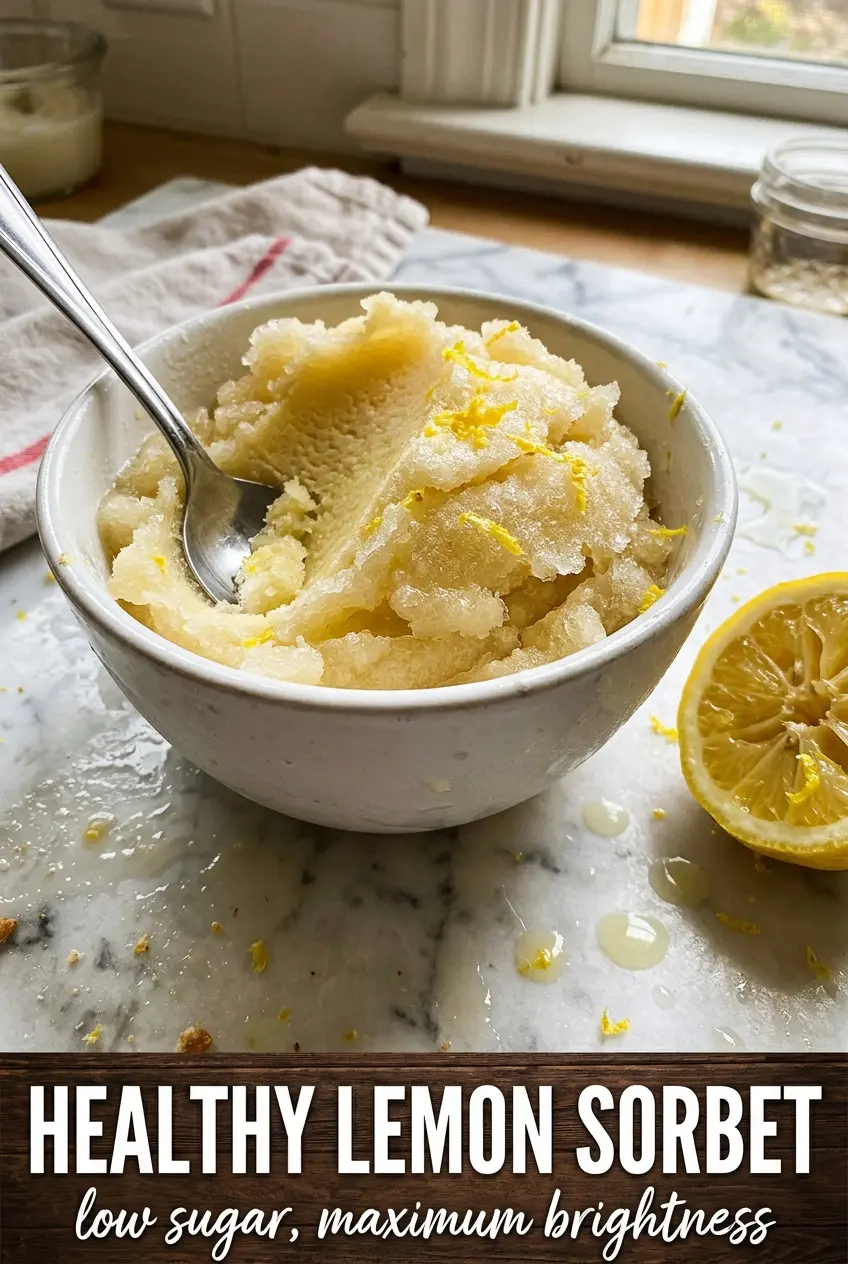
Healthy Lemon Sorbet
Ingredients
Equipment
Method
- Combine honey (or agave), water, and salt in a saucepan over low heat, and stir until fully dissolved, 2–4 minutes with steady stirring.
- Remove from heat and cool the honey syrup completely to room temperature, 15–20 minutes, so it doesn’t melt the sorbet base when mixed.
- In a large bowl, combine the cooled honey syrup with fresh lemon juice and lemon zest, stirring until evenly blended, about 1 minute.
- Taste and adjust sweetness or tartness, adding only small changes so the final sorbet stays bright and low sugar.
- Pour the mixture into a shallow freezer-safe container, cover, and freeze for 4 hours.
- Stir vigorously every hour for 4 total hours to break up ice crystals and keep the texture icy-smooth, 1–2 minutes each stir.
- Spoon the sorbet into chilled bowls or hollowed lemon halves and top with fresh mint for garnish right before serving.