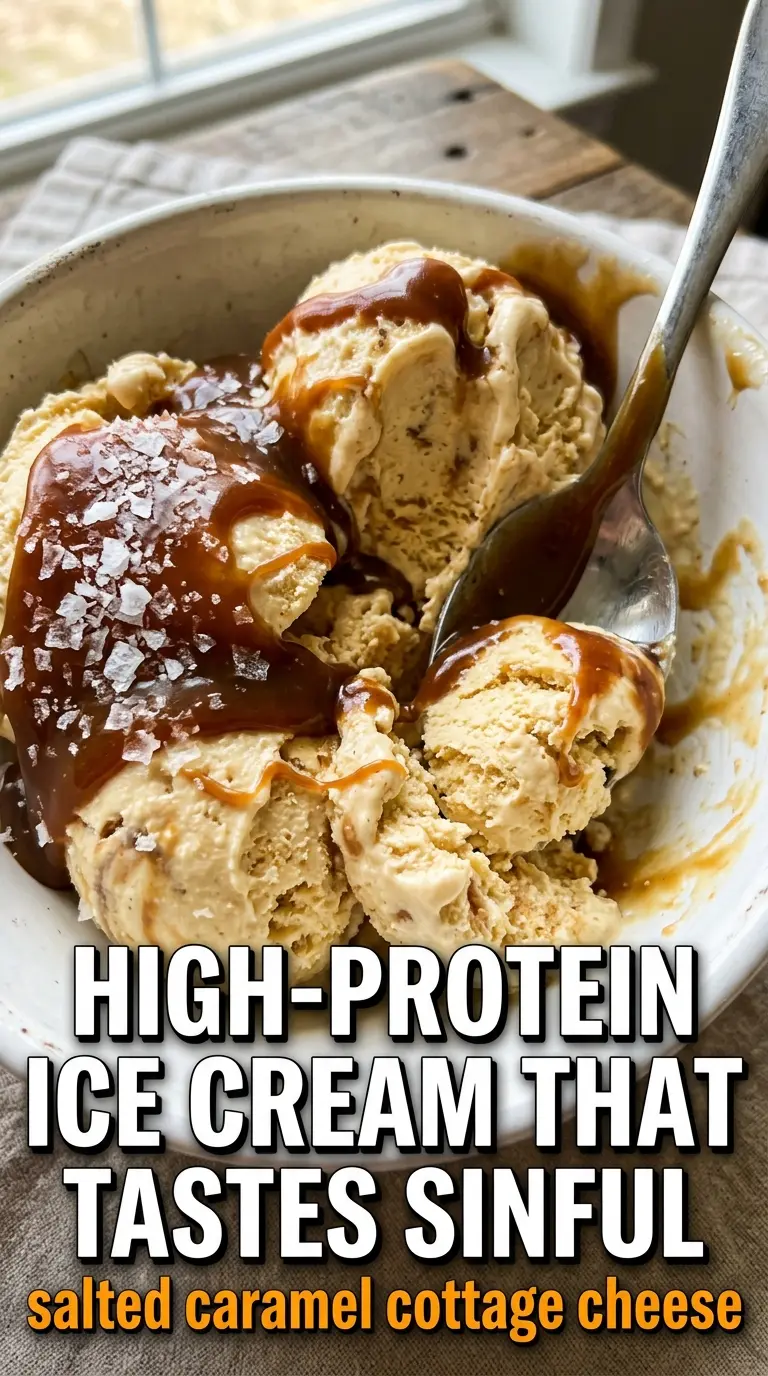
Salted caramel cottage cheese ice cream hits that sweet spot between dessert and a smart freezer stash. It freezes into a scoopable, velvety treat with deep caramel flavor, a salty finish, and none of the grainy, icy texture that can make high-protein ice creams feel like a compromise. The cottage cheese disappears once it’s blended properly, leaving behind a creamy base that eats more like a rich frozen custard than a protein hack.
The key is giving the blender enough time. Cottage cheese needs to be processed until it’s completely smooth, or you’ll end up with tiny curds that show up after freezing. Brown sugar helps the caramel note taste fuller and keeps the texture softer, while a small amount of cream cheese adds body if you want it to lean even more indulgent. Salt matters here too; it keeps the caramel from turning flat and one-note.
Below you’ll find the small details that make the difference, including how to keep the texture creamy after freezing and how to adjust the salt-caramel balance so it tastes right to you.
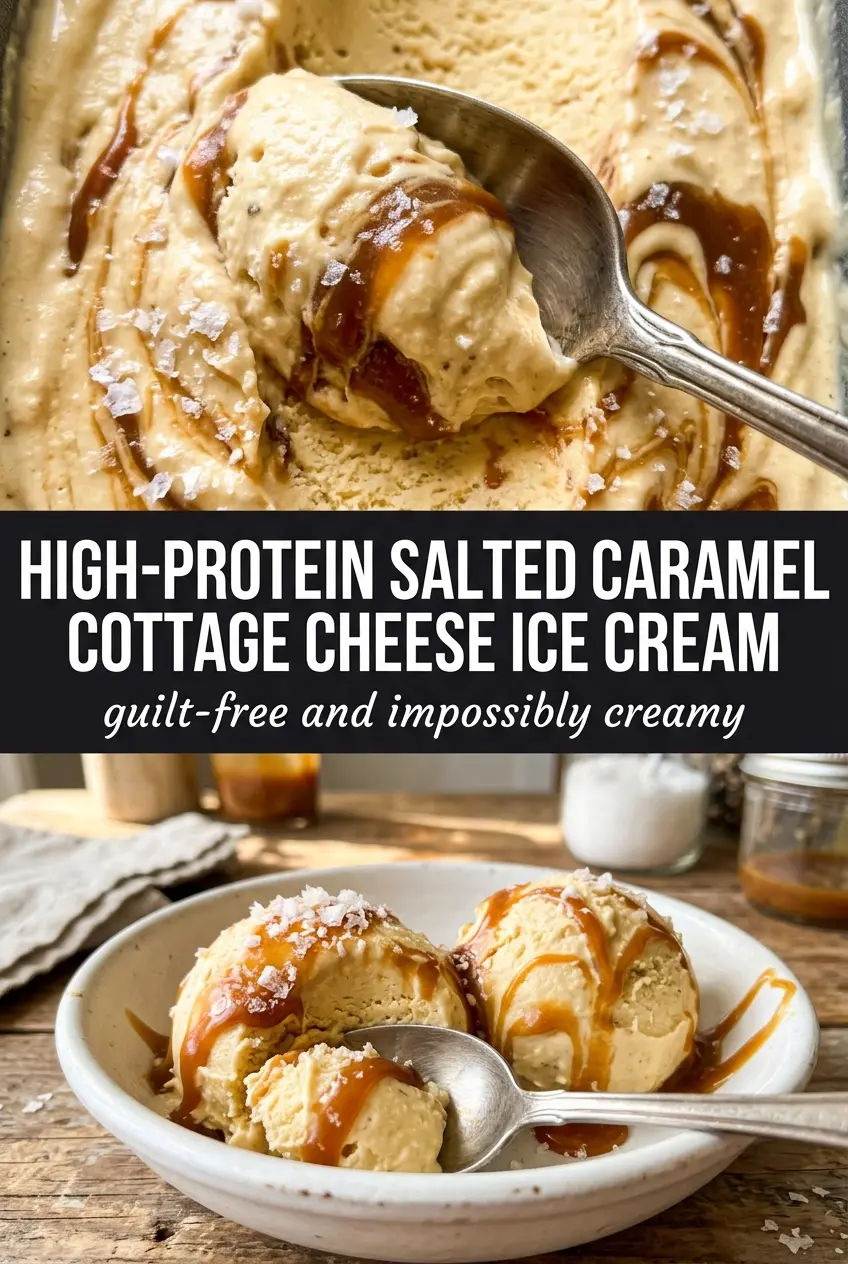
The blender made it completely smooth, and after 4 hours in the freezer it scooped like real ice cream. The caramel flavor came through nicely, and the flaky salt on top made it taste even more like a dessert shop treat.
Love this salted caramel cottage cheese ice cream? Save it for the nights when you want a creamy, salty-sweet dessert with extra protein.
The Reason This Freezes Creamy Instead of Icy
Most homemade high-protein ice creams get icy because they’re built from a base that’s too lean or not blended enough. Cottage cheese changes the game when it’s fully broken down, because the fat and protein give the freezer something richer to work with. The brown sugar also helps here. Sugar doesn’t just sweeten; it softens the freeze and keeps the spoonful from turning into a block.
The other thing worth knowing is that the salt is not just a topping effect. It sharpens the caramel flavor inside the base, which is why this tastes like salted caramel instead of sweetened frozen dairy. If the mixture tastes just a little too bold before freezing, that’s fine. Cold dulls sweetness, so the flavor needs to be slightly louder going in.
What Each Ingredient Is Actually Doing in the Bowl
- Full-fat cottage cheese — This is the base, and the full-fat version gives you the smoothest, richest result. Low-fat cottage cheese will work, but the frozen texture will be a little thinner and less creamy. Blend until the mixture looks glossy and completely uniform before you freeze it.
- Caramel sauce — Use a caramel sauce you already like eating on its own, because its flavor carries the whole dessert. A thinner sauce blends easily; a thicker one may need a little extra blending time. If yours is very sweet, you may want to hold back a bit of the brown sugar.
- Brown sugar — This deepens the caramel note and helps the finished ice cream stay softer in the freezer. White sugar will sweeten it, but it won’t give the same warm, cooked flavor. Pack it lightly when measuring so you don’t overdo the sweetness.
- Vanilla extract — Vanilla rounds out the dairy and makes the caramel taste fuller. It’s a background note, but the dessert falls a little flat without it.
- Sea salt — Fine sea salt blends into the base and keeps the sweetness balanced. If you only have table salt, use a touch less because it hits harder.
- Cream cheese — Optional, but it adds a little more body and a softer mouthfeel. If you use it, let it sit at room temperature first so it blends in without tiny flecks.
Blending, Freezing, and the Five Minutes That Save the Scoop
Getting the Base Completely Smooth
Add everything to the blender and run it for at least two full minutes. Stop once to scrape down the sides if needed, because any little cottage cheese curds left behind will freeze into tiny gritty bits. The mixture should look silky and pourable, with no visible lumps and no chalky edges clinging to the jar.
Balancing the Salted Caramel Flavor
Taste the base before it goes into the freezer. It should taste a little sweeter and slightly more salted than you want the final scoop to be, because freezing mutes both. If the caramel is getting buried, add a little more sauce. If it tastes flat, add a pinch more salt and blend again for a few seconds.
Freezing Without Turning It to a Brick
Pour the mixture into a freezer-safe container and freeze it for about 4 hours. Shallow containers freeze more evenly than deep ones, which helps the texture stay scoopable. If it freezes longer than that, let it sit on the counter for 5 to 10 minutes before scooping so the edges soften first.
The Final Caramel Finish
Spoon the ice cream into bowls and finish with extra caramel drizzle and flaky sea salt. That last pinch matters because it gives you a little crunch and a clean salty pop right at the end. Without it, the flavor is still good, but it loses the contrast that makes salted caramel taste complete.
How to Tweak It Without Losing the Creamy Texture
Make it dairy-free with coconut yogurt
Swap in a thick, unsweetened coconut yogurt for the cottage cheese and keep the rest of the ingredients the same. The result will be a little less rich and more tangy, but it still freezes into a scoopable dessert with good caramel flavor. Use a yogurt with a firm texture so it doesn’t turn icy.
Use maple caramel for a deeper flavor
If you want a more grown-up caramel note, use a maple-style caramel sauce or add a teaspoon of maple syrup. It gives the ice cream a darker, rounder sweetness, but don’t overdo it or the base will freeze softer than intended.
Skip the cream cheese for a lighter version
Leave out the cream cheese if you want a cleaner cottage cheese flavor and a slightly lighter result. You’ll lose a bit of richness, but the base still freezes well as long as you blend it until perfectly smooth.
Add chocolate drizzle for a salted caramel swirl
Drizzle melted dark chocolate over the finished scoops for a caramel-chocolate version that tastes more like a sundae. The bitter chocolate sharpens the sweetness and gives you a firmer, more dessert-shop finish.
Storage and Reheating
- Refrigerator: This ice cream isn’t meant to be stored in the fridge, since it will melt into a soft dessert base within an hour or two.
- Freezer: Freeze in an airtight container for up to 2 weeks. It’s best in the first few days, when the texture stays creamiest.
- Reheating: There’s no reheating here, but if it gets too firm, let it sit at room temperature for 5 to 10 minutes before scooping. Don’t microwave it, or the edges will melt before the center softens.
Answers to the Questions Worth Asking
High-Protein Salted Caramel Cottage Cheese Ice Cream
Ingredients
Equipment
Method
- Add cottage cheese, caramel sauce, brown sugar, vanilla extract, sea salt, and optional cream cheese to a blender or mixer and blend for 2 minutes until completely smooth with no visible lumps.
- Stop and taste the mixture, then adjust caramel sauce or sea salt to get the sweet-salty balance you want.
- Pour the blended mixture into a freezer-safe container, cover, and freeze for 4 hours until firm.
- Let the container sit at room temperature for 5 minutes to soften slightly for easier scooping.
- Spoon into bowls, then drizzle with extra caramel and add a pinch of flaky sea salt on top before serving.