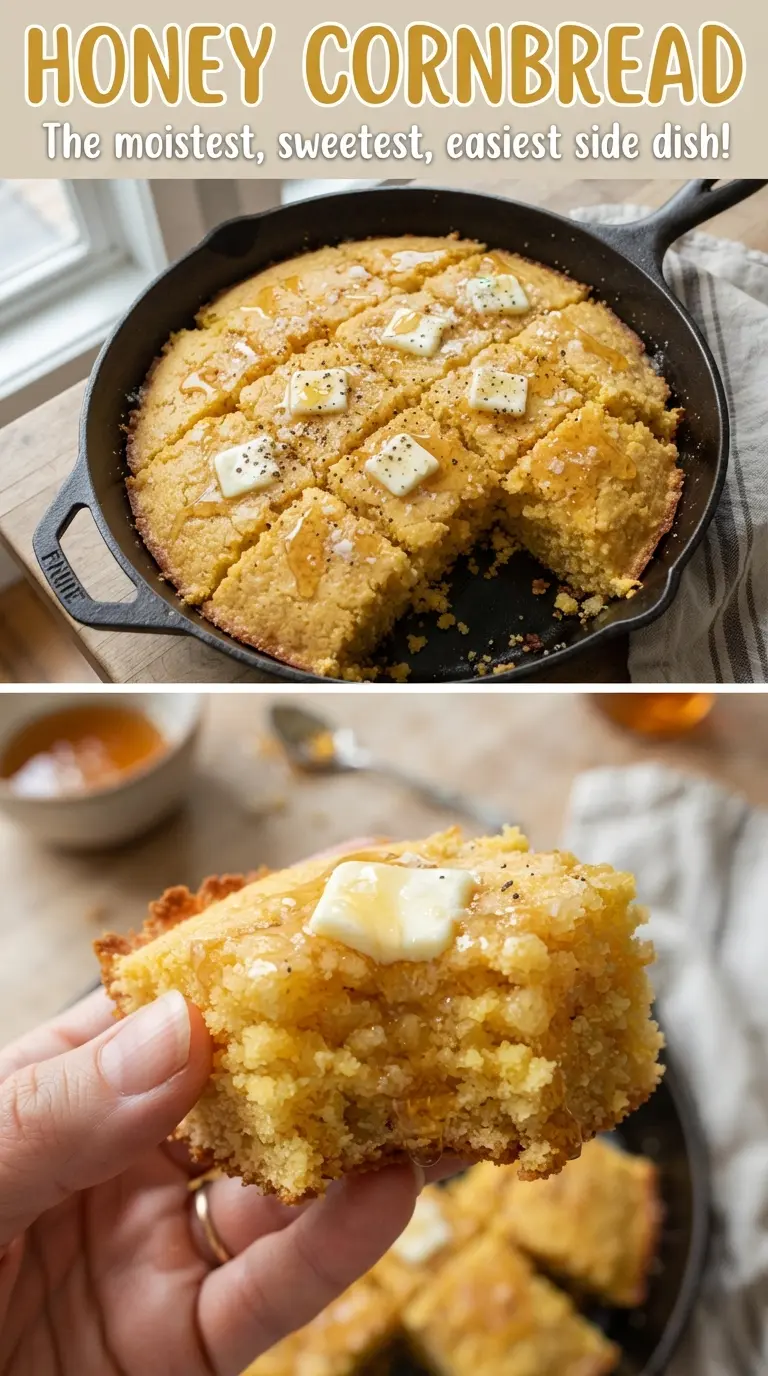
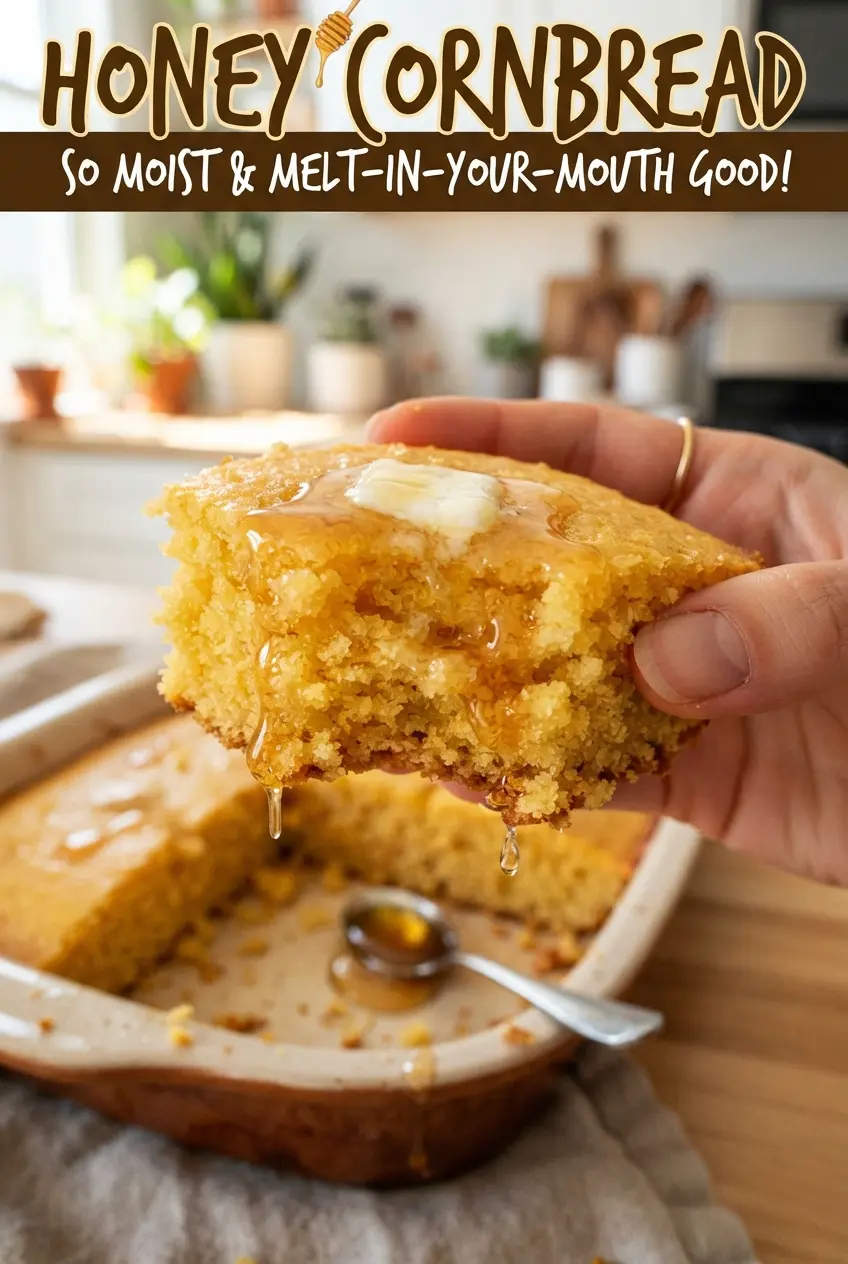
Honey cornbread bakes up with crisp, bronzed edges and a tender crumb that stays moist without feeling heavy. The honey doesn’t just sweeten it; it softens the texture and gives the loaf a warm, almost custardy richness that makes the first warm square hard to beat.
The balance matters here. Cornmeal gives the bread its grit and true cornbread character, while the flour keeps it from turning crumbly. A full tablespoon of baking powder gives the batter enough lift to rise quickly in the oven, and the melted butter carries the honey evenly through the batter so every bite tastes rounded, not flat.
Below, I’ve included the small details that keep the crumb tender, plus the best way to finish it with honey butter while it’s still warm. That last step is worth it.
The crumb stayed soft even the next day, and brushing the honey butter on top while it was warm gave it that bakery-style finish. I served it with chili and there wasn’t a square left.
Love this golden honey cornbread with the honey-butter finish? Save it to Pinterest for chili night, barbecue sides, or anytime you want a tender square with crisp edges.
The Reason Honey Cornbread Stays Tender Instead of Crumbly
The mistake most cornbread makes is leaning too far in one direction: either it’s dry and sandy, or it turns cakey and loses the corn flavor that makes it worth baking. This version stays in the middle. The flour gives the crumb enough structure to slice cleanly, while the cornmeal keeps that gentle grain and a little bite.
The other trap is overmixing. Once the wet and dry ingredients come together, the batter should still look a little rough. If you stir until it’s smooth, the gluten tightens and the bread bakes up dense instead of light. Honey also helps hold onto moisture, but it can’t save an overworked batter.
- Cornmeal — Use standard yellow cornmeal for the best balance of flavor and texture. Fine cornmeal gives a softer crumb; medium grind adds more bite.
- Honey — This is what keeps the bread moist and gives it that warm sweetness. Maple syrup can replace it in a pinch, but the flavor will be deeper and less floral.
- Whole milk — The fat in whole milk helps the crumb stay tender. Lower-fat milk works, but the finished bread won’t taste as rich.
- Melted butter — Melted butter distributes easily through the batter and gives the edges better flavor. If you use oil instead, the bread will still be moist, but it loses some of that classic cornbread taste.
What Each Ingredient Is Actually Doing in This Recipe
- Primary ingredient (the star) — Quality matters most. Choose the best you can find.
- Cooking medium (oil, butter, or broth) — This carries flavors and prevents dryness.
- Seasonings (salt, pepper, spices, herbs) — Layer flavors so nothing overpowers. Build depth gradually.
- Aromatics (garlic, onion, herbs) — Cook with fat to bloom flavors. Become the foundation.
- Supporting ingredients — Complement the main ingredient without overpowering it.
- Sauce or liquid (if applicable) — Brings flavors together. Balance richness with acid.
- Acid (lemon, vinegar, wine, or other) — Brightens and prevents flat-tasting results.
- Final finish (garnish, glaze, or sauce) — Prevents one-dimensional taste and adds visual appeal.
Building the Batter and Getting the Top Golden
Start by whisking the dry ingredients thoroughly so the baking powder is spread evenly through the cornmeal and flour. That keeps the rise consistent and avoids pockets that taste salty or flat. In the wet mixture, whisk the honey into the milk and eggs first, then add the melted butter once it has cooled a bit; if the butter is scorching hot, it can scramble the eggs or create little butter flecks in the batter.
When the batter is combined, stop as soon as you no longer see dry flour. A few small lumps are fine and expected. Spread it into a greased 8×8-inch pan and get it into the oven right away so the baking powder can do its job before the lift starts fading.
Whisking the Dry Ingredients
Use a large bowl and whisk until the cornmeal, flour, baking powder, salt, and sugar look evenly blended. This step matters more than it looks, because baking powder clumps can create uneven pockets in the crumb. If the batter bakes with streaks or a bitter edge, it usually starts here.
Bringing the Batter Together
Pour the wet ingredients into the dry and stir with a spatula just until the flour disappears. The batter should be thick and spoonable, not pourable like pancake batter. If it looks glossy and stretchy, it’s been mixed too much.
Baking Until the Center Sets
Bake at 400°F until the top is deeply golden and the center tests clean with a toothpick, about 20 to 25 minutes. The edges should pull slightly from the pan and smell nutty and sweet. If the top is browning too quickly before the center is done, move the pan one rack lower rather than covering it, which traps steam and softens the crust.
Brushing on the Honey Butter
Mix the honey and soft butter together, then brush it over the cornbread while it’s still warm. The heat helps the topping melt into the surface instead of sitting on top like frosting. Slice after the glaze goes on so the knife catches those glossy, sweet edges in every piece.
Three Ways to Make This Honey Cornbread Fit the Meal
Dairy-Free Cornbread
Swap the whole milk for an unsweetened plant milk and use melted dairy-free butter in the batter and topping. The crumb will still be tender, but the flavor is a little less rich, so don’t skimp on the honey butter finish if you want the same soft, sweet top.
Less Sweet Southern-Style Cornbread
Cut the sugar to 2 tablespoons and leave the topping off if you want a more savory side for beans, greens, or chili. The cornbread will taste more corn-forward and less cake-like, though it won’t have quite the same soft dessert-adjacent finish.
Gluten-Free Version
Replace the all-purpose flour with a 1:1 gluten-free baking blend that includes xanthan gum. The texture will be a little more delicate, but it still bakes up well as long as you don’t overmix and you let it cool for a few minutes before slicing.
Storage and Reheating
- Refrigerator: Store covered for up to 4 days. The crumb firms up a bit in the fridge, but the honey helps it stay moist.
- Freezer: Freeze individual squares tightly wrapped for up to 2 months. Thaw at room temperature while still wrapped so condensation doesn’t make the crust soggy.
- Reheating: Warm in a 300°F oven for 8 to 10 minutes or microwave a slice in short bursts. Don’t overheat it or the crumb turns dry fast; cornbread needs gentle warming, not a long blast.
Answers to the Questions Worth Asking
Honey Cornbread
Ingredients
Equipment
Method
- Preheat oven to 400F and grease an 8x8-inch baking pan.
- Set the greased pan aside while you mix the batter.
- Whisk yellow cornmeal, all-purpose flour, baking powder, salt, and sugar until evenly combined.
- Whisk whole milk, eggs, honey, and melted butter until smooth.
- Stir the wet mixture into the dry ingredients just until combined, leaving the batter slightly thick.
- Pour the batter into the greased pan and spread into an even layer.
- Bake for 20-25 minutes at 400F until golden and a toothpick comes out clean.
- Mix honey and soft butter for the topping until combined.
- Brush the honey butter over the warm cornbread before slicing, letting it melt and soak in.