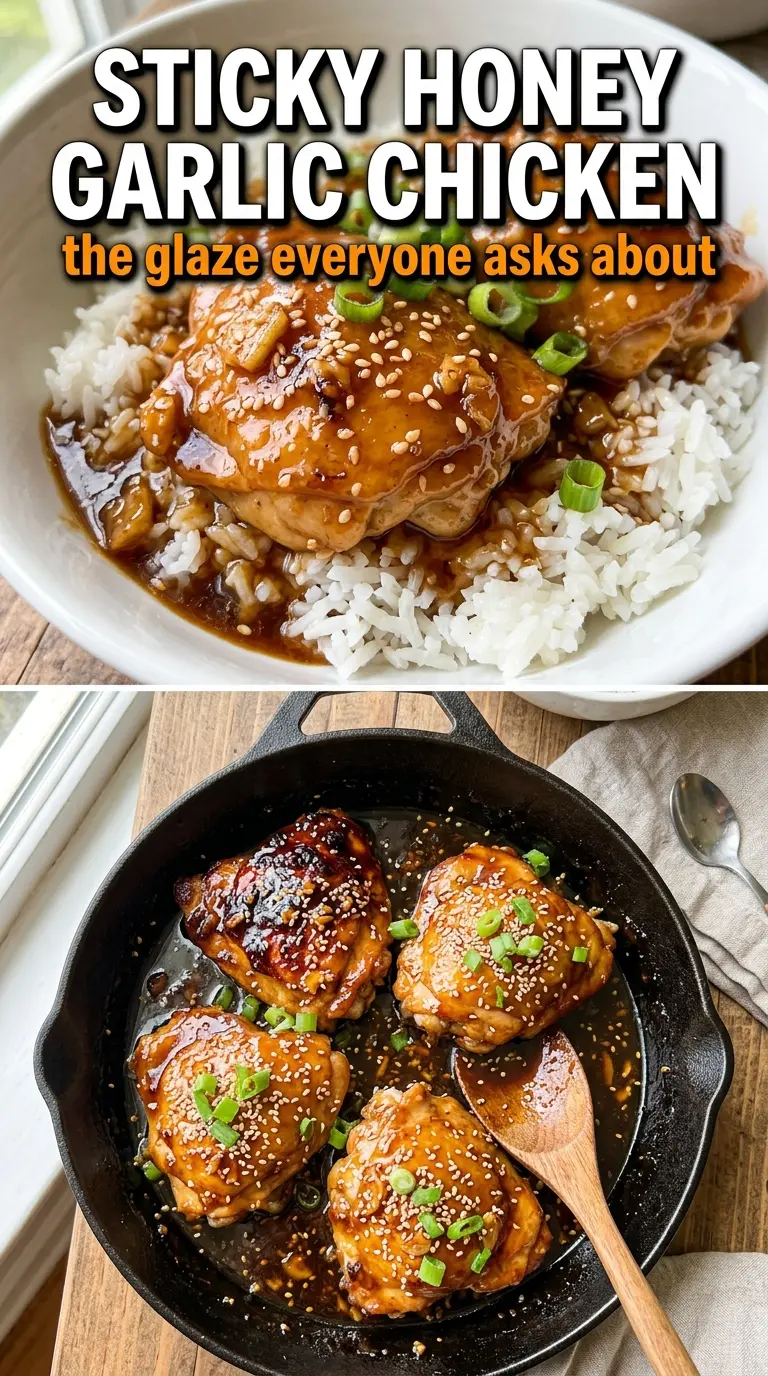
Sticky, glossy honey garlic chicken earns its place in the dinner rotation because it hits that sweet-savory balance without needing a long ingredient list or a fussy sauce. The chicken sears first, which gives the glaze something to cling to instead of sliding off into the pan, and the finished sauce turns deep amber with little caramelized garlic bits running through it.
What makes this version work is the order. The chicken is cooked separately until it has actual color, then the sauce gets built in the same skillet so the browned bits melt into the honey and soy. The cornstarch slurry goes in near the end, when the sauce is already hot, which helps it thicken into that lacquered finish instead of staying thin and watery.
Below, I’ve added the small details that matter: how to keep the glaze from turning bitter, when the sauce is thick enough to coat, and a few swaps that still give you a good weeknight skillet dinner.
The glaze thickened up in minutes and stayed shiny on the chicken instead of pooling into a thin sauce. I served it over rice and my husband kept going back for the sticky edges in the pan.
Save this honey garlic chicken for the nights when you want a sticky skillet glaze that clings to every bite.
The Trick to Getting the Glaze Thick Instead of Watery
The biggest mistake with honey garlic chicken is rushing the sauce before the pan is ready for it. If the chicken is still releasing moisture or the heat is too low, the honey mixture loosens into a thin syrup and never quite tightens up. A hot pan and a short simmer are what give you that sticky finish.
The cornstarch slurry also needs a hot base. Stir it in only after the sauce is bubbling, then give it a couple of minutes to work. If you add it too early, it can stay chalky; if you boil it hard for too long, the sauce can turn dull and tight instead of glossy.
What the Sauce Ingredients Are Doing in the Pan
- Honey — This is what gives you the shine and the sticky coating. A darker, more robust honey will add a little more depth, but any regular honey works here.
- Soy sauce — It pulls the sweetness back and gives the glaze that deep savory edge. Use regular soy sauce for the best balance; low-sodium works if that’s what you keep on hand, but the sauce may taste a touch lighter.
- Butter — It softens the garlic and rounds out the glaze so it doesn’t taste sharp. You can use salted or unsalted, but if you use salted butter, ease up a little on the seasoning at the start.
- Rice vinegar — This keeps the sauce from tasting heavy. If you don’t have it, apple cider vinegar works in a pinch, but use a little less because it’s stronger and slightly fruitier.
- Cornstarch slurry — This is what turns the sauce from thin and runny into a coating glaze. Mix it smooth before it hits the pan so you don’t get little starchy lumps.
Building the Chicken and Sauce in the Right Order
Seasoning and Searing the Chicken
Season the chicken breasts evenly, then put them into a hot skillet with the olive oil. You want a steady sizzle the moment the chicken hits the pan; if it sits there quietly, the pan isn’t hot enough and the chicken will steam before it browns. Cook until each side has a deep golden crust and the center reaches 165°F, then move it to a plate so it doesn’t overcook while you finish the sauce.
Making the Garlic Honey Base
Use the same pan for the sauce. The browned bits left behind are part of the flavor, and they dissolve into the butter as the garlic cooks. Keep the garlic moving and stop as soon as it smells fragrant; if it goes past that point and starts to brown hard, the sauce picks up a bitter edge that honey can’t hide.
Thickening to a Sticky Glaze
Pour in the honey, soy sauce, and rice vinegar, then stir in the cornstarch slurry once the sauce is simmering. In a minute or two, it should shift from looking thin and shiny to looking thick enough to leave a trail on the spatula. If it gets too thick, splash in a spoonful of water to loosen it back up; if it stays loose, give it another minute over medium heat.
Coating the Chicken and Finishing
Return the chicken to the skillet and turn it through the glaze until every surface is coated. Let it cook for another minute or two so the sauce clings and picks up a little more color around the edges. Finish with sesame seeds and sliced green onions while the glaze is still hot enough to set around the garnish.
How to Adapt This Honey Garlic Chicken for Different Kitchens
Make It with Chicken Thighs
Boneless skinless thighs work well if you want a juicier result and a little more forgiveness on the stove. They take a few minutes longer to cook through, and the final texture is softer and richer than chicken breasts. Keep the heat steady so the skinless meat still gets color before the sauce goes in.
Gluten-Free Version
Use tamari or a certified gluten-free soy sauce in place of regular soy sauce. The glaze will taste nearly the same, with the same sticky finish, and the cornstarch already keeps the sauce gluten-free. Serve it with rice or vegetables and you won’t miss a thing.
Lower-Sugar Balance
You can cut the honey slightly if you want a less sweet glaze, but don’t remove too much or the sauce loses its signature shine and body. If you reduce the honey, keep the rice vinegar in place so the sauce still tastes balanced instead of flat.
Storage and Reheating
- Refrigerator: Store leftovers in an airtight container for up to 4 days. The sauce will thicken as it chills, which is normal.
- Freezer: It freezes well for about 2 months, though the glaze may lose a little shine after thawing. Freeze the chicken and sauce together in a tightly sealed container.
- Reheating: Warm it gently in a skillet over low heat with a splash of water to loosen the glaze. High heat can make the sauce seize and turn sticky in the wrong way before the chicken is heated through.
Answers to the Questions Worth Asking

Honey Garlic Chicken
Ingredients
Equipment
Method
- Season the chicken breasts with salt, pepper, and garlic powder to taste. Heat olive oil in a large skillet over medium-high heat and sear the chicken for 5-6 minutes per side until golden and the internal temperature reaches 165°F, then remove to a plate.
- In the same pan, melt the butter and cook the minced garlic for 1 minute over medium heat until fragrant. Add the honey, soy sauce, and rice vinegar, stirring to combine.
- Add the cornstarch slurry and simmer for 2-3 minutes until the sauce thickens into a sticky glaze with amber gloss.
- Return the chicken to the pan and turn to coat in the honey garlic glaze. Cook for 1-2 more minutes, letting the glaze blister lightly and cling to the surface.
- Garnish with sesame seeds and sliced green onions. Serve hot over steamed rice.