Ina Garten’s meatloaf earns its place on the table because it slices cleanly, stays moist, and carries that deep savory-sweet glaze without falling apart. The texture is sturdy enough for neat slices, but the center stays tender instead of turning dense or bouncy. It feels like the kind of meatloaf people remember from a good dinner out, not the dry slab they ate as kids.
What makes this version work is the balance: beef for flavor and structure, veal or pork for richness, and just enough breadcrumbs and stock to hold everything together without turning it mushy. The caramelized onions matter, too. They bring sweetness and moisture, and they melt into the meat instead of sitting in sharp little bits. The free-form loaf on a baking sheet gives you more even cooking than a tight loaf pan, so the glaze can caramelize instead of steaming.
Below you’ll find the exact cues I use to know when the loaf is mixed properly, when the glaze is ready, and how to keep the slices intact after baking. There’s also a practical set of swaps and storage notes for the nights when you want to stretch it into another meal.
The glaze turned sticky and glossy, and the meatloaf held together in perfect slices after resting. The caramelized onions gave it a sweeter, richer taste than my usual recipe.
Ina Garten meatloaf with caramelized onions and that glossy ketchup glaze is worth keeping close for Sunday dinner or easy leftovers.
The Secret to a Meatloaf That Slices Cleanly Instead of Crumbling
The biggest mistake with meatloaf is overmixing. Once the meat gets worked too hard, the proteins tighten and the loaf turns dense before it even hits the oven. Here, the goal is a mixture that looks evenly combined but still feels loose in the bowl. That’s what gives you a tender slice instead of a brick.
The other detail that matters is shape. A free-form loaf cooks more evenly than one packed into a pan, and the top browns instead of steaming. That also gives the glaze a chance to tighten into a lacquered finish. If your meatloaf tends to dry out at the edges before the center is done, it usually means the loaf is too tall or the oven is too hot.
- Flat loaf shape — This is one of the most useful choices in the recipe. A flatter loaf cooks at a steady rate from edge to center, which keeps the middle moist without overcooking the outside.
- Caramelized onions — Raw onions bring bite; caramelized onions bring sweetness and moisture. Cook them until they’re soft, golden, and reduced so they blend into the meat instead of leaking water into the loaf.
- Resting time — Don’t skip it. Resting lets the juices settle back into the meat, and that’s what keeps the slices neat when you cut into it.
What Each Ingredient Is Actually Doing in This Meatloaf
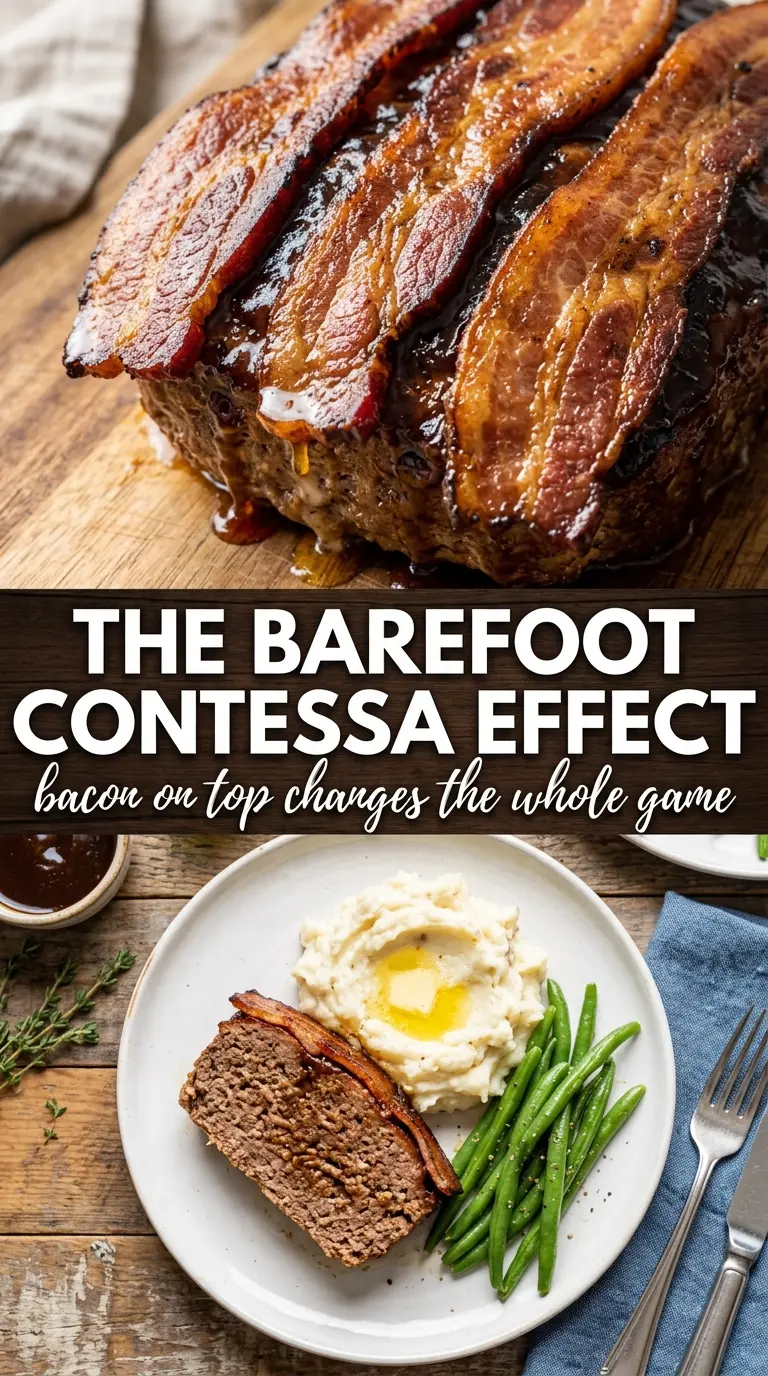
- Ground beef — This gives the loaf its meaty flavor and structure. An 80/20 style blend is ideal if you’re choosing beef yourself, because it stays juicy without making the loaf greasy.
- Ground veal or pork — Either one softens the texture and adds richness. Pork is easier to find and works beautifully; veal is a little more delicate and gives that classic restaurant-style tenderness.
- Plain dry breadcrumbs — These hold the juices in place. If you swap in fresh breadcrumbs, use a little less because they absorb differently and can make the mixture too loose.
- Eggs and stock — The eggs bind, and the stock keeps the crumb from drying out. Don’t add extra liquid beyond what’s listed; meatloaf that seems soft before baking can still set up properly in the oven.
- Dijon, Worcestershire, and thyme — This is the backbone of the seasoning. Dijon gives a quiet sharpness, Worcestershire adds depth, and thyme keeps the flavor savory instead of sweet.
- Caramelized onions — These are worth the extra pan time. They’re the difference between a meatloaf that tastes seasoned and one that tastes finished.
- Glaze ingredients — Ketchup, brown sugar, and cider vinegar give you that glossy tangy-sweet finish. The vinegar keeps the glaze from tasting flat, which matters once it bakes down on top of the meat.
Building the Loaf So It Cooks Evenly and Stays Juicy
Mix the Meat Without Tightening It
Combine everything in a large bowl and use your hands just until the ingredients disappear into one another. The mixture should look even, but it shouldn’t feel kneaded or compacted. If you keep squeezing after that point, the finished loaf turns springy and dense. Stop as soon as the onions and herbs are distributed.
Shape It Flat on the Pan
Form the mixture into a free-form loaf on a parchment-lined baking sheet, keeping the shape more like an oval than a tall mound. A flatter loaf exposes more surface area to the heat, so the edges don’t dry out before the center reaches temperature. If the loaf is too thick, the glaze may burn before the inside is done.
Brush on the Glaze Before It Goes In
Mix the ketchup, brown sugar, and vinegar until smooth, then brush it generously over the top and sides. A full coating helps the glaze caramelize instead of sliding off. If it looks thin at first, that’s fine; it thickens as it bakes and becomes sticky and glossy near the end.
Bake to Temperature, Not the Clock
Start checking around the 60-minute mark, but use the center temperature as the real guide. You’re looking for 160°F in the middle, where the loaf is fully set but still juicy. If you pull it too early, the slices can collapse; if you leave it in too long, the glaze darkens too much and the meat loses moisture.
How to Adapt This Meatloaf for Different Tables and Leftover Plans
Use pork instead of veal
Pork gives the loaf a little more richness and is usually easier to find. The texture stays tender, but the flavor leans slightly sweeter and less delicate than veal.
Make it gluten-free
Swap the dry breadcrumbs for a certified gluten-free breadcrumb or crushed gluten-free crackers. Use the same amount, then stop mixing as soon as the texture looks cohesive so the loaf doesn’t turn pasty.
Make it dairy-free without losing richness
This recipe already fits a dairy-free table as written, which is part of why it works so well for a crowd. Keep the stock and onions in place; they provide the moisture and depth that butter or milk would normally supply in other meatloaves.
Storage and Reheating
- Refrigerator: Store sliced or unsliced meatloaf in an airtight container for up to 4 days. The glaze tightens a bit in the fridge, but the flavor deepens overnight.
- Freezer: Freeze individual slices or a whole cooled loaf tightly wrapped for up to 3 months. Thaw in the refrigerator before reheating so the center warms evenly.
- Reheating: Warm slices covered in a 300°F oven with a splash of stock or water in the pan. The common mistake is blasting it in the microwave until the edges go tough before the center is hot.
Answers to the Questions Worth Asking
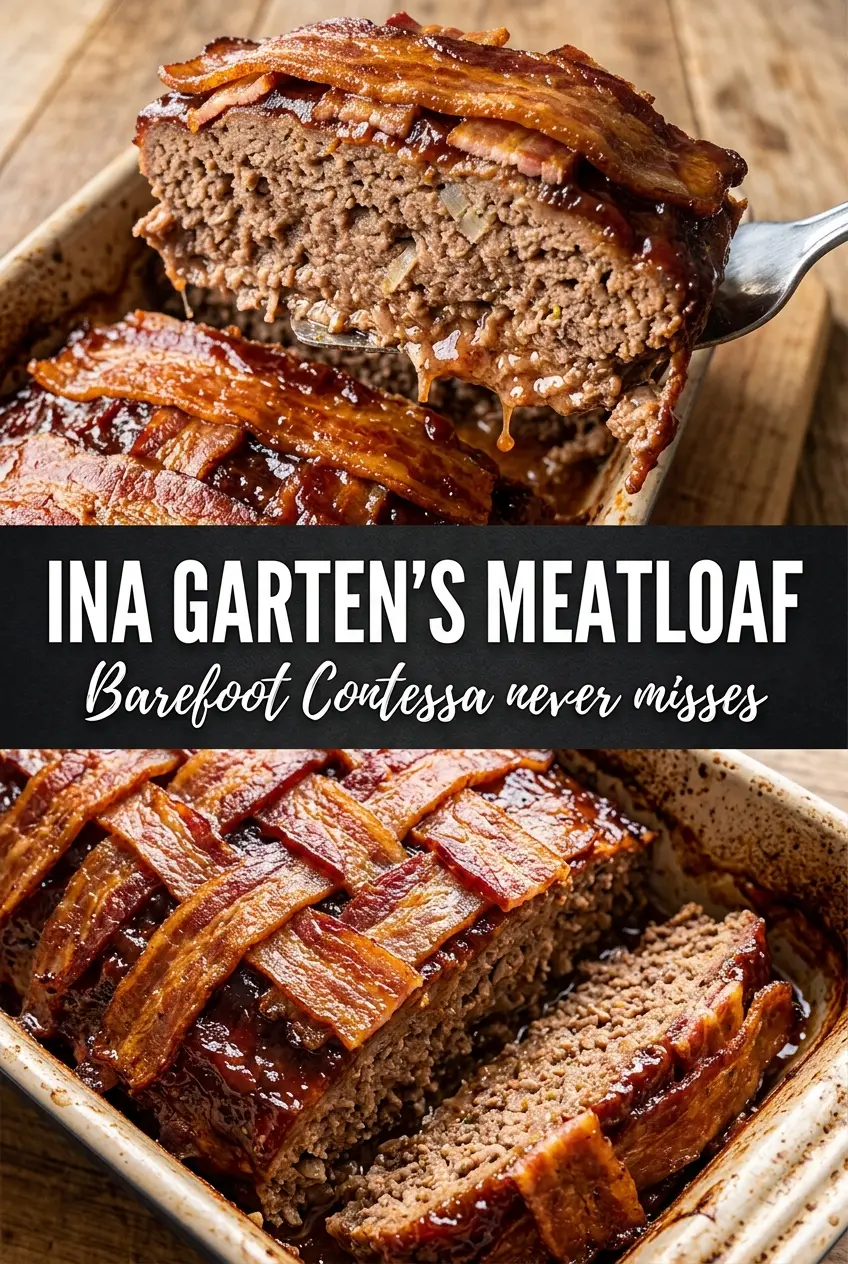
Ina Garten's Meatloaf
Ingredients
Equipment
Method
- Preheat the oven to 325°F for even, gentle baking.
- In a large bowl, combine ground beef, ground veal or pork, breadcrumbs, eggs, Dijon mustard, Worcestershire sauce, chicken stock, thyme, salt, and black pepper.
- Fold in the caramelized onions until just mixed so the loaf stays dense and slices cleanly.
- Shape the mixture into a flat, free-form loaf on a parchment-lined baking sheet, keeping it evenly thick for uniform cooking.
- Mix the ketchup, brown sugar, and cider vinegar to make the glaze.
- Brush the glaze generously over the top and sides so it lacqueres as it bakes.
- Bake for 60–75 minutes, until the internal temperature reaches 160°F, checking near the end for doneness.
- Rest the meatloaf for 15 minutes before slicing to let the juices set and keep the loaf from crumbling.