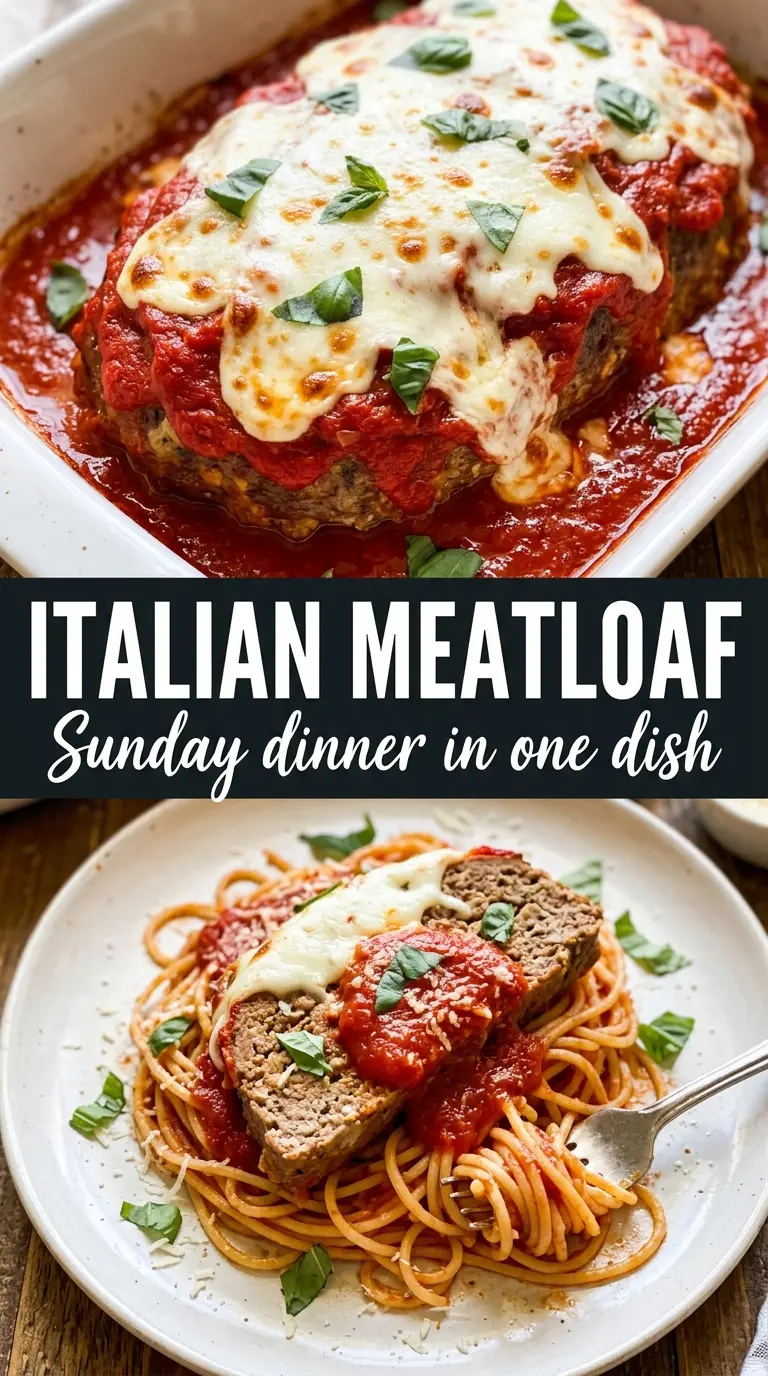
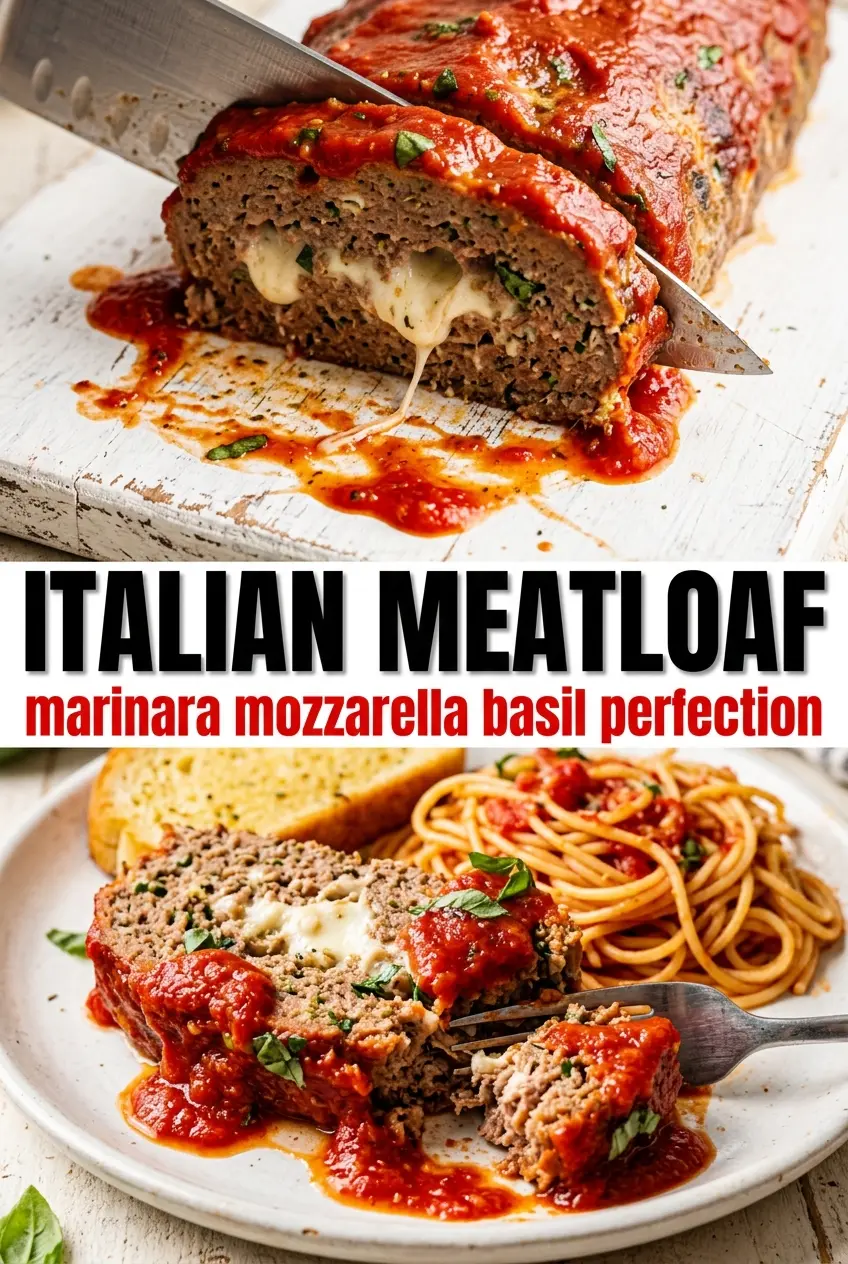
Italian meatloaf bakes up tender and savory inside, with a browned top, a layer of marinara, and melted mozzarella that turns every slice into something closer to baked pasta than old-school meatloaf. The parmesan and herbs keep the loaf from tasting flat, and the marinara on top gives it that rich, familiar finish that makes it feel comforting without being heavy.
The trick is using enough binder to hold the loaf together without packing it so tightly that it turns dense. Milk, eggs, and breadcrumbs do the quiet work here, while the beef-and-pork combination keeps the texture juicy and the flavor deep. I also like adding the sauce partway through baking instead of from the start, so the top gets a little structure before the cheese goes on.
Below, I’ve included the small details that matter most: how to keep the loaf tender, which substitutions actually work, and what to do if you want to make it ahead.
The loaf stayed so moist, and adding the marinara halfway through kept the top from getting soggy. The mozzarella browned beautifully, and even the leftovers sliced cleanly the next day.
Love the marinara-and-mozzarella finish on this Italian Meatloaf? Save it to Pinterest for a cozy loaf dinner that eats like lasagna in sliceable form.
The Reason This Meatloaf Stays Tender Instead of Dense
The biggest mistake with meatloaf is mixing it like bread dough. Once the meat starts to look evenly combined, stop. Overmixing tightens the proteins and turns the loaf springy and heavy, which is exactly what you don’t want here.
The other thing that helps is letting the breadcrumbs soak up the milk before the meat goes in. That gives the loaf a softer, more even texture and keeps the parmesan from drying it out. If you’ve ever had a meatloaf crumble apart at the table, it was probably underbound, not undercooked.
- Ground beef — Use an 85/15 or similar blend if you can. Leaner beef tends to dry out before the center reaches temperature.
- Ground pork or Italian sausage — Pork adds richness and a little sweetness. If you use Italian sausage, cut back on added salt because it brings its own seasoning.
- Italian breadcrumbs — These help hold the loaf together and carry the herbs. Plain breadcrumbs work too, but add a little more Italian seasoning.
- Parmesan — Freshly grated parmesan melts better and tastes sharper. The shelf-stable kind will work in a pinch, but the flavor is flatter.
- Marinara — Use a sauce you’d actually eat over pasta. A thin, watery sauce can make the topping slide off instead of sitting in a glossy layer.
What Each Ingredient Is Actually Doing in This Recipe
- Primary ingredient (the star) — Quality matters most. Choose the best you can find.
- Cooking medium (oil, butter, or broth) — This carries flavors and prevents dryness.
- Seasonings (salt, pepper, spices, herbs) — Layer flavors so nothing overpowers. Build depth gradually.
- Aromatics (garlic, onion, herbs) — Cook with fat to bloom flavors. Become the foundation.
- Supporting ingredients — Complement the main ingredient without overpowering it.
- Sauce or liquid (if applicable) — Brings flavors together. Balance richness with acid.
- Acid (lemon, vinegar, wine, or other) — Brightens and prevents flat-tasting results.
- Final finish (garnish, glaze, or sauce) — Prevents one-dimensional taste and adds visual appeal.
Building the Loaf So the Cheese and Sauce Stay Put
Press the meat mixture into the pan firmly enough to eliminate air pockets, but don’t mash it down. A loose shape will crack and sink in the middle, while a packed loaf bakes up tight and dry. The pan gives you clean sides and helps the loaf hold its shape for the sauce and mozzarella.
Bake the loaf first, then add the marinara and cheese near the end. That timing matters. If the sauce goes on too early, it can keep the top soft and prevent the mozzarella from browning. You want the sauce to warm and thicken on the surface while the cheese melts into those little browned spots that make each slice look appetizing.
Mixing Without Overworking
Combine the ingredients with clean hands or a fork until the breadcrumbs disappear and the mixture looks even. The texture should feel cohesive but still a little loose. If it starts to look paste-like, you’ve gone too far and the finished loaf will be compact instead of tender.
Pressing and Baking the Base
Move the mixture into a greased 9×5 loaf pan and press it into the corners so it bakes evenly. Bake until the top is set and the edges are pulling slightly from the pan. At this stage, the loaf should smell savory and feel firm when you tap it lightly with a spoon.
Finishing With Sauce and Cheese
Spoon the marinara over the top in an even layer, then scatter the mozzarella across the sauce. Return the pan to the oven until the cheese is bubbling and the top has a few golden spots. Pull it at 160°F in the center, then let it rest before slicing so the juices settle back into the loaf instead of running out onto the cutting board.
How to Adapt This for Different Kitchens and Different Cravings
Make It Gluten-Free Without Losing Structure
Swap the Italian breadcrumbs for a gluten-free breadcrumb blend in the same amount. If your mix is very coarse, add an extra tablespoon or two of milk so the loaf still feels soft and cohesive. The texture stays close to the original, but the crumb may be a touch less springy.
Use All Beef When That’s What You Have
You can replace the pork with another half pound of ground beef, but the loaf will be a little less juicy and a little less rich. If you go that route, choose a beef blend with some fat and don’t skip the resting time, since all-beef loaves are more likely to shed juices when sliced too soon.
Make It Spicier Like a Red-Sauce Supper
Use hot Italian sausage for half of the pork, or add red pepper flakes to the meat mixture. That gives the loaf a little back-end heat without changing the texture. It pairs especially well with a bright marinara that can stand up to the extra spice.
Make It Ahead for an Easier Dinner
Shape the loaf, cover it, and refrigerate it up to 24 hours before baking. This actually helps the flavors settle and makes dinner easier to time. If it goes into the oven cold from the fridge, add a few extra minutes to the first bake so the center can catch up evenly.
Storage and Reheating
- Refrigerator: Store slices in an airtight container for up to 4 days. The texture stays moist, and the sauce helps keep the loaf from drying out.
- Freezer: Freeze cooled slices tightly wrapped, then tucked into a freezer bag for up to 3 months. Thaw overnight in the fridge before reheating for the best texture.
- Reheating: Reheat covered in a 325°F oven with a spoonful of marinara on top, or warm slices gently in the microwave at medium power. High heat dries out the edges before the center is hot.
Questions I Get Asked About This Recipe
Italian Meatloaf
Ingredients
Equipment
Method
- Preheat the oven to 350°F and grease a 9x5 loaf pan. Set the pan aside so it’s ready to bake.
- In a large mixing bowl, combine ground beef, ground pork or Italian sausage, parmesan, Italian breadcrumbs, eggs, whole milk, garlic, parsley, Italian seasoning, Worcestershire sauce, and salt and pepper until just mixed. Stop when the meat is evenly combined to keep the loaf tender.
- Press the mixture firmly into the greased loaf pan to pack it evenly. This helps the loaf hold together when sliced.
- Bake at 350°F for 50 minutes. Look for the loaf to look set around the edges.
- Spread marinara sauce over the top and scatter shredded mozzarella over the sauce. Make sure the sauce is mostly covered so it bubbles through the cheese.
- Bake at 350°F for 15–20 more minutes until the cheese is bubbly and golden and the internal temperature reaches 160°F. The top should be browned and the juices should look thick, not watery.
- Rest the meatloaf for 10 minutes. This lets the juices redistribute so slices stay neat.
- Garnish with fresh basil and slice. Serve while warm with the marinara visible at the edges.