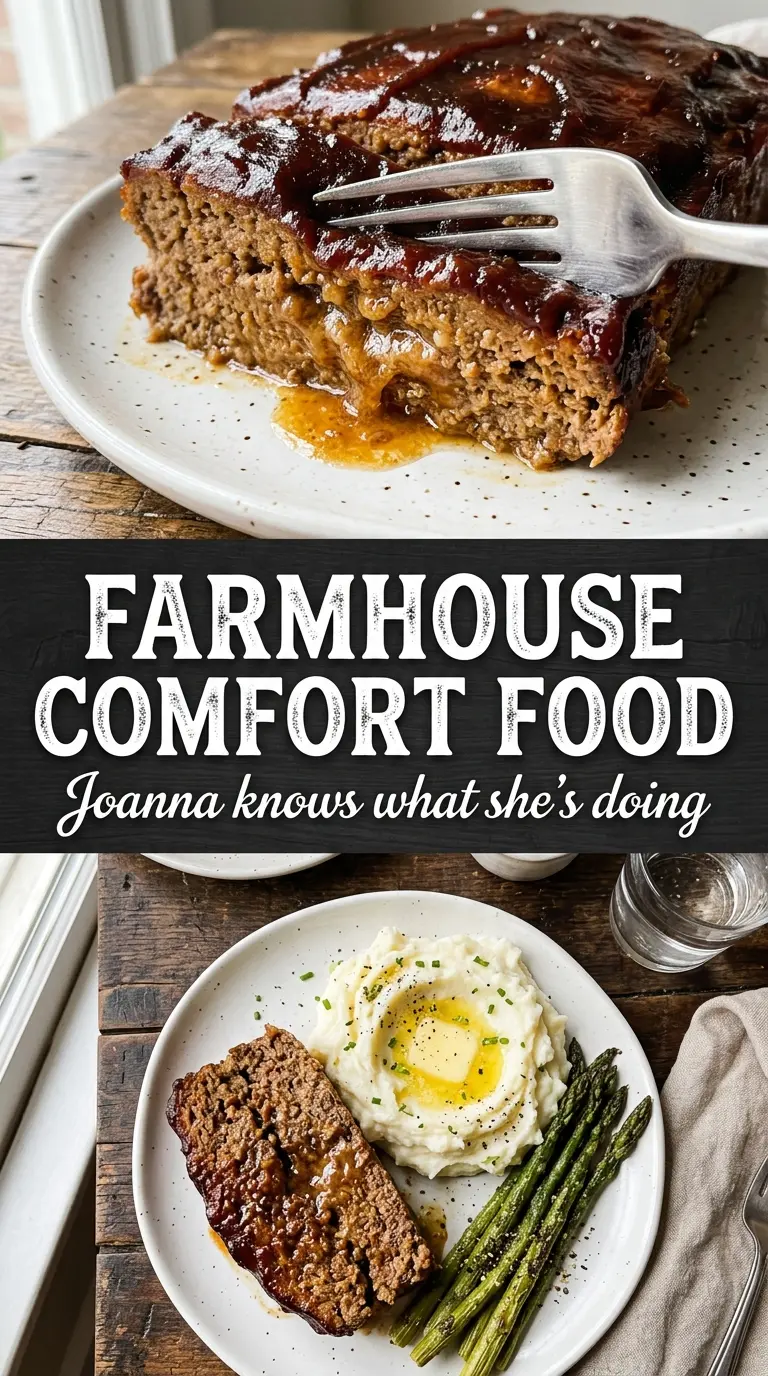
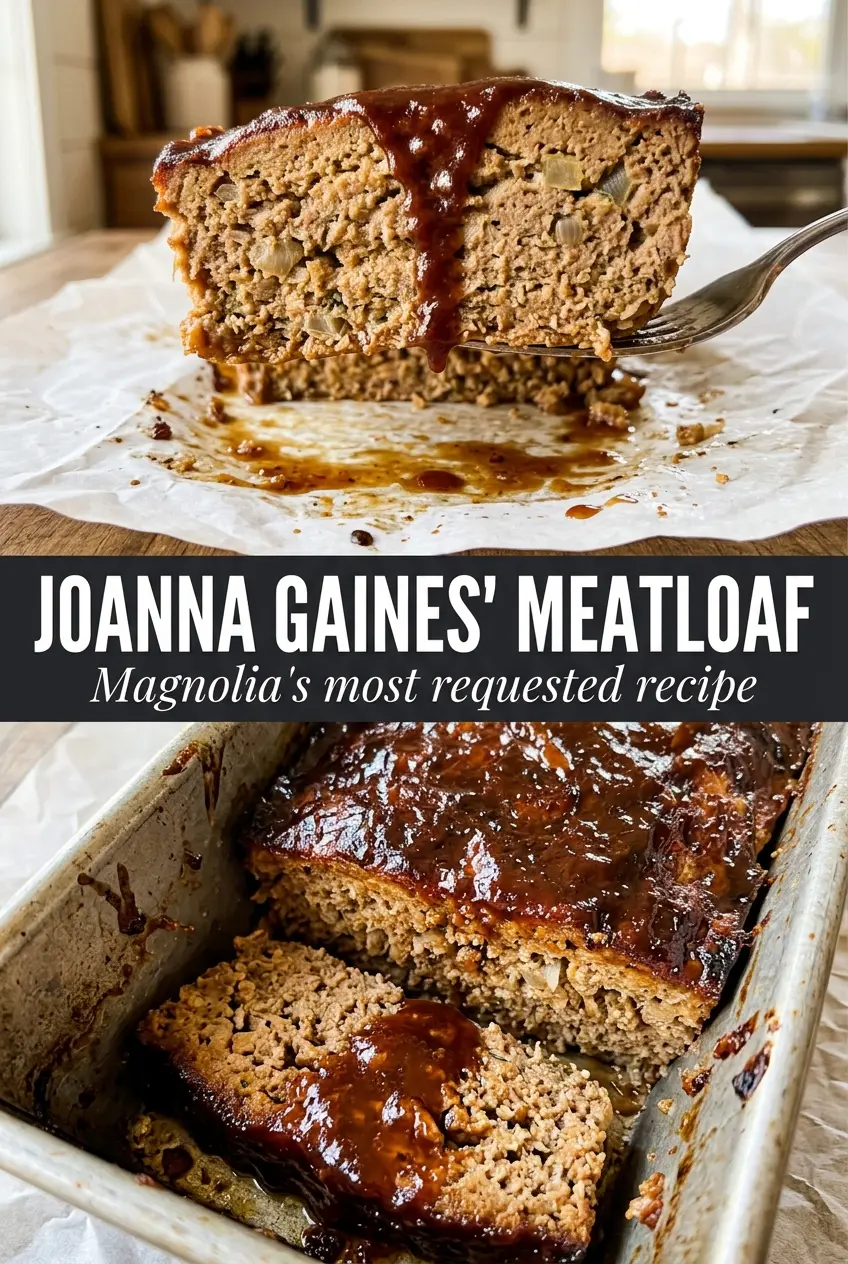
Joanna Gaines’ meatloaf comes out with a tender, sliceable crumb and a glossy ketchup glaze that bakes into a sticky, caramelized top. It’s the kind of meatloaf that doesn’t fall apart on the plate, but it still stays moist all the way through the center. The flavor is classic and familiar, with just enough Worcestershire, onion, and garlic to keep each bite from tasting flat.
What makes this version work is the balance. The breadcrumbs and milk keep the meat soft without turning it dense, and the eggs bind everything just enough to hold a clean slice. The glaze goes on in two stages, which gives you that burnished finish instead of a thin sugary coating that disappears in the oven.
Below, I’ve broken down the one part that matters most if you’ve had dry or crumbly meatloaf before, plus a few smart swaps and storage notes so you can make it your own without losing what makes it work.
The glaze set up beautifully and the loaf stayed moist even after resting. My husband went back for a second slice before I’d even cleared the pan.
Like this caramelized meatloaf? Save it to Pinterest for the nights when you want a classic loaf with a glossy ketchup-brown sugar glaze.
The Step That Keeps Meatloaf Tender Instead of Dense
The biggest mistake with meatloaf is mixing it like bread dough. Once the beef starts to look pasty, the texture goes from tender to tight, and no glaze can hide that. Combine everything until the ingredients are evenly distributed, then stop. The mixture should hold together when you press it, but it shouldn’t look whipped or compressed.
The other thing that matters here is the pan. A loaf pan gives this meatloaf its neat shape and helps the glaze pool and caramelize across the top, but it also means the meat can steam if the oven runs too hot or the mixture is packed down too firmly. That’s why a gentle hand and a full 10-minute rest at the end matter. The loaf firms up as it sits, which gives you clean slices instead of a crumbling mess.
What Each Ingredient Is Actually Doing in This Meatloaf
- Ground beef — Use beef with enough fat to stay juicy. Very lean beef can work, but the loaf will be drier and more likely to taste meaty in a flat way. If you swap in a leaner blend, don’t reduce the milk.
- Seasoned breadcrumbs — These absorb the milk and help the loaf stay tender. Plain breadcrumbs work too, but then you need a little more seasoning in the mix. Don’t use too much or the loaf turns bready instead of meaty.
- Milk and eggs — This is the moisture-and-binder combo that keeps the texture soft without falling apart. Whole milk gives the best result because it adds richness, but 2% works in a pinch. Skim milk is where the loaf starts to lose body.
- Onion and garlic — Finely diced onion melts into the loaf and keeps it from tasting heavy. The garlic should be minced small enough that it blends into the meat, not in sharp chunks. If you want a smoother texture, grate the onion instead of dicing it.
- Worcestershire and Dijon — These are doing more than seasoning. They add savory depth and keep the glaze from tasting like straight ketchup and sugar. Don’t skip them unless you’re prepared for a flatter, sweeter top.
Building the Loaf and Glaze So They Finish at the Same Time
Mix the meat with a light hand
Start by combining the beef, breadcrumbs, eggs, milk, onion, garlic, Worcestershire, Italian seasoning, garlic powder, salt, and pepper just until everything looks evenly mixed. The moment the bowl starts to look uniform, stop stirring. Overmixed meatloaf bakes up springy and dry on the edges, even if the center still looks fine.
Shape it without compacting it
Press the mixture into a greased 9×5 loaf pan and smooth the top just enough to even it out. Don’t pack it down hard. You want the loaf to hold its shape, but you still need space between the meat fibers so the finished texture stays tender.
Use the glaze in two passes
Mix the ketchup, brown sugar, Dijon, and Worcestershire until smooth, then spread half over the top before baking. That first layer bakes into the surface and starts the caramelization early. Add the second layer near the end so it stays glossy and doesn’t scorch. If the glaze looks too dark before the loaf is done, tent the top loosely with foil for the last few minutes.
Rest before slicing
Pull the loaf when the center reaches 160°F, then let it sit for 10 minutes. This is the difference between a neat slice and a puddle on the cutting board. The juices settle back into the meat during the rest, and the loaf firms enough to cut cleanly.
How to Adapt This Meatloaf Without Losing the Good Part
Gluten-free version
Swap the seasoned breadcrumbs for certified gluten-free breadcrumbs or crushed gluten-free crackers. Keep the amount the same at first, then judge the texture; the mixture should still feel moist and cohesive. The flavor stays close to the original, though the crumb may be a touch softer.
Dairy-free adjustment
Use an unsweetened plain non-dairy milk instead of whole milk. The loaf still holds together, but you lose a little richness, so don’t overbake it. The glaze remains the same since it doesn’t rely on dairy.
Individual mini loaves
Shape the mixture into smaller loaves in a lined sheet pan and reduce the baking time. Mini loaves give you more glazed surface area and faster cooking, which is handy if you want crisp edges and quicker weeknight timing. Check early with a thermometer so they don’t dry out.
Storage and Reheating
- Refrigerator: Store sliced or unsliced meatloaf for up to 4 days. It stays moist, and the flavor deepens overnight.
- Freezer: Freezes well. Wrap the cooled loaf or individual slices tightly and freeze for up to 3 months. Thaw in the refrigerator before reheating.
- Reheating: Reheat covered in a 325°F oven with a splash of water or extra glaze so the slices don’t dry out. The common mistake is blasting it in the microwave, which toughens the beef and dries the edges before the center is warm.
Answers to the Questions Worth Asking
Joanna Gaines' Meatloaf
Ingredients
Equipment
Method
- Preheat the oven to 350°F and grease a 9x5 loaf pan.
- Combine ground beef, seasoned breadcrumbs, eggs, whole milk, onion, garlic, Worcestershire sauce, dried Italian seasoning, garlic powder, salt, and pepper until just mixed.
- Transfer the mixture to the loaf pan and smooth the top.
- Mix ketchup, brown sugar, Dijon mustard, and Worcestershire, then spread half over the meatloaf.
- Bake for 55 minutes, then spread the remaining glaze over the top.
- Bake 15 more minutes until the internal temperature reaches 160°F and the glaze is deeply caramelized with a dark, shiny finish.
- Rest the meatloaf for 10 minutes before slicing and serving.