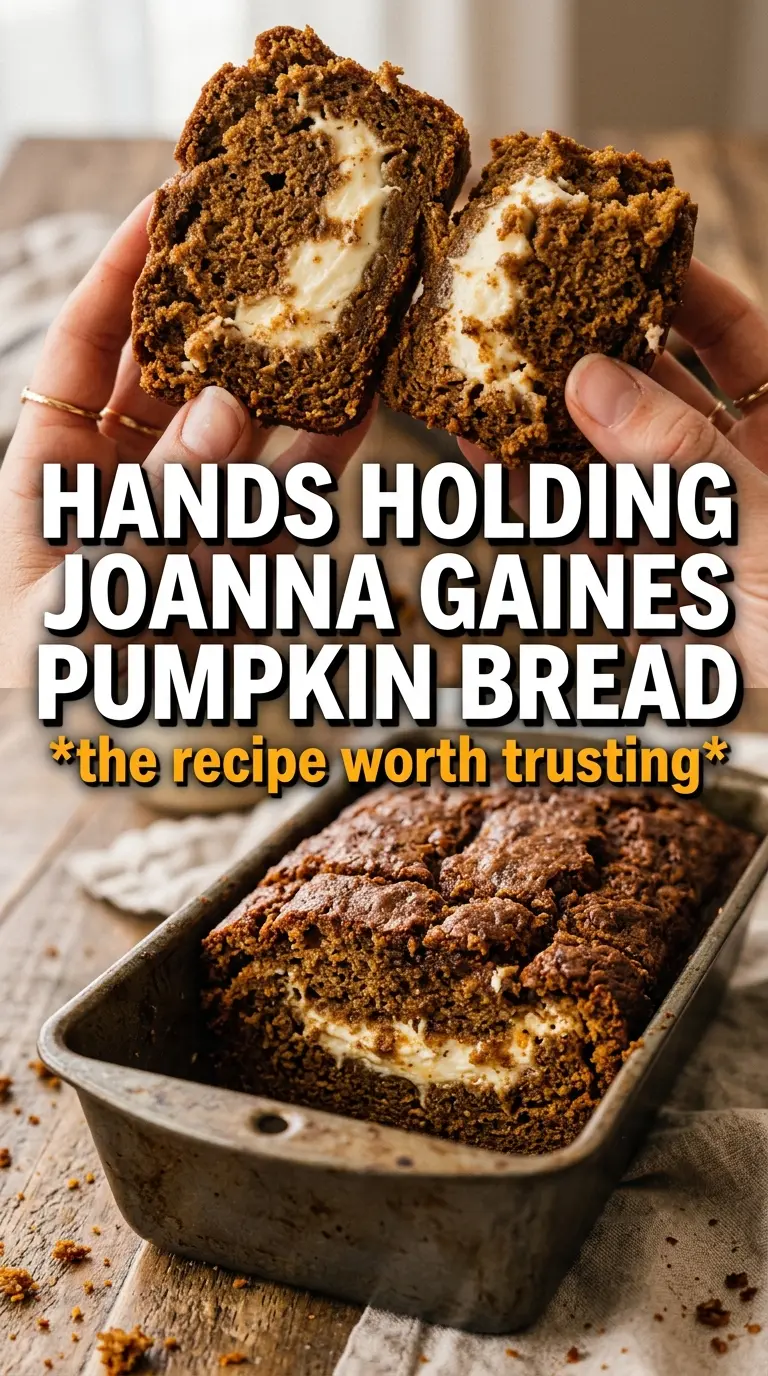
Joanna Gaines pumpkin cream cheese bread bakes into two tender loaves with a ribbon of sweet cream cheese running through the middle and just enough spice to keep each slice interesting. The crumb stays moist for days, the top turns deeply golden, and that creamy center sets into a soft, cheesecake-like layer that makes each slice feel a little more special than plain pumpkin bread.
What makes this version work is the balance. The pumpkin puree brings body and moisture, while the oil keeps the loaf soft instead of dry and crumbly. The cream cheese filling needs to be beaten until completely smooth before it goes into the pan, because any lumps will stay lumps after baking. I also like that the batter is mixed just until combined; overmixing tightens the crumb and takes away that plush texture people want from a good pumpkin loaf.
Below, I’ve included the part that matters most when you bake this kind of swirl bread: how to keep the filling centered, how to tell when the loaves are done without overbaking the edges, and the small adjustments that help if you only have one pan or need to make it ahead.
The cream cheese layer stayed right in the middle and didn’t sink, and the loaf sliced clean after cooling. The spice was warm without being overpowering, and it was even better the next day.
Save this pumpkin cream cheese bread for the mornings when you want a soft pumpkin loaf with a thick, creamy swirl baked right through the center.
The Center Swirl Is What Makes or Breaks This Loaf
With pumpkin bread, the most common mistake is treating the cream cheese filling like an afterthought. If it’s too loose, it disappears into the batter. If it’s too thick or lumpy, it bakes up in pockets instead of a clean ribbon. The filling for this loaf needs to be smooth enough to spread but still thick enough to stay put when you spoon it down the center.
The other thing that matters is placement. Half the batter goes into the pans first, then the filling, then the rest of the batter on top. That layering keeps the swirl suspended instead of sinking to the bottom. A gentle knife swirl is enough; if you chase the filling too hard, you’ll muddy the layers and lose the contrast that makes each slice look as good as it tastes.
What Each Ingredient Is Actually Doing in This Pumpkin Bread
- Pumpkin puree — Use plain pumpkin puree, not pumpkin pie filling. The puree gives the loaf moisture, structure, and that dense-but-soft crumb. Homemade puree can work, but canned is more consistent and usually gives a better texture.
- Vegetable oil — Oil keeps this bread tender longer than butter would. Butter adds flavor, but it also firms up as the loaf cools. If you swap in melted butter, the bread will taste richer but it won’t stay as soft the next day.
- Eggs — You need the full amount here because they hold the batter together and help the loaf rise around that heavy pumpkin base. For the filling, the egg helps the cream cheese set into a sliceable layer instead of staying runny.
- Cream cheese — Full-fat cream cheese gives the cleanest swirl and the richest center. Low-fat versions tend to get looser and can bake up a little watery. Soften it all the way before beating, or you’ll end up chasing little cold bits around the bowl.
- Spices — Cinnamon, nutmeg, and cloves are what make the loaf taste rounded instead of flat. Fresh spices matter here because pumpkin itself is mild. If your spices have been sitting in the cabinet for years, the loaf will still bake fine, but it won’t taste as warm or fragrant.
Building the Loaf So the Swirl Stays Put
Mixing the Pumpkin Base
Whisk the dry ingredients together first so the baking soda and spices are evenly distributed, then mix the pumpkin, sugar, eggs, oil, and water until smooth. The batter will be thick and glossy, not fluffy. Once the dry ingredients go in, fold just until no streaks of flour remain. If you keep stirring after that point, the loaf turns tight and bready instead of soft and tender.
Making the Cream Cheese Layer
Beat the cream cheese, sugar, egg, and vanilla until the mixture is completely smooth and satiny. You want it thick enough to spoon but loose enough to spread into a line without tearing the batter underneath. If the filling looks grainy, the cream cheese wasn’t soft enough at the start. Let it sit on the counter until it presses easily under your finger before you begin.
Layering and Swirling
Divide the pumpkin batter between the pans, then spoon the cream cheese filling down the center of each loaf. Add the remaining batter over the top, covering the filling as evenly as you can. Use a knife to make just one or two gentle swirls through the center. Deep swirling pulls the filling into the batter and leaves you with a mottled loaf instead of a distinct cream cheese ribbon.
Baking to the Right Doneness
Bake until the tops are set and a toothpick inserted at the edge comes out clean. Don’t chase the center with the tester, because the cream cheese layer will still look softer than the bread around it. If the tops start browning too fast before the middle is set, tent loosely with foil for the last 15 minutes. Let the loaves cool completely before slicing, or the swirl will smear and the crumb will seem gummy.
How to Adapt This Loaf for Different Kitchens and Schedules
Make It Dairy-Free
Use a plant-based cream cheese that’s meant for baking. The filling won’t taste exactly the same, but it will still give you that creamy center. Choose one that’s fairly firm, since softer dairy-free versions can melt into the bread and lose the swirl.
Bake One Large Loaf Instead of Two
If you only have one 9×5 pan, bake one loaf at a time and keep the remaining batter at room temperature while the first bakes. The batter holds fine for a short wait, but don’t leave the cream cheese filling sitting out for hours. A single loaf may need a few extra minutes in the oven, so check the edges first.
Reduce the Sweetness
This recipe bakes on the sweet side, which balances the cream cheese layer. If you want a less sweet loaf, reduce the granulated sugar in the bread by 1/2 cup and leave the filling as written. The texture will still hold, but the loaf will taste more like breakfast bread than dessert.
Storage and Reheating
- Refrigerator: Store tightly wrapped for up to 5 days. The cream cheese center firms up in the fridge, but the loaf still stays moist.
- Freezer: Freeze individual slices wrapped in plastic and then foil for up to 2 months. Thaw overnight in the fridge for the cleanest texture.
- Reheating: Warm slices in the microwave for 10 to 15 seconds or in a low oven until just heated through. Don’t overheat it, or the cream cheese layer can get greasy and the crumb dries out.
Questions I Get Asked About This Recipe

Joanna Gaines Pumpkin Cream Cheese Bread
Ingredients
Equipment
Method
- Preheat oven to 350F, and grease two 9x5 loaf pans so the batter releases easily after baking.
- Beat the cream cheese filling until completely smooth, then set it aside for easy spooning into the batter.
- Whisk the all-purpose flour, baking soda, cinnamon, nutmeg, cloves, and salt in a large bowl until evenly combined.
- Whisk the granulated sugar, pumpkin puree, eggs, vegetable oil, and water until smooth.
- Fold the dry mixture into the wet mixture until just combined, stopping as soon as no dry streaks remain.
- Divide half the batter between the two pans and spoon the cream cheese filling down the center of each loaf.
- Top each loaf with the remaining batter and swirl gently with a knife to create a marbled center.
- Bake for 60-65 minutes at 350F, until a toothpick inserted at the edge comes out clean.
- Cool completely before slicing so the cream cheese center sets and stays in thick swirls.