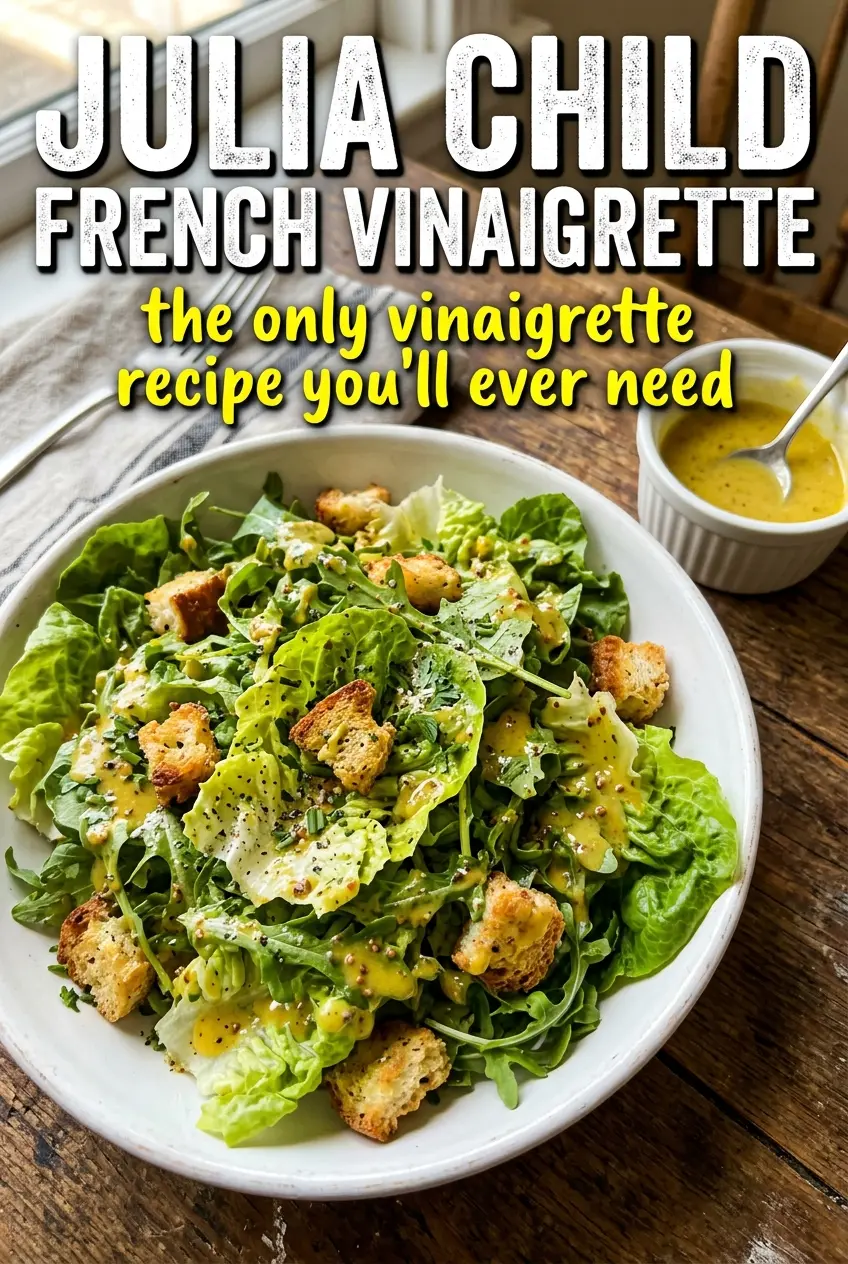
Julia Child French vinaigrette lands with the kind of clean, sharp brightness that makes plain greens taste finished. It’s glossy without being heavy, brisk from the vinegar, and rounded out by mustard, shallot, and fresh herbs in a way that feels classic instead of fussy. A good vinaigrette should cling lightly to the leaves, not puddle underneath them, and this one does exactly that when it’s whisked the right way.
The key is the emulsion. Dijon mustard helps the vinegar and oil stay together long enough to coat the salad evenly, while the minced shallot softens in the acid and takes the edge off its bite. I like adding the herbs at the end so they stay fresh and fragrant instead of disappearing into the dressing. If you’ve ever had a vinaigrette split, taste flat, or turn oily on the plate, the notes below will help you avoid that.
Below you’ll find the small details that make this dressing behave like it should, plus a few ways to adapt it when you’re out of one herb or want a slightly different finish.
The dressing emulsified into this silky, glossy vinaigrette and stayed together in the fridge all week. The tarragon and shallot made it taste like a restaurant salad.
Pin this glossy Julia Child French vinaigrette for salads that need a sharp, herb-flecked finish.
The Emulsion Is the Whole Point Here
The mistake most home cooks make with vinaigrette is dumping everything into a jar and hoping shaking will fix it. Sometimes it works for a minute, but the dressing breaks fast and the flavor never fully comes together. Whisking the vinegar, mustard, shallot, salt, and pepper first gives the salt a head start dissolving and creates a base that helps the oil disperse instead of sliding off the salad.
Slowly streaming in the olive oil matters more than the exact speed of your whisk. Go too fast and the dressing turns thin and greasy. Go slowly enough and it thickens just enough to coat the back of a spoon, which is what you want for tender lettuces and sliced vegetables.
- The mustard is doing more than adding flavor. It acts like the glue that holds the dressing together.
- The shallot softens in the vinegar and loses its raw bite, so mince it finely if you want the texture to disappear into the dressing.
- The herbs go in after the emulsion is built. If they go in too early, they get bruised and sink into the dressing instead of staying fresh.
What Each Ingredient Is Actually Doing in This Dressing
- Red wine vinegar — This gives the dressing its bright, classic backbone. White wine vinegar will work in a pinch, but it tastes a little softer and less savory.
- Dijon mustard — Use a real Dijon here, not yellow mustard. Dijon brings the right bite and helps emulsify the dressing, which is why the texture stays creamy-looking instead of separating immediately.
- Shallot — Mince it very fine so it dissolves into the vinaigrette instead of crunching in every bite. A little soak in the vinegar is enough to tame its sharpness.
- Extra virgin olive oil — This is where quality matters most. A peppery oil gives the dressing depth, but if yours is overly bitter, use a milder one so it doesn’t overpower the herbs.
- Tarragon and chervil — These are the French-cooking details that make this vinaigrette taste like itself. If you can only find one, use tarragon first; it carries more of the signature anise note.
Whisking It Into a Dressing That Stays Together
Start With the Acid and Seasoning
Combine the vinegar, mustard, shallot, salt, and pepper in a bowl and whisk for about a minute. The mixture should look a little thicker and the salt should start to disappear, which tells you the seasoning is getting dissolved instead of sitting grainy at the bottom. If you rush this part, the finished vinaigrette can taste uneven because the salt never fully disperses.
Build the Emulsion Slowly
Add the olive oil in a thin stream while whisking constantly. At first it will look loose and streaky, then it will turn glossy and slightly thickened as the oil breaks into tiny droplets. If it starts to look oily or separated, pause the pour and whisk harder for a few seconds before adding more oil.
Finish With the Herbs
Stir in the tarragon and chervil after the dressing has come together. This keeps the herbs bright and lets their flavor sit on top of the vinaigrette instead of getting lost in the acid. Taste it on a piece of lettuce if you can; salads expose weak seasoning fast, and this is the easiest way to tell whether it needs a little more salt or a touch more vinegar.
Use White Wine Vinegar for a Softer Edge
White wine vinegar gives you a gentler, cleaner dressing if red wine vinegar feels too assertive. The vinaigrette will still emulsify the same way, but the flavor will read lighter and less punchy.
Swap the Herbs Based on What’s Fresh
If you can’t find chervil, use parsley for freshness and a small pinch of dill or extra tarragon for complexity. Parsley won’t mimic chervil’s delicate anise note, but it keeps the dressing clean and green instead of muddy.
Make It Dairy-Free and Naturally Gluten-Free
This vinaigrette already fits both needs as written, which is part of its charm. Just check your Dijon label if you need strict gluten-free certainty, since some brands use additives that vary by manufacturer.
Scale It Up for a Dinner Party
This dressing doubles cleanly if you need enough for a composed salad or a larger group. Keep the oil-to-acid balance the same, then taste again at the end because bigger batches often need a touch more salt than you expect.
Storage and Reheating
- Refrigerator: Store in a jar for up to 1 week. The oil may firm up a bit in the fridge, which is normal.
- Freezer: Don’t freeze this dressing. The emulsion and fresh herbs won’t come back with the right texture.
- Reheating: No reheating needed. Let it sit at room temperature for 10 to 15 minutes, then shake or whisk again before serving so the oil loosens and the dressing turns glossy again.
Questions I Get Asked About This Recipe
Julia Child French Vinaigrette
Ingredients
Method
- Combine red wine vinegar, Dijon mustard, minced shallot, salt, and black pepper in a bowl, then whisk together for about 1 minute until the salt begins to dissolve. The mixture should look uniformly speckled and slightly opaque as the shallot disperses.
- Slowly add extra virgin olive oil while whisking constantly to create an emulsion. Continue whisking until the dressing is well combined and slightly thickened, with a glossy surface that catches the light.
- Stir in chopped fresh tarragon and chopped fresh chervil. You should see bright green herb flecks suspended through the dressing.
- Taste the vinaigrette and adjust seasonings as needed, then serve immediately over salad. For later, spoon into a jar and refrigerate for up to one week.