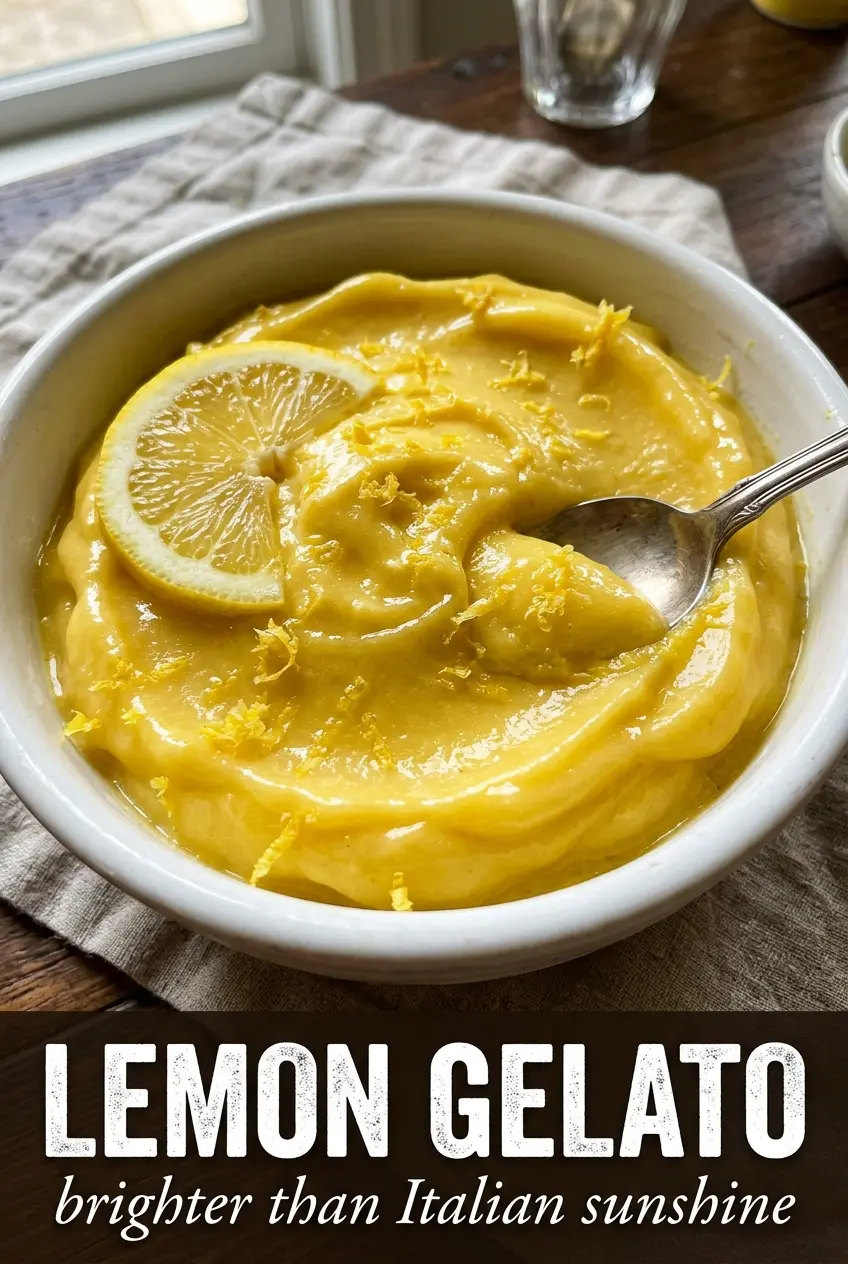
Lemon gelato lands somewhere between custard and sorbet: dense, pale, and intensely bright, with a silky spoonful that still feels light on the tongue. The first taste should hit with clean citrus, then soften into creaminess instead of sharp iciness. That balance is what makes it worth keeping around.
This version leans on egg yolks and a little cornstarch, which gives the base enough structure to stay smooth after churning. The milk-and-cream custard is cooked just until it thickens to a pudding-like consistency, then the lemon juice goes in off the heat so the dairy doesn’t seize or turn grainy. Fresh zest does most of the aromatic work here; the juice brings the tang, but the zest is what makes the flavor taste alive.
Below you’ll find the cue that tells you the base is ready, the reason the gelato needs a long chill, and a few useful swaps if you’re working around what’s in your kitchen.
The custard thickened up exactly like the directions said, and the lemon flavor was bright without tasting icy. I churned it on the lowest setting and it came out dense and silky, not airy like ice cream.
Creamy lemon gelato with that dense, scoopable texture is worth keeping on hand for the next time you want a bright dessert with almost no fuss.
The Reason This Gelato Stays Creamy Instead of Turning Icy
The biggest mistake with homemade lemon gelato is adding too much acid too early or skipping the custard base entirely. Lemon juice is sharp enough to make dairy misbehave if it hits the pot over high heat, which is how you end up with grainy edges or a curdled look before the mixture even chills. Here, the custard is cooked first until it thickens, then the lemon goes in off the heat so the dairy stays smooth.
The other detail that matters is density. Gelato should taste compact, not fluffy, so this base uses just enough cream for richness without making it heavy. Churning on the lowest setting helps keep the texture tight, and the long chill gives the starch and yolks time to settle into a base that freezes with a cleaner scoop.
What Each Ingredient Is Actually Doing in This Lemon Gelato

- Whole milk — This is the backbone of the gelato. You need the fat and protein for body, and lower-fat milk will freeze harder and taste thinner.
- Heavy cream — Just enough cream rounds out the acidity and keeps the finished texture silky. More cream would push this closer to ice cream, which softens the clean gelato feel.
- Egg yolks — They thicken the base and give it that custardy finish. If the yolks are overheated, they’ll scramble, so whisk constantly and pull the pan as soon as the mixture coats a spoon.
- Cornstarch — This is the insurance policy. It helps the base set without relying only on eggs, and it keeps the texture smoother after freezing.
- Fresh lemon juice and zest — Bottled juice won’t give you the same brightness, and the zest carries the floral lemon aroma that makes the flavor taste fresh instead of flat. Use fine zest with no white pith.
- Vanilla extract — A small amount softens the citrus edge without making the gelato taste vanilla-forward.
Cooking the Custard Without Scrambling the Eggs
Heating the Dairy First
Warm the milk and cream until they’re steaming, not boiling. You want enough heat to temper the yolks smoothly, but not so much that the mixture scorches or reduces before it ever reaches the eggs. If you see bubbles racing around the edges, lower the heat and pull it back a minute before moving on.
Tempering the Egg Mixture
Whisk the yolks, sugar, and cornstarch until they look paler and slightly thicker, then drizzle in the hot milk slowly while whisking constantly. That gradual addition keeps the eggs from clumping. If you dump the dairy in all at once, the yolks heat too fast and you’ll get flecks instead of a smooth base.
Cooking to the Right Thickness
Return everything to the saucepan and stir over medium heat until it thickens enough to coat a spoon and holds a clear line when you drag your finger through it. Stop there. If you keep cooking until it’s as thick as pastry cream, the final gelato can freeze stiff and lose that dense but creamy texture.
Adding the Lemon at the End
Take the pan off the heat before stirring in the lemon juice, zest, vanilla, and salt. The mixture may look thinner for a minute, which is normal; the cornstarch and yolks will keep it stable as it chills. The zest should smell sharp and fragrant as soon as it hits the warm custard.
Chilling Before Churning
Cool the base over an ice bath first, then refrigerate it until it’s completely cold. Churning a warm base traps weak structure and makes the machine work harder, which leads to softer, icier gelato. A proper chill gives you a tighter set and a cleaner scoop after freezing.
How to Adapt This Gelato for Different Kitchens and Preferences
Dairy-Free Lemon Gelato
Use full-fat canned coconut milk in place of the milk and cream, then expect a softer coconut note in the finished gelato. The texture will still be creamy, but it won’t taste as clean or classic as the dairy version, so lean a little harder on the lemon zest.
No-Churn Freeze-Then-Stir Version
If you don’t have an ice cream maker, pour the chilled base into a shallow container and freeze it, stirring every 30 minutes for the first 2 hours. The texture won’t be as dense or polished, but the cornstarch and custard base still help it freeze more smoothly than a standard no-churn dessert.
Extra-Tart Lemon Gelato
Add an extra tablespoon of lemon juice only after the custard is off the heat and fully smooth. More acid sharpens the flavor, but too much can thin the base and make it freeze harder, so push the zest first before adding more juice.
Storage and Reheating
- Refrigerator: The custard base keeps for 2 days before churning, covered and well chilled. After churning, store the gelato in an airtight container in the freezer instead of the fridge.
- Freezer: It freezes well for about 2 weeks. Press parchment or plastic wrap directly on the surface to slow ice crystals, and expect it to firm up more than store-bought gelato.
- Reheating: Not applicable. Let frozen gelato sit at room temperature for 5 to 10 minutes before scooping; if it’s rock hard, it’s usually been frozen in a container that was too warm or too shallow.
Answers to the Questions Worth Asking
Lemon Gelato
Ingredients
Equipment
Method
- Heat the whole milk and heavy cream in a saucepan until steaming, about 3 to 5 minutes, with small bubbles forming around the edges (do not boil).
- In a bowl, whisk the egg yolks, granulated sugar, and cornstarch until pale and thick, about 1 to 2 minutes; keep whisking until the mixture looks smooth and slightly lighter in color.
- Slowly whisk the hot milk mixture into the egg yolk mixture to temper, then pour everything back into the saucepan for steady blending.
- Cook over medium heat, stirring constantly, until thickened to a pudding consistency, about 6 to 10 minutes; when you drag a spoon through it, the line should hold for a moment.
- Remove from the heat and stir in the fresh lemon juice, lemon zest, vanilla extract, and salt until fully combined and glossy.
- Cool the custard completely over an ice bath until no longer warm, about 10 to 15 minutes, with the surface looking cool and smooth.
- Refrigerate at least 4 hours (up to overnight) until very cold; the mixture should feel chilled throughout.
- Churn in an ice cream maker on the lowest setting for a dense texture, about 20 to 30 minutes, until thick and pale yellow.
- Serve immediately for a soft-set texture, or freeze 1 to 2 hours for firmer scooping; look for an opaque, dense scoopable gelato.