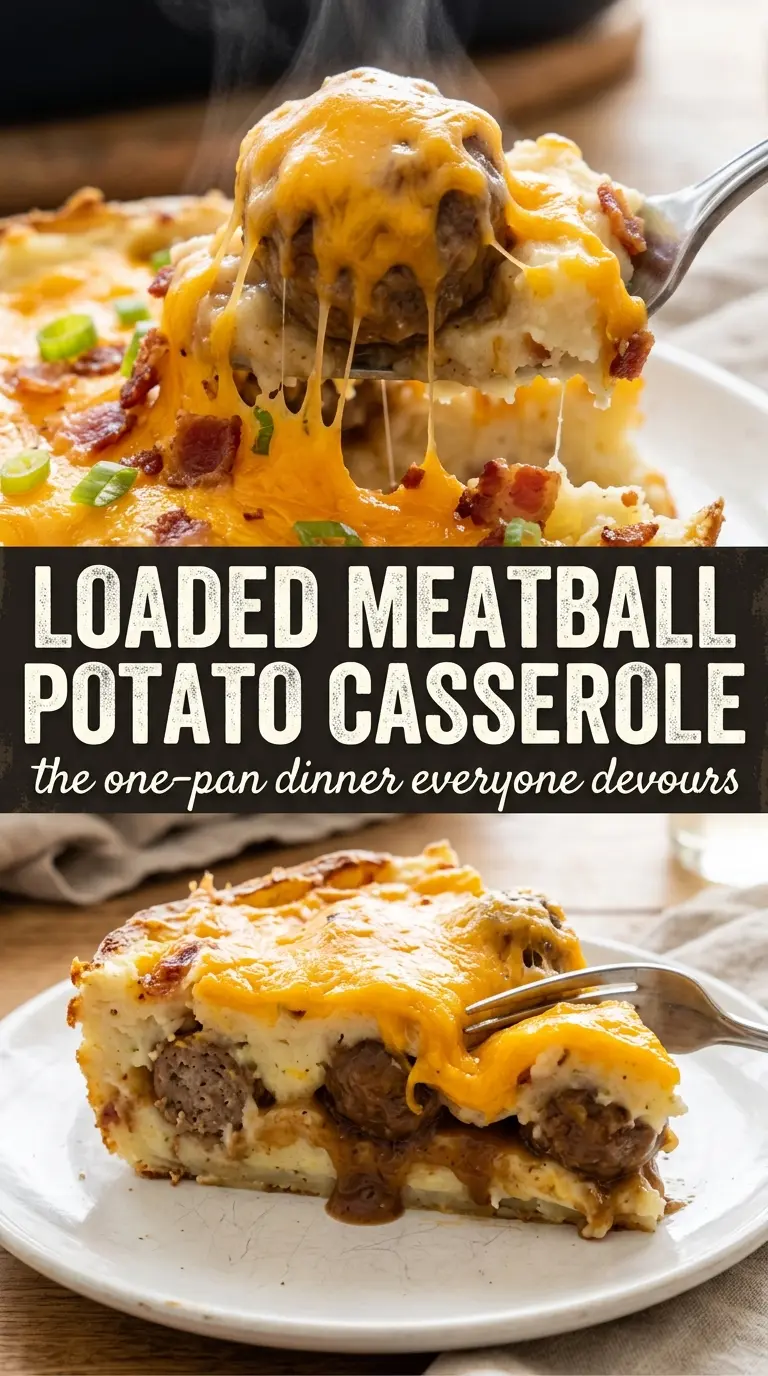
Loaded mashed potato and meatball casserole lands the way comfort food should: creamy, savory, cheesy, and filling enough to quiet a hungry table without a lot of extra effort. The potatoes bake up rich and fluffy under a layer of browned meatballs, then the cheddar melts into the nooks and crannies while the bacon adds little salty pops in every bite. It’s the kind of casserole that feels complete on its own, which is exactly why it keeps getting made again.
What makes this version work is the split cooking method. Browning the meatballs first gives you flavor and helps them hold their shape instead of sinking into the potatoes. Then the mash is built with warm milk, sour cream, butter, and some of the cheese and bacon already mixed in, so the base tastes like a loaded baked potato before it even goes into the oven. The final bake is just long enough to melt everything together and let the top turn lightly golden without drying out the potatoes.
Below, you’ll find the small details that keep the casserole creamy instead of gluey, plus a few variations for changing the meat, the dairy, or the make-ahead timing.
The potatoes stayed creamy after baking, and the meatballs held their shape instead of turning the whole dish mushy. I added the bacon at the end like you suggested, and it stayed crisp on top.
Save this loaded mashed potato and meatball casserole for nights when you want a cheesy, bacon-topped dinner that bakes into one pan.
The Part That Stops the Meatballs From Sinking
The meatballs need enough structure to stay distinct after the final bake, which is why they get browned before they go anywhere near the potatoes. Raw meatballs tucked into mash often leak juices and blur into the casserole, turning the center heavy instead of layered. A short oven bake sets the outside first, so you end up with meatballs that hold their shape and still stay tender inside.
The other place this dish can go wrong is the potato base. If the mash is too loose, the casserole spreads and feels watery; if it’s overworked, it turns pasty. Yukon golds are the right potato here because they mash smoothly without turning gummy, and the warm milk helps them stay fluffy when the cheese melts in.
What the Potatoes, Cheese, and Bacon Are Each Doing
- Yukon gold potatoes — These give you a creamy mash with enough body to support the meatballs. Russets work in a pinch, but they’re drier and can need more butter or milk to stay velvety.
- Sour cream — This adds tang and keeps the potatoes from tasting flat. Plain Greek yogurt can stand in, but it brings a little more sharpness and less richness.
- Cheddar cheese — Use a block and shred it yourself if you can. Pre-shredded cheese has anti-caking agents that can make the melt less smooth.
- Bacon — Half goes inside the mash and half stays for the top, which gives you flavor in every layer and keeps the garnish from disappearing. Cook it until crisp, then crumble it after it cools so it stays snappy.
- Breadcrumbs and egg — They’re the binding agents that keep the meatballs tender but stable. Don’t skip the egg, or the meatballs can crack and spread while baking.
Building the Casserole So the Top Melts and the Middle Stays Creamy
Mix the Meatballs Without Packing Them Tight
Combine the ground beef, breadcrumbs, egg, garlic, Worcestershire sauce, salt, and pepper just until everything is distributed. Overmixing compacts the meat and gives you dense meatballs, which is the opposite of what you want in a casserole this rich. Roll them into even balls so they bake at the same pace, then place them on the sheet pan with a little room around each one for browning.
Make the Potato Layer Taste Finished Before It Bakes
Mash the potatoes with the butter, sour cream, warm milk, half the cheddar, half the bacon, and half the green onions while they’re still hot. Hot potatoes absorb the dairy better, so the filling turns smooth instead of lumpy. If the mixture looks stiff, add a splash more warm milk; if it looks loose, let it sit for a minute before judging it, because mashed potatoes thicken as they settle.
Press, Top, and Bake Until the Cheese Goes Shiny
Spread the mash in a greased 9×13 dish, then press the browned meatballs into it so they sit partially nestled rather than floating on top. That little bit of contact lets the flavors mingle without losing the shape of the meatballs. Finish with the remaining cheddar and bake until the cheese is melted and lightly golden at the edges, with the casserole bubbling around the sides. If the top browns too fast before the center is hot, cover it loosely with foil for the last part of the bake.
Three Ways to Change the Casserole Without Losing the Comfort
Turkey Meatball Version
Swap the ground beef for ground turkey and add an extra pinch of salt plus a teaspoon of olive oil to keep the meatballs from tasting lean and dry. Turkey takes on the seasoning well, but it needs the cheese and sour cream in the potatoes to carry the dish.
Gluten-Free Version
Use gluten-free breadcrumbs in the meatballs and check that your Worcestershire sauce is gluten-free. The texture stays nearly the same, and the casserole still bakes up with that same hearty, loaded-potato feel.
Make It a Little Lighter
Cut the cheddar back by 1/2 cup and replace half the sour cream with plain Greek yogurt. You’ll lose a little richness, but the casserole still tastes creamy and balanced instead of heavy.
Storage and Reheating
- Refrigerator: Store covered for up to 4 days. The potatoes will firm up a bit, but the flavor holds well.
- Freezer: It freezes well in portions. Wrap tightly, freeze for up to 2 months, and thaw in the fridge before reheating.
- Reheating: Warm covered in a 325°F oven until hot in the center, or reheat single portions in the microwave at medium power. High heat dries out the potatoes and makes the cheese oily before the middle is warmed through.
Answers to the Questions Worth Asking

Loaded Mashed Potato and Meatball Casserole
Ingredients
Equipment
Method
- Preheat the oven to 375°F.
- Mix the ground beef, breadcrumbs, egg, minced garlic, Worcestershire sauce, salt, and pepper, then roll into 1.5-inch balls.
- Arrange the meatballs on a sheet pan and bake at 400°F for 15 minutes, until browned (visual cue: surface is browned).
- Mash the boiled Yukon gold potatoes with butter, sour cream, warm milk, half the cheddar, half the bacon, half the green onions, salt, and pepper until smooth.
- Spread the mashed potatoes in a greased 9x13 baking dish into an even layer.
- Press the baked meatballs into the mashed potatoes evenly so they sit throughout the layer.
- Top with the remaining cheddar and bake at 375°F for 20–25 minutes, until the cheese is melted and golden (visual cue: bubbly golden top).
- Garnish with the remaining bacon and green onions before serving (visual cue: bacon crumbles and green onion slices on top).