Low carb taco soup delivers the kind of dinner that tastes like it simmered all afternoon, even though it comes together in under 40 minutes. The broth is rich and smoky, the beef stays hearty, and the tomatoes, peppers, and spices give every spoonful that classic taco-night comfort without the heavy finish of beans or pasta. It’s the kind of bowl that disappears fast because it eats like a full meal.
What makes this version work is the layering. The beef gets browned first for depth, then the onion, pepper, and garlic build a base before the spices go in long enough to bloom in the hot pan. That quick minute of toasting wakes everything up and keeps the broth from tasting flat. The cauliflower goes in small so it softens into the soup instead of turning into big, distracting chunks.
Below, I’ll walk through the one step people often rush, the ingredient swaps that still keep this soup low carb, and the best way to top each bowl so it tastes finished instead of just ladled into a bowl.
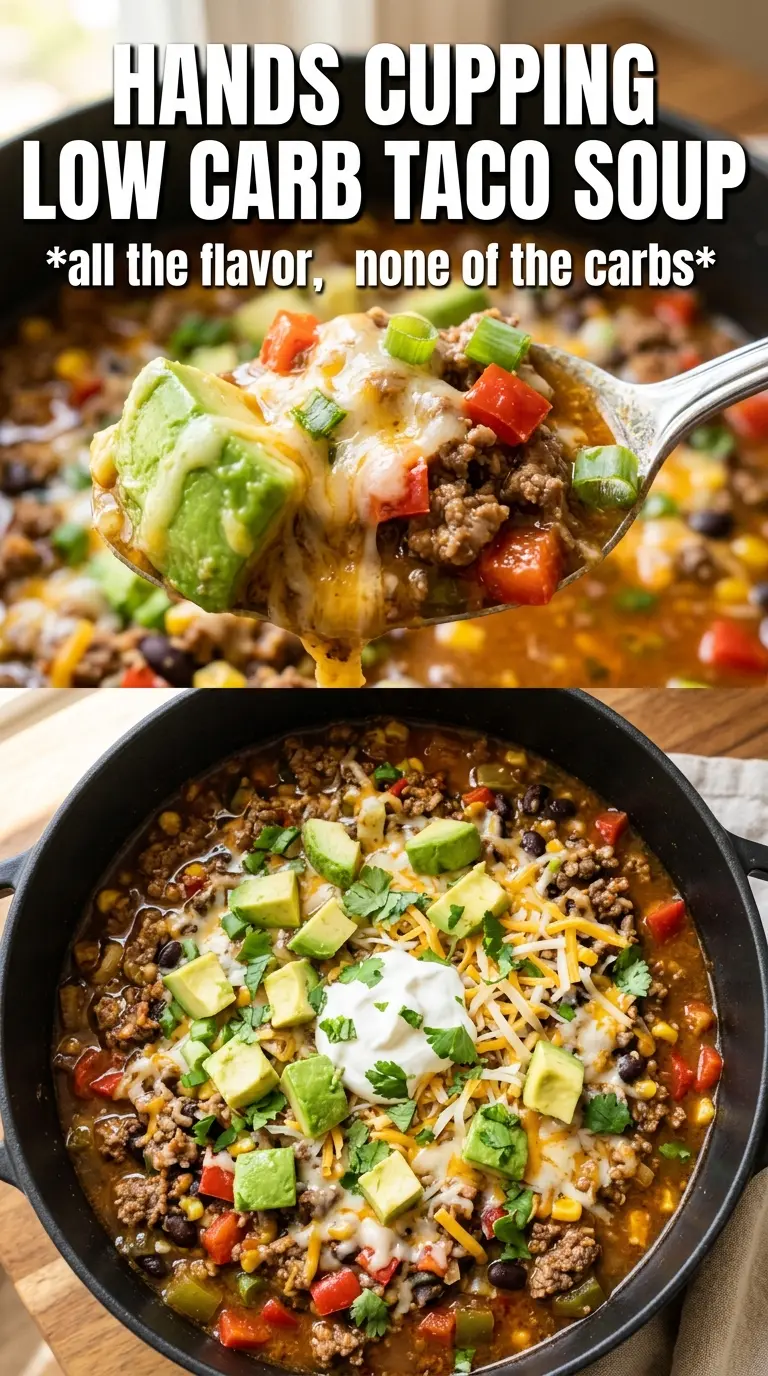
The broth thickened just enough as it simmered, and the cauliflower stayed tender without falling apart. I topped mine with avocado and cheddar, and it tasted like taco soup from a good diner.
Like this low carb taco soup? Save it for the nights when you want a smoky, beefy bowl with cauliflower, cheddar, and avocado on top.
The Secret to Keeping This Soup Bold Instead of Muddy
The difference between a good taco soup and a flat one is how the spices get handled at the start. If you dump everything into broth and walk away, the cumin and chili powder taste one-note and the soup leans watery. Cooking the seasoning in the hot pot for a minute before adding liquid gives it a toasted edge that shows up in the finished bowl.
The other thing that matters is the cauliflower size. Small florets soften quickly and blend into the soup’s texture without turning the pot into mush. If the pieces are too large, they stay crunchy while the rest of the soup is finished, and that throws off every spoonful.
- Ground beef — Use 80/20 if you want the richest broth. If you go leaner, the soup still works, but you’ll want to keep an eye on seasoning because some of the beefy depth comes from the fat you brown at the start.
- Rotel and fire-roasted tomatoes — Rotel gives heat and acidity, while fire-roasted tomatoes bring a deeper, slightly smoky background. Swapping in plain diced tomatoes works in a pinch, but the soup will taste cleaner and less layered.
- Cauliflower florets — This is the low-carb stand-in that actually behaves like a soup ingredient instead of a garnish. Cut it small so it softens in the simmer time; bigger pieces take longer and can feel separate from the broth.
- Taco seasoning and spices — Store-bought seasoning is fine, but check the salt level before adding extra. Homemade seasoning lets you control the heat and sodium, which matters because the broth and tomatoes already bring plenty of flavor.
What Each Ingredient Is Actually Doing in This Recipe
- Primary ingredient (the star) — Quality matters most. Choose the best you can find.
- Cooking medium (oil, butter, or broth) — This carries flavors and prevents dryness.
- Seasonings (salt, pepper, spices, herbs) — Layer flavors so nothing overpowers. Build depth gradually.
- Aromatics (garlic, onion, herbs) — Cook with fat to bloom flavors. Become the foundation.
- Supporting ingredients — Complement the main ingredient without overpowering it.
- Sauce or liquid (if applicable) — Brings flavors together. Balance richness with acid.
- Acid (lemon, vinegar, wine, or other) — Brightens and prevents flat-tasting results.
- Final finish (garnish, glaze, or sauce) — Prevents one-dimensional taste and adds visual appeal.
Building the Pot in the Right Order
Brown the Beef First
Cook the ground beef over medium-high heat until it loses its pink color and starts picking up browned bits on the bottom of the pot. Those browned bits matter; they dissolve into the broth later and give the soup more depth. Drain excess fat if there’s a lot in the pot, but leave a little behind so the onion and spices have something to cook in.
Softening the Vegetables
Add the onion and bell pepper and cook until the onion turns translucent and the pepper softens around the edges. You want them tender, not browned hard, because their job here is to melt into the background. Stir in the garlic at the end and give it just a minute; if it goes too long, it turns bitter and the whole pot tastes sharp.
Toast the Spices Before the Broth Goes In
Add the taco seasoning, cumin, chili powder, and smoked paprika straight to the hot pot and stir until everything smells fragrant. This is the moment that sets the flavor, and it only takes about a minute. If the pot looks dry, that’s fine — the remaining fat and juices are enough to wake up the spices without burning them.
Simmer Until the Cauliflower Turns Tender
Pour in the tomatoes and broth, then add the cauliflower if you’re using it. Bring the soup to a boil, then lower the heat and let it simmer until the cauliflower is tender and the broth tastes combined, about 18 to 20 minutes. If you keep the boil too aggressive, the cauliflower can break apart before the broth has a chance to settle into a full taco-soup flavor.
How to Adapt This Bowl Without Losing the Point
Dairy-Free Toppings That Still Finish the Soup
Skip the sour cream and cheddar and top each bowl with avocado, cilantro, and sliced jalapeños. You still get richness from the avocado and brightness from the herbs, and the soup keeps its creamy contrast without needing dairy.
Vegetarian Version With the Same Tex-Mex Backbone
Swap the beef for two cans of drained black soybeans or extra cauliflower and use vegetable broth instead of beef broth. You’ll lose some of the meaty depth, so add a little extra smoked paprika and a pinch of salt at the end to bring the flavor back up.
Spicier Pot, Same Timing
Add diced jalapeño with the onion and bell pepper, or stir in a pinch of cayenne with the spices. That heat has time to mellow as the soup simmers, so it tastes integrated instead of sharp.
Storage and Reheating
- Refrigerator: Store covered for up to 4 days. The cauliflower softens a little more as it sits, but the flavor gets even better overnight.
- Freezer: This freezes well for up to 3 months. Cool it completely first and leave a little room at the top of the container so the broth can expand.
- Reheating: Warm it gently on the stove over medium-low heat until hot. A hard boil can make the cauliflower go too soft and can dull the texture of the broth.
Answers to the Questions Worth Asking

Low Carb Taco Soup
Ingredients
Equipment
Method
- Brown the ground beef in a large pot over medium-high heat, then drain excess fat.
- Sauté the onion and green bell pepper for 4 minutes, until softened; add the garlic and cook 1 minute.
- Add the taco seasoning, cumin, chili powder, and smoked paprika and cook 1 minute, stirring to coat the vegetables.
- Add the Rotel tomatoes, diced fire-roasted tomatoes, beef broth, and cauliflower (if using), then bring the mixture to a boil.
- Simmer for 18–20 minutes, until the cauliflower is tender and the broth tastes well spiced.
- Season with salt and pepper to taste, then serve topped with sour cream, shredded cheddar, and avocado (plus jalapeños and cilantro if desired).