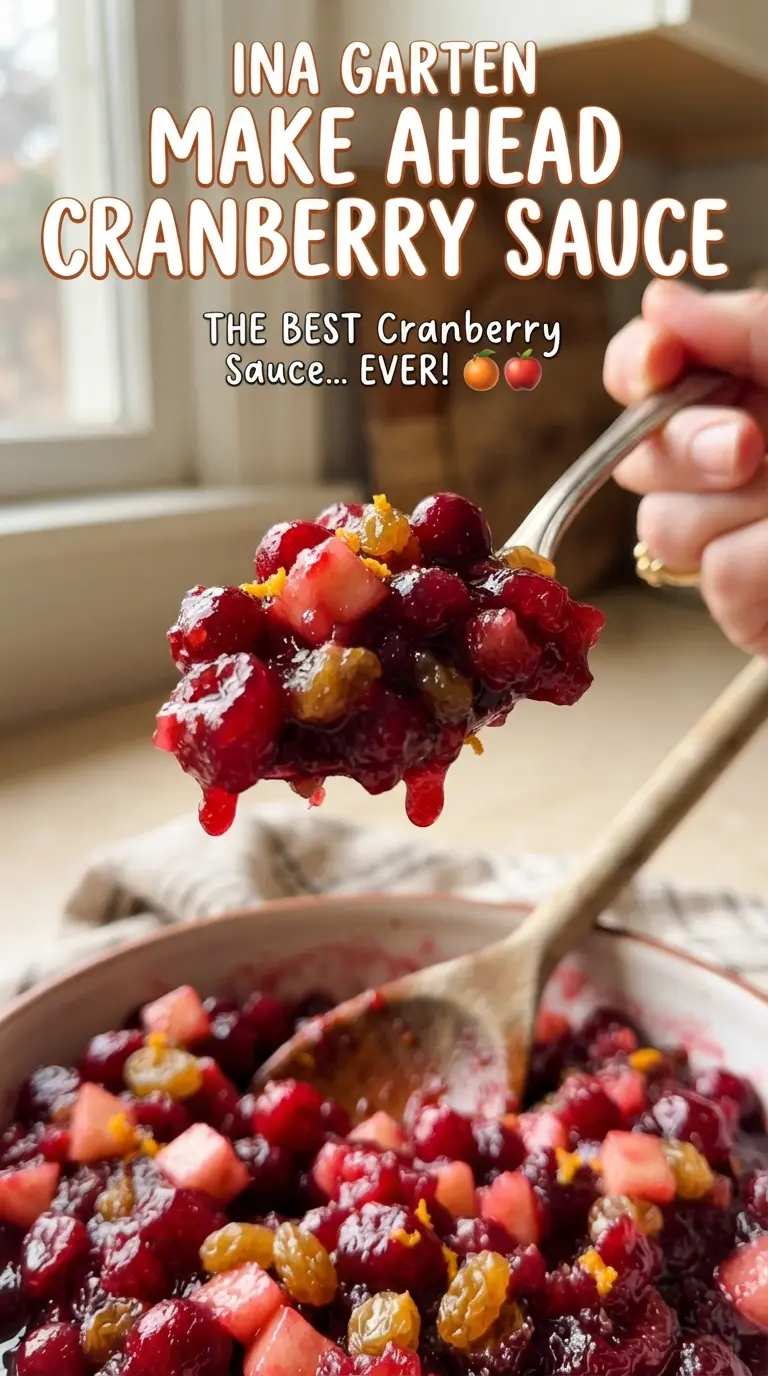
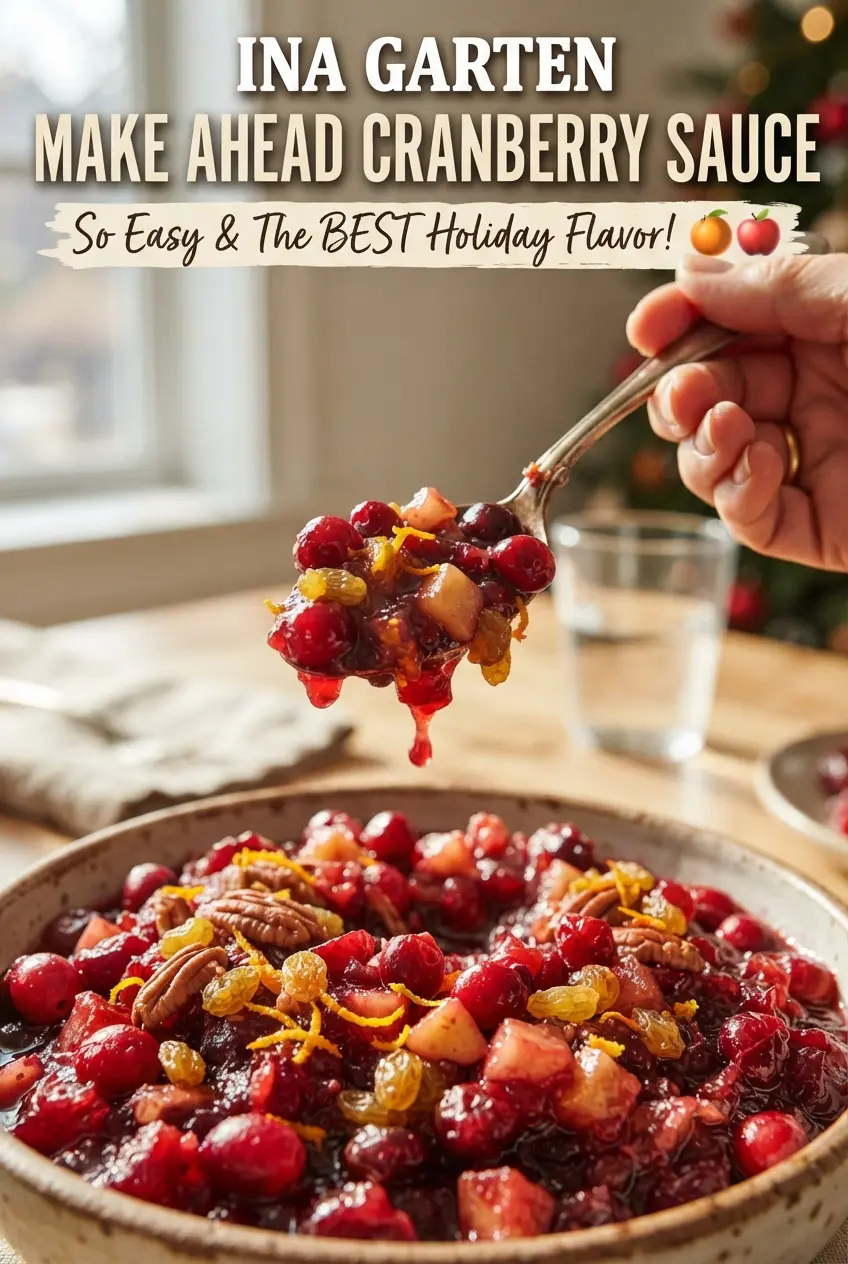
Chunky cranberry sauce earns its place on the table when it tastes bright, balanced, and a little textured instead of turning into sweet red jelly. This version lands in that sweet spot: tart cranberries, crisp apple, citrus juice and zest, and enough toasted nuts to give each spoonful some real character. It’s the kind of side dish that cuts through rich food and still feels special on its own.
The trick is in the timing. The cranberries cook just long enough to pop and thicken with sugar and water, then the apple and citrus go in after that first burst so they stay lively instead of dissolving into the pot. The raisins and nuts get stirred in off the heat, which keeps the raisins plump and the nuts from tasting stale or soft.
Below, I’ve added the parts that matter most if you want this to taste polished instead of generic: how to keep the sauce chunky, which fruit details actually change the outcome, and what to do if you want to make it a few days ahead without losing that fresh cranberry bite.
The sauce thickened up beautifully and the diced apple kept it from being one-note. I made it the day before, and the orange zest came through even more the next day.
Save this make-ahead cranberry sauce for a chunky, citrusy side that’s even better after chilling overnight.
The Part That Keeps This Cranberry Sauce From Turning Gluey
Most cranberry sauces go wrong when they’re cooked too long after the berries burst. Cranberries have enough natural pectin to thicken fast, and once that happens, a few extra minutes on the heat can turn a glossy sauce into something stiff and jammy instead of spoonable. The first simmer is short on purpose. You’re not trying to reduce everything to nothing; you’re only opening the berries and starting the base.
The second simmer is where the texture gets built. The apple adds body without making the sauce heavy, and the citrus brings brightness that keeps the sugar from flattening everything out. If the pot starts looking dry before the fruit softens, the heat is too high. Lower it and let the bubbles settle into a gentle simmer. That’s the difference between a sauce that holds together and one that seizes up.
- Cranberries — Fresh berries give you the tart pop and natural thickening this recipe needs. Frozen cranberries also work; use them straight from the freezer and expect a slightly longer simmer.
- Granny Smith apple — This is the ingredient that keeps the sauce chunky and bright. A sweeter apple softens more quickly and makes the sauce less sharp, but it still works if that’s what you have.
- Orange and lemon zest plus juice — The zest carries the fragrance, while the juice sharpens the sauce and balances the sugar. Don’t skip the zest; juice alone tastes flatter and less finished.
- Golden raisins and toasted nuts — Stir them in off the heat so they stay distinct. If you add them too early, the raisins can get mushy and the nuts lose their toast.
What Each Ingredient Is Actually Doing in This Recipe
- Primary ingredient (the star) — Quality matters most. Choose the best you can find.
- Cooking medium (oil, butter, or broth) — This carries flavors and prevents dryness.
- Seasonings (salt, pepper, spices, herbs) — Layer flavors so nothing overpowers. Build depth gradually.
- Aromatics (garlic, onion, herbs) — Cook with fat to bloom flavors. Become the foundation.
- Supporting ingredients — Complement the main ingredient without overpowering it.
- Sauce or liquid (if applicable) — Brings flavors together. Balance richness with acid.
- Acid (lemon, vinegar, wine, or other) — Brightens and prevents flat-tasting results.
- Final finish (garnish, glaze, or sauce) — Prevents one-dimensional taste and adds visual appeal.
Building the Sauce in Stages So the Texture Stays Chunky
Starting the Cranberries and Sugar
Combine the cranberries, sugar, and water in a saucepan and bring it to a boil, then drop it to a simmer for about five minutes. You’ll hear the berries start to pop and split, and the liquid will turn from clear to jewel-toned. Don’t walk away at this point; once the popping starts, the mixture can go from loose to thick quickly. If it looks foamy, that’s normal — just keep the heat gentle.
Adding the Fruit and Citrus
Stir in the diced apple, orange zest, orange juice, lemon zest, and lemon juice, then cook for about 15 minutes more. The apple should soften but still hold its shape, and the sauce should thicken enough to coat a spoon without becoming paste-like. If the fruit starts breaking apart too much, the simmer is too aggressive. A quieter bubble keeps everything intact and gives the sauce that chunky finish people remember.
Finishing with Raisins and Nuts
Take the pan off the heat before adding the raisins and toasted nuts. That last step matters because the residual heat warms them through without draining all their texture. Stir just until everything is evenly distributed, then let the sauce cool completely before chilling. Warm cranberry sauce always looks thinner than it really is, so judge the texture after it has cooled.
Cooling for the Best Flavor
Transfer the sauce to a bowl and refrigerate it once it’s no longer steaming. As it chills, the citrus, fruit, and cranberry flavor settle together and the texture tightens into that spoonable middle ground between sauce and relish. If you taste it while it’s warm and think it needs more body, wait before changing anything. It almost always firms up once cold.
What to Change When You Want a Different Kind of Sweet-Tart Balance
Make it dairy-free and naturally vegetarian
This recipe is already dairy-free and vegetarian, which is part of why it works so well as a make-ahead side. The only thing to watch is the nuts if you’re serving a mixed crowd; leaving them on top or stirring them in at the end keeps the texture clear for anyone who wants a smoother spoonful.
Use pecans for a softer, sweeter finish
Pecans make the sauce taste rounder and a little richer, while walnuts keep it more earthy and sharp. Toast them either way; untoasted nuts taste flat and disappear into the sauce instead of standing out.
Swap the apple if you need a different texture
A firm pear can stand in for the Granny Smith if you want a gentler fruit note, but the sauce will be slightly softer and less tart. If you use a sweeter apple, cut the sugar back a little or the finished sauce can drift too far toward dessert.
Storage and Reheating
- Refrigerator: Store covered for up to 1 week. The sauce actually settles and tastes fuller after a day.
- Freezer: It freezes well for up to 2 months. Thaw in the refrigerator overnight and stir before serving.
- Reheating: If you want it warm, heat it gently on low just until loosened. Don’t boil it again or the fruit can break down and the nuts lose their bite.
Answers to the Questions Worth Asking
Make-Ahead Cranberry Sauce
Ingredients
Equipment
Method
- In a saucepan, bring fresh cranberries, sugar, and water to a boil over high heat. Simmer for 5 minutes, until the skins pop, stirring occasionally so the fruit cooks evenly.
- Add Granny Smith apple, orange zest, orange juice, lemon zest, and lemon juice to the saucepan. Simmer for 15 minutes, until the mixture looks thick and the apple is tender with visible fruit chunks.
- Remove the saucepan from heat, then stir in golden raisins and toasted walnuts or pecans. Mix until the additions are evenly distributed through the cranberry sauce.
- Cool the cranberry sauce completely, then cover and refrigerate. Chill up to 1 week, until fully cold and set.
- Serve the cranberry sauce chilled or at room temperature. Spoon into a serving dish so the surface shows chunky cranberries, diced apple, raisins, and nut pieces.