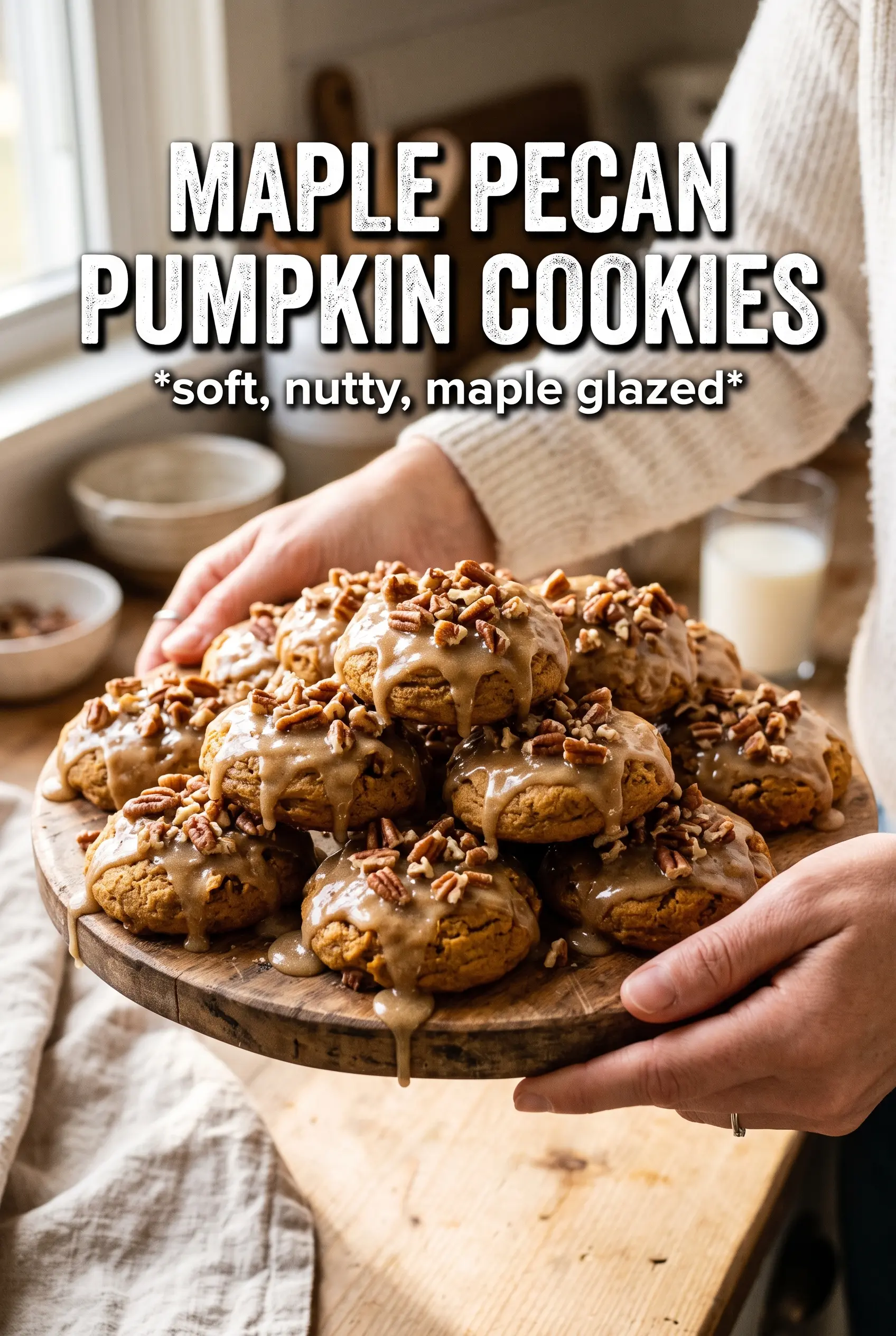
These maple pecan pumpkin cookies bake up soft in the center with crisp edges, toasted pecans in every bite, and a maple glaze that sets into a thin, sweet finish instead of sliding off the top. The pumpkin keeps the crumb tender, but it doesn’t make the cookies cakey because the puree gets blotted first and the dough stays on the sturdier side. That little bit of attention is what turns them from pleasant autumn cookies into the kind people keep reaching for off the tray.
The flavor works because maple shows up twice: once in the dough for depth, then again in the glaze for that unmistakable finish. Brown sugar and pumpkin pie spice round everything out, while toasted pecans bring the nutty crunch these cookies need to keep each bite from feeling soft all the way through. The egg yolk adds richness without extra lift, which helps the cookies stay chewy instead of puffing up like little cakes.
Below, you’ll find the trick for keeping the pumpkin flavor bold without making the dough too wet, plus the glaze timing that gives you a clean drizzle instead of a melted mess.
Blotting the pumpkin made a huge difference. The cookies baked up soft and chewy instead of cakey, and the maple glaze set beautifully on top.
Save these maple pecan pumpkin cookies for the days when you want soft pumpkin cookies, toasted pecans, and a maple glaze that sets just right.
The Pumpkin Trick That Keeps These Cookies Chewy
Pumpkin puree brings moisture, but moisture is the thing that can push a cookie from chewy into soft and cakey fast. That is why the puree gets blotted dry before it goes into the dough. It doesn’t need to disappear completely; it just needs enough water removed so the cookies spread a little instead of puffing into domes.
The other piece that matters is the egg yolk. A whole egg would add more structure and more lift, which sounds helpful until you realize it works against the dense, tender texture these cookies need. Using the yolk alone gives richness and binding power without that extra airy quality.
- Blotted pumpkin puree — This is the difference between a cookie with shape and one that bakes up soft like muffin tops. Press it between paper towels until it looks thicker and less shiny.
- Brown sugar — White sugar would make the cookies drier and flatter in flavor. Brown sugar brings moisture and a deeper caramel note that fits pumpkin and maple.
- Maple extract — The syrup alone won’t carry the maple flavor all the way through the cookie. The extract gives the dough a stronger maple backbone so the glaze doesn’t have to do all the work.
- Toasted pecans — Toasting wakes up the oils in the nuts and keeps them from tasting dusty or flat. Skip the toast and the cookies lose a layer of flavor that matters here.
What Each Ingredient Is Actually Doing in the Dough
- All-purpose flour — The amount here gives the cookies enough body to hold the pumpkin and maple without turning dense. A measure-by-spoon-and-level approach works best so you don’t accidentally pack in extra flour and dry them out.
- Butter — Softened butter creams with the sugar and helps build the base texture. Don’t melt it; melted butter will make the cookies spread too much and taste flatter.
- Pure maple syrup — Use real maple syrup, not pancake syrup. The flavor is cleaner, and the glaze will taste like maple instead of just sweet.
- Pumpkin pie spice and cinnamon — Together they create warmth without making the cookies taste overloaded with spice. If your pumpkin pie spice blend is old, it will taste dull, so use fresh if you can.
- Powdered sugar for the glaze — It dissolves fast and makes the drizzle smooth. Granulated sugar won’t work here; it stays gritty.
- Flaky sea salt — This is a finishing touch, not decoration. It sharpens the maple and keeps the sweetness from running away with the cookie.
Building the Dough So It Spreads the Right Amount
Start with the Butter and Sugar Base
Beat the softened butter, brown sugar, and maple syrup until the mixture looks fluffy and a little lighter in color. That step traps air and helps the cookies bake with a tender crumb. If the butter is too cold, the mixture will look sandy; if it’s melted, the dough will turn greasy and the cookies will spread too far.
Mix in the Pumpkin Without Over-Wetting the Dough
Stir in the blotted pumpkin, egg yolk, vanilla, and maple extract until the dough looks smooth and evenly combined. It may look slightly glossy, and that’s fine. The failure point here is overmixing after the pumpkin goes in, which can push the dough toward a tough texture once the flour is added.
Fold in the Dry Ingredients and Pecans
Add the flour, baking soda, spices, and salt, then fold just until the flour disappears. A few streaks at the edges are better than stirring until the dough tightens up. Once the toasted pecans go in, stop as soon as they are evenly distributed so you don’t crush them into tiny bits.
Bake Until the Edges Set
Scoop 1 1/2 tablespoon rounds onto lined baking sheets and bake at 375°F for 10 to 12 minutes. The edges should look set and lightly golden while the centers still look a touch soft. Pull them before they look fully done; they finish on the pan, and waiting too long is how you lose the chew.
Glaze After Cooling
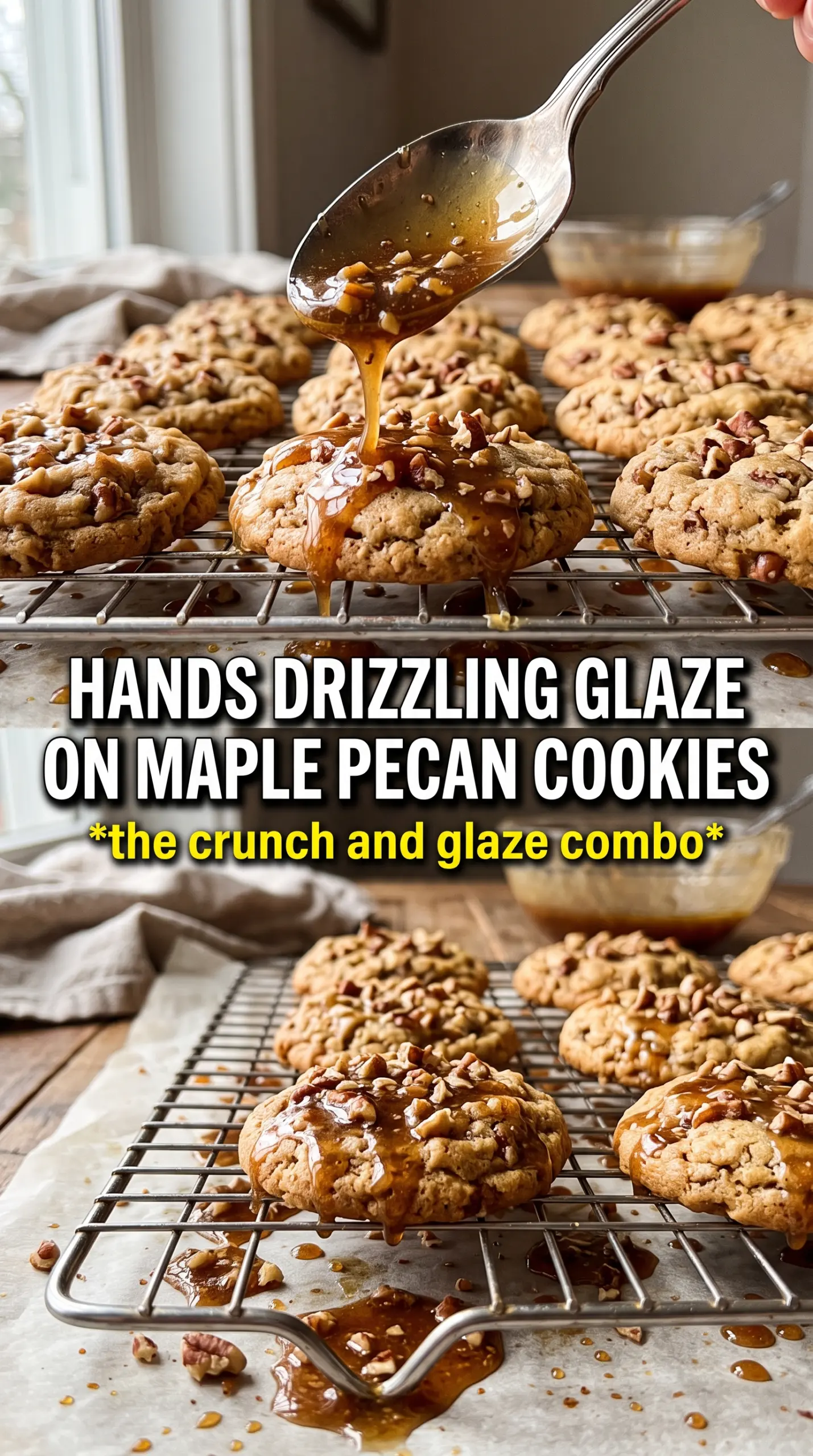
Let the cookies cool completely before drizzling on the maple glaze. If they’re warm, the glaze melts into the surface instead of sitting on top. Stir the glaze until it falls in a thick ribbon from the spoon, then finish with flaky sea salt while it is still wet so it sticks.
How to Adapt These Maple Pecan Pumpkin Cookies for Different Kitchens
Dairy-Free Version
Swap the butter for a plant-based butter stick that is meant for baking. The cookies will still spread and brown well, though the flavor will be a little less rich than with real butter. Use an unsweetened non-dairy milk in the glaze so the maple still comes through cleanly.
Gluten-Free Swap
Use a cup-for-cup gluten-free flour blend that includes xanthan gum. The texture will be a little more delicate, but the cookies still hold together well because the pumpkin and egg yolk give the dough enough moisture and structure. Don’t use almond flour alone; it won’t behave like wheat flour in this cookie.
No Maple Extract on Hand
You can leave it out and increase the maple syrup in the dough by 1 tablespoon, but the maple note will be softer. The cookies will still taste good, just a little less bold. The glaze becomes even more important in that version because it carries most of the maple flavor.
Storage and Reheating
- Refrigerator: Store in an airtight container for up to 4 days. The glaze will stay set, though the cookies soften a bit as they sit.
- Freezer: Freeze the baked cookies without glaze for up to 2 months. Thaw at room temperature, then glaze after they come back to room temperature so the icing doesn’t sweat.
- Reheating: These don’t need reheating, but if you want that fresh-baked feel, warm an unglazed cookie for 8 to 10 seconds in the microwave. Warming a glazed cookie longer than that will melt the topping and make the texture gummy.
Questions I Get Asked About This Recipe
Maple Pecan Pumpkin Cookies
Ingredients
Equipment
Method
- Preheat the oven to 375F and line baking sheets with parchment or silicone mats.
- Blot pumpkin puree dry.
- Beat softened unsalted butter, packed brown sugar, and pure maple syrup until smooth.
- Mix in blotted pumpkin puree, egg yolk, vanilla, and maple extract until evenly combined.
- Fold in all-purpose flour, baking soda, pumpkin pie spice, cinnamon, and salt just until no dry streaks remain.
- Fold in toasted pecans until distributed throughout the dough.
- Scoop dough into 1-1/2 tablespoon rounds and place on the lined baking sheets with space between them.
- Bake at 375F for 10-12 minutes, until the edges are set and lightly golden.
- Cool cookies before drizzling with maple glaze and sprinkling flaky sea salt over the tops.