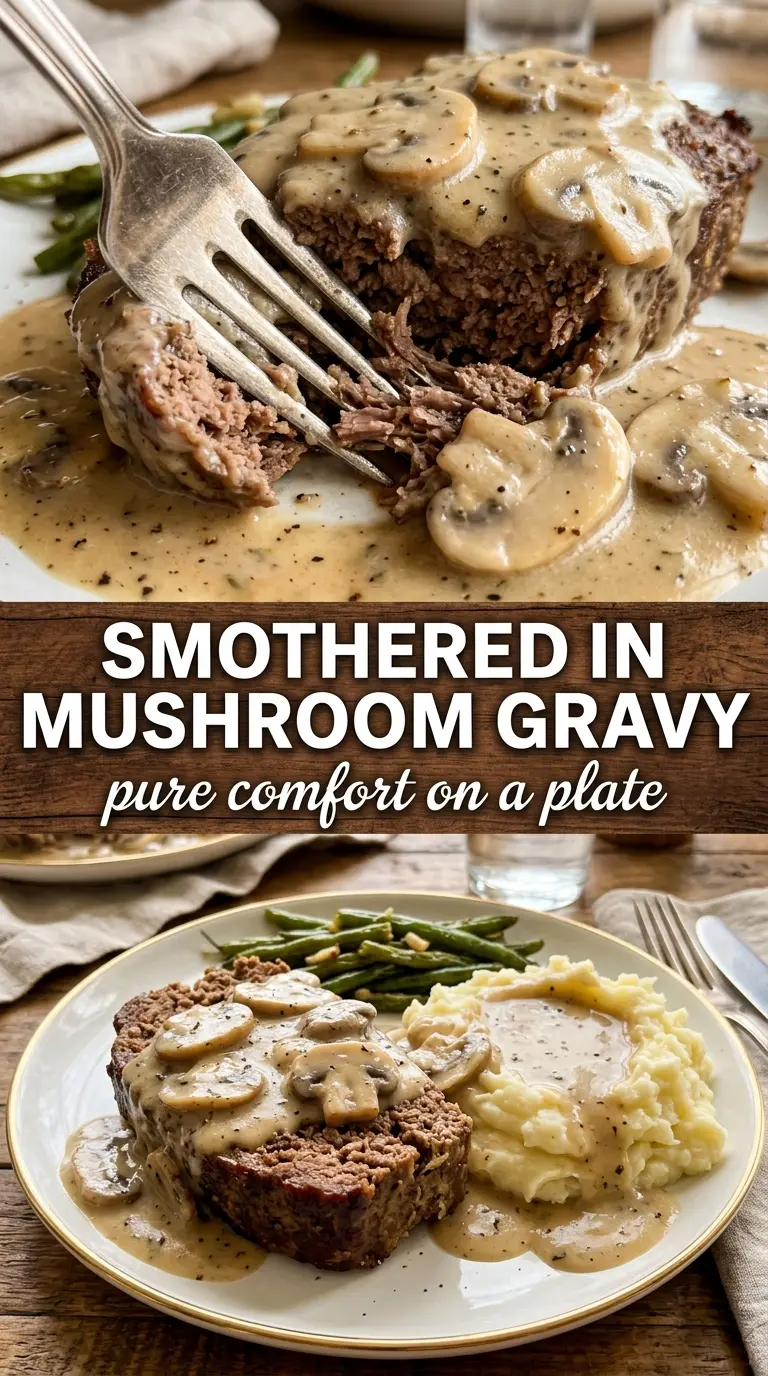
Meatloaf gets a lot more interesting when it’s sliced thick and crowned with a velvety mushroom gravy that clings to every bite. The loaf stays tender instead of dense, the glaze turns sticky and savory at the edges, and the gravy brings the whole plate together with that deep, brown, almost steakhouse-style comfort people always go back for. This is the kind of dinner that makes plain mashed potatoes disappear fast.
The trick here is using enough binder to keep the meatloaf soft without turning it bready, then letting it rest before slicing so the juices stay where they belong. The gravy works for the same reason the loaf does: mushrooms need to brown first. If you rush that step, the sauce tastes flat. Once they’ve picked up color, the broth and cream build a sauce that’s rich without feeling heavy.
Below, I’ve broken down the parts that matter most: how to keep the loaf tender, what the mushrooms should look like before the liquid goes in, and a few smart swaps if you need to adjust the recipe for what’s in your kitchen.
The meatloaf stayed juicy all the way through, and the mushroom gravy thickened up in just a few minutes with no lumps. My husband kept saying the sauce tasted like something from a diner in the best way.
Save this meatloaf with creamy mushroom gravy for the kind of comforting dinner where the gravy matters as much as the loaf.
The difference between a tender loaf and a dense brick
Meatloaf turns heavy when it gets overmixed or starved of moisture. The breadcrumbs and milk are doing more than stretching the meat; they’re holding onto juices so the slices stay soft after baking. Grating the onion matters too, because it disappears into the mixture and seasons it from within without leaving crunchy bits behind.
The other place people go wrong is cutting too soon. Meatloaf needs that short rest so the juices settle back into the loaf instead of spilling onto the board. If you slice it straight from the oven, even a well-made meatloaf can seem dry because all the moisture runs out at once.
- Ground beef — Use 80/20 if you can. Leaner beef works, but it won’t taste as plush or stay as juicy.
- Breadcrumbs and milk — This is the panade that keeps the texture tender. Don’t skip the milk; it’s part of what prevents a tight, rubbery slice.
- Grated onion — Grate it fine so it melts into the loaf. Chopped onion can stay a little sharp and make the texture uneven.
- Worcestershire — This gives the meatloaf that savory backbone that plain salt can’t provide. It shows up again in the gravy to tie the whole dish together.
What the mushrooms and cream are actually doing in the gravy
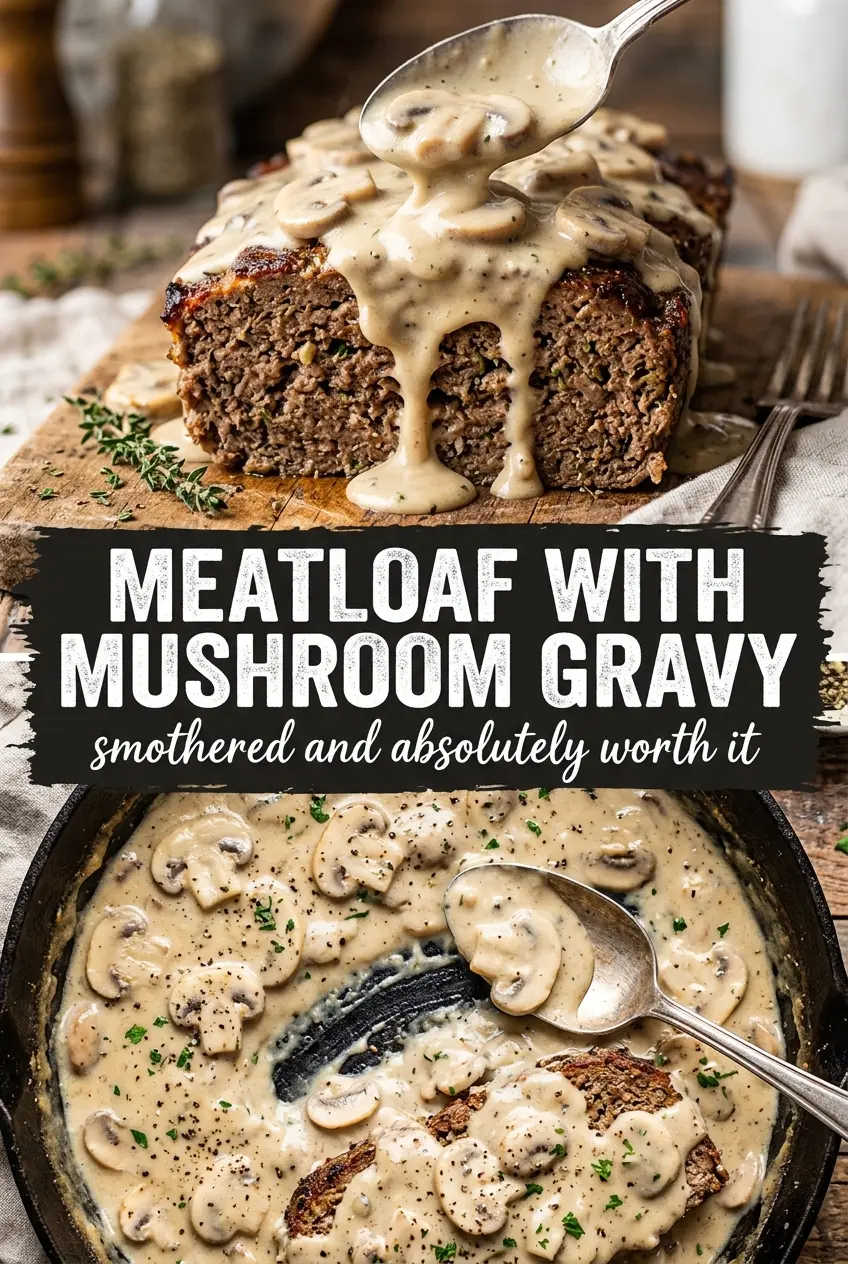
The mushrooms need to brown before anything else goes in. That’s where the depth comes from. If they just steam in the butter, the gravy tastes thin and one-note. Cremini mushrooms are worth using here because they have a little more backbone than basic white mushrooms, but regular button mushrooms still work if that’s what you have.
The flour cooks with the mushrooms and garlic for a minute to remove the raw taste, then the broth and cream turn it into a sauce that coats the back of a spoon. Heavy cream is the ingredient that gives you the velvety finish, so don’t swap in milk unless you’re willing to accept a thinner gravy. The tiny splash of Worcestershire sharpens everything and keeps the sauce from tasting flat.
- Cremini mushrooms — Their deeper flavor makes the gravy taste fuller. White mushrooms work, but they’re milder and won’t give quite the same richness.
- Heavy cream — This is what makes the sauce silky instead of just brothy. Half-and-half can work in a pinch, but the gravy will be looser.
- Butter and flour — They form the base that thickens the sauce. Let the flour cook for a full minute so the gravy doesn’t taste pasty.
- Beef broth — Use a broth you’d actually drink. A weak broth makes the gravy taste thin no matter how much cream you add.
Building the loaf and gravy in the right order
Mixing the meatloaf base
Combine the beef, breadcrumbs, eggs, milk, grated onion, Worcestershire, salt, and pepper until everything is just distributed. Stop as soon as the mixture looks even. If you keep working it, the meat proteins tighten up and the loaf bakes up dense. Press it into the pan firmly enough to remove big air pockets, but don’t pack it down like a meat brick.
Glazing before the bake
Spread the ketchup and brown sugar glaze over the top in an even layer before it goes into the oven. It will darken and bubble into a sticky cap that balances the savory meat. If the glaze goes on too thick, it can slide off instead of setting, so keep it thin and even.
Cooking the mushrooms until they take on color
Melt the butter in a skillet and cook the sliced mushrooms over medium-high heat until they’ve given off their moisture and started to brown. You want golden edges and a darker pan, not a pale pile of softened mushrooms. If the pan looks crowded or wet, the mushrooms are steaming instead of searing, and the gravy will lose that deep roasted flavor.
Finishing the gravy
Add the garlic briefly, then sprinkle in the flour and cook it for a minute before whisking in the broth, cream, and Worcestershire. The sauce should simmer until it lightly coats a spoon. If it looks lumpy, keep whisking and give it another minute; if it gets too thick, a splash of broth loosens it right back up.
How to adapt this dinner without losing the good parts
Make it gluten-free
Swap the breadcrumbs for certified gluten-free breadcrumbs and use a gluten-free flour blend for the gravy. The texture stays close to the original, though the gravy may need an extra minute on the stove to thicken fully.
Use ground turkey instead of beef
Ground turkey works, but it needs the moisture from the milk and onion even more than beef does. The flavor will be lighter, so the mushroom gravy becomes even more important for bringing depth to the plate.
Make the gravy dairy-free
Use a plant-based butter and swap the cream for an unsweetened oat or cashew cream. The sauce will be a little less lush, but it still turns silky if you keep the heat gentle and simmer it until it reduces.
Make ahead for a busy night
Shape the meatloaf and mix the glaze up to a day ahead, then refrigerate it covered. Cook the gravy fresh if you can, because mushrooms lose a little of their edge after sitting, but the loaf itself reheats beautifully.
Storage and Reheating
- Refrigerator: Store leftover meatloaf and gravy separately for up to 4 days. The loaf slices cleanly when cold, and the gravy will thicken in the fridge.
- Freezer: Meatloaf freezes well for up to 3 months, wrapped tightly and sliced or whole. The gravy can be frozen, but cream sauces sometimes separate a bit; reheat it slowly and whisk well.
- Reheating: Warm slices of meatloaf covered in a 325°F oven or in the microwave at low power with a spoonful of gravy over the top. Reheat the gravy gently on the stove over low heat and add a splash of broth if it’s too thick. High heat is what breaks cream sauces and dries out the meat.
Questions I Get Asked About This Recipe
Meatloaf with Creamy Mushroom Gravy
Ingredients
Equipment
Method
- Preheat oven to 350°F and grease a loaf pan.
- Mix ground beef, breadcrumbs, eggs, milk, grated onion, Worcestershire, salt, and pepper until evenly combined.
- Press the mixture into the loaf pan and spread ketchup and brown sugar glaze over the top.
- Bake 60–70 minutes until the internal temperature reaches 160°F.
- Rest the meatloaf 10 minutes before slicing.
- Melt butter in a skillet over medium-high heat and cook sliced cremini mushrooms until golden, about 5–6 minutes.
- Add minced garlic and cook 30 seconds, then sprinkle flour over the mushrooms and cook 1 minute.
- Whisk in beef broth, heavy cream, and Worcestershire sauce, then simmer 5 minutes until the gravy thickens.
- Slice the meatloaf and serve with mushroom gravy poured generously over the top.