Meatloaf gets a whole lot more interesting when the mashed potatoes aren’t served beside it, but piled right on top and browned until the cheese turns bubbly and the edges pick up a little color. You still get that familiar, hearty meatloaf slice, but now every piece comes with a creamy, cheesy lid that keeps the whole thing from drying out in the oven. It’s the kind of dinner that looks like it took more effort than it did.
The trick here is baking the meatloaf first so it has time to set before the potatoes go on. If you add the topping too early, the potatoes sink, the loaf steams, and you lose that clean slice. Yukon golds work especially well because they mash up rich and smooth without turning gluey, and a little warm cream keeps the topping soft enough to spread without tearing the meat below.
Below, I’ll walk you through the timing that keeps the layers distinct, plus a few swaps if you want to adjust the cheese, the meat, or the make-ahead plan.
The mashed potato topping stayed fluffy instead of sinking into the meatloaf, and the cheddar browned up beautifully on top. I baked it the extra 20 minutes and the slices held together perfectly.
Save this cheesy mashed potato meatloaf for the nights when you want a bubbling, golden-topped dinner that slices cleanly and feeds a crowd.
The Part Everyone Gets Wrong About Layered Meatloaf
The biggest mistake with this dish is treating it like a meatloaf with a side dish piled on top. It needs two separate cooking phases. The meatloaf has to get far enough along to firm up before the potatoes go on, or the topping slides around and the whole thing turns muddy at the edges.
Grated onion matters here because it melts into the meat mixture instead of leaving sharp chunks that poke through the slice. The breadcrumbs and eggs give the loaf enough structure to hold that heavy potato layer, and Worcestershire adds the kind of savory depth that keeps the meat from tasting flat under all that cheese.
The payoff is a pan dinner that cuts into neat squares instead of collapsing into a spoonable mess. That comes from patience, not extra ingredients.
What Each Ingredient Is Actually Doing in This Dish
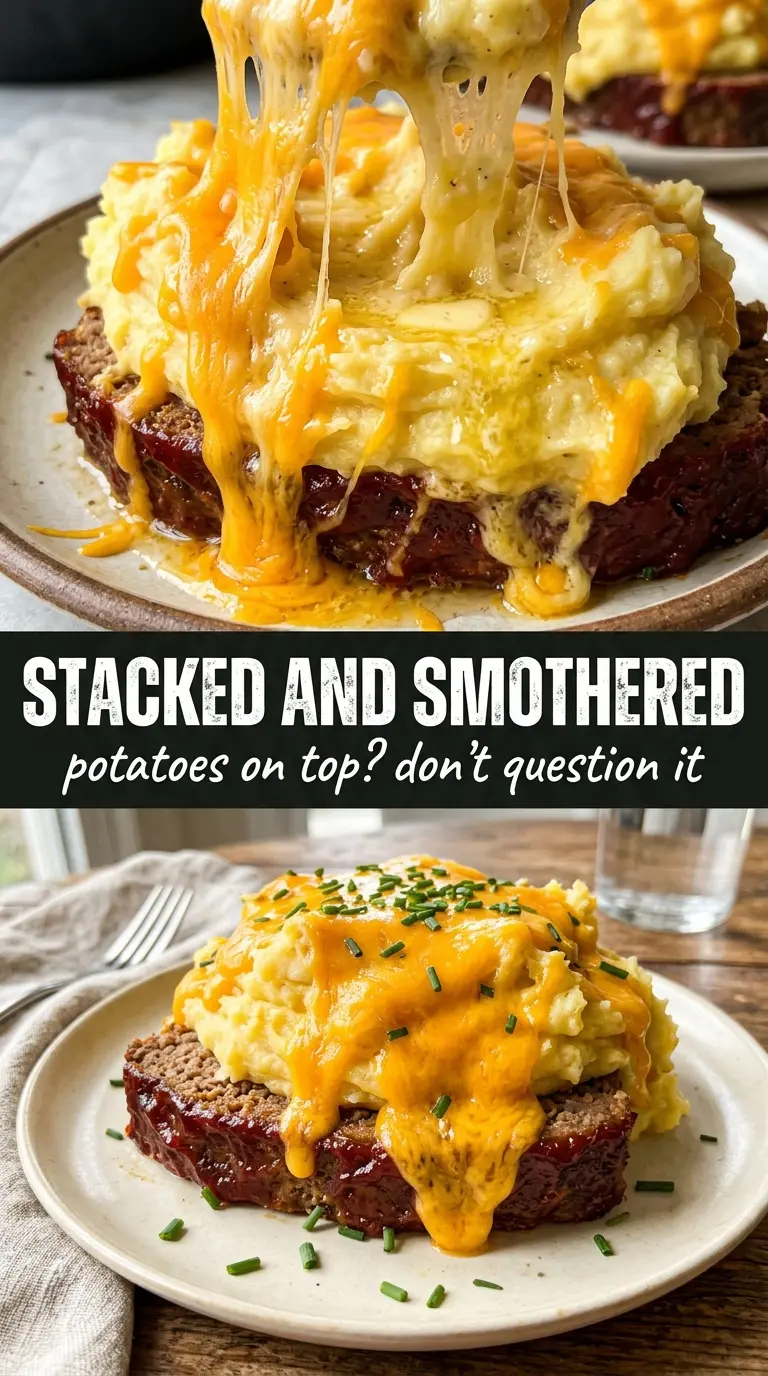
- Ground beef — An 80/20-style blend gives you enough fat for a tender loaf that stays juicy under the potato topping. Leaner beef works, but the texture turns drier after the second bake.
- Breadcrumbs, eggs, and milk — This trio holds the meatloaf together and keeps it from tightening into a dense brick. If you need a gluten-free version, use gluten-free breadcrumbs and the loaf will still slice well.
- Grated onion — This is one of the best moves in the recipe. It disappears into the meat, adds moisture, and seasons the loaf from the inside without leaving visible pieces that can fall out when you slice.
- Yukon gold potatoes — They mash silky and buttery without needing a lot of extra liquid. Russets work in a pinch, but they can go a little fluffier and drier, so watch the cream and stop mashing as soon as they’re smooth.
- Cheddar — Sharp cheddar gives the topping its strongest flavor and browns nicely. Pre-shredded cheese melts fine here, but freshly shredded cheese melts smoother and gives you a cleaner, gooier top.
- Warm cream and butter — Warm dairy blends into the potatoes without cooling them down or making the mash stiff. Cold cream can leave the topping heavy and harder to spread over the meatloaf.
How to Keep the Layers Separate and the Top Browned
Building the Loaf Base
Mix the meatloaf just until everything is combined. If you overwork it, the loaf turns dense and springy instead of tender. Press it into the baking dish in an even shape so the heat reaches it at the same rate across the pan. Uneven thickness is what gives you one end that’s dry while the other still needs time.
Giving the Meatloaf Its First Bake
Bake the loaf for 45 minutes before the potatoes go on. At that point it should be mostly cooked and firm enough that a spoonful of mash won’t sink straight through. If the center still looks loose, give it a few more minutes before topping it. You want the surface set, not crusted dry.
Making the Potato Topping Smooth
Mash the potatoes with butter, warm cream, and one cup of the cheddar until they’re smooth and spreadable. Stop as soon as the texture looks creamy; if you keep beating them, the potatoes can turn gluey. The topping should mound on a spoon but still spread across the meatloaf without tearing it open.
Finishing With Cheese and Heat
Spread the potatoes thickly over the meatloaf, then scatter the remaining cheddar on top. Return the pan to the oven until the cheese is bubbling and the potato surface picks up golden spots. Let it rest for 10 minutes before slicing. That rest matters because the juices settle and the layers hold together instead of running out onto the pan.
How to Adapt It for a Different Table
Make it with ground turkey
Swap in ground turkey for the beef if you want a lighter version. Turkey is leaner, so the loaf needs the full amount of onion, eggs, and milk to stay moist, and it benefits from the full bake time so it sets properly before the potatoes go on.
Use leftover mashed potatoes
Leftover mashed potatoes work well as long as they’re loose enough to spread. If they’re stiff from the fridge, warm them with a splash of cream or milk before layering them on, or they’ll clump and drag the meatloaf apart.
Go gluten-free without changing the texture much
Use gluten-free breadcrumbs in the meat mixture and the loaf still holds together nicely. The potato topping is naturally gluten-free, so the rest of the dish stays the same.
Storage and Reheating
- Refrigerator: Store leftovers covered for up to 4 days. The potato topping firms up in the fridge, but the flavor holds up well.
- Freezer: It freezes best as individual slices. Wrap tightly and freeze for up to 2 months; the potatoes may lose a little creaminess after thawing, but the dish still reheats well.
- Reheating: Reheat covered in a 325°F oven until warmed through. The common mistake is blasting it in the microwave, which can make the potatoes dry and the meatloaf rubbery.
Answers to the Questions Worth Asking

Meatloaf with Mashed Potatoes and Cheese
Ingredients
Equipment
Method
- Preheat the oven to 350°F and grease a 9x13 baking dish.
- Mix ground beef, breadcrumbs, eggs, milk, grated onion, Worcestershire, salt, and pepper, then press the mixture into the baking dish to form a loaf shape.
- Bake for 45 minutes until nearly cooked through.
- Mash potatoes with butter, warm cream, 1 cup cheddar, salt, and pepper until smooth.
- Spread the mashed potatoes thickly over the meatloaf, then scatter the remaining cheddar over the top.
- Return to the oven and bake for 15–20 minutes until the potato topping is golden and the cheese is bubbling.
- Rest the meatloaf for 10 minutes before serving.