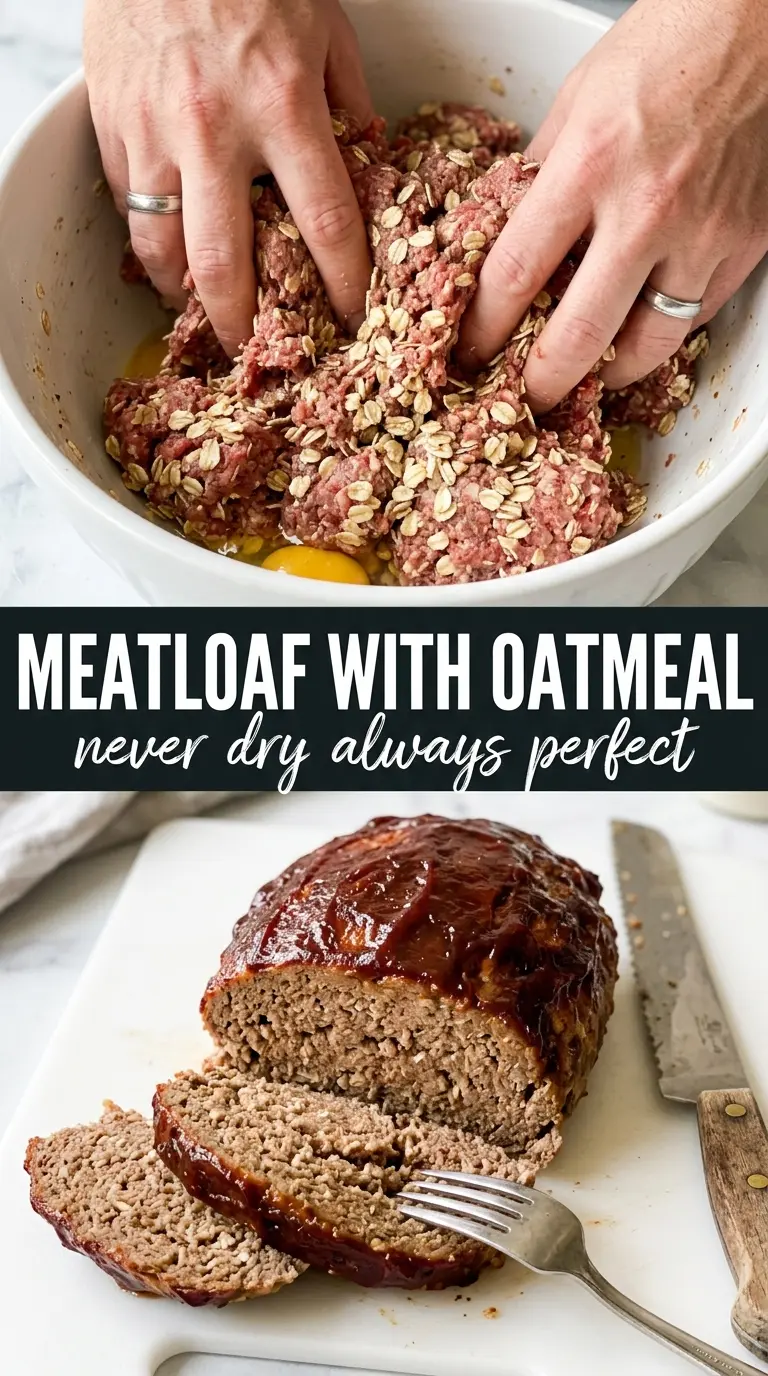
Meatloaf with oatmeal comes out tender, sliceable, and full of beefy flavor without the dry, crumbly texture that turns people off from meatloaf in the first place. The oats melt into the mixture just enough to hold everything together, but they still leave a little texture that keeps each bite interesting. The ketchup glaze bakes into a sticky, tangy finish that balances the richness of the beef.
The trick here is giving the oats a few minutes to soak in milk before they go into the bowl. That step keeps them from stealing moisture from the meat as the loaf bakes, which is how you end up with a firmer, drier slice. Grated onion does the same kind of quiet work, adding moisture and flavor without leaving big chunks behind. If you’ve only ever made meatloaf with breadcrumbs, this version is worth paying attention to.
Below, I’ve included the little details that keep this loaf moist all the way through, plus the swaps I’d use when I want a gluten-free version or when I’m out of one of the usual pantry items.
The oats gave the meatloaf a softer texture than breadcrumbs, and it sliced cleanly without falling apart. The glaze caramelized beautifully and the leftovers reheated without drying out.
Save this oatmeal meatloaf for a weeknight dinner with a moist center and that caramelized ketchup-mustard glaze on top.
The Reason Oats Keep This Meatloaf Tender Instead of Dense
Breadcrumbs can do the job, but oats bring a little more structure and a little more forgiveness. Old-fashioned rolled oats soften as they sit with the milk, then continue absorbing juices in the oven, which helps the loaf stay moist without turning gummy. That matters in a loaf pan, where the meat doesn’t have much room to shed steam.
The other place people run into trouble is overmixing. Once the beef and soaked oats are combined, stop as soon as everything looks evenly distributed. If you pack the mixture too tightly, the finished loaf turns springy instead of tender, and the slices lose that clean, hearty texture you want.
- Old-fashioned rolled oats — These hold their shape better than quick oats and give you a better slice. Quick oats can work in a pinch, but they soften more aggressively and make the loaf a little finer in texture.
- Grated onion — This blends into the meatloaf and keeps moisture moving through the loaf. Finely chopped onion works, but grated onion disappears more completely and keeps the texture smooth.
- Whole milk — The soak matters more than the type of milk. Use what you have, but don’t skip the soak, or the oats will pull moisture from the beef as the loaf bakes.
- Worcestershire sauce — This adds depth and a savory backbone that keeps the flavor from tasting flat. There isn’t a perfect substitute, though soy sauce plus a tiny splash of vinegar will get you close in a pinch.
What Each Ingredient Is Actually Doing in This Recipe
- Primary ingredient (the star) — Quality matters most. Choose the best you can find.
- Cooking medium (oil, butter, or broth) — This carries flavors and prevents dryness.
- Seasonings (salt, pepper, spices, herbs) — Layer flavors so nothing overpowers. Build depth gradually.
- Aromatics (garlic, onion, herbs) — Cook with fat to bloom flavors. Become the foundation.
- Supporting ingredients — Complement the main ingredient without overpowering it.
- Sauce or liquid (if applicable) — Brings flavors together. Balance richness with acid.
- Acid (lemon, vinegar, wine, or other) — Brightens and prevents flat-tasting results.
- Final finish (garnish, glaze, or sauce) — Prevents one-dimensional taste and adds visual appeal.
Building the Loaf So It Stays Moist All the Way Through
Soaking the Oats First
Stir the oats into the milk and let them sit for 5 minutes before anything else goes into the bowl. They should look softened and a little swollen, not dry and dusty. If you skip this, the oats keep drinking liquid in the oven and the finished loaf can feel dry even when the center is cooked through.
Mixing Without Packing It Down
Add the beef, onion, garlic, Worcestershire, seasonings, and soaked oats, then mix with your hands just until the ingredients are evenly distributed. The mixture should hold together when squeezed, but it shouldn’t look paste-like. Overworking ground beef tightens the proteins and gives you a heavy loaf instead of a tender one.
Glazing in Two Rounds
Spread half the glaze over the top before baking so it has time to set into a shiny, tangy crust. Add the rest at the 45-minute mark, when the surface has already started to firm up. If you glaze too early with all of it, the sugars can scorch before the meatloaf finishes cooking, and the topping loses that sticky finish.
Resting Before You Slice
Pull the meatloaf when it reaches 160°F in the center, then let it rest for 10 minutes. That short rest lets the juices settle back into the loaf instead of running out the second you cut it. Slice too soon and the center will look messy, even if the flavor is right on target.
How to Adapt This Oatmeal Meatloaf Without Losing the Good Texture
Gluten-Free Version That Still Slices Well
Use certified gluten-free oats and check your Worcestershire sauce, since some brands contain gluten. The texture stays nearly the same because the oats are doing the binding work, and you won’t miss breadcrumbs at all.
Leaner Meatloaf with Ground Turkey
Swap the beef for ground turkey, but add an extra tablespoon of milk or a splash more Worcestershire so the loaf doesn’t dry out. Turkey makes a lighter slice, though it won’t have the same rich flavor as beef, so the glaze matters even more here.
No-Mustard Glaze
Mix ketchup with brown sugar and a small splash of apple cider vinegar if you don’t want mustard in the topping. You’ll lose a little sharpness, so keep the vinegar modest or the glaze can taste thin instead of balanced.
Make-Ahead and Leftover Storage
You can mix and shape the loaf up to 24 hours ahead, cover it tightly, and refrigerate it before baking. Leftovers keep well because the oats help trap moisture, which means the slices stay tender instead of turning chalky when reheated.
Storage and Reheating
- Refrigerator: Store sliced meatloaf in an airtight container for up to 4 days. The glaze softens a little, but the texture stays pleasantly moist.
- Freezer: Wrap individual slices tightly and freeze for up to 3 months. Thaw in the fridge overnight for the best texture.
- Reheating: Warm slices covered in a 300°F oven with a spoonful of water or a little extra glaze. Microwave heat works in a pinch, but short bursts are best or the edges turn tough fast.
Questions I Get Asked About This Recipe

Meatloaf with Oatmeal
Ingredients
Equipment
Method
- Preheat the oven to 350°F and grease a 9x5 loaf pan. You should see an even, thin coating so the loaf releases cleanly.
- Mix the old-fashioned rolled oats with whole milk and let soak 5 minutes until the oats soften. The mixture should look thicker and slightly creamy, with softened oat pieces.
- Combine ground beef, soaked oats, eggs, grated onion, minced garlic, Worcestershire sauce, garlic powder, dried thyme, salt, and black pepper. Mix until evenly combined with no dry oat pockets visible.
- Press the meat mixture into the loaf pan and smooth the top. The surface should be level so the glaze can spread evenly.
- Mix the ketchup, brown sugar, and mustard, then spread half over the meatloaf. The top should show a glossy red layer from edge to edge.
- Bake at 350°F for 55–65 minutes until the internal temperature reaches 160°F. The loaf should be browned on top with juices bubbling lightly around the edges.
- At the 45-minute mark, spread the remaining glaze over the meatloaf. Continue baking so the glaze caramelizes and darkens slightly.
- Rest the meatloaf for 10 minutes before slicing. The center should hold together cleanly so each slice stays moist and not crumbled.