Golden, herb-speckled Mediterranean salad dressing turns a plain bowl of greens into something you actually look forward to eating. The vinegar gives it lift, the Dijon keeps the emulsion steady, and the chopped olives and capers add that briny, savory edge that makes the whole thing taste layered instead of flat. It pours like a vinaigrette but eats with more presence than a basic oil-and-vinegar dressing.
The part that matters most here is the emulsion. Add the olive oil slowly while whisking, and the dressing turns glossy and a little thick instead of separating into a sharp puddle. Fresh herbs go in at the end so they stay bright, and the garlic has enough raw bite to stand up to the olives and capers without disappearing.
Below, you’ll find the small details that make this dressing work every time, plus a few smart ways to adjust it if you want it milder, creamier, or a little more herb-forward.
The dressing thickened up beautifully and didn’t separate in the fridge. The olives and capers gave it that salty punch I was missing, and it was perfect over cucumber tomato salad.
Save this Mediterranean salad dressing for bright, briny vinaigrette flavor with herbs, garlic, olives, and capers.
The Reason This Dressing Stays Emulsified Instead of Breaking
The vinegar, Dijon, and garlic need to be whisked together first because that acidic base gives the oil something to bind with. If you dump everything in at once, the dressing can still taste fine, but it will separate faster and pour thinner. Dijon is doing more than adding flavor here; it acts like a quiet little stabilizer that keeps the mixture cohesive long enough to coat salad greens properly.
The other thing that matters is the texture of the herbs and briny bits. Mince the olives and capers finely enough that they disperse through the dressing instead of sinking to the bottom in clumps. That gives every spoonful a little salt, acid, and herb without turning it into a chunky tapenade.
- Whisking the vinegar and mustard first helps the dressing hold together and keeps the garlic from tasting harsh in one spot.
- Slow oil addition is what turns this from a sharp vinaigrette into a glossy emulsion.
- Finely chopped herbs, olives, and capers distribute flavor evenly and keep the texture spoonable.
- Fresh garlic gives the dressing its bite; jarred garlic can work, but it usually tastes flatter and a little sweeter.
What Each Ingredient Is Doing in This Dressing
- Red wine vinegar — This gives the dressing its clean acidity and the classic Mediterranean snap. If you need a swap, lemon juice works, but the flavor shifts brighter and a little less rounded.
- Dijon mustard — This is the emulsifier and the backbone of the dressing. Yellow mustard won’t behave the same way, and the flavor comes out harsher and less balanced.
- Extra virgin olive oil — Use a good one here because it’s half the dressing. A peppery, fresh oil tastes rich and grassy; a dull oil makes the whole thing fall flat.
- Fresh basil, parsley, and oregano — These herbs keep the dressing alive and green-tasting. Dried herbs won’t give the same fresh finish, though a pinch of dried oregano can stand in if that’s all you have.
- Kalamata olives and capers — These bring the salty, briny depth that makes this dressing taste Mediterranean instead of generic. Chop them finely so they season the dressing instead of overwhelming the bite.
Building the Emulsion Without Making It Greasy
Start With the Sharp Base
Whisk the vinegar, Dijon, and garlic until the mixture looks smooth and slightly thickened. That first step matters because it spreads the mustard evenly before the oil goes in. If the garlic is left in clumps, you’ll get harsh bites instead of a steady garlicky flavor. The bowl should smell punchy and bright before you add anything else.
Add the Oil in a Thin Stream
Pour the olive oil in slowly while whisking constantly. The dressing should turn from thin and translucent to glossy and a little opaque as it comes together. If it starts looking broken or oily, stop adding oil for a moment and whisk harder until it tightens again. Rushing this stage is the fastest way to end up with separated dressing.
Fold in the Herbs and Briny Bits
Stir in the basil, parsley, oregano, olives, and capers after the emulsion forms. Adding them too early can keep the dressing from tightening properly, and the herbs can get bruised and dull. Once they’re in, the dressing should look flecked and rustic, not muddy. Taste after this stage because the olives and capers can change the salt level enough that you may not need much extra seasoning.
Balance the Final Bite
Add salt and black pepper last, then taste again. If it feels too sharp, a touch more olive oil softens it. If it tastes flat, it usually needs a small pinch of salt or another splash of vinegar, not more garlic. Let it sit for a few minutes before serving so the herbs open up and the garlic settles into the dressing instead of tasting harsh.
Three Ways to Adjust This Dressing Without Losing What Makes It Good
Make It Dairy-Free and Naturally Vegan
This dressing already fits both needs as written. The important thing is keeping the olive oil and mustard ratio intact so the texture stays emulsified and the flavor still feels full, not thin. Serve it over beans, grain salads, or chopped vegetables and it still reads as a complete dressing, not a compromise.
Swap the Vinegar for Lemon Juice
Lemon juice gives you a brighter, fresher edge and works especially well on cucumber, tomato, or chickpea salads. The tradeoff is that you lose a little of the mellow depth that red wine vinegar brings. Start with the same amount, taste, and add a splash more oil if the lemon makes it feel too sharp.
Blend It Smooth for a Creamier Finish
If you want a more unified dressing, blend the vinegar, mustard, garlic, herbs, olives, and capers with the oil instead of whisking by hand. The result is thicker and more spoonable, with the briny ingredients integrated instead of visibly chopped. You lose a little rustic texture, but you gain a dressing that clings beautifully to thicker salads and roasted vegetables.
Storage and Reheating
- Refrigerator: Store in a glass jar for up to 1 week. The olive oil may firm up in the cold, so the dressing can look cloudy or separated.
- Freezer: Freezing isn’t a good fit here. The herbs and emulsion don’t thaw with the same texture, and the dressing loses its fresh edge.
- Reheating: Don’t heat it. Let the jar sit at room temperature for 15 to 20 minutes, then shake hard or whisk again before serving. If it still looks tight, add a teaspoon of water or vinegar to loosen it.
Questions I Get Asked About This Recipe
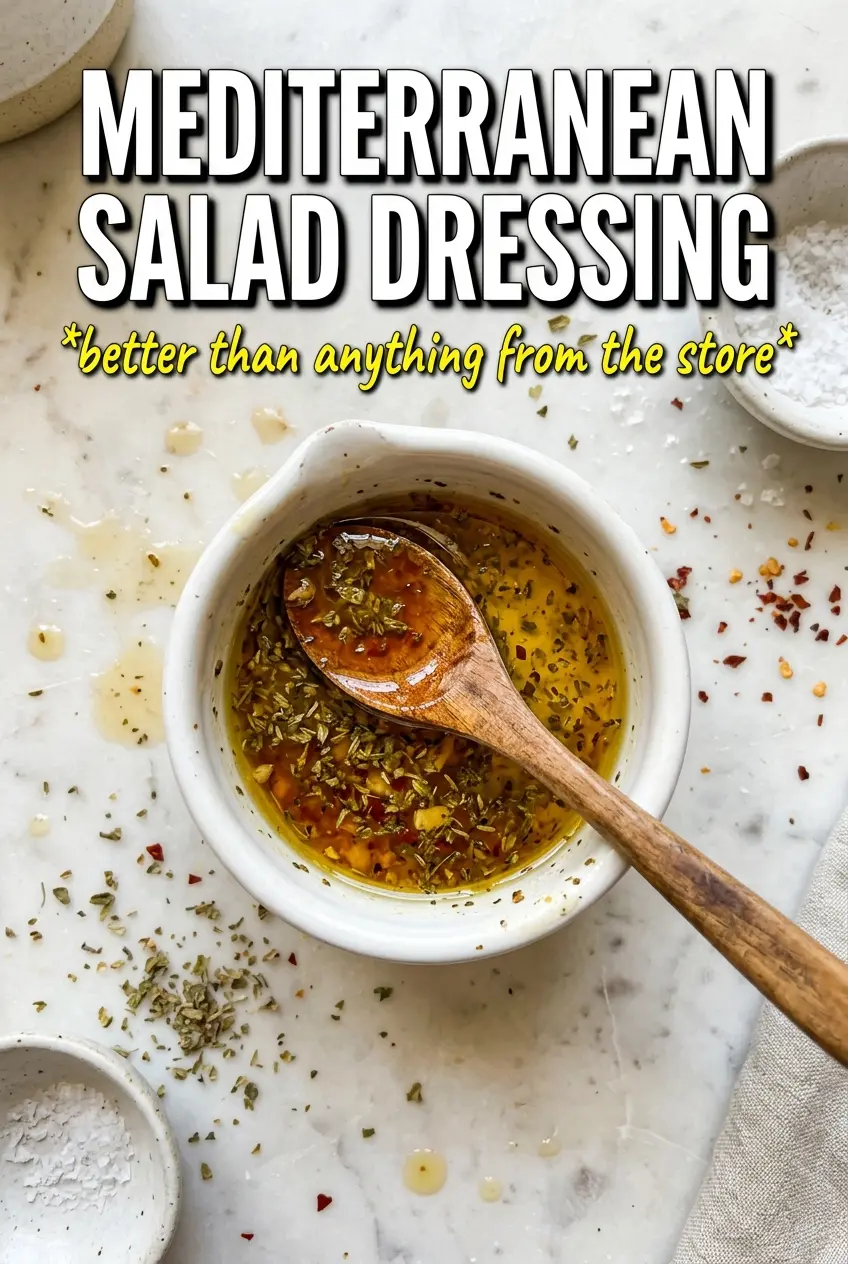
Mediterranean Salad Dressing
Ingredients
Method
- Whisk together red wine vinegar, Dijon mustard, and minced garlic until fully combined and slightly thickened.
- Slowly stream in extra virgin olive oil while whisking continuously to form a golden emulsion with visible herb-ready consistency.
- Stir in chopped basil, chopped parsley, chopped oregano, minced kalamata olives, and minced capers.
- Season with salt and black pepper, then taste and adjust the balance as needed.
- Transfer the dressing to a glass jar and refrigerate for up to one week.
- Shake well before serving so the herbs and flecks distribute evenly over the vinaigrette.