Moist, tender pumpkin bread with a crackly sugar top has a way of disappearing slice by slice, especially when the crumb stays soft for days instead of drying out after the first afternoon. This version leans into pumpkin puree for deep flavor and a plush texture, then finishes with a spoonful of sugar on top so the crust bakes into a light, crisp shell.
The trick here is keeping the batter relaxed. The oil keeps the loaf supple, brown sugar adds a little molasses depth, and the milk loosens everything just enough to bake up even without feeling heavy. The spices stay warm and familiar rather than sharp, which lets the pumpkin taste like pumpkin instead of turning the loaf into spice cake.
Below, I’ll show you where people usually overmix or underbake this kind of loaf, plus a few smart swaps if you want to tweak the texture or make it dairy-free without losing the structure.
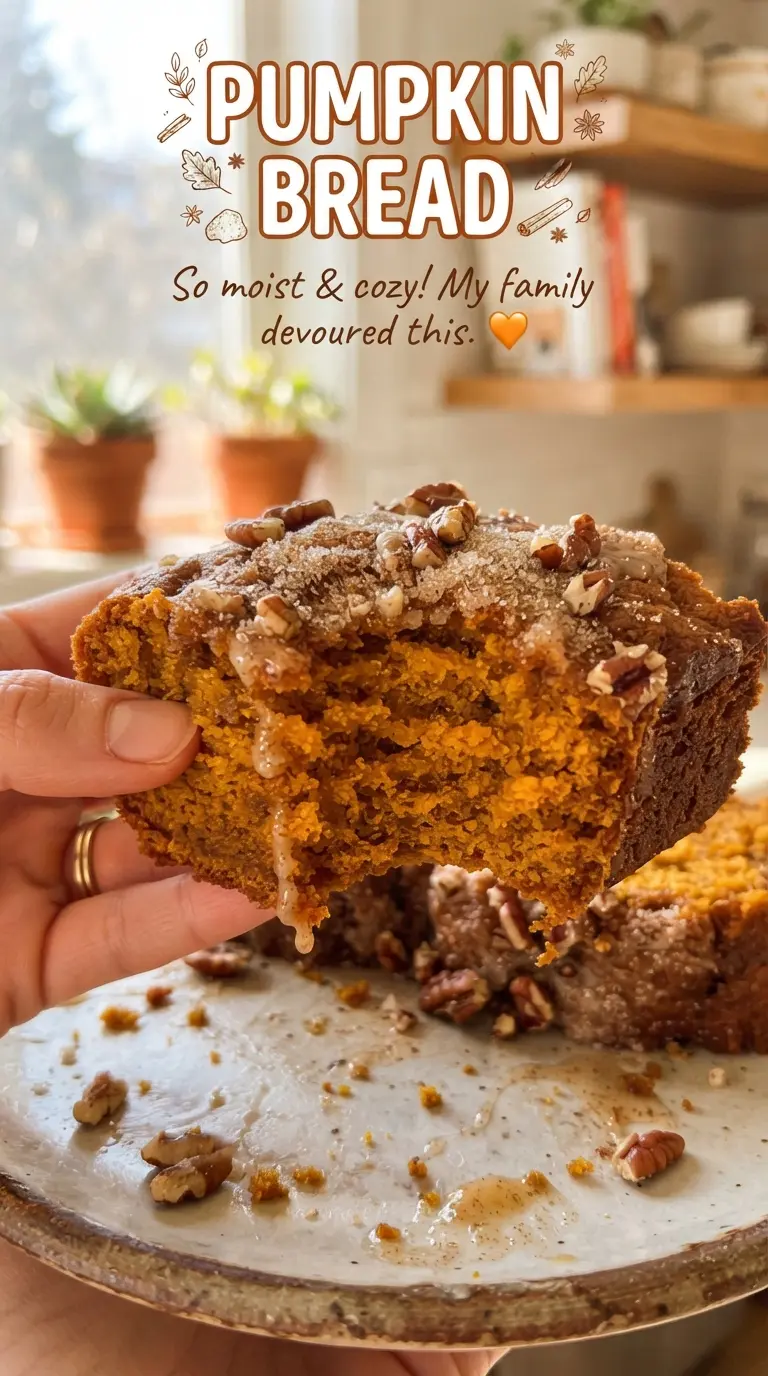
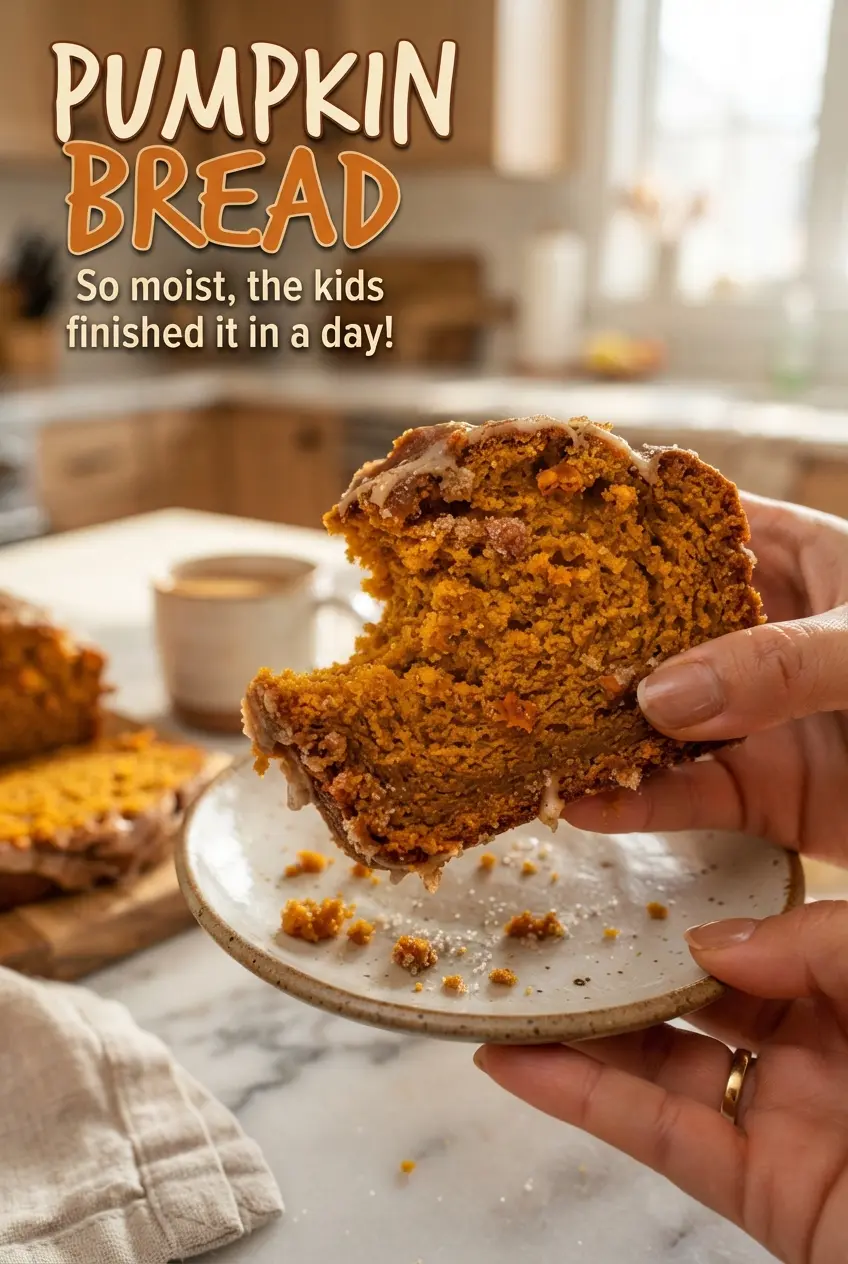
The loaf rose beautifully, the top turned crackly instead of soggy, and the pumpkin flavor stayed front and center even the next day.
Save this pumpkin bread for a moist loaf with a crackly sugar top and warm spice in every slice.
The Bake That Keeps Pumpkin Bread from Turning Heavy
The line between tender pumpkin bread and a dense, gummy loaf is usually a mixing problem, not a measuring one. Once the dry ingredients hit the wet, the flour starts developing structure fast, and stirring past the point where the streaks disappear gives you a tighter crumb than you probably wanted.
The other thing that matters is doneness. Pumpkin bread can look set on top while the center is still catching up, especially in the middle of a tall loaf pan. A toothpick should come out clean or with just a few moist crumbs, and the loaf should smell deeply spiced and feel springy when you press the center lightly.
- Pumpkin puree — Use canned puree, not pumpkin pie filling. The filling already has sugar and spices mixed in, which throws off both the texture and the balance of the loaf.
- Brown sugar — This brings moisture and a little caramel depth. Packed brown sugar helps the crumb stay soft after cooling.
- Vegetable oil — Oil gives pumpkin bread its plush, even texture. Melted butter can work in a pinch, but it bakes up a little firmer and slightly less moist.
- Milk — Just enough to loosen the batter so it bakes evenly. Any plain milk works here, including dairy-free milk as long as it’s unflavored.
What Each Ingredient Is Doing in This Loaf
- All-purpose flour — This gives the loaf enough structure to rise without becoming cakey. Don’t swap in bread flour unless you want a tighter, chewier crumb.
- Baking soda — It reacts with the acidity in the pumpkin and brown sugar to help the loaf rise. If yours is old, the bread will bake up flat and heavy.
- Pumpkin pie spice and cinnamon — These warm the loaf without overpowering it. If you only have one or the other, use both if you can; the blend gives more depth than cinnamon alone.
- Eggs — They bind the batter and help the loaf set properly in the center. Room-temperature eggs mix in more smoothly, but cold eggs won’t ruin the recipe.
- Granulated sugar — This keeps the crumb lighter than using brown sugar alone and helps the top get that crackly finish after the sugar topping goes on.
- Vanilla extract — It rounds out the spice and makes the pumpkin taste fuller. Use the real stuff if you have it; this is one place where it matters.
The Mixing Order That Gives You a Soft Crumb and a Crackly Top
Whisk the Dry Base First
Start by whisking the flour, baking soda, salt, pumpkin pie spice, and cinnamon together until the color looks even. That step keeps the leavening and spices from clumping in one spot, which is how you end up with pockets of bitter baking soda or one slice that tastes heavier than the rest. If you see little spice streaks, keep whisking.
Build the Wet Mixture Until It Looks Smooth
Whisk the pumpkin puree, oil, eggs, both sugars, milk, and vanilla until the mixture looks glossy and uniform. The sugar won’t dissolve completely, and that’s fine; you’re aiming for a smooth batter base, not a custard. If the oil looks streaky at this stage, the eggs weren’t mixed in well enough yet.
Fold, Don’t Beat
Add the dry ingredients to the wet and fold just until the flour disappears. A few tiny lumps are better than an overworked batter. Overmixing is what makes quick bread tough, and pumpkin bread in particular can go from tender to rubbery fast if you keep stirring after the flour is hydrated.
Finish with Sugar and Bake Through
Pour the batter into the pan and sprinkle the top with the tablespoon of sugar. That thin layer is what gives the loaf its crackly finish as it bakes. Bake until a toothpick comes out clean and the center springs back lightly; if the top is browning too fast before the middle is done, tent it loosely with foil for the last stretch.
How to Adjust This Pumpkin Bread Without Losing the Texture
Dairy-Free Version
Use an unsweetened plain non-dairy milk in place of the milk. Almond, oat, or soy all work, and the loaf stays just as soft because the main tenderness comes from the oil and pumpkin, not the dairy.
Less Sweet, More Spiced
Cut the granulated sugar back by 2 tablespoons if you want a loaf that leans more savory-spiced than dessert-like. The texture stays good, though the top won’t get quite as crisp from the sugar finish.
Gluten-Free Swap
Use a 1:1 gluten-free baking blend that includes xanthan gum. The crumb will be a touch more delicate, but the loaf still slices well if you cool it completely before cutting.
Storage and Reheating
- Refrigerator: Store tightly wrapped for up to 5 days. The loaf stays moist, but the texture firms up a bit in the fridge.
- Freezer: Freezes well. Wrap the cooled loaf or individual slices tightly and freeze for up to 3 months.
- Reheating: Warm slices in the microwave for 10 to 15 seconds or in a low oven until just heated through. Don’t blast it on high heat or the crumb turns dry at the edges before the center is warm.
Answers to the Questions Worth Asking
Pumpkin Bread
Ingredients
Equipment
Method
- Preheat oven to 350F, then grease and line a 9x5-inch loaf pan. Place the pan on a sheet pan for stability while baking.
- Whisk all-purpose flour, baking soda, salt, pumpkin pie spice, and ground cinnamon until evenly combined. Stop when the spice color is consistent throughout.
- Whisk pumpkin puree, vegetable oil, eggs, brown sugar, granulated sugar, milk, and vanilla extract until smooth. Keep whisking until no sugar grains are visible.
- Fold the dry ingredients into the wet just until no flour streaks remain. Mix only to combine so the loaf stays tender.
- Pour the batter into the prepared loaf pan and sprinkle the top with 1 tablespoon granulated sugar. Aim for an even, light dusting over the surface.
- Bake at 350F for 55-65 minutes until a toothpick inserted in the center comes out clean. Look for a domed top and set edges.
- Cool the pumpkin bread in the pan for 15 minutes. The loaf should feel firm enough to unmold without cracking.
- Transfer to a rack and cool before slicing. Wait until the loaf is mostly cool for clean, even slices.