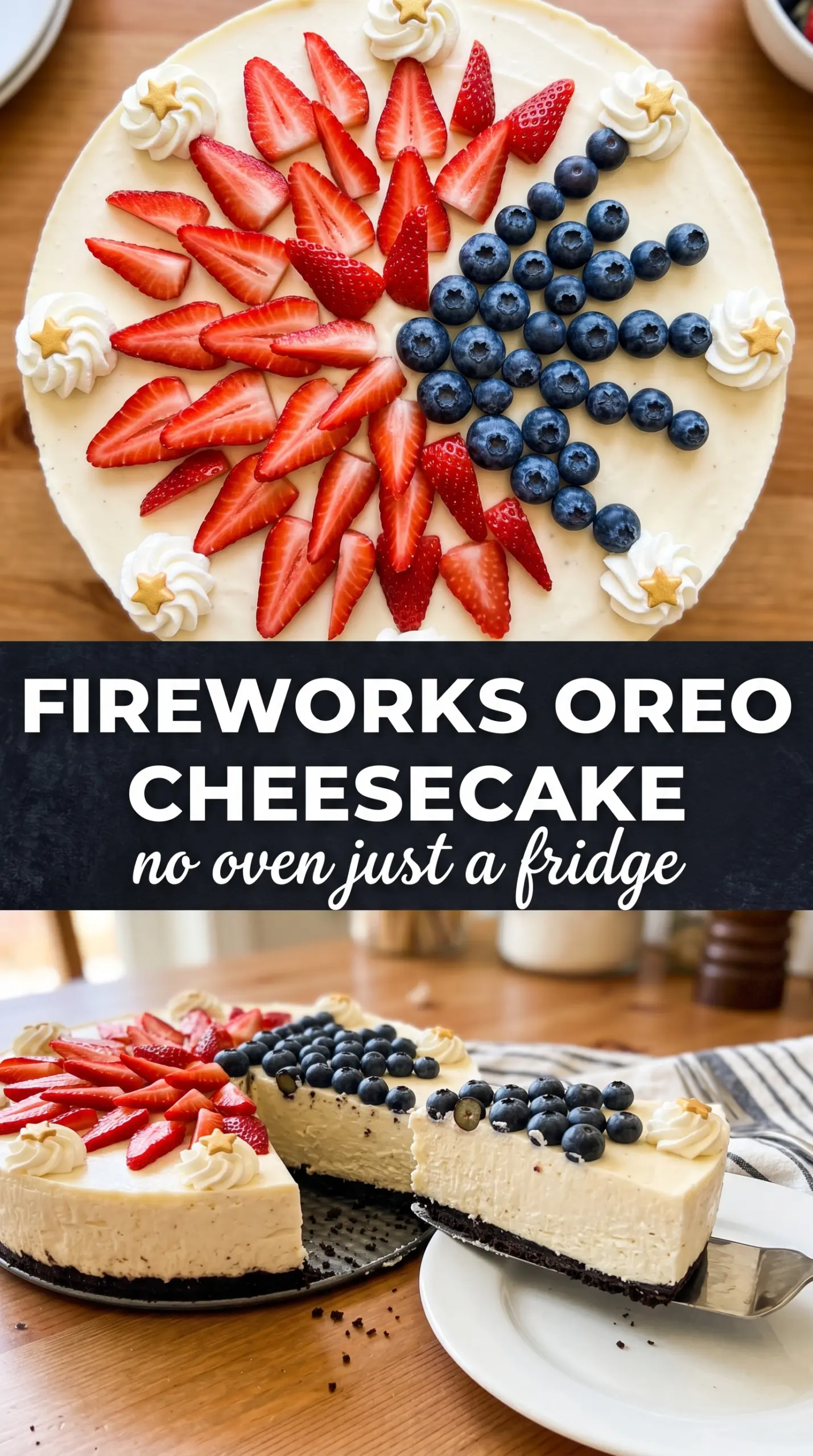
Cold, creamy, and built on a dark Oreo crust, this no-bake Fireworks Oreo Cheesecake has the kind of clean slice that makes people pause before they take the first bite. The filling stays light instead of dense, the chocolate cookie base gives every forkful a little crunch, and the red and blue sprinkles on top make it feel festive without turning fussy.
The trick is keeping the cream cheese smooth before the whipped cream goes in. If the base is even a little lumpy, those bits don’t disappear later. I also like to press the crust firmly into the pan and chill it before filling so it sets up into a sliceable layer instead of crumbling the second you cut it.
Below you’ll find the one step that keeps the filling airy, the best way to get a clean release from a springform pan, and a few smart swaps if you want to change the topping or make it ahead for a crowd.
The crust held together perfectly and the filling set up overnight into neat slices. I folded the whipped cream in gently like you said, and the cheesecake came out light instead of heavy.
Love the creamy filling and Oreo fireworks top? Save this No-Bake Fireworks Oreo Cheesecake for your next red, white, and blue dessert table.
The Trick to a Cheesecake That Slices Cleanly Without Baking
No-bake cheesecake fails in two predictable places: a crust that won’t hold, or a filling that never quite sets. The crust here needs to be packed firmly enough to act like a base, not a loose layer of crumbs. The filling needs time in the fridge, not a shortcut in the freezer, because the cream cheese and whipped cream set into a sliceable texture gradually.
The other part that matters is how you combine the filling. Whipped cream folded in too aggressively loses the air that gives this cheesecake its light, mousse-like bite. Fold it in gently and stop as soon as the mixture looks uniform. That keeps the texture smooth and prevents the filling from becoming heavy or grainy.
- Oreo cookies — The classic chocolate cookie crust gives you the right flavor and enough natural binder from the filling. Any sandwich cookie will work in a pinch, but you’ll lose that familiar Oreo depth.
- Cream cheese — Full-fat cream cheese is what makes the filling set with a rich, tangy edge. Let it soften all the way first; cold cream cheese leaves tiny lumps that don’t beat out later.
- Heavy whipping cream — This is what gives the cheesecake its lift. You need heavy cream, not half-and-half, because it has enough fat to whip into stiff peaks and hold the filling together.
- Powdered sugar — It sweetens the filling without making it gritty. Granulated sugar won’t dissolve the same way in a no-bake filling and can leave a sandy texture.
What Each Ingredient Is Actually Doing in This Recipe
- Primary ingredient (the star) — Quality matters most. Choose the best you can find.
- Cooking medium (oil, butter, or broth) — This carries flavors and prevents dryness.
- Seasonings (salt, pepper, spices, herbs) — Layer flavors so nothing overpowers. Build depth gradually.
- Aromatics (garlic, onion, herbs) — Cook with fat to bloom flavors. Become the foundation.
- Supporting ingredients — Complement the main ingredient without overpowering it.
- Sauce or liquid (if applicable) — Brings flavors together. Balance richness with acid.
- Acid (lemon, vinegar, wine, or other) — Brightens and prevents flat-tasting results.
- Final finish (garnish, glaze, or sauce) — Prevents one-dimensional taste and adds visual appeal.
Building the Filling So It Stays Light and Set
Start with the crust and press it into the pan with real pressure. A flat-bottomed measuring cup works well here because it compacts the crumbs evenly, especially along the edge where slices tend to break first. Once it chills, the butter firms up and turns those crumbs into a stable base.
Making the Oreo Crust
Mix the crushed Oreos with melted butter until every crumb looks damp and the mixture holds together when you pinch it. If it still looks dry in spots, the crust will crumble when sliced. Press it into a 9-inch springform pan, then refrigerate it before you even start the filling. That cold base helps the cheesecake set from the bottom up.
Whipping the Cream Cheese Base
Beat the softened cream cheese with powdered sugar and vanilla until the mixture looks completely smooth and glossy. Scrape the bowl a few times so no soft lumps hide at the bottom. If you rush this step, those lumps stay in the finished cheesecake, and there’s no fixing them later.
Folding in the Whipped Cream
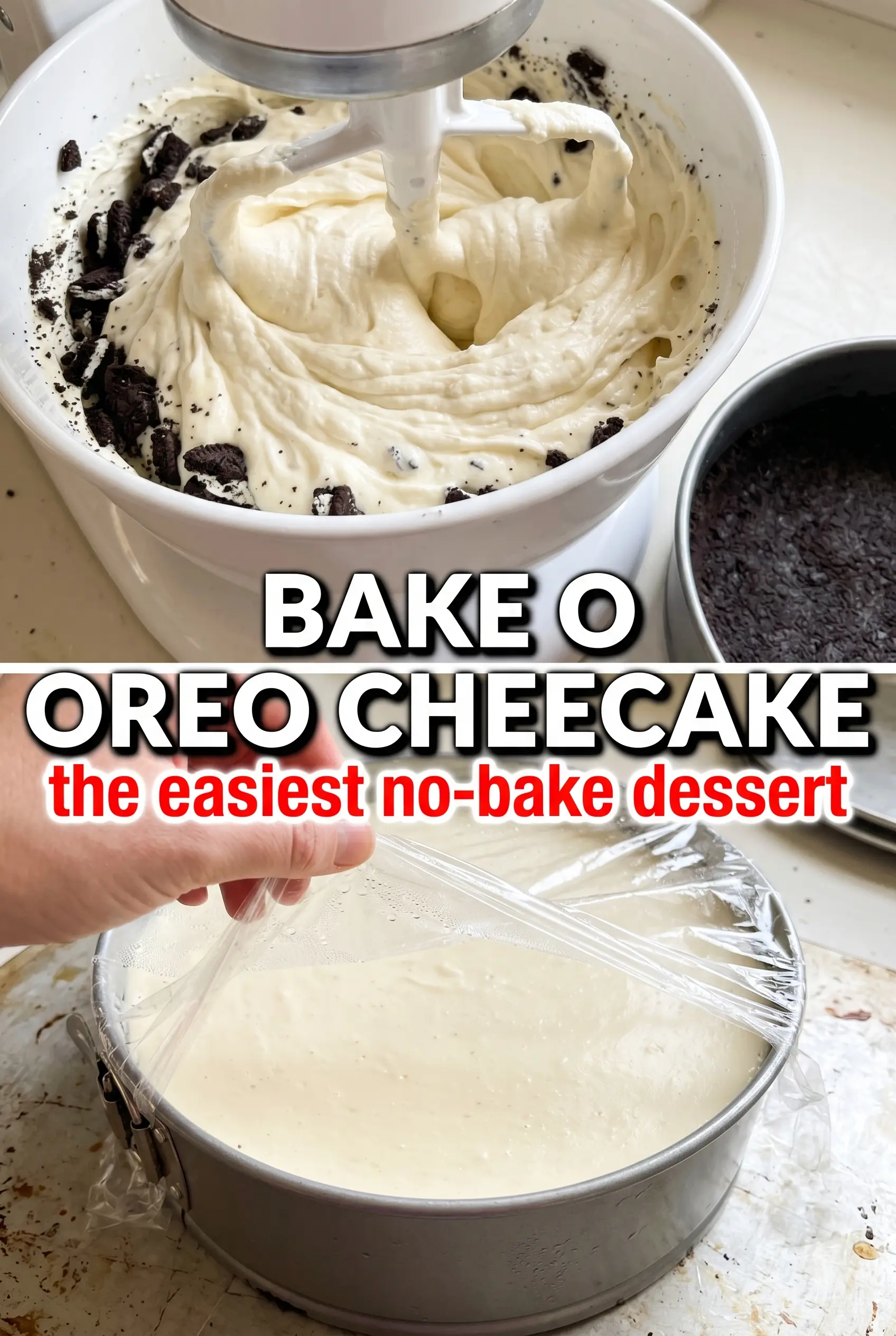
Whip the heavy cream to stiff peaks in a separate bowl; it should hold its shape when you lift the beater, not slump back into the bowl. Add it to the cream cheese mixture in two additions and fold with a spatula, turning the bowl as you go. Stop as soon as the streaks disappear. Overmixing knocks out the air and leaves you with a denser cheesecake.
Chilling Until It’s Ready to Slice
Pour the filling over the chilled crust and smooth the top before covering the pan. Give it at least 6 hours in the refrigerator, and overnight is even better if you want sharp slices. If it still feels soft in the center, it needs more time. Cutting too early is the fastest way to end up with a messy wedge instead of a clean slice.
How to Change the Topping, Crust, or Serving Style Without Breaking the Texture
Gluten-Free Oreo Cheesecake
Use gluten-free chocolate sandwich cookies in both the crust and the topping. The texture stays nearly identical because the cookies are doing the same job; just crush them finely so the crust packs the same way.
Dairy-Free Version
Swap in dairy-free cream cheese and a plant-based whipping cream that whips to stiff peaks. The flavor stays close, but the filling may set a little softer, so give it the full overnight chill before slicing.
Different Toppings for Different Holidays
Keep the base the same and change only the finish. Fresh berries, crushed peppermint, or chocolate drizzle all work, but add them right before serving so the top stays neat and the cookies don’t soften from sitting under moisture.
Make-Ahead for a Party
This cheesecake is at its best when made the day before. Hold off on the whipped cream piping and sprinkle garnish until the day you serve it so the decorations stay bright and the top doesn’t pick up condensation in the fridge.
Storage and Reheating
- Refrigerator: Store covered for up to 5 days. The crust softens slightly by day two, but the cheesecake still slices well.
- Freezer: Freeze whole or in slices, wrapped tightly and then placed in an airtight container, for up to 1 month. Thaw in the refrigerator overnight for the best texture.
- Reheating: No reheating needed. Serve it straight from the fridge, and don’t let it sit out too long before slicing or the filling will soften and smear.
Questions I Get Asked About This Recipe
No-Bake Fireworks Oreo Cheesecake
Ingredients
Equipment
Method
- Mix finely crushed Oreo cookies with melted unsalted butter until the texture resembles wet sand. Press the mixture firmly into the bottom of a 9-inch springform pan, then refrigerate to set.
- Beat softened cream cheese, powdered sugar, and vanilla extract until completely smooth with no lumps. Pause to scrape the sides as needed so the filling stays silky.
- In a separate bowl, whip heavy whipping cream to stiff peaks. Fold it gently into the cream cheese mixture in two additions to keep the filling airy.
- Pour the filling over the chilled Oreo crust, then smooth the top with an offset spatula. Tap the pan lightly to level the surface.
- Cover and refrigerate for at least 6 hours or overnight until fully set. The center should jiggle only slightly when done.
- Before serving, pipe whipped cream around the edge of the cheesecake to form a starburst effect. Scatter red and blue star sprinkles across the center for a fireworks look.
- Dust with crushed Oreos in a fireworks burst pattern. Slice with a clean, warm knife for neat edges.