Oatmeal pumpkin pancakes come out thick, tender, and a little rustic, with the kind of deep pumpkin spice flavor that tastes built for a slow breakfast plate. The oats give them more body than a standard pancake, so they hold together well and still stay soft in the middle instead of turning gummy.
Blending the oats first matters. It gives you the hearty texture without the grittiness that can happen when whole oats go straight into the batter. Pumpkin puree adds moisture and color, but it also makes the batter heavier, which is why the baking powder and the brief rest time matter so much here. Those few minutes let the oat flour hydrate and the batter thicken just enough to scoop cleanly.
Below, I’m walking through the small details that keep these pancakes fluffy instead of dense, plus the substitutions that still give you a good stack when you’re working with what you have.
The batter thickened after that short rest exactly like you said, and the pancakes cooked up fluffy with crisp edges instead of spreading out in the pan. The pumpkin and cinnamon came through without tasting heavy.
Keep this oatmeal pumpkin pancake stack handy for mornings when you want a thick, cozy breakfast that still cooks fast.
The Batter Needs a Short Rest to Stay Fluffy
With oat flour in the mix, the batter thickens fast. If you cook it the second it comes together, the oats haven’t had time to absorb the liquid, so the pancakes can spread oddly in the pan and feel wet in the center. That three-minute rest is long enough to fix that without turning the batter stiff.
The other trap is overmixing. Once the dry ingredients hit the wet, stir just until you stop seeing pockets of flour. A few small streaks are fine. Overworking this batter develops more gluten from the all-purpose flour and gives you pancakes that are tougher than they should be.
- Blended rolled oats — These give the pancakes their hearty texture and help them hold more moisture than plain flour alone. A food processor or blender works fine, and you don’t need a perfect powder; a slightly coarse oat flour keeps the crumb pleasant.
- Pumpkin puree — Use pure pumpkin, not pumpkin pie filling. The puree brings moisture, body, and color without extra sugar or spices getting in the way.
- Milk or buttermilk — Buttermilk gives a little extra tang and tenderness, while regular milk still works well. If you use buttermilk, the batter usually thickens a touch more, which is normal.
- Melted butter or coconut oil — Butter adds a round, familiar flavor. Coconut oil is the best swap if you want dairy-free pancakes, but let it cool slightly before whisking it in so it doesn’t seize when it hits the cold pumpkin mixture.
What Each Ingredient Is Actually Doing in This Recipe
- Primary ingredient (the star) — Quality matters most. Choose the best you can find.
- Cooking medium (oil, butter, or broth) — This carries flavors and prevents dryness.
- Seasonings (salt, pepper, spices, herbs) — Layer flavors so nothing overpowers. Build depth gradually.
- Aromatics (garlic, onion, herbs) — Cook with fat to bloom flavors. Become the foundation.
- Supporting ingredients — Complement the main ingredient without overpowering it.
- Sauce or liquid (if applicable) — Brings flavors together. Balance richness with acid.
- Acid (lemon, vinegar, wine, or other) — Brightens and prevents flat-tasting results.
- Final finish (garnish, glaze, or sauce) — Prevents one-dimensional taste and adds visual appeal.
Building the Pumpkin Batter So It Cooks Evenly
Grinding the oats first
Blend the oats until they look like a coarse flour, not like dry flakes with a few broken pieces in them. If you leave the oats too large, the batter won’t thicken evenly and the pancakes can end up lumpy in a way that tastes raw rather than rustic. Stop and scrape the sides if needed so you get a consistent grind.
Mixing the wet and dry with a light hand
Whisk the pumpkin, milk, eggs, melted butter, and vanilla until smooth before adding them to the dry ingredients. Once the wet goes in, fold gently until the flour disappears. The batter should look thick and spoonable, not pourable like crepe batter. If it seems too loose, let it sit a minute before adding anything else, because the oats keep absorbing liquid.
Cooking until the edges set
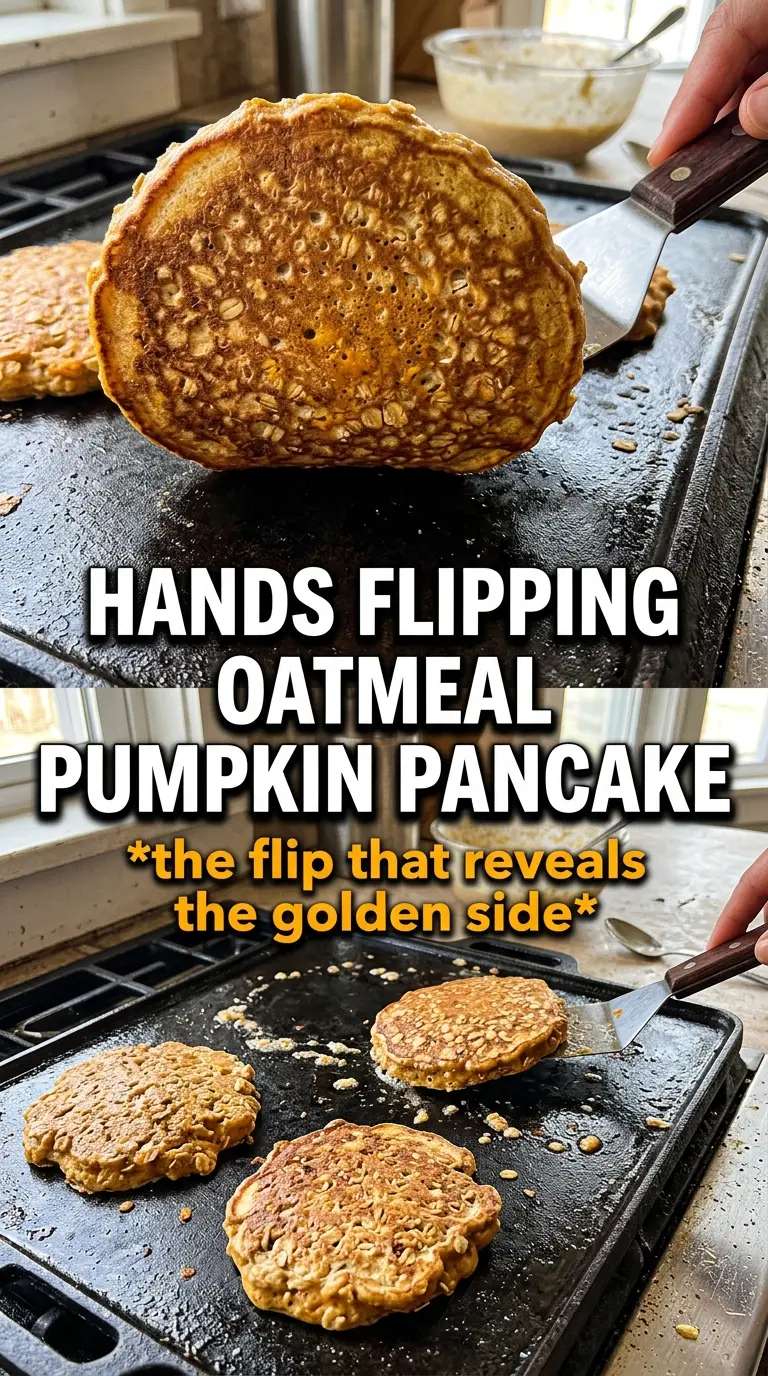
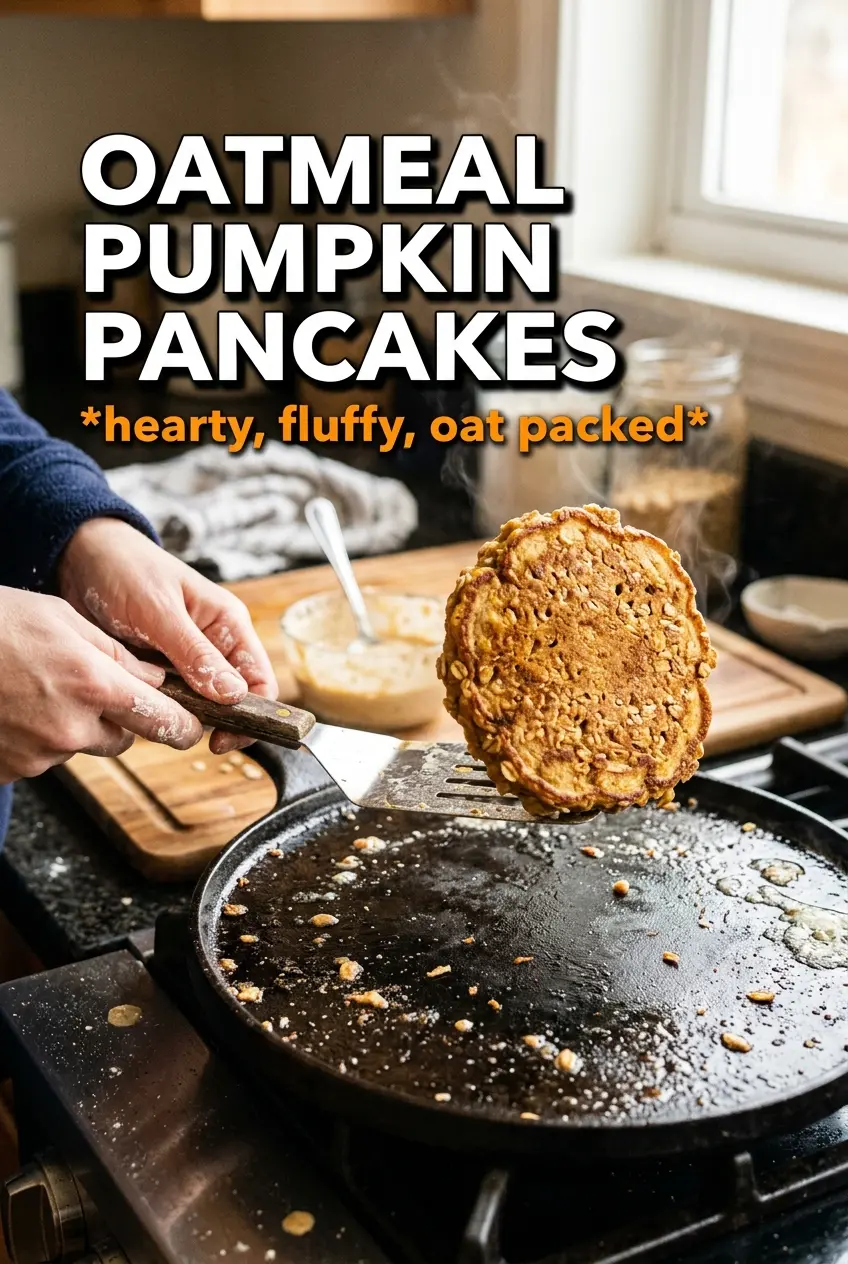
Use a greased skillet over medium heat and portion about 1/4 cup for each pancake. The first side is ready when the edges look set and little bubbles start to break across the surface, then the second side usually needs less time. If the pancakes are browning too fast before the center firms up, the pan is too hot. Pull the heat back a little and give the next batch more time.
How to Adapt These Pancakes When the Pantry Is Bare
Dairy-Free with Coconut Oil and Plant Milk
Use coconut oil instead of butter and any unsweetened plant milk you like. Oat milk keeps the flavor neutral, while almond milk makes the pancakes a little lighter. The texture stays tender, but the flavor is slightly less rich than the butter version.
Gluten-Free with a 1:1 Baking Blend
Swap the all-purpose flour for a good 1:1 gluten-free baking flour. Keep the oat flour, but check that your oats are certified gluten-free if that matters for your kitchen. The pancakes stay soft, though they may be a little more delicate when you flip them.
Less Sweet, More Breakfast-Forward
Drop the brown sugar to 1 tablespoon if you want the maple syrup and toppings to carry the sweetness. The pancakes will still brown well, but the pumpkin and spice flavors come through a little more clearly.
Storage and Reheating
- Refrigerator: Store in an airtight container for up to 4 days. The oat flour keeps them from drying out as fast as regular pancakes, though they do soften a bit overnight.
- Freezer: These freeze well. Let them cool completely, then freeze in a single layer before packing them into a bag with parchment between layers.
- Reheating: Warm in a toaster, toaster oven, or skillet over low heat until hot through. The biggest mistake is microwaving them too long, which makes the centers gummy instead of soft.
Questions I Get Asked About This Recipe
Oatmeal Pumpkin Pancakes
Ingredients
Equipment
Method
- Blend old-fashioned rolled oats in a blender or food processor until coarse oat flour forms, stopping to scrape as needed.
- Combine oat flour, all-purpose flour, baking powder, pumpkin pie spice, cinnamon, salt, and brown sugar until the dry mixture is evenly speckled.
- Whisk pumpkin puree, milk or buttermilk, eggs, melted butter or coconut oil, and vanilla extract together until smooth.
- Fold the wet mixture into the dry mixture until just combined, then rest 3 minutes so the batter thickens slightly.
- Heat a greased skillet over medium heat, then portion batter using about 1/4 cup per pancake.
- Cook for 2-3 minutes per side until golden and cooked through, flipping when the edges look set and bubbles appear.
- Serve pancakes warm with maple syrup, chopped pecans, and whipped cream.