Deeply browned chicken thighs, a glossy balsamic glaze, and burst cherry tomatoes make this skillet dinner feel a lot more special than the effort it takes to cook it. The skin stays crisp on top, the sauce turns sticky and savory-sweet, and everything finishes in one pan so there’s nothing fussy to clean up afterward.
The trick here is building flavor in layers. First you sear the chicken hard enough to render the skin and leave browned bits in the pan, then you use balsamic vinegar, honey, and broth to turn those bits into a sauce that clings instead of thinning out. Bone-in, skin-on thighs matter because they stay juicy through the final simmer and give the sauce more richness than lean chicken breasts would.
Below, I’ve included the small details that keep the glaze from turning flat or watery, plus a few easy swaps if you need to work with what’s in your kitchen.
The skin crisped up beautifully and the balsamic sauce got thick and glossy without turning sticky or burnt. I served it over rice and my husband went back for seconds before I even sat down.
Love a glossy skillet dinner? Save this one pan balsamic chicken for the nights when you want crisp chicken, blistered tomatoes, and a deep caramelized glaze.
The Seared Skin Is What Keeps This Balsamic Chicken from Going Flat
The biggest mistake people make with balsamic chicken is rushing straight into the sauce. If the thighs never get a proper sear, you lose the crisp skin and you also lose the browned bits that give the glaze depth. Those bits matter more than the vinegar itself; they turn a sweet-tangy sauce into something that tastes cooked, not mixed.
Keep the heat at medium-high for the first sear and don’t move the chicken around. The skin should release cleanly when it’s ready and look deeply golden, not pale with a few brown freckles. If it sticks, it needs another minute. Once the sauce goes in, the pan should come back to a simmer fast enough to reduce but not so hard that the honey scorches.
- Chicken thighs — Bone-in, skin-on thighs stay juicy through the final simmer and give you the best texture here. Breasts will work, but they cook faster and dry out sooner, so you’ll need to pull them earlier and accept less richness.
- Balsamic vinegar — Use a balsamic you’d actually taste on salad. Cheap vinegar can still work, but if it’s harsh and thin, the sauce will taste sharper than glossy. You don’t need aged vinegar, just something balanced.
- Honey — This rounds out the vinegar and helps the sauce reduce into a glaze. Maple syrup can stand in, though it brings a lighter sweetness and a little less shine.
- Chicken broth — This keeps the glaze from turning cloying and gives you enough liquid to deglaze the skillet. Water will technically work, but the sauce loses body and tastes flatter.
- Butter — Stir it in at the end after the heat drops. If you add it too early, the sauce can separate instead of turning silky.
What Each Ingredient Is Doing in the Skillet

- Chicken thighs — The skin renders into the sauce and keeps the meat forgiving while the glaze thickens. If you swap in boneless thighs, shorten the final cook time and start checking early so they stay tender.
- Cherry tomatoes — They blister, collapse, and release a little juice that lightens the balsamic without watering it down. Grape tomatoes work too, though they’re a little less juicy.
- Garlic — Keeping the cloves whole lets them soften and mellow instead of burning in the hot pan. If you slice them, they’ll brown faster and can turn bitter before the sauce finishes.
- Chicken broth — This loosens the fond from the skillet and gives the glaze enough volume to coat the chicken. Low-sodium broth is the better choice here because the sauce reduces and concentrates quickly.
- Fresh basil — Add it at the end for a bright finish that cuts through the glaze. Dried basil won’t give the same lift, so save it for the seasoning blend if that’s all you have.
Building the Glaze Without Burning It
Searing the Chicken First
Season the thighs generously, then lay them skin-side down in hot oil and leave them alone. You want steady sizzling and a deep golden crust that releases from the pan on its own. If the heat is too low, the skin steams; if it’s too high, the fat spits and the skin burns before it renders.
Softening the Garlic and Tomatoes
Once the chicken comes out, the garlic and tomatoes go into the same pan. The goal is just enough heat to blister the tomatoes and take the raw edge off the garlic. If the garlic starts taking on dark spots before the tomatoes soften, the pan is too hot and you need to move fast to the next step.
Reducing the Balsamic Sauce
Pour in the balsamic, honey, and broth, then scrape the bottom of the skillet until the brown bits dissolve into the liquid. Bring it to a boil for a moment, then settle it into a lively simmer when the chicken goes back in. That’s the point where the sauce starts to thicken; if it stays thin, keep cooking uncovered until it turns syrupy enough to coat the back of a spoon.
Finishing With Butter and Basil
When the chicken reaches 165°F and the glaze looks thick and dark, pull the pan off the heat and stir in the butter. This is what gives the sauce its shine and smooth edge. Add the basil last so it stays fresh and doesn’t wilt into the sauce before you serve.
How to Adapt This Skillet Chicken Without Losing the Glaze
Use Boneless Chicken Thighs for a Faster Dinner
Boneless thighs shave a few minutes off the cook time and still stay juicy. Sear them the same way, but start checking the internal temperature earlier during the simmer so they don’t overcook while the sauce reduces.
Make It Dairy-Free
Skip the butter and finish with an extra tablespoon of olive oil instead. You’ll lose a little silkiness, but the glaze will still cling well and the flavor stays clean and bright.
Lower the Sweetness
Cut the honey back to 1 tablespoon if you prefer a sharper balsamic sauce. The glaze will be a little less sticky and a little more savory, which works especially well if you’re serving it with mashed potatoes or crusty bread.
Add More Vegetables
A handful of baby spinach or sliced mushrooms can go in after the tomatoes. Spinach wilts almost instantly, while mushrooms need a few extra minutes to release their liquid before the sauce goes in.
Storage and Reheating
- Refrigerator: Store leftovers in an airtight container for up to 4 days. The skin softens, but the sauce tastes even better after the flavors settle.
- Freezer: Freeze for up to 2 months, though the tomatoes will soften more after thawing. For the best texture, freeze the chicken and sauce together, then reheat gently.
- Reheating: Warm in a covered skillet over low heat with a splash of broth to loosen the glaze. High heat will tighten the chicken and can make the sauce separate before the center is hot.
Answers to the Questions Worth Asking
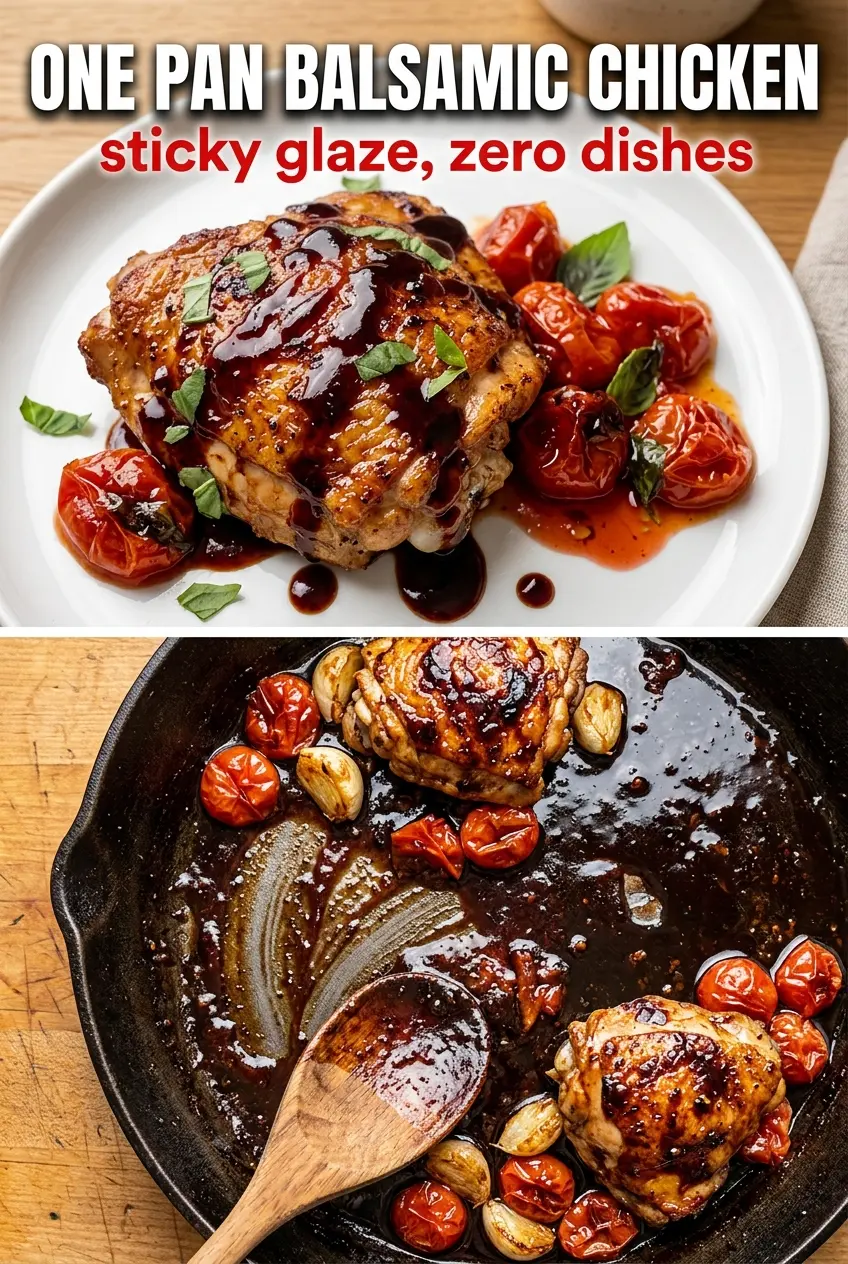
One Pan Balsamic Chicken
Ingredients
Equipment
Method
- Season the chicken thighs generously on both sides with salt, pepper, garlic powder, and Italian seasoning.
- Heat olive oil in a large cast iron skillet over medium-high heat, then place chicken skin-side down and sear for 7-8 minutes until the skin is deeply golden and crispy; flip and sear 3 more minutes.
- Remove the chicken from the skillet and set aside while you prepare the tomatoes and garlic.
- Add whole garlic cloves and cherry tomatoes to the skillet and cook for 2 minutes until the tomatoes begin to blister.
- Pour in balsamic vinegar, honey, and chicken broth, then stir and bring to a boil while scraping up any browned bits.
- Return the chicken skin-side up and cook over medium heat for 12-15 minutes until chicken reaches 165°F and the balsamic sauce reduces to a thick glaze.
- Stir in butter until melted, scatter fresh basil over the top, and serve straight from the skillet.