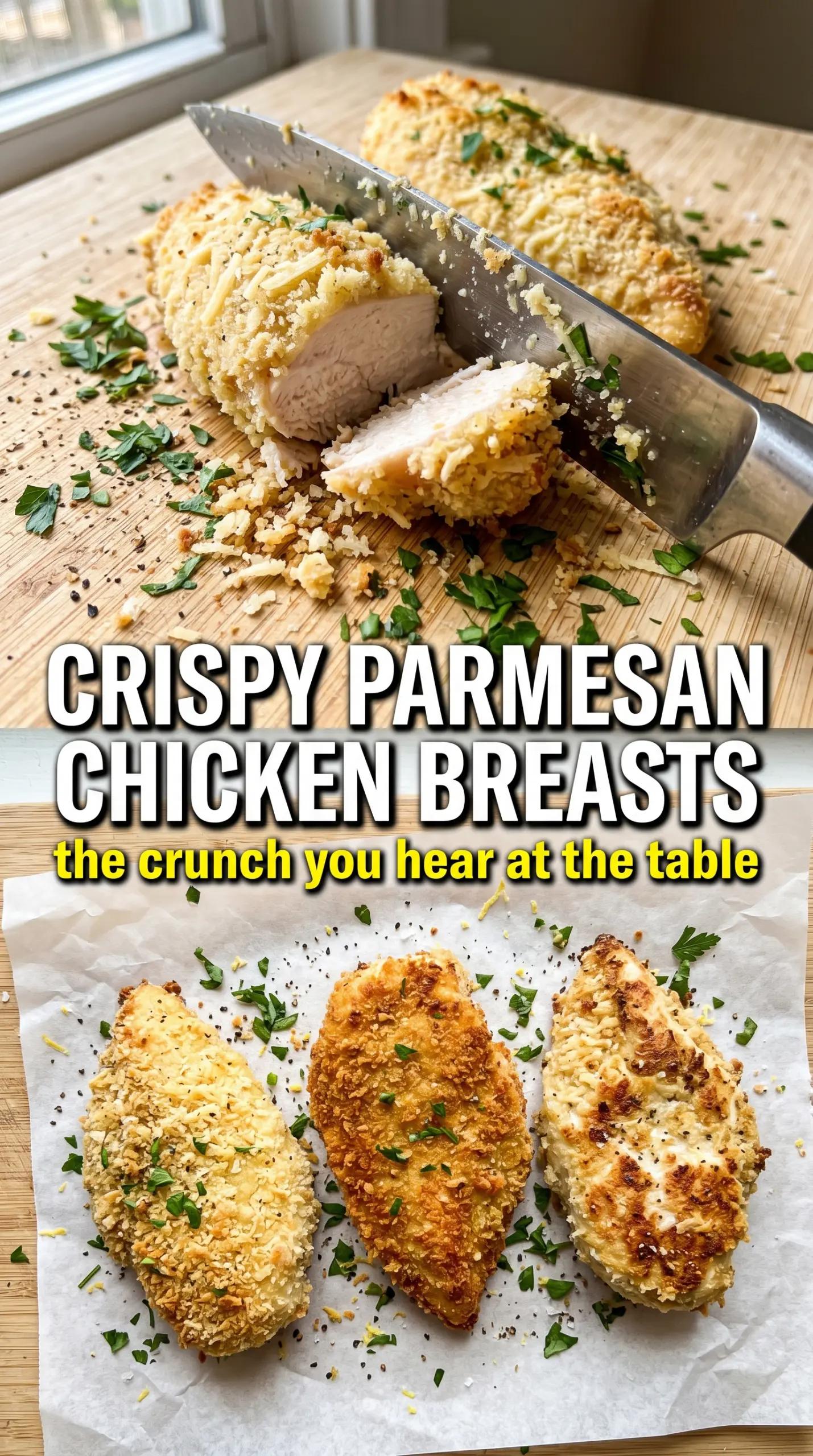
Shatteringly crisp on the outside and juicy in the middle, Parmesan Crusted Chicken earns a permanent place in the weeknight rotation because it gives you that fried-chicken-style crunch without the mess of a skillet full of oil. The crust bakes up deeply golden, fragrant with garlic and Italian herbs, and stays attached to the chicken instead of sliding off at the first cut.
The trick is in the layering. Flour gives the egg something to cling to, the egg helps the panko and Parmesan lock on, and the oil on top nudges the coating toward real browning in the oven. Freshly grated Parmesan matters here because pre-shredded cheese doesn’t melt and crisp the same way; it tends to stay dusty and dry instead of forming that crackly, savory crust.
Below, you’ll find the exact breading order that keeps the coating from going patchy, plus the small oven setup that makes the bottom side cook up crisp instead of soggy. There’s also a useful note on swaps if you need a gluten-free version or want to use chicken thighs instead.
The crust came out unbelievably crisp and stayed on every bite, even after I sliced into the chicken. Using the wire rack made a huge difference, and the lemon at the end kept it from feeling heavy.
Save this Parmesan Crusted Chicken for the nights when you want a crisp, cheesy crust and juicy chicken without frying.
The Reason the Crust Stays Crunchy Instead of Going Soft
The biggest mistake with baked breaded chicken is skipping the rack. When the chicken sits flat on a baking sheet, steam gets trapped under the crust and softens the bottom before the top has a chance to finish browning. A wire rack lets hot air move all the way around each piece, which keeps the coating dry enough to crisp.
The second trap is rushing the breading. Press the chicken firmly into the Parmesan-panko mixture and give it a real coating, not a dusting. Thin patches dry out before they brown, and they’re the first spots to flake away when you cut into the chicken. A little oil on top helps the breading toast in the oven the way it would in a shallow fry.
What the Parmesan, Panko, and Eggs Are Each Doing Here
- Parmesan cheese — Freshly grated Parmesan melts into the panko and creates that salty, lacy crust. Pre-grated cheese can work in a pinch, but it usually bakes up drier and less cohesive. Grate it finely so it hugs the breadcrumbs instead of falling off in clumps.
- Panko breadcrumbs — Panko is what gives the crust its sharp crunch. Regular breadcrumbs turn out denser and a little sandy, so if you swap them in, expect a heavier coating. If you need gluten-free, use gluten-free panko and keep the rest of the method the same.
- Eggs — The egg layer is the glue. Whisk them until smooth so you don’t get uneven patches of coating, then let the excess drip off before pressing on the crumbs. Too much egg makes the breading gummy instead of crisp.
- Chicken breasts — Pounding them to an even thickness is what keeps the thinner end from drying out before the thicker end is done. If your breasts are especially large, split them horizontally after pounding so the portions cook in the same window.
- Olive oil — A drizzle or spray on top pushes the crust toward a real golden finish. Without it, the coating can look pale even when the chicken is cooked through.
From Breading Line to Golden Finish
Set Up the Coating Station
Lay out three shallow dishes in order: flour, beaten eggs, and the Parmesan-panko mixture. Season the flour first, not just the chicken, because that first layer is where a lot of the base flavor starts. Work with one piece of chicken at a time so the coating doesn’t dry out while you’re breading the rest.
Press the Crust On Firmly
Dredge the chicken in flour, dip it in egg, then press it hard into the breadcrumb mixture. Use your fingertips to pack the crumbs onto the sides as well as the top. If the coating looks patchy now, it’ll bake patchy later, so spend the extra few seconds making it even.
Bake on a Rack Until Deep Golden
Place the coated chicken on the prepared rack and bake at 425°F until the crust is deep golden and the thickest part reaches 165°F. High heat is what browns the panko and crisps the cheese before the chicken dries out. If the tops are browning too quickly, move the tray down one rack, but don’t lower the oven temperature or the crust will stay pale.
Rest Before Slicing
Let the chicken rest for 3 minutes before cutting in. That short pause keeps the juices from running out onto the plate and softening the crust. Finish with parsley and lemon wedges; the lemon cuts through the richness and makes the Parmesan taste even sharper.
How to Adapt This for Different Pans, Diets, and Protein Swaps
Gluten-Free Parmesan Crusted Chicken
Swap the all-purpose flour for a gluten-free flour blend and use gluten-free panko. The crust still gets crisp because the crunch comes from the panko and the oven heat, not the wheat flour. Just keep the coating light so the gluten-free crumbs don’t turn heavy.
Chicken Thighs Instead of Breasts
Boneless skinless thighs work well if you want a richer, juicier result. They need a little more time in the oven than thin breasts, so watch for the same deep golden crust and check the center for doneness with a thermometer. Thighs give up a little of the dramatic sliceable look, but they stay tender even if you cook them a minute or two longer.
No Wire Rack
If you don’t have a rack, line the baking sheet with parchment and flip the chicken halfway through baking. You won’t get quite the same all-over crunch, but it keeps the underside from steaming as much. Skip foil here; it traps too much moisture.
Storage and Reheating
- Refrigerator: Store leftovers in an airtight container for up to 3 days. The crust will soften a bit, but the flavor stays strong.
- Freezer: Freeze after baking if you need to, wrapped well and sealed in a freezer bag for up to 2 months. The coating won’t be as crisp after thawing, but it still reheats better than you’d expect if you freeze pieces in a single layer first.
- Reheating: Reheat on a wire rack in a 375°F oven until hot and the crust firms back up, about 10 to 15 minutes. The microwave will turn the breading rubbery, so use it only if you’re not worried about the crunch.
Answers to the Questions Worth Asking
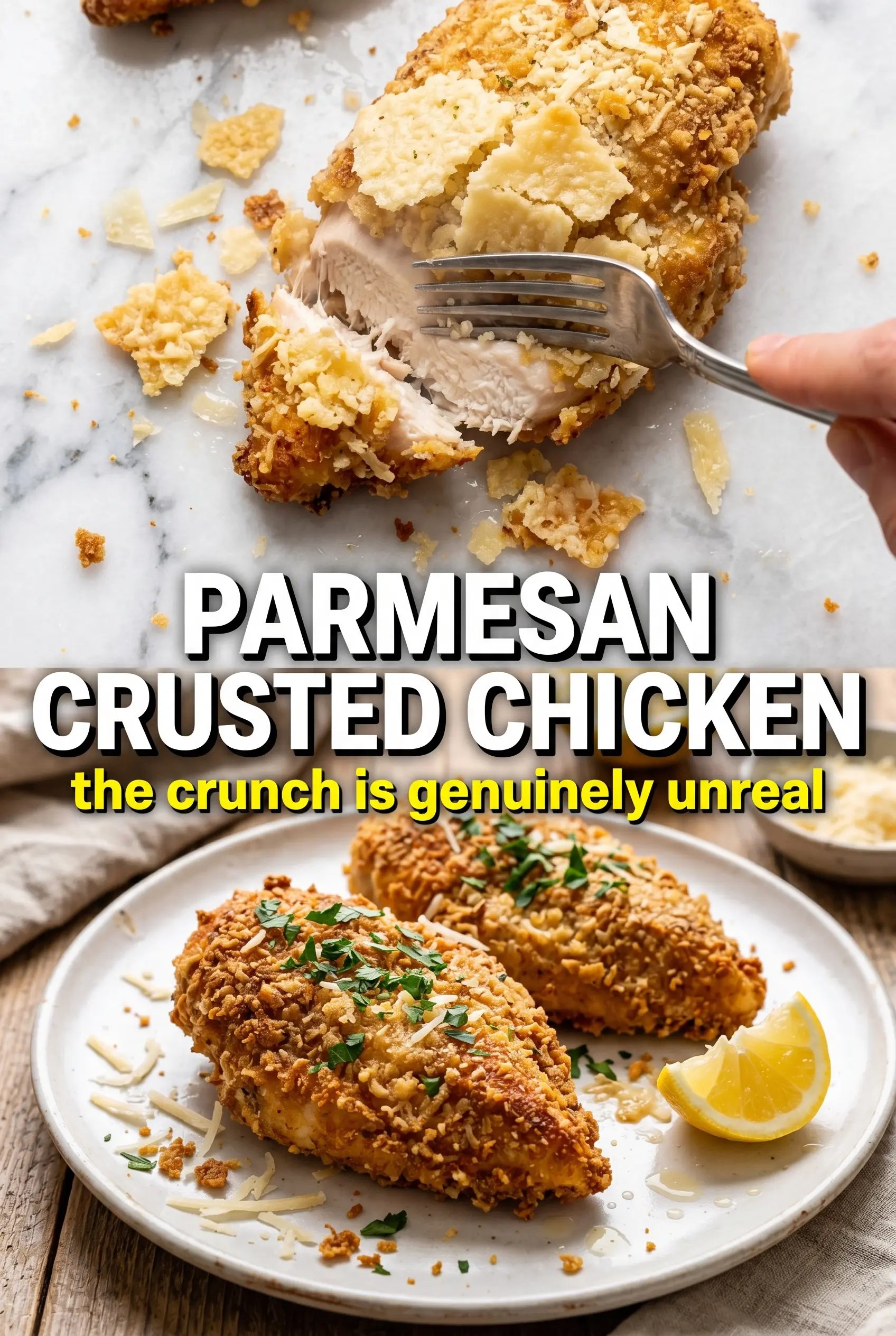
Parmesan Crusted Chicken
Ingredients
Equipment
Method
- Preheat the oven to 425°F and line a baking sheet with a wire rack; spray the rack with cooking spray so the crust stays crisp.
- Season the chicken breasts with salt, pepper, and garlic powder to taste, then set up a three-station breading line with flour, beaten eggs, and panko crust.
- Mix the panko with Parmesan, Italian seasoning, garlic powder, and smoked paprika until evenly combined for a fragrant coating.
- Dredge each chicken breast in the flour, ensuring the surface is lightly coated.
- Dip the floured chicken into the beaten eggs so the coating adheres.
- Press the chicken firmly into the Parmesan panko so all sides are fully covered with a thick, even crust.
- Drizzle or spray the olive oil over the breaded chicken and place it on the prepared rack for airflow.
- Bake for 20-22 minutes at 425°F until the crust is deep golden and the internal temperature reaches 165°F.
- Rest the chicken for 3 minutes to help the crust set before cutting.
- Garnish with fresh parsley and serve with lemon wedges.