Parmesan herb roasted acorn squash lands on the table with caramelized edges, tender centers, and a crisp, savory cheese crust that makes it feel a little more special than the average sheet pan vegetable. The squash softens into sweet, buttery rounds while the Parmesan browns into a salty shell that cracks a bit when you bite into it.
This version works because the squash gets time on the pan before the cheese goes on. That first roast drives off surface moisture, so the Parmesan can actually crisp instead of melting into a damp layer. Garlic, thyme, and rosemary go on early too, which lets their flavor cling to the squash and perfume the pan as it roasts.
Below, I’ll walk through the one detail that keeps the crust crisp, which Parmesan works best, and how to adapt it if you want to serve it with a different herb mix or make it dairy-free.
The squash got those caramelized edges and the Parmesan actually stayed crisp instead of turning soggy. I made it once for dinner and ended up putting the leftovers on a salad the next day.
Save this Parmesan Herb Roasted Acorn Squash for the nights when you want a crisp, caramelized side with almost no hands-on work.
The Trick That Keeps the Parmesan Crisp Instead of Soggy
Acorn squash throws off a little moisture as it cooks, and that’s what ruins a lot of cheese-topped versions. If you add the Parmesan too early, it melts before the squash has had time to roast, then steams itself into a soft layer instead of forming a crust. The first roast is doing the work here: it softens the squash, concentrates the flavor, and dries the surface just enough for the cheese to brown properly.
The other thing that matters is spacing. If the rings are crowded, the squash steams and the edges stay pale. Give them a single layer with a little breathing room and you’ll get those browned, slightly curled edges that make this dish worth repeating.
- Single layer on the pan — Crowding traps steam, which is the fastest way to lose that crisp-cheese finish.
- Flip before adding Parmesan — The first side gets tenderness; the second side gets the cheesy crust.
- Watch the last 5 minutes — Parmesan can go from golden to bitter faster than people expect, especially on the edges of the pan.
What Each Ingredient Is Actually Doing in This Dish
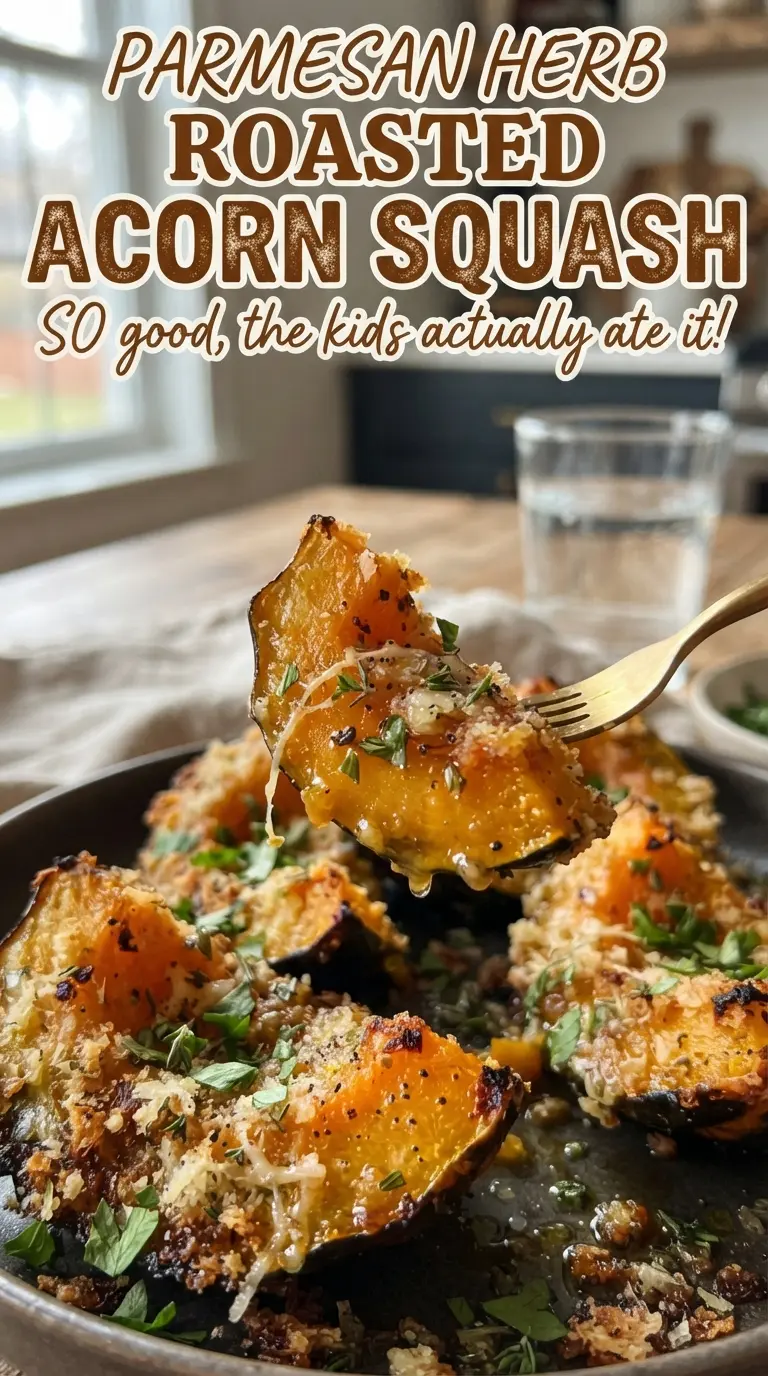
- Acorn squash — This is the base of the whole recipe, and its natural sweetness turns deep and almost nutty in the oven. Slice it into even 1/2-inch rings so it roasts at the same pace and keeps its shape.
- Olive oil — It helps the squash brown and gives the herbs something to cling to. A decent everyday olive oil is fine here; save the fancy bottle for finishing.
- Garlic, thyme, and rosemary — These herbs bring a savory edge that balances the squash’s sweetness. Fresh herbs matter most with rosemary, because dried rosemary can turn sharp and woody on a hot sheet pan. If you only have dried thyme, use half the amount.
- Parmesan — Grated Parmesan is what creates the crust. Use the finely grated kind that melts and crisps well, not a big shredded handful that tends to brown unevenly. The saltiness also seasons the squash without needing extra fuss.
The Roast Timing That Gives You Tender Squash and a Real Cheese Crust
Seasoning the Rings Evenly
Toss the squash with the oil, garlic, herbs, salt, and pepper until every cut surface is lightly coated. That thin film of oil is what helps the edges caramelize and keeps the herbs from burning dry against the pan. If you see bare spots, the seasoning is sitting in the bowl instead of on the squash, so keep tossing until the rings look glossy and evenly dressed.
Roasting Before the Cheese Goes On
Lay the rings in a single layer on parchment and roast them until they’re beginning to soften and the undersides are lightly browned. At this point the squash should give a little when pressed with a spatula, but it shouldn’t collapse. If they’re still raw and hard when you flip them, the Parmesan will overcook before the squash finishes.
Finishing With Parmesan
Sprinkle the cheese generously over the flipped slices and return the pan to the oven until the tops are golden and crisp. You’re looking for edges that darken in spots and cheese that looks dry, not wet. Pull the pan as soon as the Parmesan has color; if you wait for a deep brown crust, the squash underneath can go mushy and the cheese can turn bitter.
How to Adapt It for Different Tables and Pantry Situations
Dairy-Free Version
Skip the Parmesan and roast the squash a few minutes longer until the edges are deeply caramelized. You’ll lose the salty crust, but the herbs and browned squash still give you a strong savory side dish. A sprinkle of nutritional yeast before serving adds a little nuttiness without trying to fake cheese.
Using Dried Herbs Instead of Fresh
If fresh thyme or rosemary isn’t available, use about half the amount of dried herbs. Dried rosemary is stronger and more brittle, so crush it between your fingers before tossing it in. The flavor will be a little less bright, but it still reads as savory and earthy.
Make It a Little Richer
Add a pinch of red pepper flakes or a little lemon zest after roasting if you want more contrast. The pepper brings heat that cuts through the cheese, while lemon wakes up the squash’s sweetness. Add either at the end so the flavor stays fresh instead of cooking flat in the oven.
Storage and Reheating
- Refrigerator: Store in an airtight container for up to 4 days. The squash softens a little, and the Parmesan loses some crispness, but the flavor holds up well.
- Freezer: Freezing isn’t ideal. The squash turns watery when thawed, and the cheese crust won’t stay crisp.
- Reheating: Warm on a sheet pan in a 400F oven for 8 to 10 minutes so the edges re-crisp. The microwave softens everything and makes the cheese rubbery, which is the main thing to avoid.
Answers to the Questions Worth Asking
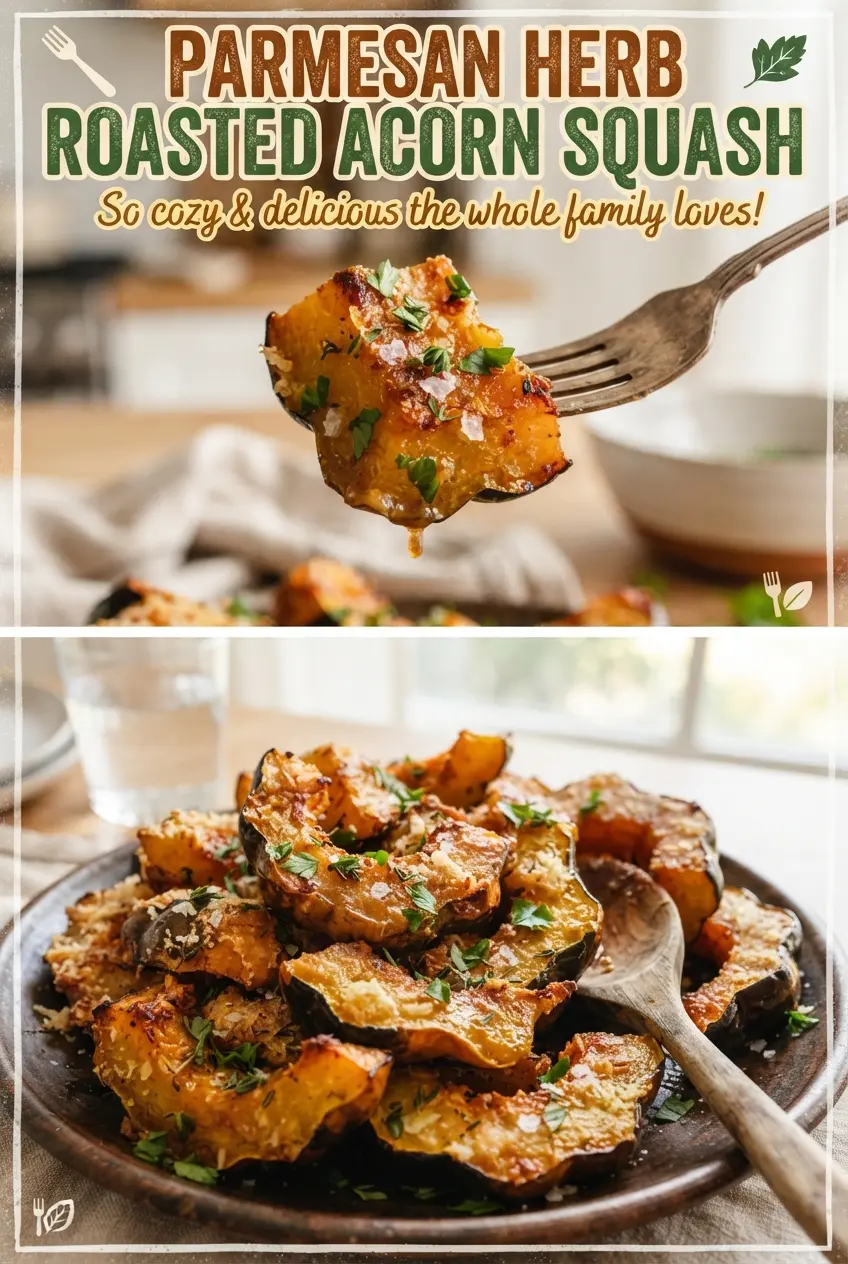
Parmesan Herb Roasted Acorn Squash
Ingredients
Equipment
Method
- Preheat oven to 400F and line a sheet pan with parchment. This helps prevent sticking while you build caramelized edges.
- Toss acorn squash rings with olive oil, garlic, fresh thyme leaves, fresh rosemary, salt, and black pepper. Make sure every ring is lightly coated so it roasts evenly.
- Arrange the squash in a single layer on the sheet pan. Roast 20 minutes at 400F until the edges begin to brown and the slices look slightly softened.
- Flip the squash slices and sprinkle generously with grated Parmesan. Return to the oven so the cheese can melt and form a crisp crust.
- Roast 12-15 minutes more at 400F until the squash is tender and the Parmesan is golden and crisp. Watch for deep golden spots on the cheese for the best texture.