Pecan pie pumpkin cheesecake lands in that rare dessert sweet spot where every bite gives you something different: a crisp, spiced crust, a dense but silky pumpkin cheesecake layer, and a glossy pecan topping that settles into sticky little pockets instead of sliding off the slice. It looks like a holiday showpiece, but the texture is what keeps people coming back for seconds.
What makes this version work is the layering of flavors and temperatures. The gingersnap crust brings enough spice to stand up to the pumpkin filling without getting muddy, and the cheesecake base stays smooth because the batter is mixed just until combined. The pecan topping is cooked separately and added after chilling, which keeps the nuts crunchy and lets the caramel cling to the cake instead of disappearing into it.
Below, I’ll walk through the one part that matters most for a clean slice, plus the ingredient choices that make the topping taste like pecan pie instead of just caramel sauce with nuts.
The cheesecake baked up smooth with no cracks, and the pecan layer stayed glossy and thick instead of turning runny. I chilled it overnight, and the slices came out clean with that perfect pumpkin-spice center.
Save this pecan pie pumpkin cheesecake for the kind of dessert that needs a silky pumpkin layer and a sticky pecan crown.
The Water Bath Is What Saves the Filling
Cheesecake cracks for a few predictable reasons: the batter gets overmixed, the oven runs hot, or the edges set long before the center has a chance to finish gently. The water bath matters here because it buffers the heat and keeps the custard baking slowly from the outside in. That steady bake is what gives you a smooth middle instead of a dry rim and a sunken center.
With pumpkin in the batter, the filling is a little heavier than classic cheesecake, which makes gentle heat even more important. Bake until the edges look set and the center still has a soft wobble when you tap the pan. If the middle looks fully firm in the oven, it’s already overbaked.
What Each Layer Is Doing in This Dessert
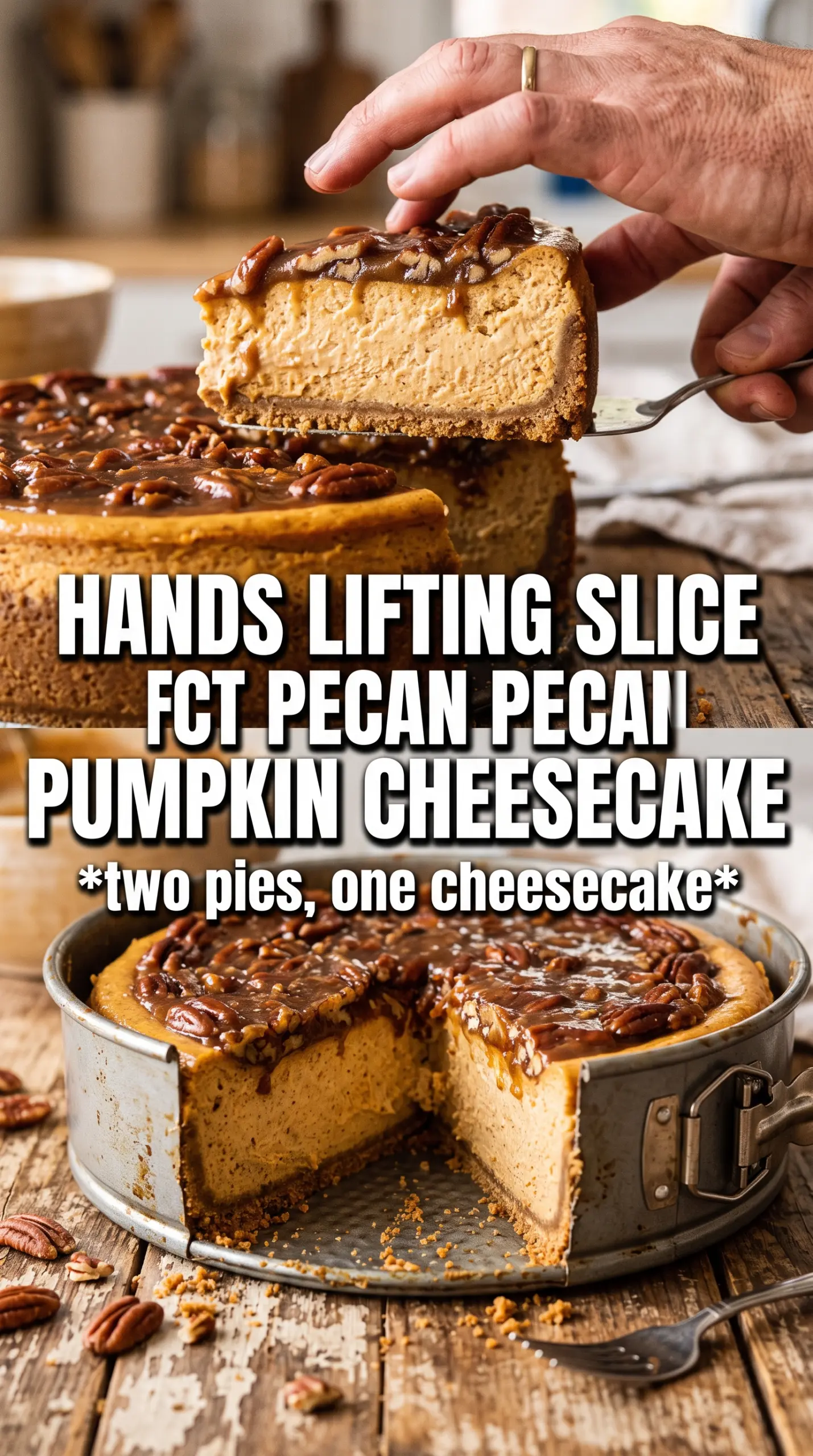
- Gingersnap crumbs — These bring spice and structure in one move. A plain graham crust works in a pinch, but gingersnaps give the cheesecake a deeper, warmer base that plays nicely with pumpkin. Crush them finely so the crust presses together without crumbling when sliced.
- Cream cheese — Use full-fat block cream cheese, not the whipped kind. Block cream cheese gives you the dense, clean slice you want; tubs are softer and can leave the filling loose. Let it soften fully so the batter turns smooth without beating air into it.
- Pumpkin puree — This adds flavor and body, but it also brings moisture, which is why the cheesecake needs the long chill. Use pure pumpkin puree, not pumpkin pie filling, or the sugar and spices will throw off the balance. If the puree looks watery, give it a quick stir and measure from there.
- Sour cream — This keeps the filling tangy and helps the texture stay creamy instead of heavy. You can swap in full-fat Greek yogurt, but the flavor will be a little sharper and the filling slightly less plush.
- Pecan halves — Halves give the topping that classic pie look and a better bite. Chopped pecans work, but you lose the dramatic finish and some of the texture contrast. Stir them in after the caramel simmers so they stay coated, not sandy.
How to Keep the Cheesecake Smooth, Then Finish It Like Pecan Pie
Building the Gingersnap Crust
Mix the crumbs, sugar, and melted butter until every crumb looks evenly moistened, then press the mixture firmly into the bottom of the springform pan. Bake it for 10 minutes so it sets before the filling goes in. If the crust is loose or sandy now, it will fall apart under the cheesecake later. Let it cool for a few minutes while you mix the batter so the pan isn’t blazing hot.
Mixing the Pumpkin Filling Without Whipping in Air
Beat the cream cheese and sugar until smooth, then add the eggs one at a time, mixing just until each one disappears. Stir in the pumpkin, sour cream, spices, and vanilla on low speed. If you beat the batter hard here, it traps air, and those air pockets can rise and crack as the cheesecake bakes. The finished batter should look thick, smooth, and glossy.
Baking Until the Center Still Wobbles
Set the springform pan in a water bath and bake until the edges are set but the center still jiggles slightly when nudged. That wobble is your signal to stop; the cheesecake firms as it cools. If you wait for the center to look completely set in the oven, it will bake past creamy and turn dense. Cool it completely before chilling or condensation can drip onto the surface and soften the top.
Making the Pecan Topping Last
Melt the butter and brown sugar together, then add the cream and corn syrup and simmer for about 3 minutes until the mixture looks glossy and slightly thickened. Stir in the pecans, vanilla, and salt, then let it cool for 15 minutes before spooning it over the chilled cheesecake. If you add it while it’s too hot, it can soak into the top layer and make the slices messy. You want it thick enough to mound, but still loose enough to spread.
How to Adapt This for Different Diets and Different Baking Timetables
Gluten-Free Crust Swap
Use certified gluten-free gingersnaps or gluten-free graham crackers in the crust. The filling and topping are already gluten-free, so this swap changes only the base. Keep the crumb texture fine and press it firmly so the crust doesn’t scatter when you cut the first slice.
Dairy-Free Version
Use dairy-free cream cheese, plant-based butter, and a thick dairy-free sour cream style substitute. The texture will be a little softer and the tang slightly different, but the pumpkin and pecan layers still carry the dessert. Keep the chill time long, since dairy-free cheesecakes often need extra time to firm up.
Make It One Day Ahead
Bake the cheesecake the day before you plan to serve it and add the pecan topping after it has fully chilled. That extra rest gives you the cleanest slices and the best texture in the center. If you’re hosting, this is the smartest way to go because the dessert gets better overnight instead of stressing you out at the last minute.
Less Sweet Pecan Topping
Reduce the brown sugar slightly if you want the pecan layer to lean more nutty than candy-sweet, but don’t cut it too far or the sauce won’t thicken properly. The caramel base needs enough sugar to coat the pecans and set into that glossy finish. If you reduce it, keep the simmer time about the same and watch for a syrupy, not watery, consistency.
Storage and Reheating
- Refrigerator: Store covered for up to 5 days. The crust stays sturdy, but the pecan topping will soften a bit as it sits.
- Freezer: Freeze the cheesecake without the pecan topping for up to 2 months, wrapped well and then sealed. Thaw overnight in the refrigerator, then add the topping after it’s fully thawed.
- Reheating: Cheesecake is best served cold or just slightly cool, not warmed. If you want the topping looser, let the slice sit at room temperature for 15 to 20 minutes instead of microwaving it, which can make the filling greasy and the topping runny.
Questions I Get Asked About This Recipe
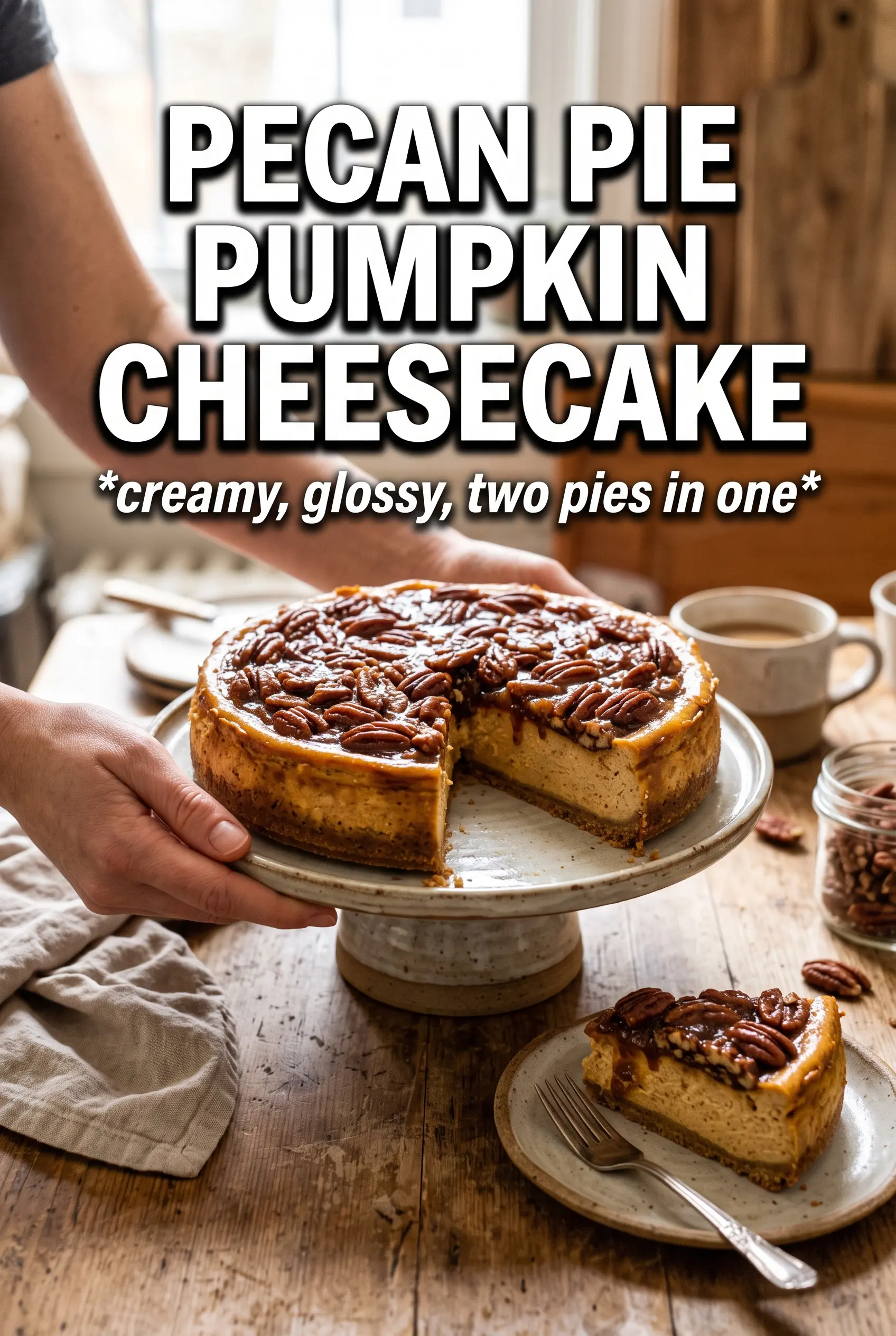
Pecan Pie Pumpkin Cheesecake
Ingredients
Equipment
Method
- Preheat oven to 325F, then press gingersnap crumbs mixed with sugar and melted butter into a 9-inch springform pan and bake for 10 minutes.
- Remove from oven and let the crust cool while you prepare the filling.
- Beat the cream cheese and sugar until smooth, then mix in eggs, pumpkin, sour cream, pumpkin pie spice, cinnamon, and vanilla.
- Pour the cheesecake batter over the cooled crust.
- Place the springform pan into a water bath and bake at 325F for 65-70 minutes until the center is just set.
- Cool the cheesecake completely before chilling.
- Refrigerate the cheesecake for 6 hours.
- Melt butter and brown sugar together, then stir in heavy cream and corn syrup.
- Simmer the mixture for 3 minutes, stirring to combine.
- Stir in pecan halves, vanilla, and salt, then cool for 15 minutes.
- Pour the pecan topping over the chilled cheesecake right before serving.