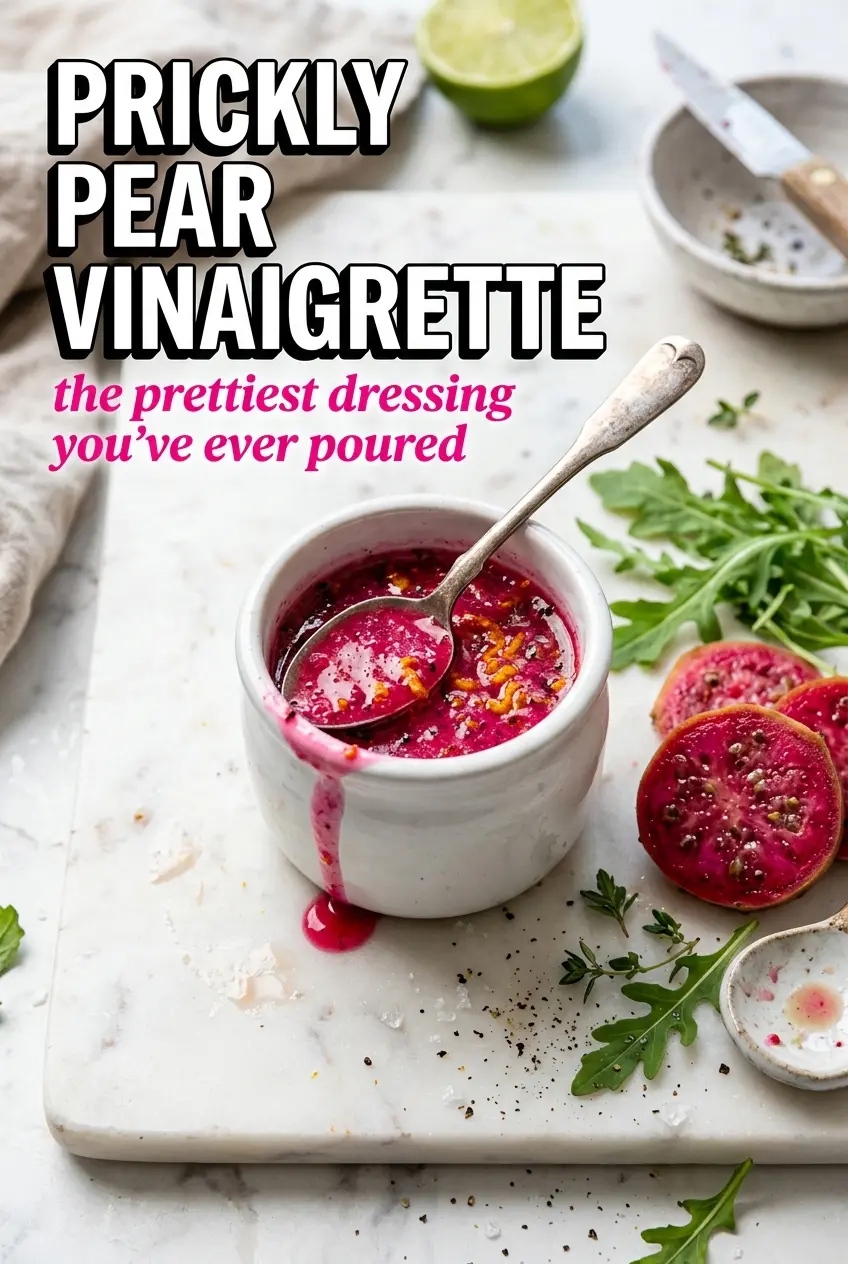
Prickly pear vinaigrette brings a bright, glossy pink color and a clean sweet-tart finish that makes even a simple bowl of greens feel special. It’s the kind of dressing that looks polished on the table but comes together in minutes, with a balance that leans fresh instead of sugary. The flavor is delicate enough to let the fruit show through, but the vinegar and mustard keep it grounded so it actually tastes like a vinaigrette, not a smoothie poured over salad.
The key is treating the prickly pear puree like the base of the dressing, not just a color agent. Red wine vinegar sharpens the fruit, Dijon helps the emulsion hold, and the shallot adds a little savory bite that keeps the dressing from tasting flat. I whisk the oil in slowly so the mixture turns silky instead of separate and greasy, and I always taste it after it sits for a minute because the sweetness of the fruit can change how much salt or acid it needs.
Below, you’ll find the trick for keeping this dressing smooth, what to do if your prickly pear puree tastes sweeter than expected, and a few smart ways to use it beyond salad.
The dressing turned out beautifully smooth and the prickly pear flavor stayed bright after chilling. I whisked it by hand and it still emulsified perfectly, then it coated the greens without pooling at the bottom of the bowl.
Save this prickly pear vinaigrette for salads that need a jewel-toned dressing with a fresh, sweet-tart edge.
The Emulsion Is the Difference Between Silky and Separated
Most homemade fruit vinaigrettes fail because the oil goes in too fast or the mustard isn’t doing enough work. When that happens, the dressing looks broken and slides off the greens instead of clinging to them. The fix is simple: start with the acidic ingredients and flavor base, then whisk in the olive oil in a thin stream so the mixture has time to tighten up into a smooth emulsion.
The shallot matters here too. It gives the dressing a little structure and sharpness, which keeps the prickly pear from reading as one-note sweet. If your puree is especially thick, whisk it with the vinegar first so you can see the texture before the oil goes in. That small step makes it easier to tell whether the dressing needs a touch more acid or a pinch more salt at the end.
What Each Ingredient Is Actually Doing in This Dressing
- Prickly pear puree — This is the color and the signature flavor. A smooth puree gives the dressing its jewel-like look and soft fruitiness, but it needs vinegar and mustard to keep it from tasting flat. If your puree has seeds or pulp, strain it first for the cleanest texture.
- Red wine vinegar — This brings the brightness that wakes up the fruit. Apple cider vinegar can work in a pinch, but it tastes rounder and less sharp, so the finished dressing won’t have the same clean lift. Use the full amount before deciding to add more; prickly pear can hide acidity at first.
- Dijon mustard — This is the emulsifier that helps the dressing stay together. Yellow mustard won’t give the same depth or stability, and leaving it out makes separation more likely. Whisk it into the acid and puree before adding oil so it can do its job properly.
- Olive oil — A good olive oil gives body and a smooth finish. Since this dressing is fruit-forward, a mild extra-virgin oil works better than an aggressively peppery one. If you want a softer taste, use half olive oil and half neutral oil.
- Shallot — Minced shallot adds a gentle onion note without overpowering the dressing. A few minutes of resting softens its edge, so don’t skip the minced shallot unless you want the vinaigrette to taste sweeter and less layered.
Whisking It Into a Glossy, Pourable Dressing
Building the Base
Combine the prickly pear puree, red wine vinegar, honey, Dijon mustard, and minced shallot in a bowl first. Whisk until the mixture looks uniform and the mustard is fully dissolved into the liquid. If you dump in the oil too early, the base won’t have enough structure to hold the emulsion together. This is the point where the dressing should already smell bright and slightly sharp, with the fruit still leading.
Streaming in the Oil
Add the olive oil slowly while whisking constantly. You want the dressing to thicken slightly and look glossy, not cloudy and loose. If the oil goes in all at once, the dressing can separate before it ever comes together, especially if the puree is cold from the refrigerator. Keep whisking until it looks silky and lightly nappes the whisk.
Final Seasoning and Rest
Season with salt and black pepper, then taste again after a minute or two. The flavor should feel balanced: sweet from the fruit and honey, sharp from the vinegar, and just savory enough to keep it from drifting into dessert territory. If it tastes soft or dull, add a tiny pinch of salt or a few drops of vinegar, not more honey. The dressing will also taste a little more rounded after it sits briefly, so don’t overcorrect on the first taste.
Make It Vegan
Swap the honey for maple syrup or agave nectar in the same amount. Maple gives a deeper note and agave keeps the flavor cleaner, but both will make the dressing a little softer than honey. Taste at the end and add a small pinch more salt if the sweetness feels a touch flat.
Use It With a Milder Oil
If your olive oil is bold or grassy, replace half of it with a neutral oil like avocado or grapeseed. The dressing will stay emulsified, but the prickly pear flavor will come through more clearly. This is the best move if you’re serving it with delicate greens or fruit.
Make It Sharper for Grilled Foods
For grilled chicken, shrimp, or vegetables, add an extra teaspoon of red wine vinegar and a pinch more black pepper. The dressing will read brighter and cut through smoky food better. Keep the honey where it is so the fruit still tastes like the star.
Storage and Reheating
- Refrigerator: Store in a glass jar for up to 1 week. The dressing may separate and thicken as it chills, which is normal.
- Freezer: I don’t recommend freezing this vinaigrette. The emulsion can break after thawing, and the texture gets watery.
- Reheating: No reheating needed. Let it sit at room temperature for 10 to 15 minutes, then shake or whisk well before serving so the oil loosens back up and the dressing turns smooth again.
Questions I Get Asked About This Recipe
Prickly Pear Vinaigrette
Ingredients
Method
- In a bowl, combine prickly pear puree, red wine vinegar, honey, Dijon mustard, and minced shallot. Whisk until fully blended and glossy.
- Slowly whisk in the olive oil in a thin stream at room temperature until the mixture turns smooth and slightly thicker. Season with salt and black pepper.
- Taste and adjust the balance of sweet, tang, and seasoning as needed. If you’re not serving right away, cover and refrigerate in a glass jar up to one week.
- Before serving, shake the jar well to re-emulsify. Use immediately over salad or as a light drizzle.