Deeply spiced pumpkin bread with a tender, almost custardy crumb and a thick drizzle of brown butter maple icing is the kind of loaf that disappears slice by slice. The crumb stays soft for days, the top bakes up with a gentle dome, and the icing adds a glossy finish that tastes like maple candy with a nutty edge. It’s the sort of bread that works for breakfast, but it doesn’t sit quietly on the table long enough to stay just breakfast.
This version leans on pumpkin puree for moisture and uses oil instead of butter in the loaf, which keeps the texture plush even after it cools. The spice blend is warm without drowning out the pumpkin, and the batter comes together with almost no effort as long as you stop mixing the moment the flour disappears. The icing matters here too: browning the butter first gives it a deeper, toasted flavor that plain melted butter can’t match, and cooling it slightly before whisking keeps the glaze smooth instead of greasy.
Below, I’ll walk through the small details that keep the loaf from turning gummy and the icing from sliding off the top. There’s also a few useful ways to adapt it if you want a dairy-free finish or a thicker bakery-style glaze.
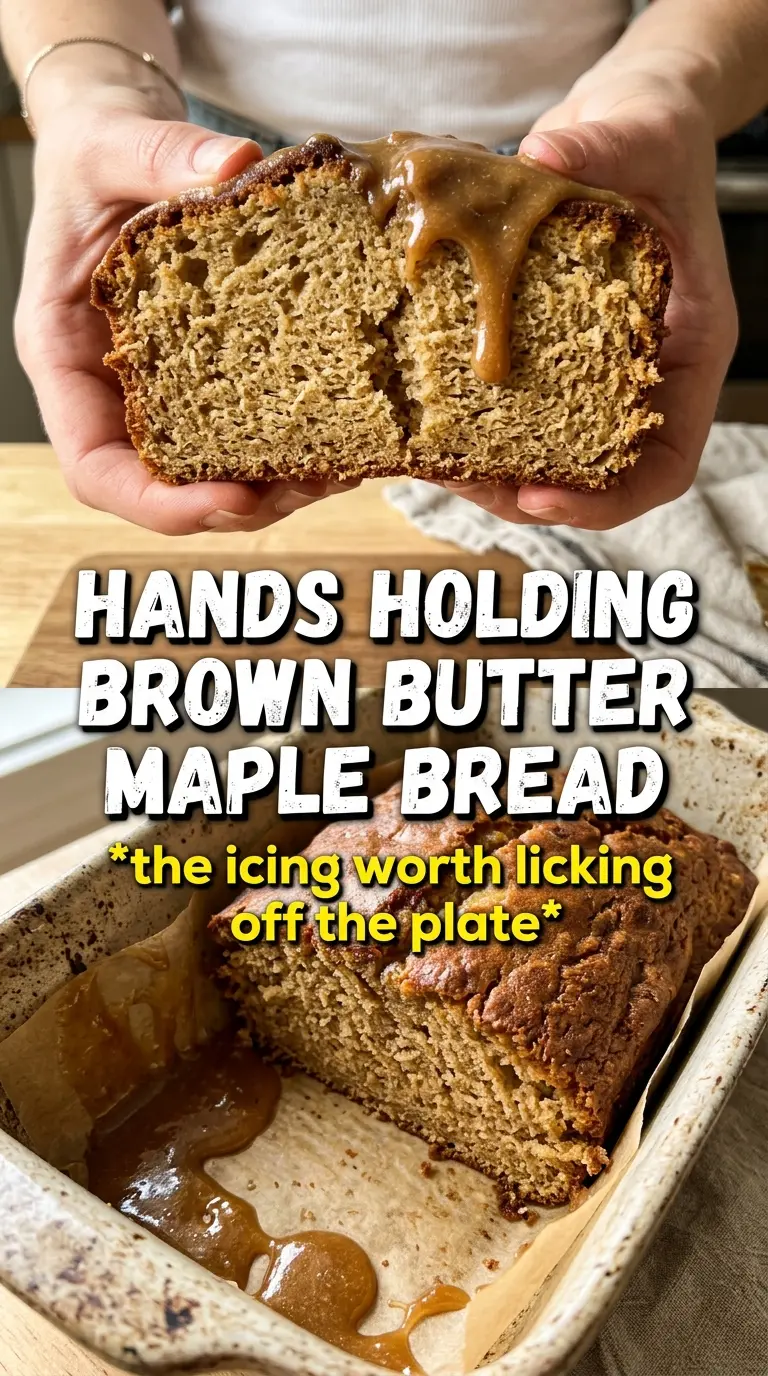
The loaf baked up with a perfectly soft center and the icing set just enough to drip down the sides without soaking in. The browned butter made the maple glaze taste way deeper than I expected.
Save this pumpkin bread with brown butter maple icing for the kind of loaf that stays soft, slices cleanly, and tastes even better the next day.
The Difference Between Tender Pumpkin Bread and a Dense, Gumgy Loaf
The biggest failure point in pumpkin bread is overmixing. Once the flour goes in, every extra stir tightens the crumb and pushes the loaf toward toughness or a wet, tunned texture in the center. This batter should look a little rough when it hits the pan; the oven finishes the job better than your spoon does.
Another thing that matters here is moisture balance. Pumpkin puree brings a lot of liquid, but it doesn’t have much structure on its own, which is why the flour, eggs, and baking soda all have jobs to do at the same time. The loaf needs a full bake until a tester comes out clean from the center, and then it needs to cool all the way before the icing goes on. If you glaze it while it’s warm, the icing thins out and disappears into the crust instead of sitting on top in that glossy layer.
What the Pumpkin, Oil, and Brown Butter Are Each Doing Here
- Pumpkin puree — Use plain pumpkin puree, not pumpkin pie filling. Pie filling already contains sugar and spices, which throws off both the flavor and the texture. The puree gives moisture and that earthy pumpkin body without making the bread overly sweet.
- Vegetable oil — Oil keeps the crumb soft for longer than butter would in the loaf. Butter brings flavor, but it firms up as it cools; oil stays liquid, which is why this bread still slices neatly on day two and day three.
- Pumpkin pie spice and cinnamon — The spice blend gives the loaf its warm backbone, while the extra cinnamon keeps the flavor from tasting flat. If you only have pumpkin pie spice, use it and skip the extra cinnamon; if your blend is old and faded, the bread will taste dull no matter how good the pumpkin is.
- Brown butter — This is the ingredient that makes the icing taste layered instead of just sweet. Brown it until the milk solids are golden and smell nutty, then let it cool for about 10 minutes so it won’t melt the powdered sugar into a runny glaze.
- Pure maple syrup — Use real maple syrup here. Pancake syrup tastes one-note and thin in the icing. Pure maple gives the glaze its deep amber sweetness and helps it set with a better sheen.
Building the Batter and Finishing the Icing Without Losing the Texture
Whisk the dry ingredients first
Start with the flour, baking soda, spices, and salt in one bowl. That gives you even spice distribution and keeps the baking soda from clumping, which can leave bitter little pockets in the finished loaf. The dry mix should look uniform and fragrant before it ever meets the wet ingredients.
Bring the wet mixture together until smooth
Whisk the pumpkin puree, both sugars, oil, eggs, and vanilla until the mixture looks glossy and completely smooth. If you still see streaks of egg white, keep whisking; those streaks can turn into uneven spots in the crumb. The sugar should start dissolving into the pumpkin mixture, which helps the loaf bake up with a finer texture.
Fold, don’t beat, once the flour goes in
Add the dry ingredients to the wet bowl and fold just until the flour disappears. A few streaks are better than a hard-mixed batter, because the oven will finish incorporating those last bits without making the loaf tough. Scrape the bottom of the bowl once so you don’t leave a pocket of dry flour behind.
Brown the butter and stop at nutty, not dark
Cook the butter over medium heat until the foam settles and the milk solids at the bottom turn golden brown. The smell changes fast from buttery to toasted and nutty; that’s the cue to pull it off the heat. If it goes past amber and starts smelling sharp or burnt, start over, because the icing will taste bitter.
Whisk the glaze to a thick drizzle
Let the browned butter cool briefly, then whisk in the powdered sugar, maple syrup, vanilla, cinnamon, and just enough milk to make it pourable. You want it thick enough to ribbon off the whisk, not watery enough to run straight off the loaf. If it gets too thin, add a little more powdered sugar; if it turns paste-like, a teaspoon of milk at a time will loosen it back up.
Thicker Bakery-Style Icing
Use the full amount of powdered sugar and start with just 1 tablespoon of milk. A thicker glaze sits on top in a bold stripe instead of soaking into the crust, which is what you want if you like a pronounced finish and a sweeter bite in each slice.
Dairy-Free Version
Swap the butter in the icing for a plant-based butter that browns well, or use a melted dairy-free butter substitute if you don’t need the toasted flavor. The glaze will still be sweet and maple-forward, but the nutty depth from real browned butter will be lighter.
Make It Less Sweet
Cut the icing over the loaf in a thinner drizzle instead of a heavy pour, or stop at 1 cup powdered sugar and add milk sparingly. You’ll still get the maple-brown butter flavor without covering every bite in sweetness.
Storage and Reheating
- Refrigerator: Store covered for up to 5 days. The crumb stays moist, and the icing may firm up a little on top.
- Freezer: Freeze the loaf without icing for up to 2 months, wrapped tightly and then sealed in a freezer bag. Thaw at room temperature before glazing so the icing doesn’t bead up on the cold surface.
- Reheating: Warm slices briefly in the microwave or toaster oven. If you heat it too long, the icing melts away and the bread can dry out at the edges.
Answers to the Questions Worth Asking
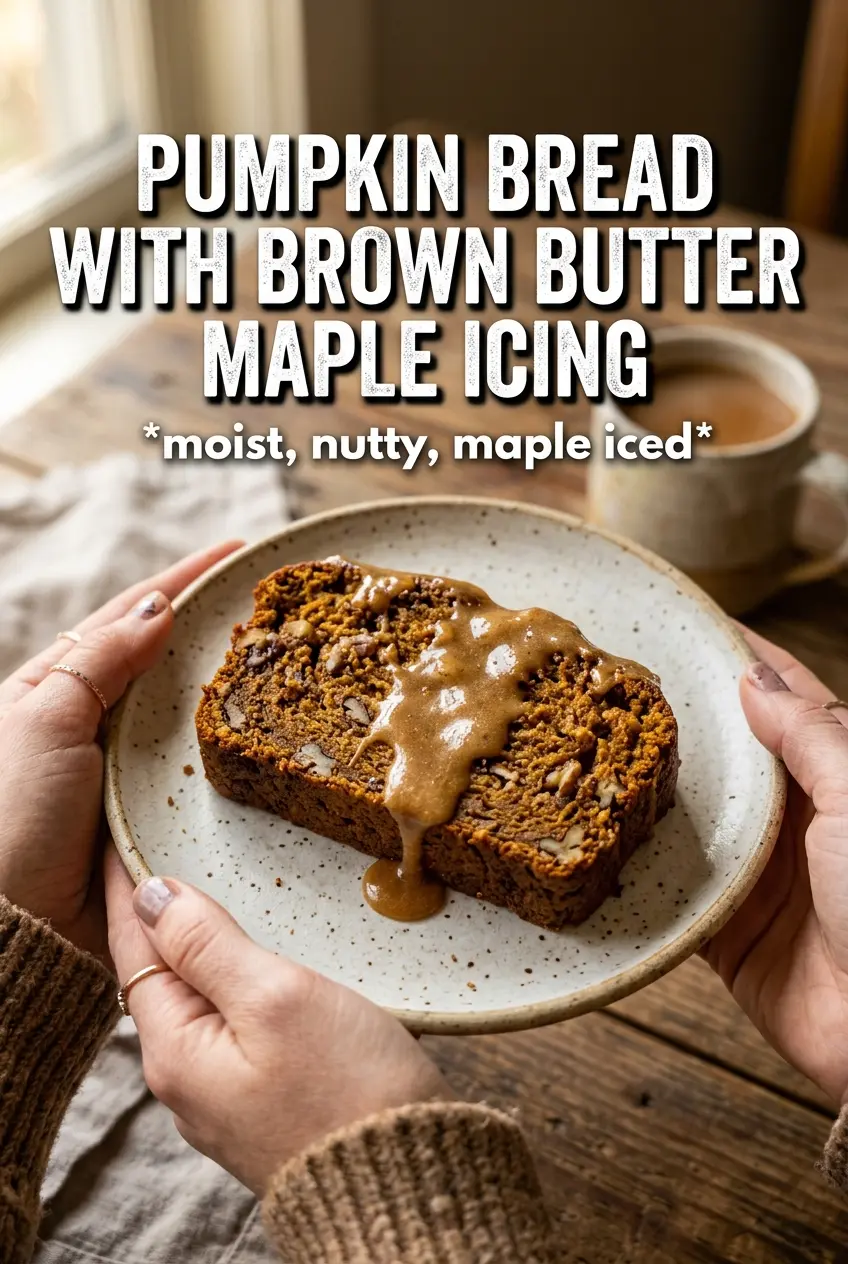
Pumpkin Bread With Brown Butter Maple Icing
Ingredients
Equipment
Method
- Preheat oven to 350F, then grease a 9x5 loaf pan.
- Whisk all-purpose flour, baking soda, pumpkin pie spice, cinnamon, and salt.
- Whisk pumpkin puree, granulated sugar, brown sugar, vegetable oil, eggs, and vanilla until smooth.
- Fold dry ingredients into the wet mixture just until combined, then pour batter into the loaf pan.
- Bake for 60-65 minutes, until a toothpick comes out clean.
- Cool the loaf completely before icing.
- Brown the unsalted butter in a saucepan until golden and nutty-smelling, then cool for 10 minutes.
- Whisk the browned butter with powdered sugar, pure maple syrup, vanilla, cinnamon, and enough milk to reach a thick drizzling consistency.
- Drizzle the icing generously over the cooled loaf, letting it run down the sides.