Moist pumpkin bread with cream cheese frosting has a way of disappearing from the counter before it ever cools completely. The loaf stays soft and tender for days, with a tight, cake-like crumb that still slices cleanly. Then the frosting hits: cool, tangy, thick enough to hold its shape, and just sweet enough to turn an everyday pumpkin loaf into something people keep sneaking back for.
This version leans on pumpkin puree for both flavor and moisture, but the balance matters. Too much flour and the loaf turns dry. Too much mixing and it gets tough. The batter is mixed just until the flour disappears, which keeps the crumb light instead of gummy, and the cream cheese frosting is beaten separately so it stays smooth instead of grainy. Cinnamon in both the bread and the frosting ties everything together without burying the pumpkin.
Below, I’ll walk through the small details that keep the loaf from sinking in the middle and the frosting from sliding off the top. There’s also a note on how to get a thicker frosting if you want a bakery-style finish.
The loaf baked up with a gorgeous dome and the frosting stayed thick instead of running down the sides. I chilled it for 20 minutes before slicing and the pieces came out clean and neat.
Save this pumpkin bread with cream cheese frosting for the days when you want a soft, spiced loaf with a thick tangy topping.
The Trick to Keeping Pumpkin Bread Tender Instead of Dense
Pumpkin bread goes wrong when the batter gets overworked or the flour ratio creeps too high. Pumpkin puree brings a lot of moisture, but it also adds weight, so the mixing stage matters more than the ingredient list makes it seem. Once the dry and wet ingredients come together, stop as soon as the flour disappears. A few streaks are better than a heavy, tight loaf.
The other thing that matters is the oven set at a steady 350°F and a loaf pan that’s properly greased. Pumpkin batter needs time to set in the center, and if the oven runs too hot the outside can brown before the middle finishes. You’re looking for a loaf that springs back lightly in the center and a tester that comes out clean or with just a few moist crumbs, not wet batter.
- Pumpkin puree — Use plain pumpkin puree, not pumpkin pie filling. The pie filling already contains sugar and spices, which throws off both the flavor and the texture.
- Brown sugar — This adds moisture and a deeper, molasses note that plain white sugar can’t match. If you’re out, use all granulated sugar, but the bread will taste a little flatter.
- Oil — Oil keeps the crumb soft longer than butter does here. Butter can work, but the loaf won’t stay as tender on day two and three.
- Pumpkin pie spice and cinnamon — The combo gives the bread that warm, rounded spice note without needing extra ingredients. If your pumpkin pie spice is old, replace it; stale spice is one of the easiest ways to end up with a bland loaf.
How to Keep the Frosting Thick Enough to Sit on Top
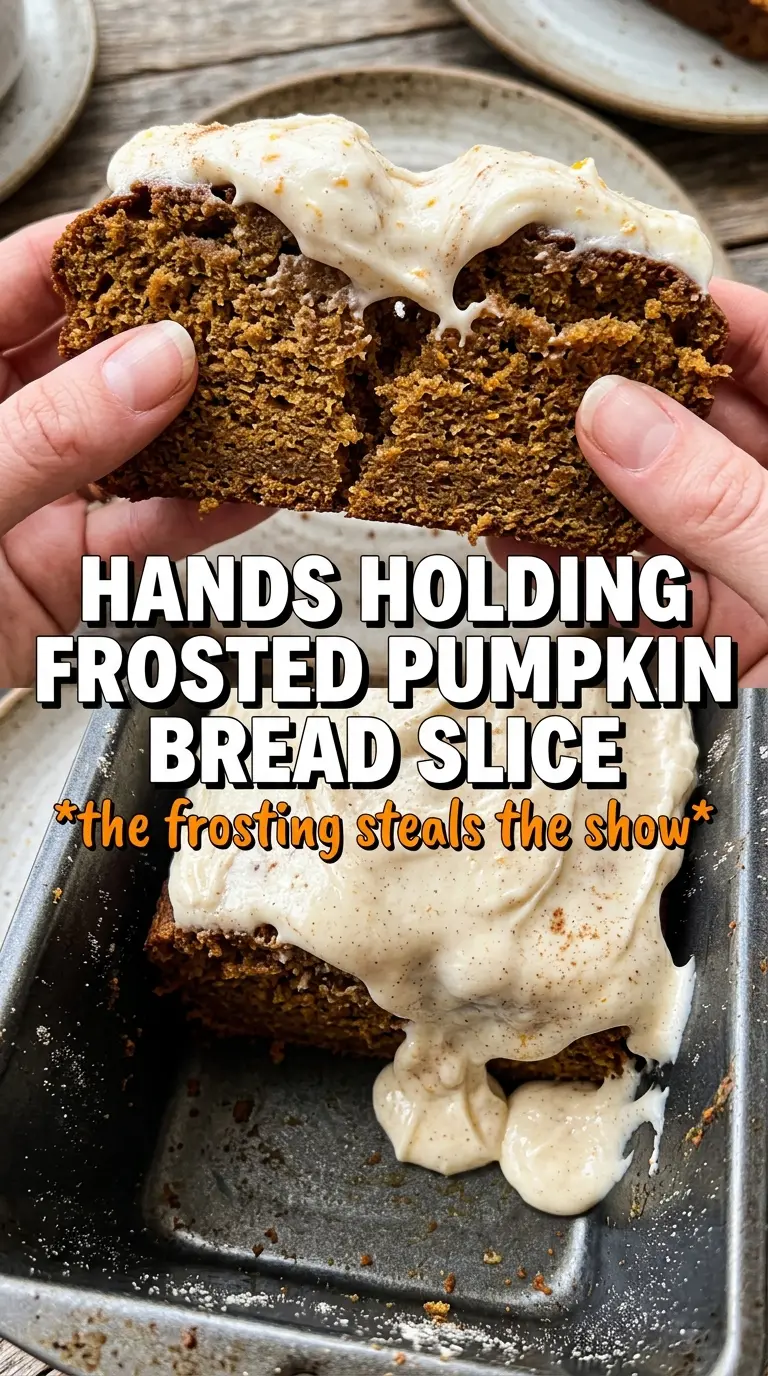
- Cream cheese — Full-fat cream cheese gives the frosting its tang and body. Low-fat versions tend to soften too much and can turn loose.
- Butter — Butter helps the frosting whip up smooth and adds structure. Start with softened butter, not melted butter, or the frosting can turn glossy and thin.
- Powdered sugar — This is what gives the frosting body. Add it gradually so you can stop at thick and spreadable instead of ending up with a sugary paste.
- Milk — Use just enough to loosen the frosting at the end. If it gets too soft, a spoonful more powdered sugar usually brings it back.
Getting the Batter and Frosting in the Right Order
Mix the Dry Ingredients First
Whisk the flour, baking soda, pumpkin pie spice, cinnamon, and salt together before anything else. That keeps the leavening and spices evenly distributed, which matters in a loaf this dense. If the baking soda clumps, you’ll get little bitter pockets and uneven rise. A quick whisk now saves you from a sunk center later.
Build the Wet Base Until It Looks Smooth
Stir the pumpkin puree, sugars, oil, eggs, and vanilla until the mixture looks glossy and uniform. The goal is a smooth orange batter with no streaks of egg showing through. Once the flour goes in, the clock changes; overmixing at that point develops gluten and makes the loaf chewy instead of tender.
Stop Mixing the Moment the Flour Disappears
Fold the wet and dry mixtures together just until you don’t see dry flour anymore. The batter should look thick and a little shaggy, not beaten smooth. Pour it into the loaf pan right away so it bakes evenly. If you keep stirring because a few streaks remain, the loaf will bake up heavy and tunnel through the middle.
Beat the Frosting Until It Holds Its Shape
Beat the cream cheese and butter first until completely smooth, then add the powdered sugar, vanilla, and cinnamon. Dribble in the milk only as needed until the frosting spreads easily but still sits high on a spoon. If the frosting looks loose, don’t keep adding milk out of habit. Extra powdered sugar fixes softness better than more mixing does.
Make it dairy-free
Use a plant-based cream cheese and vegan butter for the frosting, then add the milk a teaspoon at a time since nondairy versions can loosen fast. The bread itself is already dairy-free as written, so the swap is mostly about getting the frosting texture back under control.
Skip the frosting for a simpler loaf
Bake the pumpkin bread plain and dust the top with cinnamon sugar while it’s still warm. You lose the tangy contrast, but the loaf gets a more breakfast-style finish and holds up better for packing into lunches or freezing slices.
Turn it into muffins
Divide the batter into lined muffin cups and start checking them much earlier, usually around 18 to 22 minutes. Muffins bake faster and give you more of the browned edge people love, but they won’t have the same soft center as a loaf.
Storage and Reheating
- Refrigerator: Store frosted slices in an airtight container for up to 5 days. The frosting firms up in the fridge, and the bread stays moist.
- Freezer: Freeze the unfrosted loaf or individual slices wrapped tightly for up to 3 months. Cream cheese frosting doesn’t freeze as neatly, so frost after thawing for the cleanest result.
- Reheating: Let chilled slices sit at room temperature for 15 to 20 minutes, or warm the unfrosted bread briefly in the microwave. Don’t heat frosted slices hard or the topping will melt and slide.
Questions I Get Asked About This Recipe
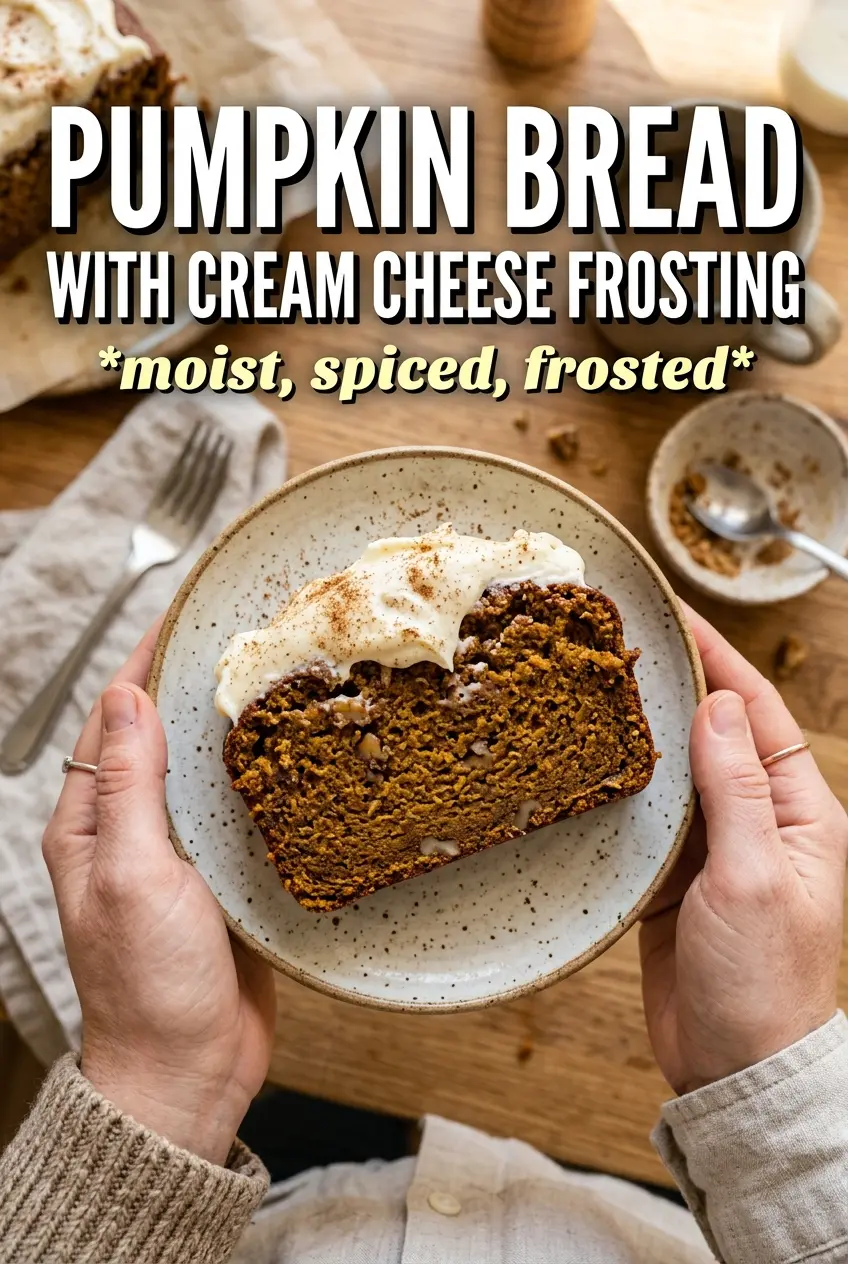
Pumpkin Bread With Cream Cheese Frosting
Ingredients
Equipment
Method
- Preheat the oven to 350F and grease a 9x5 loaf pan.
- Whisk the dry ingredients together until evenly combined.
- Whisk the wet ingredients together until smooth.
- Fold the wet mixture into the dry mixture until just combined.
- Pour the batter into the greased loaf pan.
- Bake for 60–65 minutes, until a toothpick comes out clean.
- Cool the loaf completely before frosting.
- Beat the cream cheese and butter until smooth.
- Add the powdered sugar, vanilla, cinnamon, and enough milk to make a thick but spreadable frosting.
- Spread the frosting generously over the cooled loaf, then dust with cinnamon and serve.