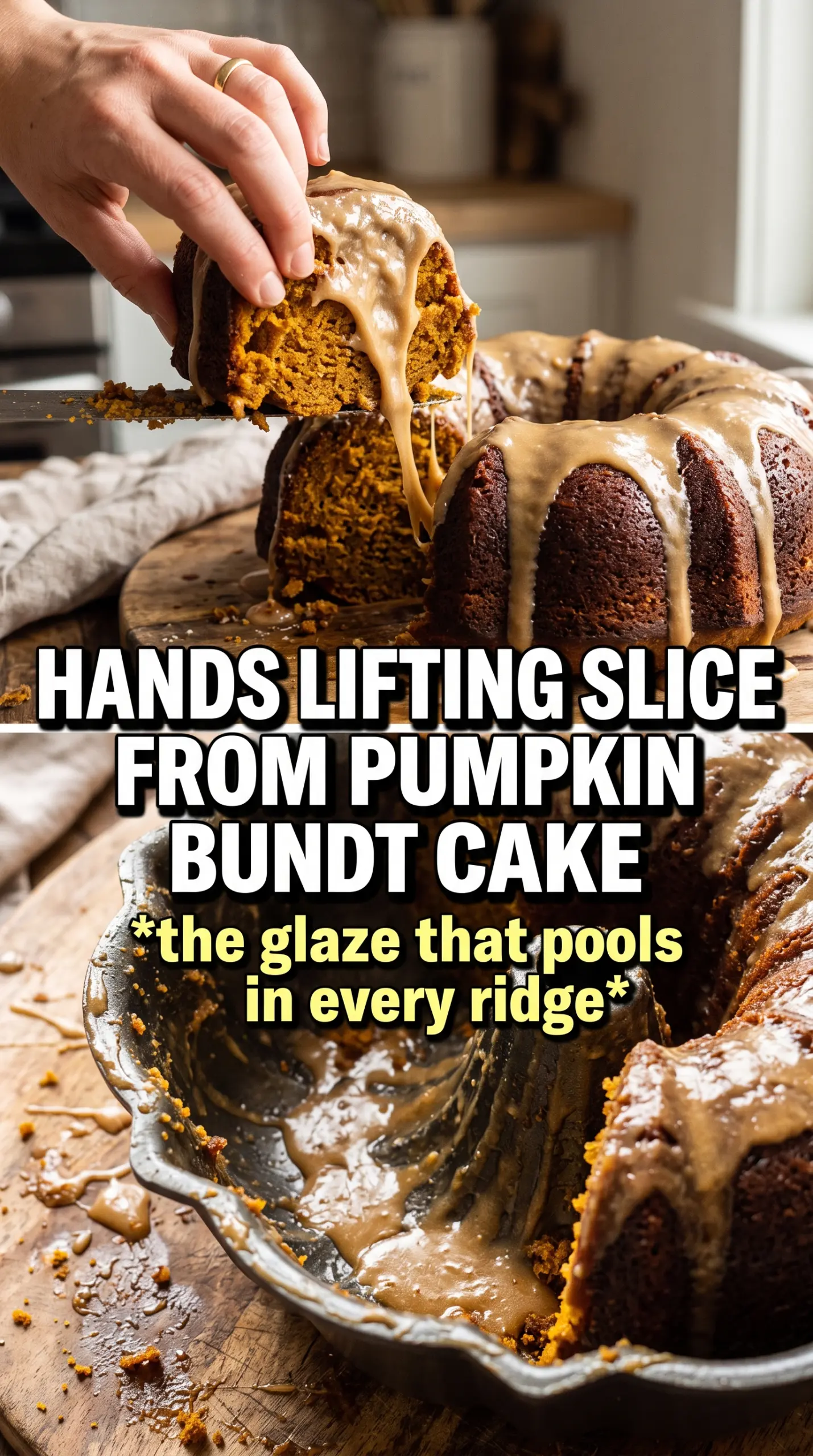
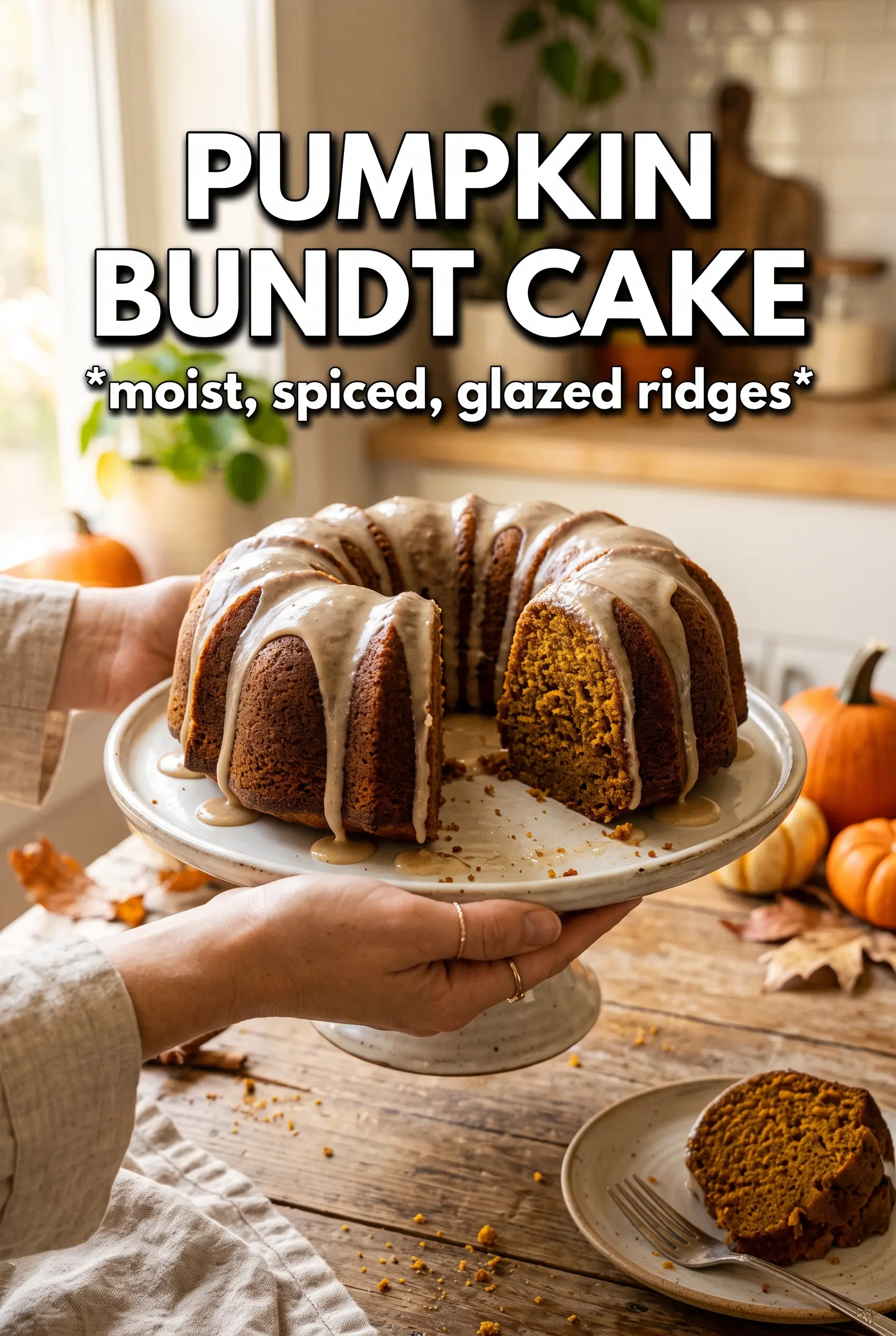
Golden, tender Pumpkin Bundt Cake is the kind of dessert that disappears slice by slice because it stays moist for days and carries real pumpkin flavor, not just spice. The crumb is soft but structured, which means it holds up under a thick cream cheese glaze that settles into every ridge instead of sliding right off the pan.
What makes this version work is the balance: enough pumpkin puree for moisture, enough butter for richness, and a full hit of cinnamon and pumpkin pie spice so the cake tastes warm and spiced without turning muddy. Sour cream keeps the crumb plush and gives the cake a little tang, which matters once the sweet glaze goes on top. The bundt pan does the fancy work here, but the batter needs to be mixed with restraint so the cake stays light instead of dense.
Below, I’m walking through the part that saves bundt cakes from sticking, the ingredient choices that matter most, and the few small adjustments that make this cake bake evenly and release cleanly.
The cake came out with a perfect crumb and the glaze filled every ridge without dripping off the sides. I greased the pan like you said and it released in one piece.
Save this Pumpkin Bundt Cake for the kind of dessert that bakes up tall, slices cleanly, and stays moist under a thick cream cheese glaze.
The One Mistake That Makes Bundt Cakes Stick
Bundt cakes usually fail at the pan, not the batter. The ridges and curves hold onto every weak spot in the coating, so a quick swipe of grease is not enough here. You need a heavy, even layer of butter or nonstick spray with flour, pushed into every groove, and the pan should look fully coated rather than patchy.
Letting the cake rest for 20 minutes after baking matters just as much. If you turn it out too soon, the structure is still fragile and can tear. If you wait too long, the sugar can cool and cling to the pan, which is how a gorgeous cake ends up broken on the rack.
What Each Ingredient Is Actually Doing In This Cake
- Pumpkin puree — This gives the cake its moisture and that deep orange color, but it also adds weight, so the leaveners and eggs have to do more lifting. Use canned puree, not pumpkin pie filling, because the filling is already sweetened and spiced.
- Sour cream — This is the difference between a cake that stays plush for days and one that dries out by the next morning. Full-fat sour cream works best; plain Greek yogurt can stand in, but the texture comes out a little firmer and less rich.
- Butter and sugar — Creaming them until light and fluffy traps air, which helps the cake rise in a pan that doesn’t get much help from batter lift alone. If you rush this step, the cake can bake up heavy and tight.
- Pumpkin pie spice and cinnamon — These give the cake its backbone, but cinnamon alone can taste flat here. The blend in the batter plus a little more in the glaze keeps the spice from disappearing under the sweetness.
- Cream cheese — This is the glaze that holds its shape and tastes tangy enough to balance the cake. A block-style cream cheese gives a smoother, thicker glaze than the whipped tub version.
How To Keep The Batter Light And The Crumb Tender
Creaming The Butter Properly
Beat the butter and sugar until the mixture looks pale and fluffy, not just combined. That color change matters because it means air has been worked into the base, which helps the bundt rise evenly. If the butter is too cold, it will stay lumpy and won’t cream correctly. If it is melted, the cake can bake up dense and greasy.
Adding The Pumpkin Without Overmixing
Once the eggs go in one at a time, add the pumpkin puree, sour cream, and vanilla and mix just until the batter looks smooth. The batter will get thicker and a little heavier at this stage, which is normal. Stop as soon as the flour disappears when you fold it in. Overmixing after the flour is added develops gluten and gives you a tight crumb instead of a tender one.
Knowing When The Cake Is Done
Bake until a toothpick comes out clean or with a few moist crumbs, and the top springs back when lightly pressed. A bundt pan bakes more slowly in the center, so the edges can look done before the middle actually is. If the top is getting dark before the center finishes, tent it loosely with foil for the last part of the bake.
How To Adapt This Pumpkin Bundt Cake Without Losing The Texture
Dairy-Free Version With A Different Finish
Use a plant-based butter, dairy-free sour cream, and a dairy-free cream cheese for the glaze. The cake will still be moist and spiced, but the glaze may be a little looser, so add the milk slowly and stop as soon as it reaches a drizzleable consistency.
Gluten-Free Baking With Better Structure
Swap in a good 1:1 gluten-free flour blend that includes xanthan gum. The cake will bake up a little more delicate, so let it cool fully before glazing and slicing. If your blend is very fine, the crumb stays close to the original; coarse blends can make it a bit drier.
Make It Ahead For Easier Serving
Bake the cake a day ahead, wrap it once it’s fully cool, and glaze it the day you plan to serve it. The flavor deepens overnight, and the crumb slices more cleanly after a rest. If you glaze it too early, the topping softens the crust and can soak into the ridges.
Storage And Reheating
- Refrigerator: Store covered for up to 5 days. The glaze firms up in the fridge, and the cake stays moist.
- Freezer: Freeze the unglazed cake tightly wrapped for up to 2 months. Thaw overnight in the refrigerator, then glaze after it comes to room temperature.
- Reheating: Warm individual slices in the microwave for 10 to 15 seconds. Long reheating dries out the crumb and can make the glaze separate.
Questions I Get Asked About This Recipe
Pumpkin Bundt Cake
Ingredients
Equipment
Method
- Preheat oven to 325F. Grease and flour a 10-inch bundt pan very well for clean release.
- Whisk together all-purpose flour, baking powder, baking soda, pumpkin pie spice, cinnamon, and salt until evenly combined.
- Beat unsalted butter and granulated sugar until very light and fluffy, then add eggs one at a time.
- Add pumpkin puree, sour cream, and vanilla, then fold in the flour mixture until just combined to avoid overmixing.
- Pour the batter into the prepared bundt pan and bake 60-70 minutes, until a toothpick comes out clean.
- Cool in the pan 20 minutes, then invert onto a rack and cool completely.
- Beat cream cheese glaze ingredients until smooth, adding milk a tablespoon at a time to reach a thick drizzle consistency.
- Drizzle the cream cheese glaze generously over the cooled cake, letting it cascade into the ridges.