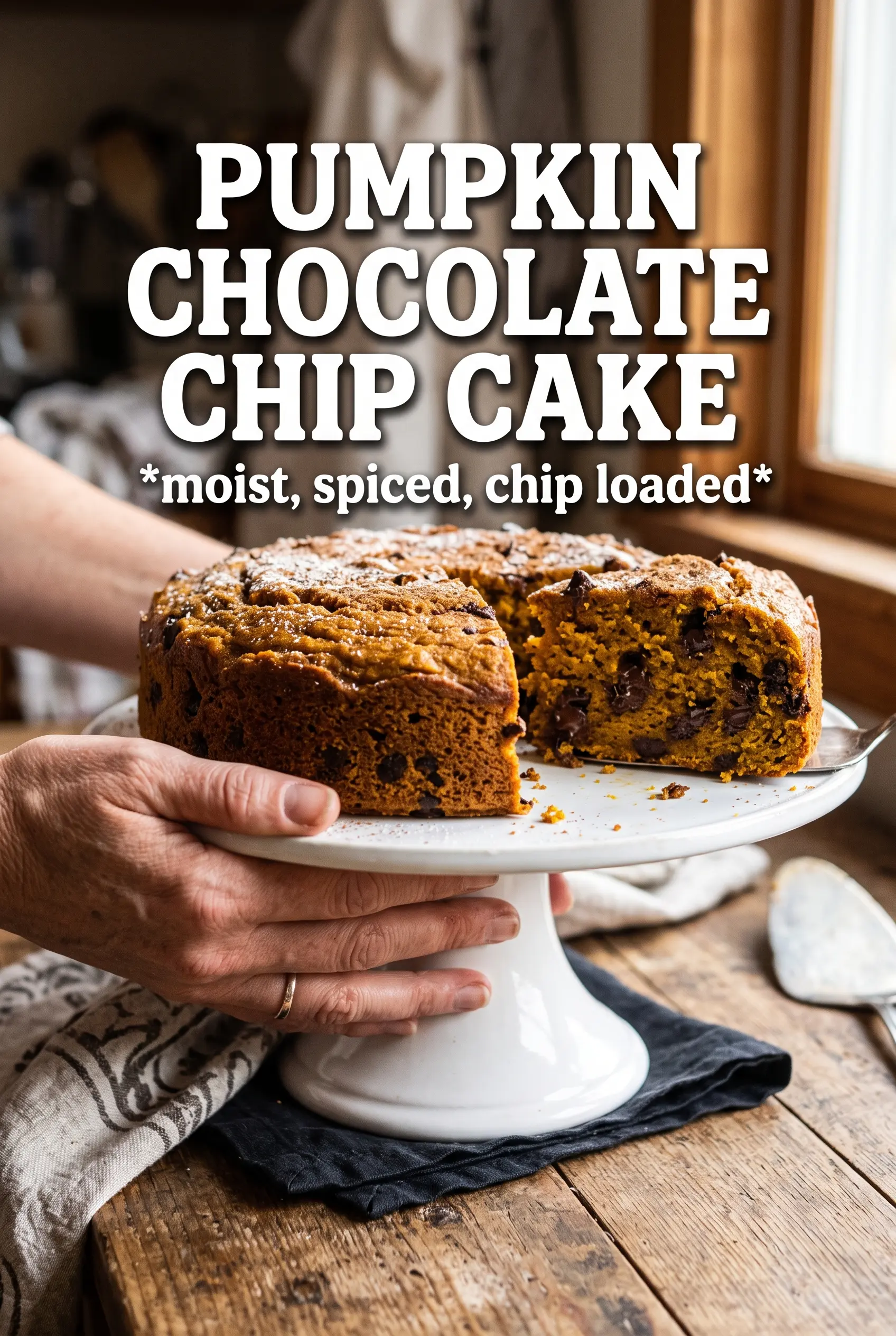
Moist, warmly spiced, and packed with dark chocolate chips, this pumpkin chocolate chip cake lands in that sweet spot between cozy and rich without tasting heavy. The pumpkin keeps the crumb tender for days, and the chocolate cream cheese frosting gives each slice a deep cocoa finish that plays beautifully against the spice. It slices cleanly, stacks neatly, and tastes even better once the flavors settle for a few hours.
The key here is balance. Pumpkin adds moisture, but sour cream keeps the cake soft without turning it dense, and the brown sugar brings a little molasses depth that white sugar just can’t match. Folding the chocolate chips in at the end keeps them from sinking, and cooling the layers completely before frosting keeps the chocolate cream cheese frosting smooth instead of sliding off the sides.
Below you’ll find the little details that matter most: how to keep the cake light instead of gummy, why the frosting should be beaten until fully smooth, and a few smart swaps if you need to work around what you have on hand.
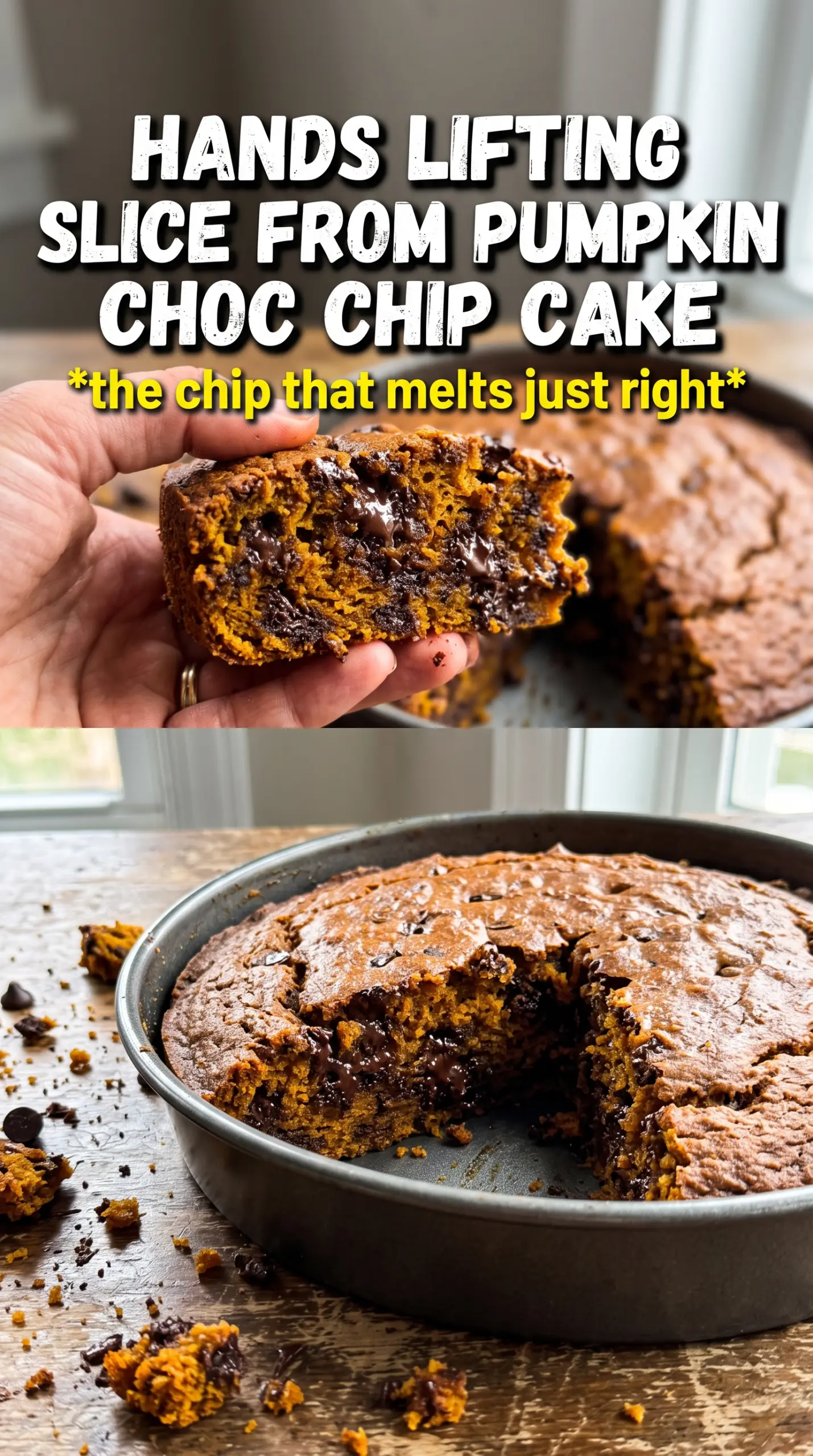
The cake stayed incredibly moist for three days, and the chocolate chips stayed evenly distributed instead of sinking to the bottom. That frosting was smooth and tangy, not overly sweet.
Save this pumpkin chocolate chip cake for the days when you want a moist layer cake with chocolate chips in every bite and a rich cocoa cream cheese frosting.
The Reason Pumpkin Cakes Turn Heavy Before They Ever Reach the Oven
Pumpkin cake goes wrong when the batter gets overworked or overloaded with flour. Pumpkin already brings a lot of moisture, and once you add eggs, sour cream, and melted chocolate chips, the batter can turn dense fast if you keep mixing after the dry ingredients go in. The goal is a batter that looks finished as soon as the flour disappears, not one that gets beaten into a smooth paste.
This cake also needs the right pan setup. Two 9-inch rounds bake more evenly than one deep layer, and that matters here because pumpkin batters can stay gummy in the center if the pans are too crowded. You want the edges set, the centers springy, and a toothpick that comes out with a few moist crumbs, not wet batter.
- Brown sugar gives the cake more depth than white sugar and helps the crumb stay soft.
- Sour cream adds tenderness and a little tang. Greek yogurt works if that’s what you have, but the cake will taste slightly brighter.
- Pumpkin purée should be plain canned pumpkin, not pumpkin pie filling. Pie filling is already sweetened and spiced, which throws off the balance.
- Chocolate chips should be folded in at the end so they don’t streak through the batter or sink to the bottom.
What Each Ingredient Is Actually Doing in the Cake and Frosting
- All-purpose flour gives the cake structure without making it bready. Measure it lightly, because packed flour is one of the fastest ways to dry out a pumpkin cake.
- Pumpkin pie spice and cinnamon build warmth without making the cake taste overly spiced. The cinnamon sharpens the pumpkin, while the pie spice rounds everything out.
- Butter brings richness to both the cake and the frosting. For the cake, it should be softened enough to cream with the sugar, but not greasy or melted.
- Dark chocolate chips hold their shape better than milk chocolate and give the cake little pockets of deeper flavor. If you only have semi-sweet chips, they work fine.
- Cream cheese is what keeps the frosting from tasting flat. Full-fat cream cheese gives the smoothest texture and the best tang.
- Cocoa powder makes the frosting taste like chocolate frosting, not just sweetened cream cheese. Natural cocoa works here; Dutch-process gives a darker, softer chocolate note.
- Milk is there for texture, not flavor. Add it slowly so the frosting turns spreadable instead of loose.
Building the Batter and Frosting So Nothing Breaks
Creaming the Butter and Sugar First
Beat the butter and brown sugar until the mixture looks fluffy and a little lighter in color. That step traps air, which helps the cake rise without turning cakey. Once the eggs go in, add them one at a time so the batter stays smooth instead of looking curdled. If the mixture looks separated after an egg, keep going; it usually comes back together once the pumpkin and sour cream are added.
Folding in the Dry Ingredients
Add the flour mixture in two additions and mix only until the streaks disappear. Overmixing develops gluten and gives you a tough, tight crumb instead of a soft one. The batter should look thick and plush, not pourable like pancake batter. Fold in the chocolate chips by hand so they stay suspended through the layers.
Baking the Layers Until They Spring Back
Divide the batter evenly between the pans and smooth the tops so they bake at the same pace. The cakes are done when the centers spring back lightly and a tester comes out with a few crumbs clinging to it. If the tops are browning too fast before the centers finish, tent loosely with foil for the last 10 minutes. Let the layers cool completely in the pans before turning them out, or they’ll tear while they’re still fragile.
Whipping the Chocolate Cream Cheese Frosting
Beat the cream cheese and butter first until there are no lumps, then add the cocoa and powdered sugar slowly. If you dump everything in at once, the frosting can turn grainy and dusty before it smooths out. A tablespoon of milk at a time gets you to a spreadable texture without making it runny. If the frosting feels soft, chill it for 10 minutes before assembling the cake.
How to Adapt This Cake for Different Needs Without Losing the Texture
Gluten-Free Version
Use a 1:1 gluten-free baking flour that includes xanthan gum. The cake stays tender, but it may need a couple extra minutes in the oven and should be cooled fully before slicing, since gluten-free layers are more delicate when warm.
Dairy-Free Swap
Use dairy-free butter in both the cake and frosting, plus a plain unsweetened dairy-free yogurt in place of the sour cream. The frosting won’t have the same tang unless you use a plant-based cream cheese, but the texture still works if you chill it before spreading.
Cupcake Version
Divide the batter among lined muffin cups and bake until the centers spring back, usually around 18 to 22 minutes. You get a higher frosting-to-cake ratio and cleaner portions, but the edges brown faster, so start checking early.
Storing the Cake
Refrigerator: Store covered for up to 5 days. The frosting firms up in the fridge, and the cake tastes best after it sits at room temperature for 20 to 30 minutes. Freezer: Freeze unfrosted layers tightly wrapped for up to 2 months, or freeze frosted slices on a tray before wrapping. Reheating: If you want a softer slice, let it come to room temperature; microwaving frosted cake makes the frosting greasy and can ruin the texture.
Questions I Get Asked About This Cake
Pumpkin Chocolate Chip Cake
Ingredients
Equipment
Method
- Preheat oven to 350F and grease two 9-inch round pans, so the cakes release cleanly after baking.
- Beat butter and brown sugar until creamy and lighter in color.
- Add eggs one at a time, then beat in pumpkin, sour cream, and vanilla until smooth and thick.
- Combine flour, baking powder, baking soda, pumpkin pie spice, cinnamon, and salt, then fold into the wet ingredients just until no dry streaks remain.
- Fold in dark chocolate chips until evenly distributed through the batter.
- Divide batter between the two prepared pans and bake for 35-40 minutes, until a toothpick in the center comes out clean or with a few moist crumbs.
- Cool the cakes completely in the pans, then remove from pans so frosting won’t melt.
- Beat cream cheese, butter, and powdered sugar until smooth, then mix in cocoa powder, vanilla, and milk until spreadable.
- Frost between layers and all over the cake, swirling to create a thick, dark chocolate finish on the top and sides.