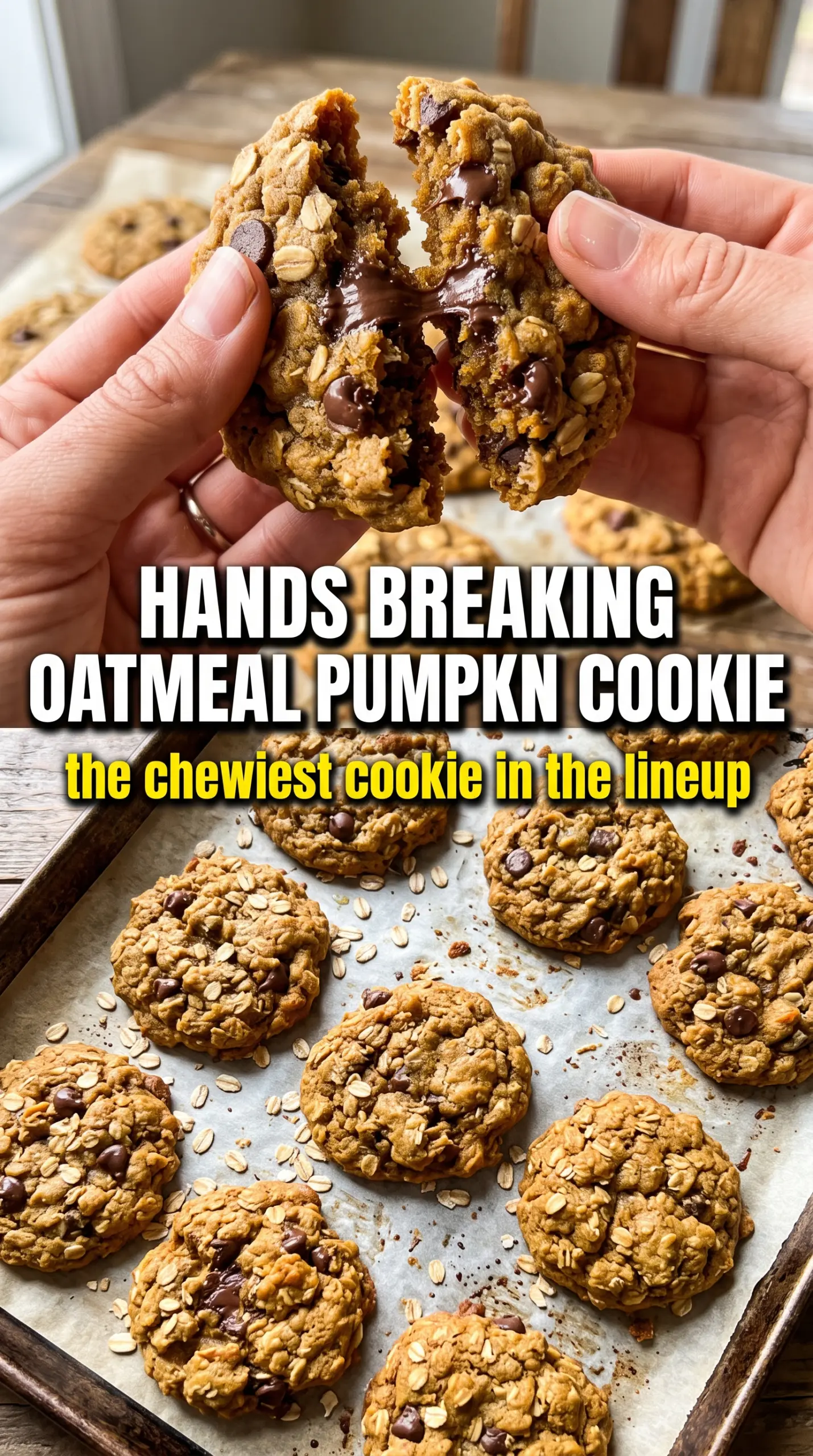
Pumpkin chocolate chip oatmeal cookies bake up soft in the center with crisp edges, a hearty oat chew, and little pockets of melted chocolate in every bite. The pumpkin doesn’t make them cakey here, which is the difference between a cookie you reach for once and one that disappears off the tray while it’s still warm.
The trick is keeping the pumpkin under control. A lot of pumpkin cookie recipes turn heavy because there’s too much moisture in the dough, so this version uses just enough blotted pumpkin puree to add flavor and tenderness without making the cookies puff up like muffins. Old-fashioned oats bring structure and chew, while brown sugar keeps the centers soft and the cinnamon-pumpkin spice blend gives the cookies that warm, bakery-style smell when they come out of the oven.
Below, I’ve included the one prep detail that matters most, plus a few swaps and storage notes so you can keep these cookies soft for days.
The pumpkin flavor came through without making the cookies cakey, and the edges set up beautifully while the centers stayed soft. My kids grabbed them before they even cooled all the way.
Like these pumpkin chocolate chip oatmeal cookies? Save them to Pinterest for the soft, chewy cookie batch with warm spice and melty chocolate.
The Small Moisture Problem That Changes Everything
Pumpkin brings great flavor, but it also brings water, and that extra moisture is what turns a cookie into something cakey and soft in the wrong way. Blotting the pumpkin first gives you the flavor without flooding the dough. That’s the difference between cookies that spread into a tender, chewy edge and cookies that mound up like little breakfast muffins.
The other thing that matters here is the balance of oats and flour. Too much flour and these cookies go dry; too many oats and they fall apart before they bake through. This ratio keeps the dough scoopable, the centers soft, and the edges set enough to lift cleanly off the pan after a short rest.
- Pumpkin puree — Use plain canned pumpkin, not pumpkin pie filling. Blot it between paper towels until it looks thick and pasty. That small step keeps the dough from getting loose.
- Old-fashioned rolled oats — These give the cookies their chewy bite. Quick oats will work in a pinch, but the texture turns softer and less defined.
- Brown sugar — This is what keeps the centers moist and gives the cookies a deeper caramel note. White sugar alone won’t give the same softness.
- Butter — Softened butter creams with the sugars and traps air, which helps the cookies bake up light instead of dense. Don’t melt it; melted butter changes the spread and the final texture.
What Each Ingredient Is Actually Doing in This Recipe
- Primary ingredient (the star) — Quality matters most. Choose the best you can find.
- Cooking medium (oil, butter, or broth) — This carries flavors and prevents dryness.
- Seasonings (salt, pepper, spices, herbs) — Layer flavors so nothing overpowers. Build depth gradually.
- Aromatics (garlic, onion, herbs) — Cook with fat to bloom flavors. Become the foundation.
- Supporting ingredients — Complement the main ingredient without overpowering it.
- Sauce or liquid (if applicable) — Brings flavors together. Balance richness with acid.
- Acid (lemon, vinegar, wine, or other) — Brightens and prevents flat-tasting results.
- Final finish (garnish, glaze, or sauce) — Prevents one-dimensional taste and adds visual appeal.
Building the Dough So the Cookies Stay Chewy
Whisk the dry mix first
Start by whisking the flour, baking soda, pumpkin pie spice, cinnamon, and salt together so the leavener and spices are evenly distributed. If the baking soda clumps, you’ll get uneven spread and patchy flavor. A quick whisk now saves you from overmixing later.
Cream the butter and sugars until the color lightens
Beat the softened butter with both sugars until the mixture looks fluffy and a little paler. This takes a couple of minutes, and it matters because the air you build here helps the cookies bake with a lighter texture. Once the pumpkin, eggs, and vanilla go in, the mixture may look slightly curdled; that’s normal and it smooths out when the flour is added.
Fold, don’t beat, once the flour goes in
Add the dry ingredients and mix just until the flour disappears, then fold in the oats and chocolate chips. If you keep beating at this stage, the cookies get tough and the oats can break down too much. The finished dough should be thick, scoopable, and sticky enough to hold a mound without sliding off the spoon.
Watch the edges, not the clock
Scoop two-tablespoon portions onto lined baking sheets and bake until the edges are golden and the centers still look slightly soft, about 10 to 12 minutes. If you wait for the centers to look fully set in the oven, the cookies will overbake by the time they cool. Let them sit on the pan for 5 minutes so they finish setting without drying out.
How to Adapt These Cookies Without Losing the Texture
Dairy-free version
Use a high-quality plant-based butter that comes in sticks, not a soft tub spread. The stick-style version behaves more like real butter and gives better structure, while tub spreads can make the dough greasy and cause too much spread.
Make them a little less sweet
Reduce the granulated sugar by 2 tablespoons if you like a less sweet cookie. Keep the brown sugar in place, since that’s part of what keeps the centers soft and chewy.
Swap the chocolate chips
Dark chocolate or chopped chocolate works well if you want a richer bite and more visible melted pockets. White chocolate makes these sweeter and more dessert-like, while chopped toasted walnuts add crunch but take the cookies in a more rustic direction.
Storage and Reheating
- Refrigerator: Store in an airtight container for up to 5 days. The oats soften a little more by day two, which makes the cookies feel even chewier.
- Freezer: These freeze well baked or unbaked. Freeze baked cookies in a sealed container for up to 2 months, or freeze portioned dough balls and bake straight from frozen with 1 to 2 extra minutes.
- Reheating: Warm a baked cookie in the microwave for 8 to 10 seconds to bring back the soft center. Longer than that and the chocolate turns oily and the cookie dries out at the edges.
Questions I Get Asked About This Recipe
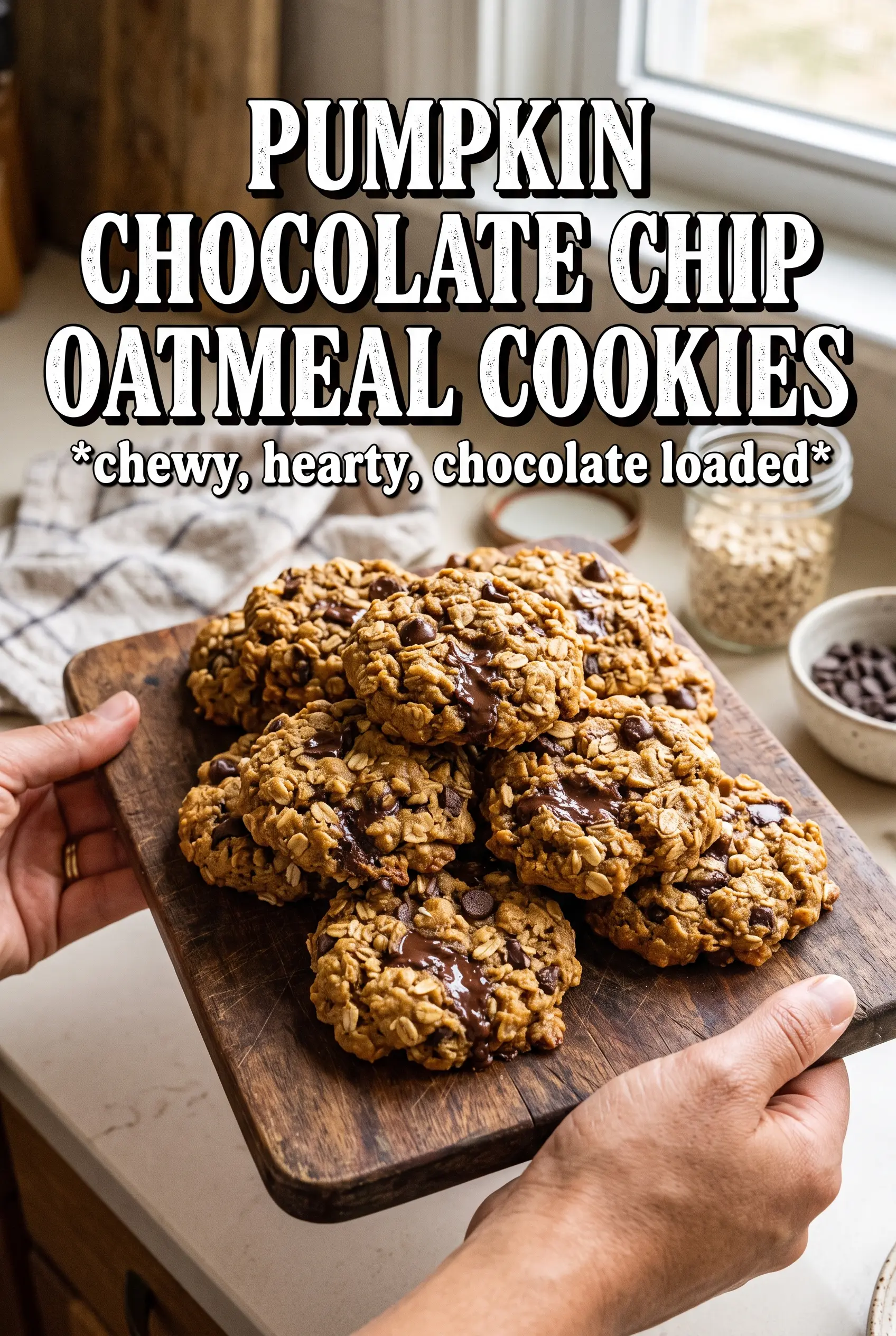
Pumpkin Chocolate Chip Oatmeal Cookies
Ingredients
Equipment
Method
- Preheat the oven to 375F and line baking sheets for easy transfer.
- Blot the pumpkin puree dry.
- Whisk together the all-purpose flour, baking soda, pumpkin pie spice, cinnamon, and salt until evenly mixed.
- Beat the softened unsalted butter with the brown sugar and granulated sugar until smooth.
- Add the blotted pumpkin puree, then beat in the eggs and vanilla until combined.
- Fold the flour mixture into the wet ingredients just until no dry streaks remain.
- Fold in the old-fashioned rolled oats and semi-sweet chocolate chips.
- Scoop 2-tablespoon rounds onto the lined baking sheets with spacing between cookies.
- Bake at 375F for 10-12 minutes, until the cookies are golden and set at the edges.
- Cool on the pan for 5 minutes before transferring to finish cooling.