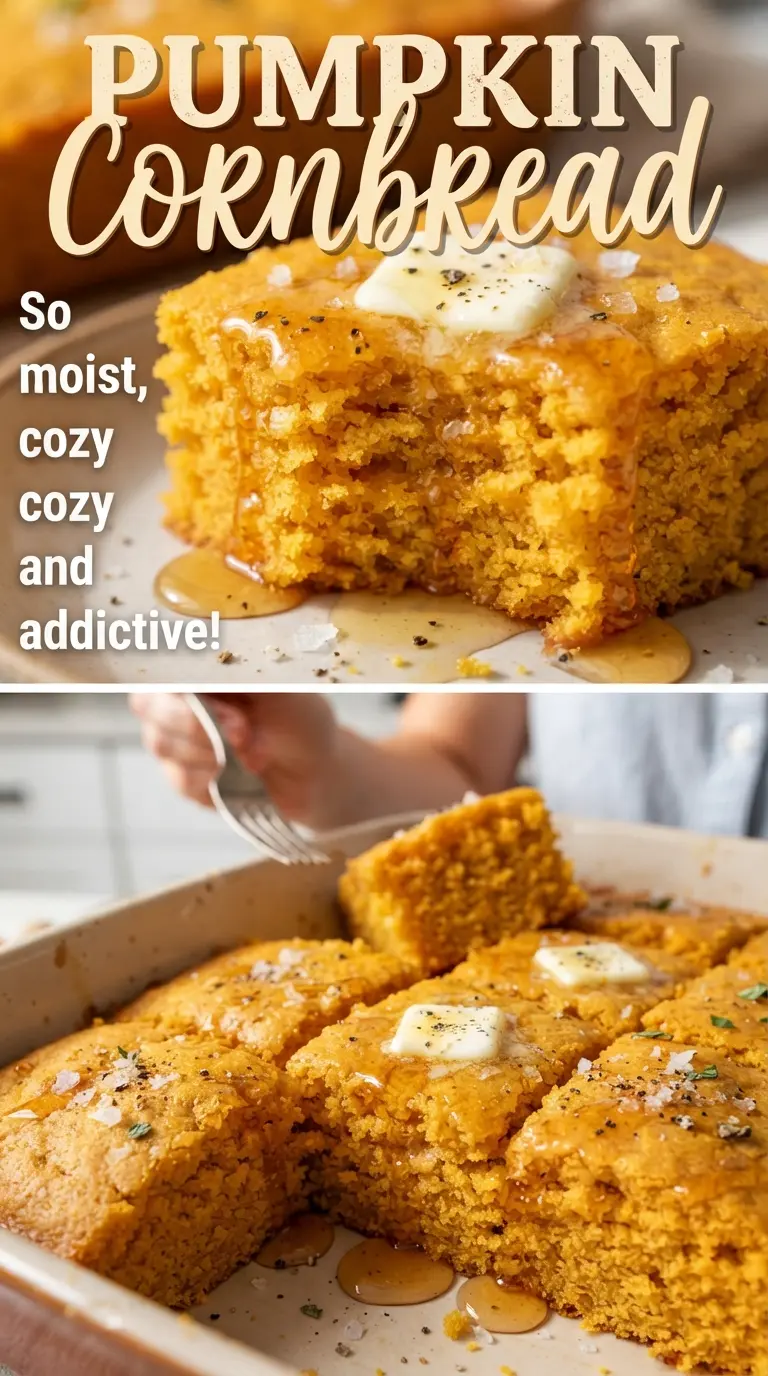
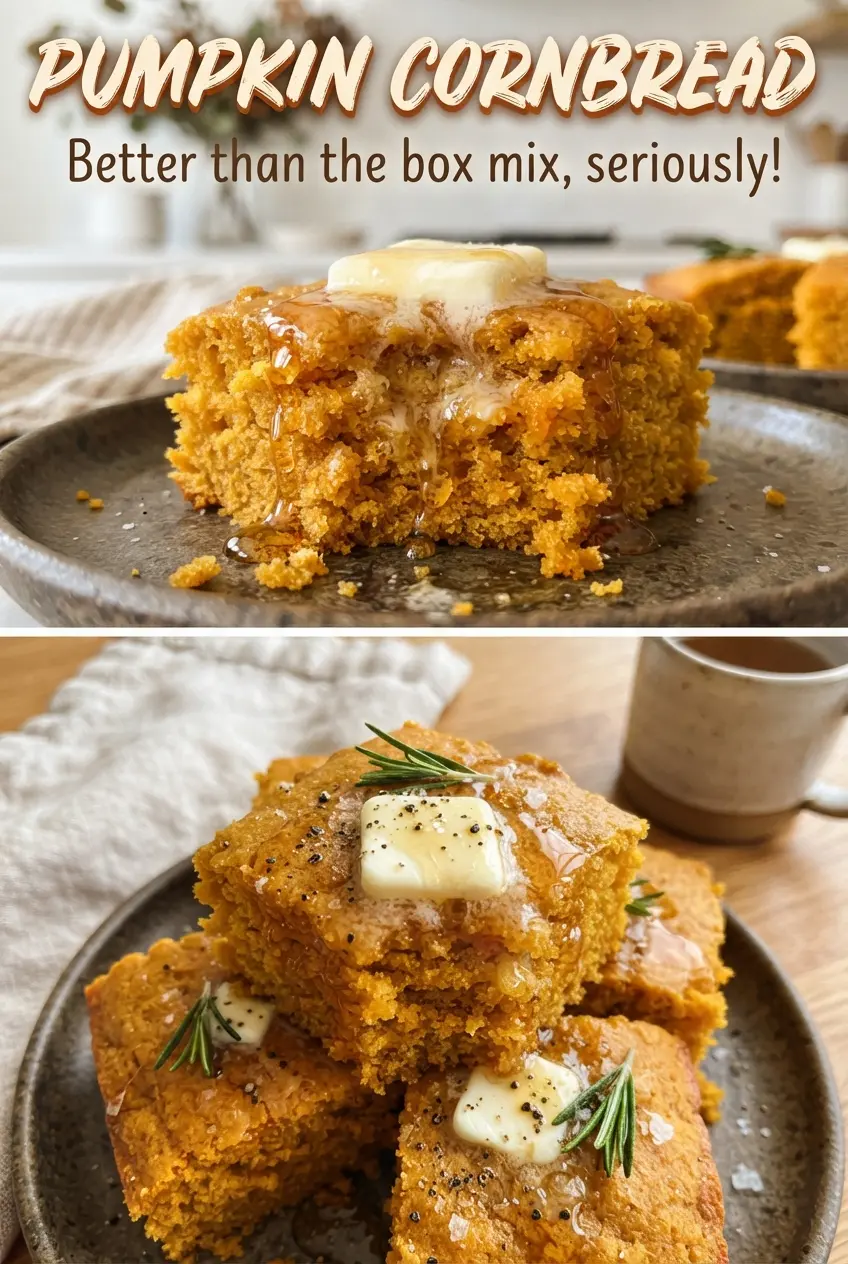
Golden pumpkin cornbread brings the kind of tender, lightly sweet crumb that disappears fast from the table. The edges turn crisp and bronzed, the middle stays soft and moist, and the pumpkin gives it a deeper color and a mellow richness that plain cornbread just doesn’t have. It’s the kind of side dish that works beside chili, roasted chicken, or a bowl of soup, but it’s good enough to eat warm with butter on its own.
The texture depends on balance: enough cornmeal for that classic cornbread bite, enough flour to keep it from getting gritty, and enough pumpkin to keep it plush without turning cakey. Buttermilk helps the crumb stay tender and gives the baking powder a boost, while the maple syrup rounds out the pumpkin spice without making the bread taste like dessert. The key is to stop mixing as soon as the batter comes together. Overmixing tightens the crumb and knocks out the light, even rise that makes a pan of cornbread worth repeating.
Below, you’ll find the little details that matter most — which pan gives you the best crust, how to keep the center from baking up dense, and what to change if you want a dairy-free version that still tastes like the real thing.
The cornbread came out with crisp edges and a really tender middle, and the maple syrup gave it just enough sweetness without taking over. I baked it in my cast iron skillet and the bottom had that perfect little crunch.
Love that golden, maple-kissed pumpkin cornbread? Save this one for the next time you want a tender side with crisp edges.
The Trick to Keeping Pumpkin Cornbread Light, Not Heavy
Pumpkin adds moisture and color, but it can tip cornbread into a dense, almost muffin-like texture if the batter gets overworked or the flour ratio is off. The flour here matters just as much as the cornmeal because it keeps the crumb from turning sandy and helps the bread hold together once the pumpkin goes in. If you’ve ever had pumpkin bread that felt heavy in the middle, it usually needed a gentler hand, not more baking time.
The other place people go wrong is the oven. At 400°F, this batter gets a quick burst of heat that helps the baking powder lift the loaf before the pumpkin can weigh it down. If the pan goes into a cooler oven, the edges dry out before the center sets. You want the top deeply golden and the middle just cooked through, not dried out to chase a false clean toothpick too early.
What the Cornmeal, Pumpkin, and Buttermilk Are Doing Here
- Yellow cornmeal — This gives the bread its signature texture and that faint, toasty corn flavor. Fine or medium grind both work; coarse cornmeal makes the crumb more rustic and a little more crumbly.
- Pumpkin puree — Use plain pumpkin puree, not pumpkin pie filling. The puree keeps the cornbread moist and gives it a deeper orange color without making it taste like pie.
- Buttermilk — This adds tang and tenderness, and it works with the baking powder to create lift. If you don’t have it, mix regular milk with a spoonful of lemon juice or vinegar and let it sit for a few minutes before using.
- Maple syrup and brown sugar — These add just enough sweetness to balance the pumpkin spice. Honey will work in place of maple syrup, but the flavor will be a little rounder and less woodsy.
- Melted butter — Butter gives richness and helps the top bake up with a soft sheen. Let it cool slightly before mixing it with the eggs so you don’t accidentally scramble them.
Getting the Batter Ready Before the Oven Takes Over
Whisk the dry ingredients first
Combine the cornmeal, flour, brown sugar, baking powder, salt, and pumpkin pie spice until the mixture looks even and no brown sugar clumps remain. This keeps the leavening distributed through the batter, which matters because uneven baking powder means uneven rise. If you see streaks of spice or pockets of sugar now, they’ll show up later as dense spots.
Mix the wet ingredients until smooth
Whisk the pumpkin, eggs, buttermilk, melted butter, and maple syrup until the mixture looks glossy and fully blended. The butter should be warm, not hot, so it mixes in cleanly instead of separating. A smooth wet mixture helps the batter come together fast, which is what keeps the finished cornbread tender.
Stop stirring the moment the batter comes together
Pour the wet mixture into the dry ingredients and stir just until you don’t see dry flour anymore. A few small lumps are fine; they disappear in the oven. If you beat the batter until it looks perfectly smooth, the crumb tightens and the cornbread bakes up tougher than it should.
Bake until the center sets cleanly
Spread the batter into a greased 8×8-inch pan or cast iron skillet and bake until the top is golden and a toothpick comes out clean, usually 22 to 25 minutes. In a skillet, the edges brown faster and the bottom gets a better crust. Pull it when the center feels set but still soft to the touch; overbaking dries out the pumpkin and takes away the tenderness that makes this version work.
How to Adjust Pumpkin Cornbread Without Losing the Good Parts
Cast iron skillet crust
Bake this in a well-greased 10-inch cast iron skillet if you want deeper browning on the bottom and edges. The skillet conducts heat faster than a glass or metal baking pan, so the crust turns crisp while the center stays soft. It’s the best choice when you want cornbread that feels a little more old-school and rustic.
Dairy-free version
Swap the buttermilk for unsweetened non-dairy milk mixed with 1 tablespoon lemon juice or vinegar, and use melted plant-based butter or neutral oil in place of the butter. The crumb will still be tender, but the flavor will be a little less rich. Oil gives the softest texture; plant butter keeps the flavor closer to the original.
Less sweet, more savory
Cut the brown sugar in half and leave the maple syrup in place for just a light sweetness. That version works especially well next to chili, ham, or roasted vegetables, and the pumpkin spice reads more like warmth than dessert. Go much lower than that and the cornbread starts tasting flat instead of balanced.
Storage and Reheating
- Refrigerator: Store in an airtight container for up to 4 days. The crumb firms up a little in the fridge, but it stays moist.
- Freezer: Freezes well for up to 2 months. Wrap individual squares tightly and thaw at room temperature before reheating.
- Reheating: Warm slices in a 300°F oven for 8 to 10 minutes or in a skillet over low heat. The common mistake is microwaving too long, which makes the cornmeal turn gummy instead of soft.
Questions I Get Asked About This Recipe
Pumpkin Cornbread
Ingredients
Equipment
Method
- Preheat the oven to 400F and grease an 8x8-inch pan or 10-inch cast iron skillet (warm pan helps the cornbread set quickly).
- Whisk yellow cornmeal, all-purpose flour, brown sugar, baking powder, salt, and pumpkin pie spice until evenly combined (dry streaks should disappear).
- Whisk pumpkin puree, eggs, buttermilk, melted butter, and maple syrup until smooth and glossy (no egg clumps).
- Stir wet into dry just until combined (small lumps are fine; overmixing makes it tough).
- Spread the batter into the greased pan and level the top with a spatula for even rise.
- Bake 22-25 minutes at 400F until golden and a toothpick comes out clean, with edges pulling slightly from the pan.
- Serve warm with butter on top so it melts into the tender crumb.