Golden, fluffy pumpkin cottage cheese pancakes bring the kind of breakfast that feels comforting without being heavy. The edges turn lightly crisp in the skillet, the centers stay tender, and the pumpkin gives each bite a soft, spiced warmth that works beautifully with maple syrup and pecans. The cottage cheese melts right into the batter, so you get a stack that tastes rich and satisfying without losing that airy pancake texture.
What makes this version work is the balance. Pumpkin puree adds moisture, oats give the pancakes enough structure to flip cleanly, and the eggs and cottage cheese build a batter that cooks up with a little more body than a standard pancake. Blending the batter smooth helps a lot here, especially if your cottage cheese is a little lumpy, because it keeps the texture even from edge to edge. A short rest before cooking gives the oats time to hydrate, which means thicker batter, better lifting, and fewer pancakes that spread too thin in the pan.
Below, I’ll walk through the one step that keeps these pancakes fluffy instead of dense, plus the ingredient swaps that still give you a good stack when you need to work with what’s in the fridge.
I blended the batter and let it sit for a few minutes like you said, and the pancakes came out thick but still light. The cottage cheese flavor disappeared completely, and they flipped without falling apart.
Pumpkin cottage cheese pancakes are worth saving for the mornings when you want a fluffy, high-protein stack with real maple syrup on top.
The Trick to Fluffy Pumpkin Pancakes Is Keeping the Batter Thick
Most pumpkin pancake batters fail for one simple reason: they get too loose. Pumpkin puree carries a lot of moisture, and cottage cheese can add even more depending on the brand, so if you stir by hand and keep going until everything looks perfectly smooth, you can accidentally thin the batter enough that the pancakes spread instead of rising. A thicker batter gives you height in the skillet, which is what keeps these pancakes tender in the middle instead of damp and flat.
The other thing to watch is heat. Medium heat is the sweet spot here. Too hot and the outside browns before the center sets; too low and the pancakes dry out while they sit in the pan. You want bubbles across the surface, set edges, and a pancake that releases cleanly when you slide a spatula underneath.
- Blending helps more than whisking. It breaks down the cottage cheese and keeps the batter uniform, which matters if you want a smooth, custardy crumb instead of little pockets of curds.
- The oats need a brief rest. Even three minutes changes the texture, because the oats soak up liquid and thicken the batter enough to hold shape.
- Don’t chase extra browning. These pancakes are done when the tops look mostly set and the centers spring back lightly. Dark bottoms with wet middles mean the heat is too high.
What Each Ingredient Is Doing in These Pancakes
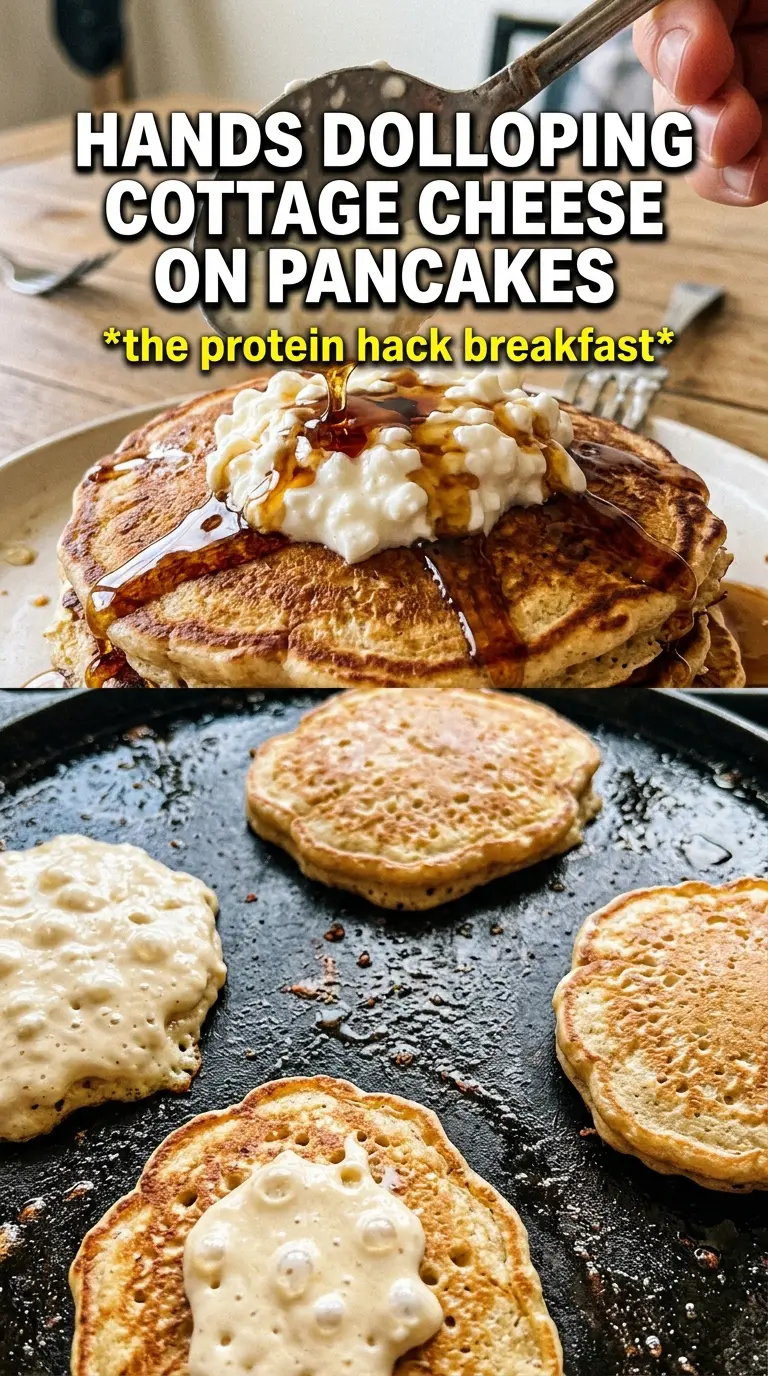
- Cottage cheese — This is the high-protein base that gives the pancakes body and moisture. Blending it smooth makes the texture lighter, but if your cottage cheese is already very fine, whisking works too.
- Pumpkin puree — Use plain pumpkin puree, not pumpkin pie filling. Pie filling is sweetened and spiced already, and it throws off both the texture and the flavor balance.
- Rolled oats or oat flour — Rolled oats give a slightly heartier pancake and need blending; oat flour makes the batter smoother from the start. If you use rolled oats, let the batter rest so they can soften.
- Eggs — The eggs are doing a lot of the structural work here. They help the pancakes set cleanly, which is why these flip better than many other pumpkin pancakes.
- Pumpkin pie spice and cinnamon — Both are worth keeping, because pumpkin on its own tastes mild. The spice blend brings the warm, bakery-style note that makes the pancakes taste complete.
- Maple syrup or honey — This is just enough sweetness to round out the batter without turning it into dessert. If you want a less sweet stack, cut it back slightly and serve with extra maple syrup at the table.
Getting the Pancakes to Flip Cleanly Without Falling Apart
Build the Batter First
Add everything to a blender and blend until smooth, then let the batter sit for about 3 minutes. That short pause gives the oats time to absorb liquid and makes the batter easier to portion. If you’re using very thick cottage cheese and mixing by hand, whisk until the mixture looks cohesive and no big curds remain.
Cook Over Steady Medium Heat
Grease the skillet lightly and let it heat fully before the batter goes in. Drop 2-3 tablespoon portions so the pancakes stay small enough to turn with confidence. If the first pancake browns too fast, the skillet is hot; pull it off the heat for a minute before continuing.
Watch for the Surface Cues
The pancakes are ready to flip when bubbles appear across the top and the edges look set, not wet. Slide the spatula all the way under each pancake and turn it once, gently. If you flip too early, the center smears and the pancake tears; give it the extra minute and it usually releases cleanly.
Finish Briefly on the Second Side
The second side only needs 1-2 minutes. You’re looking for a light golden finish and a pancake that springs back when you touch the center. Keep finished pancakes on a plate and cover them loosely so they stay warm without steaming soft.
How to Adapt These Pumpkin Cottage Cheese Pancakes When You Need a Swap
Gluten-Free With Oat Flour
Use certified gluten-free oat flour if you need this recipe to stay gluten-free. The texture stays soft and slightly hearty, and you won’t lose the gentle sweetness that oats bring. If the batter seems too thick after resting, stir in a tablespoon of milk.
Dairy-Free Version
Swap the cottage cheese for a thick dairy-free yogurt if you need to avoid dairy, but expect a softer, less structured pancake. The batter may need an extra tablespoon or two of oat flour to keep it from spreading too much. The flavor stays good, though the protein level drops.
Make Them a Little Less Sweet
Skip the maple syrup or honey in the batter if you want a more breakfast-forward pancake. The spices and pumpkin still carry plenty of flavor, and the pancakes pair well with savory toppings like plain yogurt or extra cottage cheese.
Storage and Reheating
- Refrigerator: Store cooked pancakes in an airtight container for up to 3 days. They soften a little as they sit, but the flavor holds up well.
- Freezer: These freeze well. Lay them in a single layer to freeze, then stack with parchment between each pancake and store in a freezer bag for up to 2 months.
- Reheating: Warm them in a toaster or a skillet over low heat until heated through. The biggest mistake is using the microwave too long, which makes the pancakes rubbery instead of fluffy.
Answers to the Questions Worth Asking
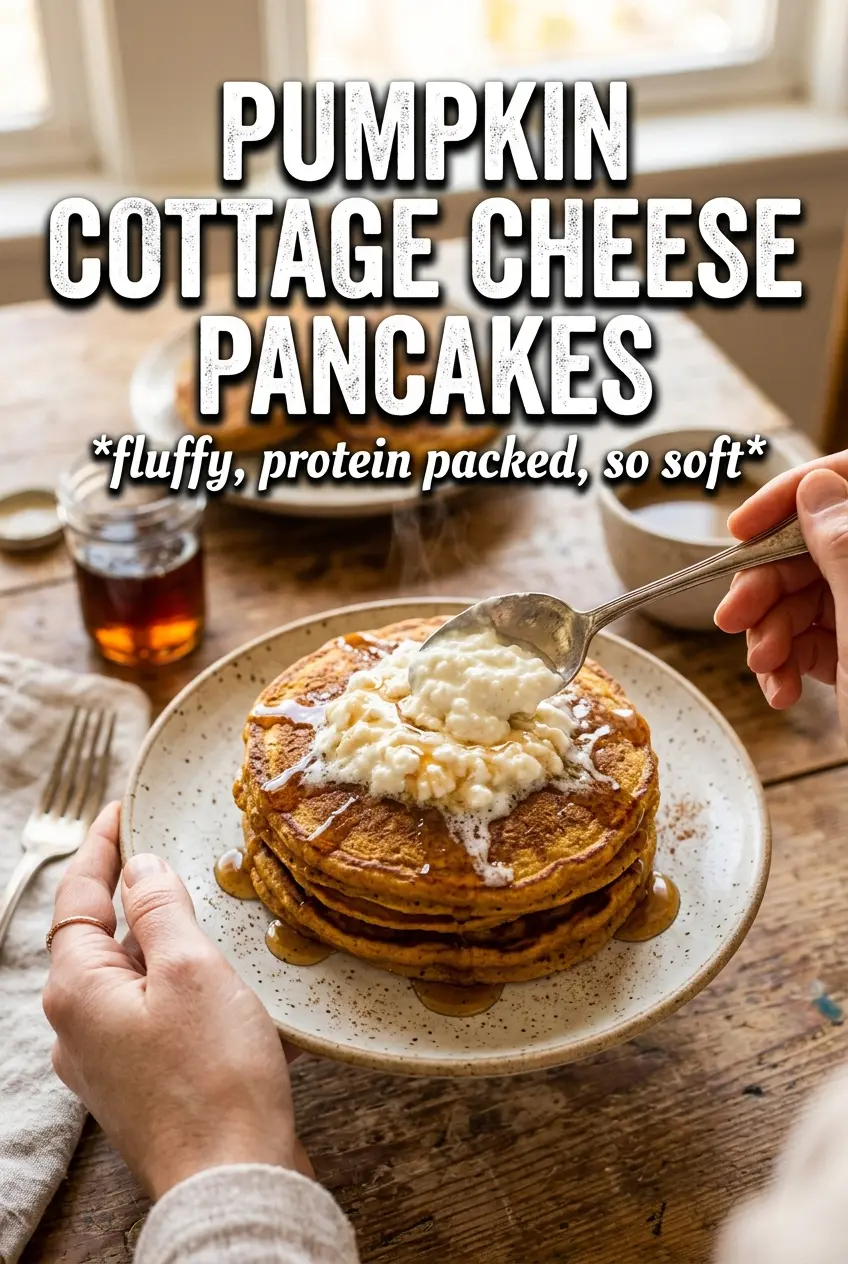
Pumpkin Cottage Cheese Pancakes
Ingredients
Equipment
Method
- Add cottage cheese, pumpkin puree, eggs, rolled oats (or oat flour), baking powder, pumpkin pie spice, cinnamon, maple syrup (or honey), vanilla extract, and salt to a blender, then blend until smooth (or whisk well if using smooth cottage cheese). The batter should look thick and fully combined with no visible oat bits.
- Rest the batter for 3 minutes to help it thicken slightly before cooking. Keep it at room temperature during the rest.
- Heat a lightly greased skillet over medium heat until hot. The surface should sizzle lightly when a drop of batter touches it.
- Drop 2–3 tablespoon portions of batter into the skillet and cook for 2–3 minutes, until bubbles form across the top and the edges look set. Aim for evenly spaced pancakes for consistent browning.
- Flip the pancakes gently and cook for 1–2 minutes more. Cook until both sides are golden and the center looks set when lightly pressed.
- Serve the pancakes with maple syrup and pecans. Add extra cottage cheese on the side if you like.